If you have flown anywhere in the past couple of years, you know the absolute panic of waiting at the baggage carousel. I have had my checked bag delayed twice, and the airline tracking apps are usually a joke. After hearing a bunch of friends swear by them, I finally decided to test out the Apple AirTag for my luggage and my daily work backpack.
I bought this specific tracker because I wanted something seamlessly integrated with my iPhone. No third-party apps, no weird subscriptions. I have been using it constantly for the past few weeks, taking it on two cross-country flights and keeping it in my backpack during my daily train commute. Here is my honest take on how it actually performs in the real world. If you want to skip the details and just see the current cost, you can check today's price.
The One-Tap Setup: Does It Work?
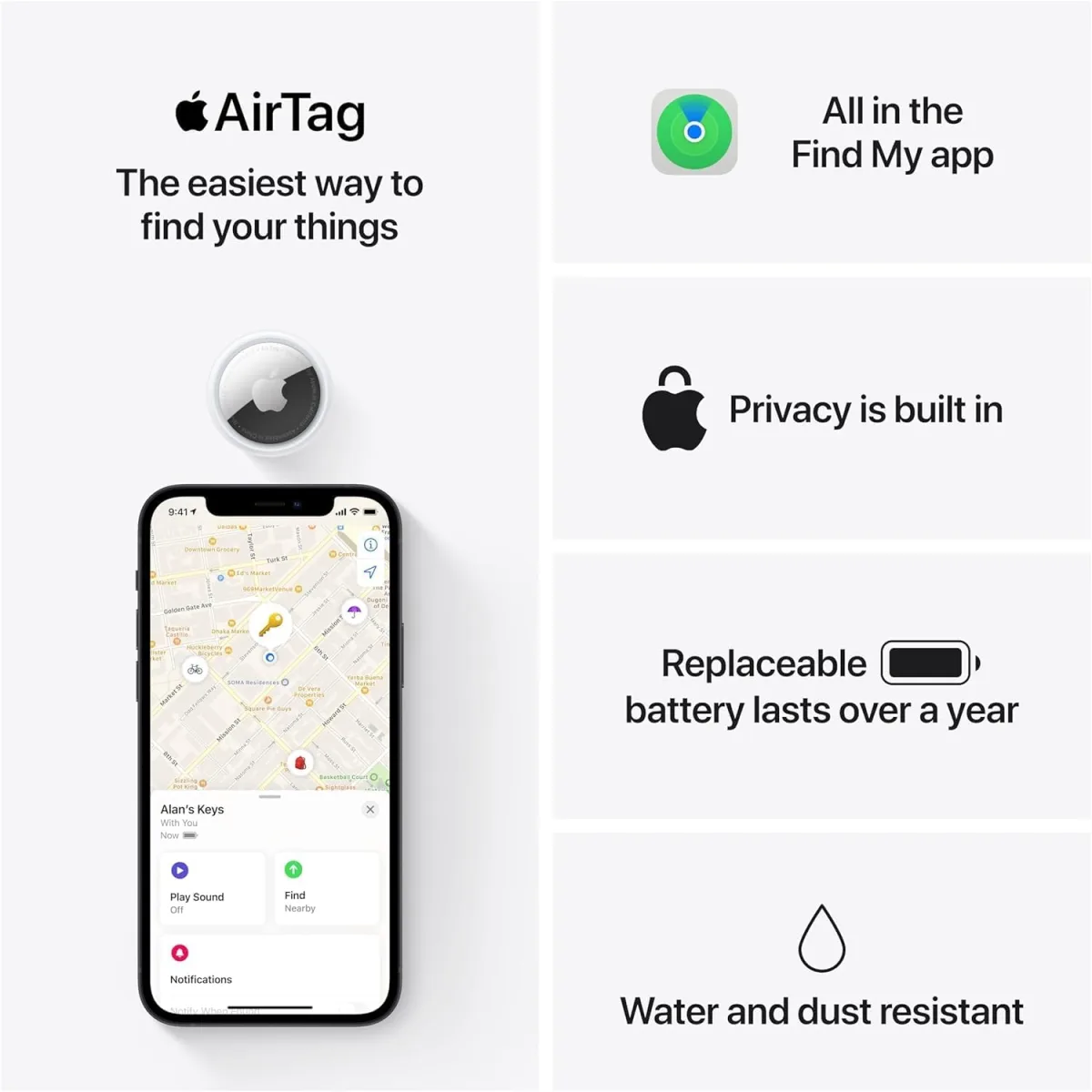
Apple heavily advertises the one-tap Bluetooth setup. I am usually pretty skeptical of instant pairing claims, but I have to admit, this was flawless. I unboxed the little silver and white disc, pulled the plastic battery tab, and it immediately chimed. A second later, a pop-up appeared on my iPhone screen asking me to name the item. I chose "Checked Luggage" from the drop-down list and that was literally it. The whole process took under thirty seconds.
Real-World Testing: Luggage Tracking at the Airport
The real test came during a layover in Atlanta. My first flight was delayed, giving me exactly twenty-five minutes to sprint to my connecting gate. I made it, but I was fully convinced my suitcase did not.
Once I sat down on the plane, I opened the Find My app. Because the AirTag does not use GPS, it relies on the Bluetooth signals of other Apple devices passing by. Considering there are thousands of iPhones in an airport, the network is incredibly strong. I refreshed the app and watched the location of my bag move from Terminal B to Terminal E. I actually saw it load onto my plane before we took off. The peace of mind that gave me was worth the purchase price right then and there.
When I landed, the precision finding feature blew my mind. As I walked up to the baggage claim, the app gave me a literal on-screen arrow pointing to my bag, counting down the feet. I knew exactly where to stand on the carousel before the bag even came down the chute.
The Built-In Speaker: Helpful or Too Quiet?
One feature I really wanted to test was the built-in speaker. You can use the Find My app to make the tracker play a sound if you misplace your bag nearby. I tried this when I lost my backpack somewhere in my house. The chime is a high-pitched chirping sound. It is loud enough if the room is totally quiet, but honestly, if your bag is buried under a pile of laundry or if you are in a noisy airport terminal, you might struggle to hear it. I noticed that the sound gets heavily muffled if the tracker is shoved deep inside a densely packed suitcase. It is definitely a nice backup feature to have, but I rely way more on the directional arrows than the audio chime.
What Annoyed Me
It is not a perfect product. After a few weeks of use, a couple of things really started to bug me.
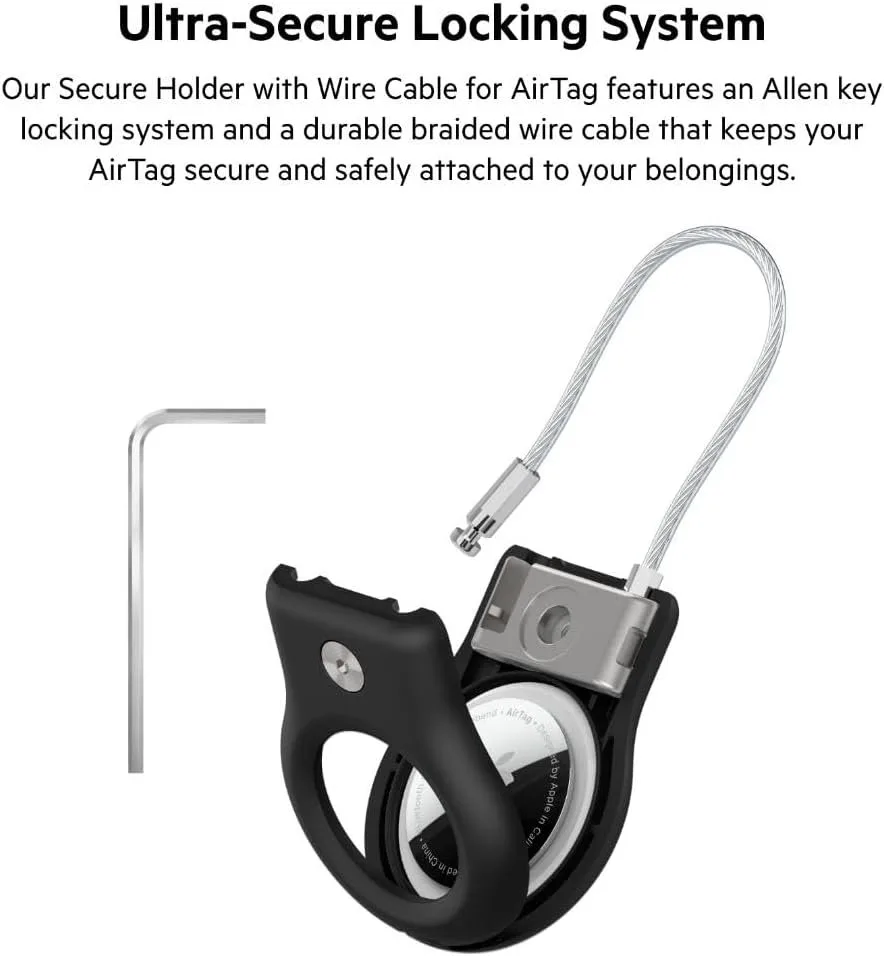
- The Apple Accessory Tax: The tracker is literally just a smooth disc. There is no hole to attach it to a keyring or a zipper. You are forced to buy a separate holder or case if you want to attach it to your backpack straps. I ended up tossing it loosely into an inside pocket of my luggage, but for my backpack, I had to buy a keychain case.
- Scuffing: The shiny silver side gets scratched up instantly. Mine looked five years old after just three days in my backpack.
- Anti-Stalking Quirks: Apple built in safety features so people cannot use these to track others. That is great, but when I left my backpack in my wife's car while I ran into a store, her iPhone started alerting her that an unknown tracker was following her. It gets a little annoying when traveling with family.
If you are willing to deal with the accessory tax and scratches, you can grab it on Amazon.
Battery Life and Maintenance
I noticed right away that this does not need to be charged like an Apple Watch. It uses a standard CR2032 coin battery. Apple claims it lasts about a year. While I haven't hit the one-year mark yet, I checked the battery status in the app and it is still completely full. I love that I do not have to remember to plug my luggage tag into a wall charger. When it finally dies, a replacement battery costs a couple of bucks at the pharmacy.
Who Should Buy This
Frequent Flyers
If you check bags, this is an absolute must-have. You will never wonder if your bag made the connection again.
Commuters
Slipping this into your backpack or laptop bag gives you a massive safety net if you ever leave your bag on a train or at a coffee shop.
Deep Apple Ecosystem Users
If you already have an iPhone, iPad, or Mac, this integrates flawlessly without you having to create new accounts or download clunky apps.
Who Should Skip It
Android Users
Do not buy this. It requires an iOS device to set up and track. Look into Tile or Samsung SmartTags instead.
Budget Shoppers
While the tag itself isn't outrageously priced, needing to buy extra holders just to clip it to a bag is frustrating if you are trying to save money.
Final Verdict
I honestly will not travel without one of these in my suitcase anymore. The anxiety reduction of knowing exactly where your stuff is located is huge. Despite the scratches and the annoying lack of a keyring hole, the tracking performance is vastly superior to anything else I have tried. If you want to protect your luggage on your next trip, pick one up here.