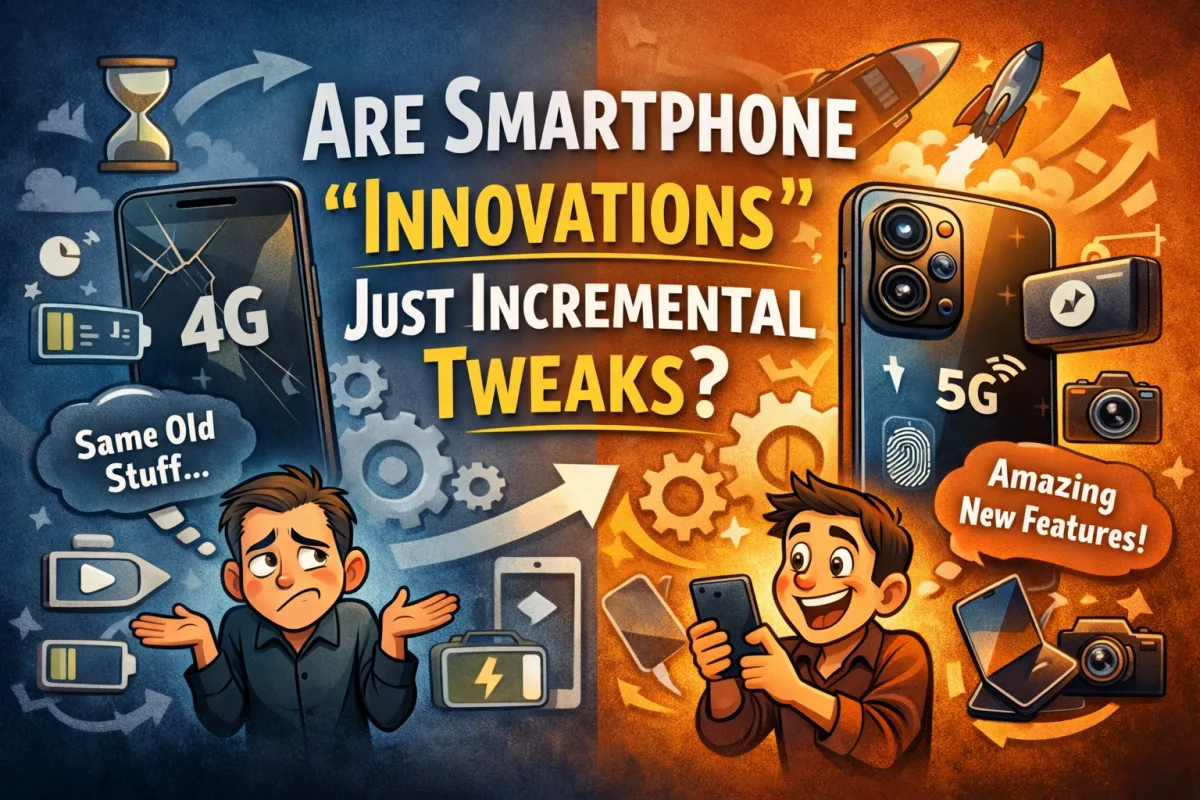
The Illusion of Perpetual Innovation
Every year, the tech giants roll out their shiny new flagships, complete with a laundry list of "revolutionary" features. We're told these devices represent the pinnacle of human ingenuity, packed with advancements that will fundamentally change how we interact with the digital world. But let's be honest: for the seasoned observer and the average consumer alike, a growing sense of déjà vu often accompanies these grand pronouncements. Are we truly witnessing groundbreaking innovation, or just increasingly sophisticated iterations of the same core device we've been carrying for over a decade?
My take? We're largely stuck in an innovation rut, disguised by dazzling marketing campaigns. The industry is locked in a cycle of incremental improvements, focusing on niche enhancements rather than paradigm shifts. It's not that the engineering isn't impressive – it absolutely is. But the impact on the everyday user experience? That's a much harder case to make.
The Camera Arms Race: More Lenses, More Pixels, More... Indifference?
Nowhere is this "innovation fatigue" more apparent than in smartphone cameras. Manufacturers are locked in an absurd arms race, cramming in more lenses, bumping up megapixel counts to frankly unnecessary levels, and touting AI processing that promises to turn every snapshot into a masterpiece. Do we really need a 200-megapixel sensor on our phone? For most users, the difference between a great 12MP photo and an exceptional 200MP one is negligible on a phone screen, and often even on larger displays.
Sure, features like periscope zoom lenses on devices like the Samsung Galaxy S24 Ultra or improved low-light performance on the Google Pixel series are technically impressive. They allow for incredible shots in specific scenarios. But think about your own usage: how often do you truly push these limits? For the vast majority, the cameras on a two-year-old mid-range phone are more than adequate for social media and family photos. The focus has shifted from making photography accessible and good to making it technically superior in ways most won't fully appreciate or utilize.
Folding Phones: A Solution Still Seeking a Problem?
Then there are folding phones. Ah, the foldable! Remember the initial hype? The promise of a phone that unfolds into a tablet, offering the best of both worlds. Devices like Samsung's Z Fold and Z Flip series, or Motorola's Razr, showcase incredible engineering prowess. The hinges, the flexible displays – it's all genuinely cutting-edge stuff.
Yet, they remain firmly in the niche category. Why?
- Durability Concerns: Early models were plagued by screen issues, and while they've improved, the perception of fragility persists.
- High Price Tags: They consistently command premium prices, putting them out of reach for many.
- Software Optimization: Many apps simply don't take full advantage of the larger, dynamic screens, leaving the user experience feeling less seamless than it should.
- Bulk: Foldables are often thicker and heavier than their traditional counterparts.
For some power users or those who genuinely crave the larger screen real estate, they're fantastic. But for the average consumer, the compromises on price, durability, and often battery life simply don't justify the "innovation." It feels like a technology looking for its killer app, rather than a natural evolution driven by widespread user need.
Battery Life and Charging: The Tortoise and the Hare of Innovation
Here's an area where true, impactful innovation would be universally welcomed: battery life. Despite all the advancements in chip efficiency and display technology, many users still find themselves hunting for a charger by late afternoon. While charging speeds have indeed become blistering – some phones can now go from empty to full in under 30 minutes – it feels like a workaround for a problem that hasn't been fundamentally solved. We're making charging faster because batteries still don't last long enough.
Where's the solid-state battery that lasts for days? Where's the truly ambient wireless charging that powers our devices without a pad? These are the innovations that would genuinely change our daily lives, freeing us from the constant anxiety of a dwindling charge. Instead, we get incremental gains in milliamp-hours and another few watts added to fast charging capabilities. It's progress, yes, but hardly revolutionary.
The Real Innovation Might Be Elsewhere
Perhaps we're looking in the wrong place for "innovation." The true advancements might not be in the hardware itself, but in the ecosystems and the subtle software improvements that make our devices more intuitive, more secure, and more integrated into our lives. Things like seamless integration between phone, watch, and laptop, or privacy features that genuinely protect our data. These are the less glamorous but arguably more impactful changes.
Industry analysts point to a lengthening average smartphone replacement cycle, now stretching well beyond two years for many users. People just aren't compelled to upgrade every year or two anymore because their current phone does everything they need, and the "new" features don't offer a compelling enough reason to spend hundreds, if not thousands, of dollars.
What Do We Really Want?
So, what's my point? It's not that current smartphone tech isn't impressive. It's a marvel of miniaturization and computational power. But the relentless push to label every minor upgrade as "innovation" feels disingenuous. We've reached a plateau where the core functionality is excellent, and subsequent improvements are increasingly marginal for the average person.
Perhaps manufacturers should shift their focus. Instead of chasing pixel counts and foldable gimmicks, what if they invested more heavily in truly robust battery tech, long-term software support for older devices, or even modular designs that allow users to upgrade specific components? Imagine extending the life of your device by simply swapping out a better camera module or a new battery.
Until then, I'll continue to look at the latest smartphone announcements with a healthy dose of skepticism. The engineering is brilliant, no doubt. But for truly transformative innovation, I suspect we'll have to wait a little longer, and perhaps demand a little more from the companies that dominate our digital lives.