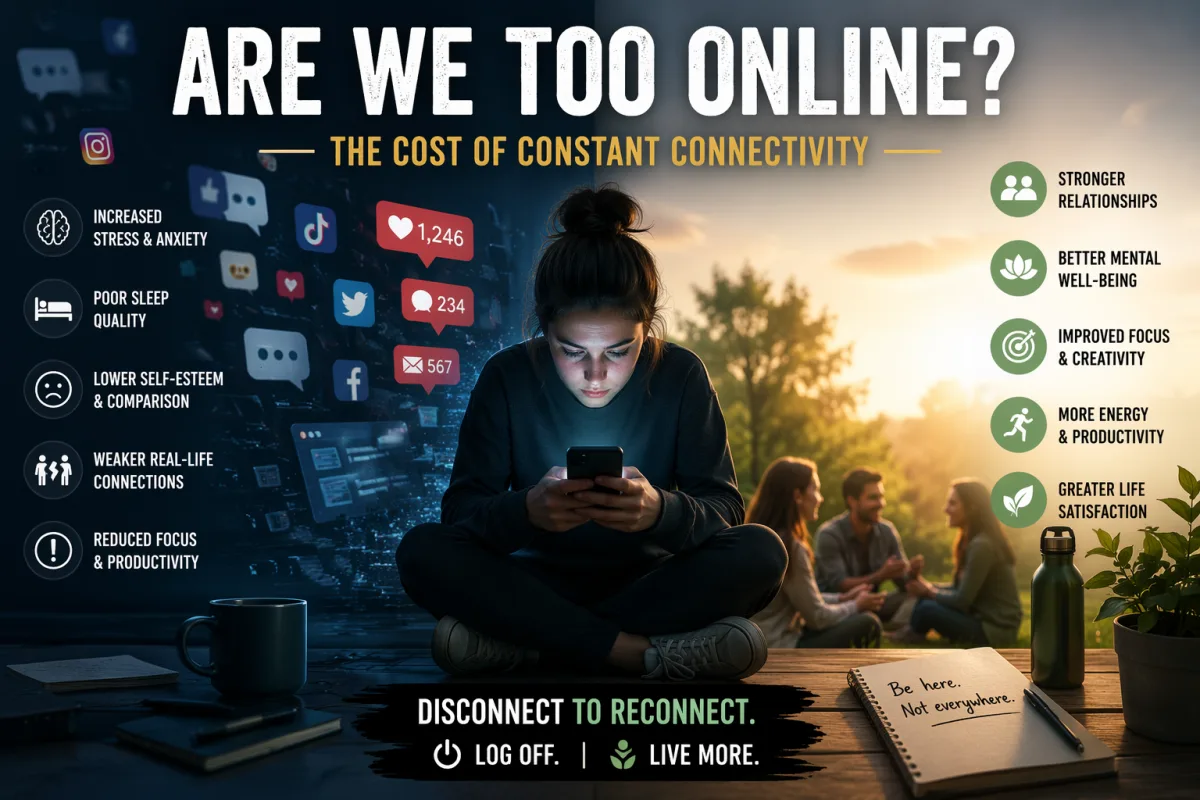
That familiar glow of a smartphone screen. The instant gratification of a 'like' or a new email. It's a dance we all know, a rhythm dictated by the digital world. We’re more connected than ever, yet many of us feel increasingly disconnected from ourselves and what truly matters. We have to ask: Are we too online? This isn't just a rhetorical question; it's a critical inquiry into the very fabric of our modern lives and the profound cost of constant connectivity.
The internet promised to bring us closer, to democratize information, and to make our lives easier. And in many ways, it has delivered. But this always-on culture has also quietly, insidiously, extracted a toll we're only just beginning to understand. From our mental well-being to our physical health and the quality of our relationships, the price of this pervasive digital presence is substantial.
The Mental Toll of Our Digital Overload
Our brains weren't designed for this relentless barrage of information. Every notification, every new tab, every scroll is a micro-decision, a tiny drain on our cognitive resources. This constant switching isn't just annoying; it's mentally exhausting. Research from the University of California, Irvine, for instance, shows that it takes an average of 23 minutes and 15 seconds to get back to a task after an interruption.
Think about that. If your phone buzzes every 15 minutes, you're essentially never truly focusing. This fragmentation of attention leads to reduced productivity, increased stress, and a pervasive sense of being overwhelmed. We're always on call, always reachable, and the expectation of instant responses creates a low-level hum of anxiety that never truly dissipates.
The Rise of Doomscrolling and Comparison Culture
One particularly insidious aspect of our online habits is doomscrolling. This is the act of compulsively checking and consuming negative news or content, often late into the night. It's a self-perpetuating cycle that amplifies anxiety and hopelessness, leaving us feeling drained and powerless.
Then there's the comparison trap. Social media, in particular, curates highlight reels of others' lives. We see perfect vacations, thriving careers, and blissful relationships, often forgetting that these are carefully constructed facades. Constantly comparing our messy realities to these idealized digital personas fuels feelings of inadequacy, jealousy, and a pervasive sense that we're somehow falling short.
Physical Manifestations of Constant Connectivity
It's not just our minds that suffer; our bodies bear the brunt too. The posture we adopt while hunched over our devices – the "tech neck" – leads to chronic pain in the neck and shoulders. Our eyes strain from prolonged exposure to screens, leading to digital eye strain, headaches, and even blurred vision. A 2020 study published in *JAMA Ophthalmology* highlighted the rising prevalence of myopia (nearsightedness) globally, with screen time often cited as a contributing factor, particularly in younger populations.
Perhaps the most significant physical impact is on our sleep. The blue light emitted by screens suppresses melatonin production, making it harder to fall asleep and disrupting our natural circadian rhythms. Many of us find ourselves scrolling "just a little longer" before bed, inadvertently sabotaging our rest. Poor sleep isn't just about feeling tired; it affects our mood, cognitive function, immune system, and overall physical health.
Eroding Real-World Connections and Relationships
Paradoxically, while technology connects us globally, it can isolate us locally. How often have you been in a restaurant or at a family gathering and seen everyone absorbed in their phones? These are lost opportunities for genuine human connection, for deep conversations, and for simply being present with those around us.
Our digital interactions often replace, rather than supplement, real-world engagement. Sending a quick text or liking a photo requires far less emotional investment than meeting for coffee or having a heart-to-heart conversation. This shift towards more superficial interactions can leave us feeling less understood and less supported, even with hundreds or thousands of "friends" online.
Children, in particular, are feeling this impact. They're growing up in a world where digital interactions are often prioritized, potentially hindering the development of crucial social skills like reading non-verbal cues, empathy, and conflict resolution that come from face-to-face communication.
Reclaiming Our Time: Strategies for Healthier Digital Living
Recognizing the problem is the first step; taking action is the next. We don't have to abandon technology entirely, but we must learn to use it with intention. How do we find a better balance and ensure we're not constantly online?
- Set Boundaries: Designate "no-phone zones" in your home, like the dinner table or bedroom. Create "no-screen times" an hour before bed and for the first hour after waking.
- Curate Your Feed: Unfollow accounts that make you feel inadequate or anxious. Mute notifications from non-essential apps. Your digital space should serve you, not drain you.
- Mindful Usage: Before opening an app, ask yourself: "Why am I opening this? What do I hope to gain?" This simple check can disrupt mindless scrolling.
- Digital Detoxes: Try a short digital detox – a few hours, a day, or even a weekend. You'll be surprised how much mental space you reclaim.
- Engage Offline: Actively seek out real-world activities. Read a physical book, go for a walk, meet a friend for coffee, learn a new skill that doesn't require a screen.
What this means for you is a chance to reset. It’s an opportunity to consciously decide how technology fits into your life, rather than letting it dictate your every moment. It’s about being the master of your devices, not their slave.
The Path to Intentional Connectivity
The question isn't whether we can live without the internet – that's unrealistic for most of us. The real question is how we can integrate technology into our lives in a way that enhances it, rather than detracting from our well-being. It requires awareness, discipline, and a willingness to challenge the pervasive norms of constant digital engagement.
It's time to choose presence over pixels, deep connection over superficial likes, and genuine rest over endless scrolling. By understanding the true cost of being constantly online, we empower ourselves to make more conscious choices, fostering a healthier, more balanced relationship with our digital world and, ultimately, with ourselves.