When the Bonsenkitchen Immersion Blender arrived, I didn't have sky-high expectations. I mean, it's an immersion blender, a tool I've used for years, and this one was priced quite affordably. The unboxing was pretty straightforward—minimalist packaging, no excessive plastic, which I appreciated. Inside, I found the motor unit, the blending shaft, a whisk attachment, and a plastic beaker. Holding the main motor unit for the first time, I noticed it felt surprisingly light in my hand, weighing in at just under 1.5 pounds, which immediately made me wonder about the power it packed. My first use was a simple berry smoothie, and while it managed to blend the soft berries and yogurt without much fuss, the motor made a distinctly high-pitched whirring sound that wasn't entirely reassuring. It was in that moment, as I struggled a bit with a few stubborn, slightly frozen berry pieces, that I knew this wasn't going to be a powerhouse appliance, but rather a tool for more specific, lighter kitchen tasks.
- Who this is best for: Home cooks on a budget, small households, or anyone needing a basic, compact tool for light blending tasks like smooth soups, sauces, or baby food, and occasional whisking.
- Standout feature: Its compact size and the surprisingly effective whisk attachment that adds genuine versatility without taking up extra counter space.
- The single biggest limitation or frustration: The motor's noticeable lack of power when dealing with anything harder than soft fruits or cooked vegetables, coupled with the restrictive two-speed operation.
- Value assessment: It's a decent value for its price point if your expectations are realistic and you primarily deal with softer ingredients. It's definitely not a replacement for a high-powered stand blender, but for quick, simple jobs, it does enough to justify its cost, especially if you can check today's price and find a good deal.
First Impressions and Build Quality
Taking the Bonsenkitchen immersion blender out of its box, the first thing I noticed was its relatively sleek, minimalist design. It's primarily constructed from a matte black plastic for the motor housing, which gives it a somewhat modern but unassuming look. The blending shaft, however, is a stainless steel rod, which is pretty standard and feels robust enough for the job. The overall dimensions are quite compact, making it easy to store in a drawer or a small cupboard without taking up much space. The motor unit itself feels lightweight, as I mentioned, but not flimsy to the point of feeling cheap. It just doesn't have that hefty, robust feel you get from higher-end kitchen appliances.
The attachments—the blending shaft and the whisk—click into place with a satisfying, albeit plastic-on-plastic, lock. There's a slight give, but nothing that made me worry it would detach during use. The whisk attachment itself is made of stainless steel wires, which seem durable enough for whipping eggs or cream. The accompanying 24oz plastic beaker is basic, clear, and has measurement markings, which is a thoughtful addition, even if it feels a bit thin. It's a standard kitchen beaker, nothing more, nothing less. The power cord is a reasonable length, about three feet, which offers enough reach for most kitchen outlets without requiring an extension cord, though I sometimes found myself wishing for just a little more slack when working on my larger kitchen island.
The finish of the plastic housing is a smooth matte black, which resists fingerprints fairly well, though it can show dust if not wiped down regularly. The stainless steel parts are polished and look good. What tells me it's reasonably well-made for its price point is the snug fit of the attachments and the lack of obvious seams or rough edges on the plastic. It's clear that this isn't a premium product, but it also doesn't scream "cheap knock-off." It occupies that middle ground of being perfectly adequate for its intended purpose, as long as that purpose isn't too demanding. The buttons feel a bit stiff at first, but loosen up with use. Overall, my initial impression was that it’s a no-frills, functional tool that looks decent enough on the counter and doesn’t feel like it’ll fall apart on the first use.
Key Features Worth Knowing
The Bonsenkitchen immersion blender boasts a few key features that aim to make it a versatile kitchen companion. Here’s my honest take on each one after three weeks of regular use:
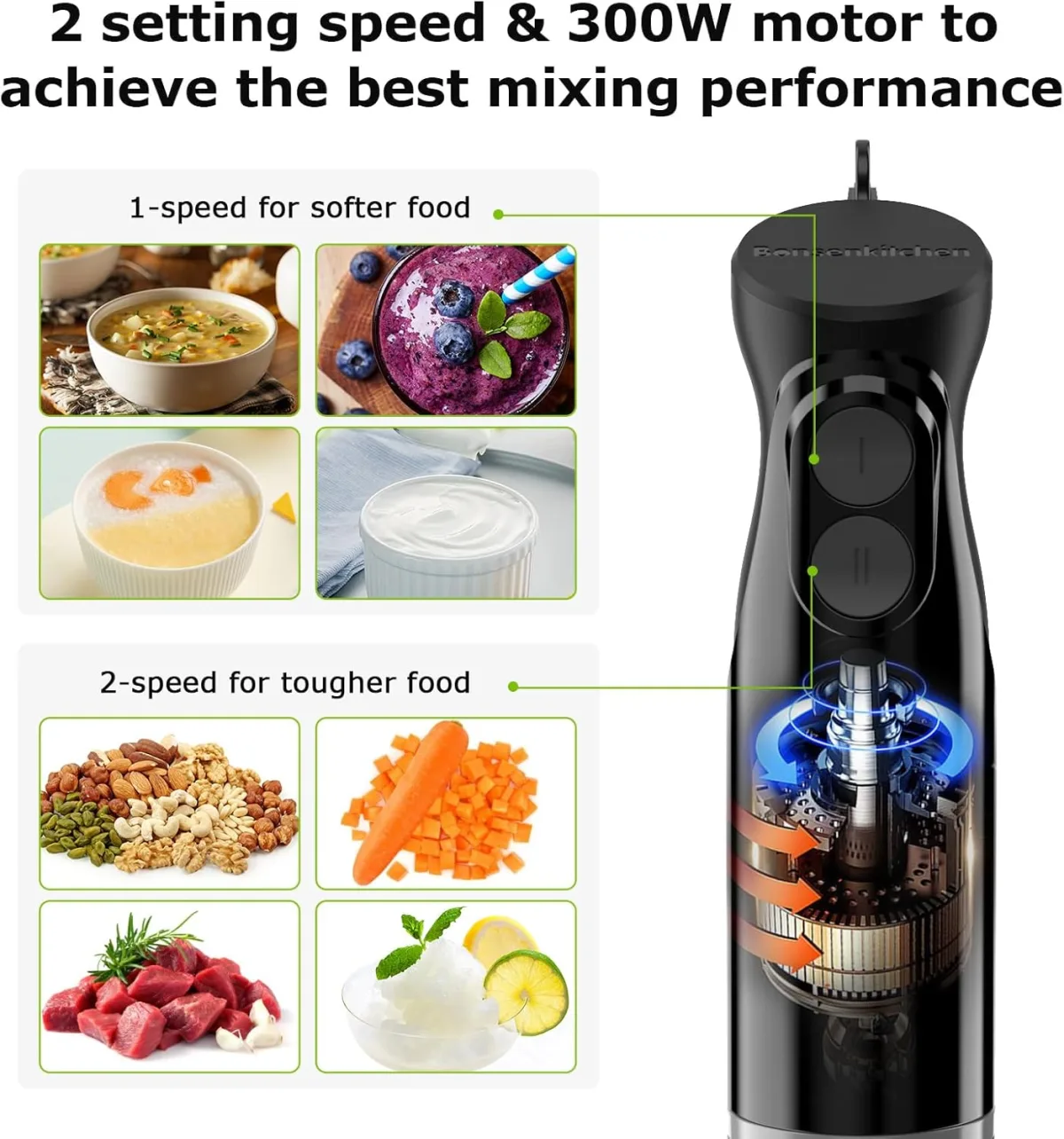
- 2 Mixing Speeds: This blender offers two speeds: Low and High. While simple, I quickly found myself wishing for more granularity. Low speed is perfect for gently incorporating ingredients or blending very thin liquids without splashing, like when I was making a simple vinaigrette. High speed kicks things up a notch, which is necessary for pureeing soups or making thicker smoothies. However, the jump from Low to High is quite significant, and there's no in-between. I often felt like I needed a medium setting for tasks that weren't quite delicate enough for Low but too much for High, which could sometimes over-aerate or splash. The lack of variable speed control is a definite limitation if you're used to more precise blending.
- Sharp Blades: The blades are indeed sharp, made of stainless steel. They do a decent job of cutting through softer ingredients. The design of the blending bell, which houses the blades, is pretty standard. It's not an anti-suction design, which means I often found the blender suctioning itself to the bottom of my pot or beaker, making it a bit harder to move around and get an even blend without lifting and breaking the seal repeatedly. For soft foods, these blades are perfectly adequate; for anything tougher, they become more of a pulverizer than a precise cutter, often struggling to break down fibrous ingredients evenly.
- 3-In-1 Functionality (Blender, Whisk, Beaker): This is arguably where the Bonsenkitchen offers good value.
- Immersion Blender: The primary function, and it performs as expected for light to medium tasks. It’s great for getting directly into pots.
- Egg Whisk: The whisk attachment is a pleasant surprise. It's not going to replace a stand mixer, but for whipping a couple of eggs for an omelet, making a quick batch of whipped cream, or emulsifying a salad dressing, it’s remarkably effective. It attaches easily and cleans up quickly. I found myself reaching for it more often than I anticipated for these small, quick jobs.
- 24oz Beaker: The included plastic beaker is a basic but useful accessory. It's great for making single-serve smoothies or small batches of sauce without dirtying a larger container. The measurement markings are a nice touch, too.
- Ergonomic Design: I found the handle comfortable to hold, even during longer blending sessions (which, given the power, rarely exceeded a few minutes). It fits well in my average-sized hand, and the buttons are positioned intuitively. It doesn't feel unwieldy or unbalanced, which is important for an appliance you're holding and maneuvering.
- Easy Cleanup: This is a major plus. Both the blending shaft and the whisk attachment detach from the motor unit with a simple twist and pull. They're both dishwasher safe (though I prefer handwashing to preserve them), and the smooth stainless steel surfaces rinse clean very easily. The motor unit itself just needs a quick wipe down if it gets splashed. This quick cleanup makes it much more appealing for daily use than a bulky stand blender.
- My Surprise (Negative): What truly surprised me, and not in a good way, was the fixed two-speed button operation. Instead of a switch that stays on, you have to continually hold down either the "Low" or "High" button for the entire duration of blending. For quick pulses, it’s fine, but when you're trying to achieve a smooth consistency for a soup that takes a couple of minutes, having to maintain constant thumb pressure becomes genuinely tiring and uncomfortable. It feels like a design oversight that significantly impacts the user experience for anything beyond very brief tasks. I really wished for a toggle switch or a lock-on feature, or even a variable dial, especially if I wanted to grab it on Amazon, I'd hope for better control.
Real-World Performance
Living with the Bonsenkitchen Immersion Blender for three weeks really gave me a sense of its capabilities and, more importantly, its limitations. I put it through its paces with several common kitchen tasks.
- Soups: This is arguably where immersion blenders shine, and the Bonsenkitchen did a decent job, but with a caveat. When I used it for a creamy tomato soup directly in the pot, blending hot liquids was easy and splash-free on the low setting. Switching to high, it took about 2-3 minutes to get a smooth consistency for a medium pot (about 6 cups) of soup. However, because of the suction issue I mentioned earlier, I had to constantly lift and plunge the blender to ensure all the chunks were reached and blended evenly. For soups with soft, cooked vegetables like squash or potatoes, it performed admirably. If there were any tougher bits, like unpeeled garlic or carrots that weren't fully tender, it left behind tiny, fibrous pieces, which meant I had to blend for longer.
- Smoothies: This was a mixed bag. For simple, fresh fruit smoothies with yogurt and milk, it worked perfectly. It quickly blended everything into a smooth, drinkable consistency. However, when I introduced frozen fruit, things got challenging. I tried a banana-strawberry smoothie with pre-frozen banana slices and a few frozen strawberries. I had to add significantly more liquid than usual and still found myself having to stop, stir, and reposition the fruit multiple times. The motor sounded strained, and it took a good 4-5 minutes to get a somewhat smooth result, often leaving small ice shards or fruit chunks. As for ice cubes? Forget about it. It’s simply not designed for crushing hard ice, even small ones. The motor would just bog down, and I worried about burning it out.
- Sauces and Dressings: For lighter tasks like homemade mayonnaise or hollandaise sauce (using the whisk attachment), it was surprisingly effective. The whisk created a beautiful emulsion quickly and evenly. For thicker sauces, like a pesto, I found I had to pre-chop my garlic, nuts, and basil quite finely beforehand. It didn't have the power to break down whole cloves of garlic or hard nuts into a fine paste. It could incorporate them, but not truly pulverize them.
- Baby Food: This is a strong suit for the Bonsenkitchen. I pureed cooked carrots, peas, and steamed apples for a friend's baby, and it handled them beautifully. The soft, cooked textures were no match for the blades, and it produced a very smooth, consistent puree perfect for little ones. Cleanup was also a breeze, which is a big plus when you're dealing with baby food.
- Whipping Eggs and Cream: The whisk attachment truly shines here. I used it multiple times for scrambling eggs for omelets, and it aerated them quickly and effectively. I also whipped a small batch of heavy cream for dessert; it took a bit longer than my stand mixer would, maybe 3-4 minutes to reach soft peaks, but it got the job done without any complaints from the motor. It’s a handy attachment for those quick, small-batch whipping needs.
My biggest frustrations during these three weeks centered around the power. There were times, particularly with frozen fruit, when the motor felt like it was struggling significantly, making an audible change in pitch that suggested it was under considerable strain. This made me wary of pushing it too hard, limiting its utility for tougher ingredients. The need to continuously hold down the button for power was also a constant minor annoyance, especially during tasks like soup blending that require more than a few seconds. The suction effect when blending in a pot was also something I had to actively manage, making the process less smooth than I'd hoped. If you’re looking for something with serious blending power, this isn’t it. But for its price, and for the specific tasks it handles well, it’s a fair trade-off.
Comparison Table
To give you a clearer picture, here's how the Bonsenkitchen Immersion Blender stacks up against a couple of other popular models I've either owned or researched extensively. Keep in mind that prices can fluctuate, so it's always good to see what others paid for these alternatives.
| Feature | Bonsenkitchen Immersion Blender Handheld, 2 Mixing Speed Hand Blender Electric with Sharp Blades, 3-In-1 Hand Held Stick Blender with Egg Whisk, 24oz Beaker for Soups, Smoothies, Sauce | Cuisinart Smart Stick Hand Blender (CSB-175) | KitchenAid Cordless Hand Blender (KHBBV53) |
|---|---|---|---|
| Motor Power (Advertised/Estimated) | 300W (feels less powerful in practice) | 200W (efficient, feels robust) | 8V Lithium Ion (cordless power, strong for battery) |
| Speed Settings | 2 (Low, High - push button) | Variable speed dial | Variable speed trigger |
| Main Blending Shaft Material | Stainless Steel | Stainless Steel | Stainless Steel |
| Attachments Included | Blending Shaft, Whisk, 24oz Beaker | Blending Shaft, Whisk, Chopper Attachment, 3-Cup Beaker | Blending Shaft, Pan Guard, Chopper Attachment, Whisk, 4-Cup Beaker, Charger |
| Corded/Cordless | Corded | Corded | Cordless |
| Ease of Cleaning | Very easy (detachable shaft/whisk) | Very easy (detachable shaft/whisk/chopper) | Very easy (detachable shaft/whisk/chopper) |
| Best Use Cases | Light blending (soups, sauces, baby food), quick whisking | Versatile blending, chopping, whisking for everyday tasks | Ultimate portability, versatile for all kitchen tasks without outlet reliance |
| Typical Price Range | $25 - $35 | $50 - $70 | $100 - $150 |
As you can see, the Bonsenkitchen sits firmly at the entry-level. It's significantly more affordable than its competitors, but that comes with compromises in power, speed control, and additional attachments. The Cuisinart Smart Stick, for example, offers better speed control with its variable dial and often includes a chopper, making it more versatile for a slightly higher price. The KitchenAid Cordless is in a whole different league, offering the convenience of no cords and superior power, but at a much steeper investment. If budget is your absolute primary concern and your blending needs are basic, the Bonsenkitchen can serve you well. If you're looking for more power, versatility, or convenience, you'll need to open your wallet a bit wider.
Pros and Cons
After three weeks of daily use, here’s my balanced take on the Bonsenkitchen Immersion Blender’s strengths and weaknesses:
Pros:
- Extremely Affordable: This blender is priced very competitively, making it accessible for almost any budget.
- Compact and Easy to Store: Its slim profile and detachable parts mean it takes up minimal space in drawers or cupboards.
- Simple to Use: With just two buttons for speed, it's straightforward and requires no learning curve.
- Effortless Cleanup: The detachable blending shaft and whisk rinse clean quickly, and are dishwasher-safe, which is a huge time-saver.
- Effective for Soft Ingredients: It excels at blending cooked vegetables, soft fruits, and making smooth soups and sauces without much fuss.
- Surprisingly Good Whisk Attachment: The included whisk is genuinely useful for whipping eggs, cream, or making quick dressings.
- Lightweight Design: It's easy to handle and maneuver, reducing arm fatigue during use.
Cons:
- Limited Power: The motor struggles significantly with frozen fruits, ice, or harder ingredients, often bogging down and sounding strained.
- Only Two Speeds: The lack of variable speed control means you can't fine-tune your blending, making it less versatile for delicate tasks or thick mixtures.
- Fixed Button Operation: You have to constantly hold down the speed button, which can be tiring and uncomfortable during longer blending sessions. There's no lock-on feature.
- Suction Issues: The blending bell often suctions itself to the bottom of pots or containers, requiring frequent lifting to break the seal and ensure even blending.
- Not for Ice Crushing: Despite having "sharp blades," it's not designed or powerful enough to effectively crush ice cubes without risking motor damage.
- Basic Beaker Quality: While functional, the included plastic beaker feels a bit thin and less durable compared to those bundled with higher-end models.
I always check what other people are saying, and my experience largely aligns with common themes I found in other Amazon reviews. Many verified buyers praise this Bonsenkitchen immersion blender for its incredible value for money, often highlighting its ability to tackle simple blending tasks like soups and baby food with ease. The whisk attachment frequently gets positive mentions for its unexpected utility. People love how compact it is and how simple it is to clean, making it a convenient kitchen gadget. However, the recurring complaints echo my frustrations quite closely. A significant number of users report that the motor lacks the power for anything beyond soft ingredients, with many struggling with frozen fruit or nuts. The two-speed limitation and the need to constantly hold down the power button are also common points of frustration, particularly for those used to more advanced models. Some reviews also touch on concerns about its long-term durability, suggesting it might not be built for years of heavy, daily use.
Who Should Buy This — And Who Should Skip It
Buy this if…
- You're on a tight budget: If you need a functional immersion blender without breaking the bank, this Bonsenkitchen model offers good core functionality for its price.
- You primarily make smooth soups, sauces, or baby food: For tasks involving cooked vegetables, soft fruits, or liquids, it performs quite well and will get the job done.
- You have a small kitchen and prioritize compact storage: Its slim design and detachable parts make it incredibly easy to store, which is a huge plus for limited counter or drawer space.
- You want an occasional whisking tool without buying a separate appliance: The whisk attachment is genuinely useful for quick jobs like whipping eggs or small amounts of cream, adding versatility.
- You're a beginner cook: It's simple to operate and a great entry-level tool for exploring the convenience of immersion blending.
Skip this if…
- You regularly blend frozen fruits, ice, or nuts: This blender simply doesn't have the power to handle tough, frozen ingredients effectively, and you'll likely burn out the motor or get frustrated with chunky results.
- You need precise speed control for delicate recipes: With only two speeds and no variable dial, you lack the finesse required for certain emulsifications or textures.
- You expect professional-level power and durability for daily heavy use: This isn't a workhorse. If you're an avid cook who plans to use an immersion blender intensively every day, invest in a more robust, higher-wattage model.
- You already own a powerful stand blender and rarely need an immersion function: If your primary blending needs are already covered by a high-end countertop blender, this basic immersion blender might not add enough value to your kitchen.
- You dislike holding down buttons: The fixed button operation can be a real pain for tasks that require more than a few seconds of blending.
Final Verdict
After three weeks of blending, whisking, and pureeing, I'd give the Bonsenkitchen Immersion Blender a solid 3.5 out of 5 stars. It's a perfectly capable, budget-friendly kitchen tool, best suited for light blending tasks and occasional whisking. It shines when making creamy soups from cooked vegetables, smooth sauces, or pureeing baby food. The whisk attachment is a genuine bonus and adds good value. However, its limitations in power, the lack of variable speed control, and the constant need to hold down the power button are definite drawbacks that prevent it from being a truly versatile kitchen workhorse. I wouldn't recommend it for anyone who frequently blends frozen ingredients or requires robust, consistent power. Would I buy it again? If my budget was extremely tight and my blending needs were strictly limited to soft ingredients and whisking, then yes, I'd consider it. But for more demanding tasks, I'd definitely save up for a more powerful model with better speed control. It's a good starter immersion blender, but it's important to set your expectations accordingly. If you're still interested, you can pick one up here.
Frequently Asked Questions
Can the Bonsenkitchen Immersion Blender crush ice?
No, not effectively. While it has sharp blades, the motor isn't powerful enough to safely or consistently crush ice cubes. Trying to do so will likely strain the motor and could potentially damage the appliance. For icy drinks, you'll need a more robust blender.
Is the Bonsenkitchen Immersion Blender easy to clean?
Yes, it's very easy to clean. Both the blending shaft and the whisk attachment detach with a simple twist, allowing you to rinse them under the faucet or place them in the dishwasher. The motor unit itself just needs a quick wipe with a damp cloth if it gets splashed.
What's the actual wattage of this immersion blender?
The product listing claims 300W, but based on my experience, it feels less powerful than some other 200W blenders I've used. This is likely due to how the power is delivered or the efficiency of the motor, so manage your expectations regarding its blending strength for tougher ingredients.
How long is the power cord?
The power cord is approximately 3 feet long. This is a fairly standard length for kitchen appliances, providing enough reach for most countertop outlets, but you might find yourself needing to use it closer to an outlet if your kitchen layout requires it.