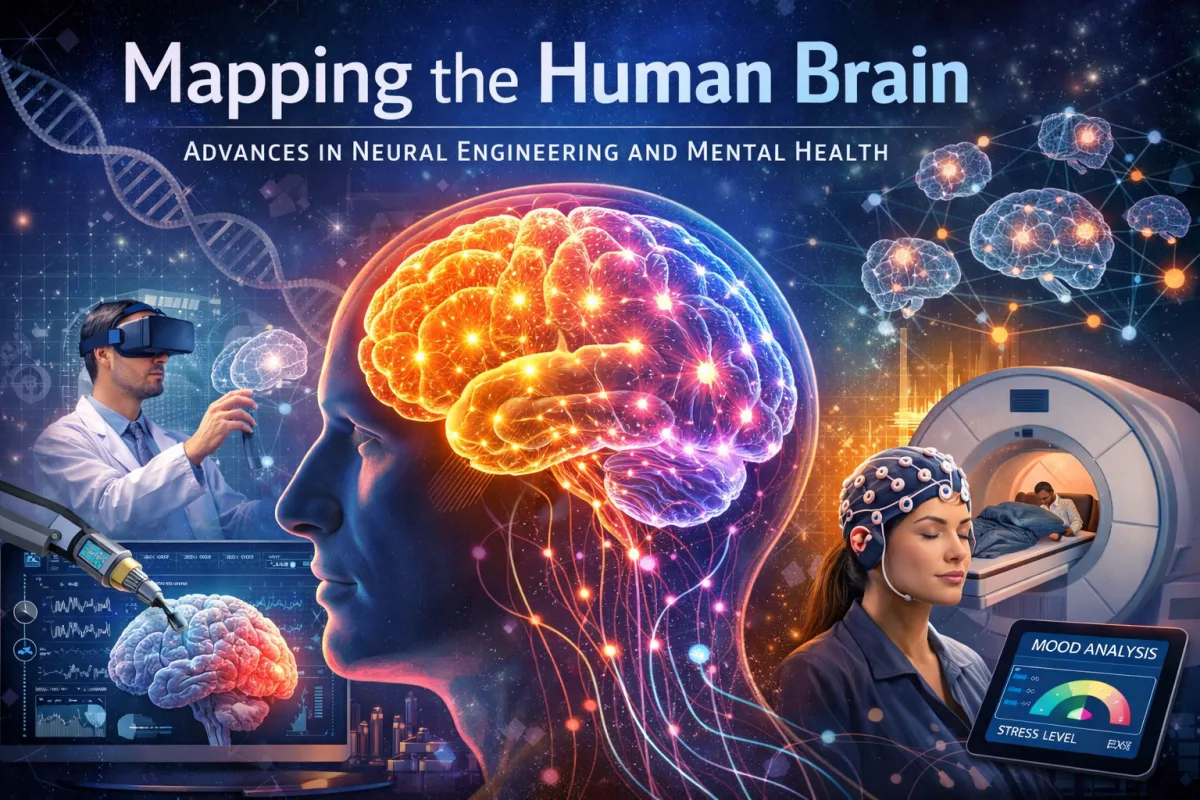
Imagine a world where your deepest thoughts, your unvoiced intentions, or even your internal monologue could be accessed by a machine. It's a concept that's fueled countless science fiction narratives, from dystopian thrillers to utopian fantasies. But is it just fiction? In the rapidly evolving landscape of neuroscience and engineering, the question, "Can machines read your thoughts?" is shifting from speculative to genuinely scientific inquiry.
Researchers today are making incredible strides in understanding the brain's electrical signals. They're developing sophisticated tools that can interpret some aspects of our mental activity, leading to innovations that are already changing lives. We're not talking about a machine broadcasting your inner monologue to the world just yet, but the progress is undeniable and raises profound questions about privacy, identity, and the very nature of human consciousness.
The Dawn of Brain-Computer Interfaces (BCIs)
The foundation of any machine's ability to "read" thoughts lies in Brain-Computer Interfaces, or BCIs. These groundbreaking systems establish a direct communication pathway between the brain and an external device. They bypass traditional motor output, offering a lifeline for individuals with severe paralysis or neurological conditions.
BCIs come in various forms, broadly categorized as invasive or non-invasive. Non-invasive BCIs, like those using electroencephalography (EEG) caps, measure electrical activity from outside the skull. They're safe and easy to use, but their signal resolution is often limited. Invasive BCIs, on the other hand, involve surgically implanting electrodes directly into the brain tissue. This offers far more precise data, allowing for more nuanced control and interpretation.
The applications are astounding. For instance, companies like Neuralink have demonstrated their BCI technology in human patients. Their first human trial participant, Noland Arbaugh, paralyzed from the neck down, publicly showcased his ability to play chess on a computer using only his thoughts. He controls the cursor simply by intending to move it, thanks to a small implant in his brain that translates neural signals into digital commands. This isn't reading his specific chess strategy, but rather his motor intentions to move the cursor.
Decoding Brain Activity: Intentions, Not Inner Monologues
When we ask if machines can read your thoughts, we need to clarify what "thoughts" actually means. It's not about machines translating your exact internal sentences or abstract philosophical musings. Instead, current BCI technology excels at decoding specific types of brain activity related to intentions, motor commands, and sometimes even visual imagery.
Scientists employ various techniques to capture this neural data. Functional magnetic resonance imaging (fMRI) detects changes in blood flow associated with brain activity, offering high spatial resolution. Electroencephalography (EEG) measures electrical impulses on the scalp, providing excellent temporal resolution. Electrocorticography (ECoG), an invasive technique, involves placing electrodes directly on the brain's surface, capturing signals with superior clarity and detail.
Recent breakthroughs show incredible promise in this area. Researchers at Stanford University, for example, have developed a BCI that decodes imagined handwriting. A participant, paralyzed and unable to speak, imagined writing individual letters, and the system translated those neural signals into text on a screen with remarkable accuracy, achieving speeds of up to 90 characters per minute. This isn't mind-reading in the traditional sense, but it is a sophisticated interpretation of the brain's electrical patterns associated with a specific, complex motor intention.
The Brain's Language Isn't English (Yet)
It's crucial to understand that your brain doesn't store thoughts as neat, grammatical sentences. Instead, it operates through complex networks of neurons firing electrical impulses and releasing chemical neurotransmitters. A thought, in essence, is a transient pattern of activity across these networks. Translating these intricate, dynamic patterns into coherent, understandable language is an enormous challenge.
Current systems primarily identify correlations between specific neural patterns and known outputs – like moving a prosthetic arm or selecting a letter. They learn to recognize the "signature" of an intention. The deeper, more abstract aspects of human thought, such as introspection, creativity, or philosophical reasoning, remain far beyond the reach of present-day technology. We're still grappling with the fundamental neural code that underpins such complex cognitive processes.
Ethical Labyrinths: Who Owns Your Mental Privacy?
As the ability to decode brain activity advances, so do the ethical considerations. The prospect of machines reading your thoughts, even in a limited capacity, opens a Pandora's Box of questions about mental privacy, autonomy, and potential misuse. Who owns the data generated by your brain? What protections exist against unauthorized access or even manipulation of neural information?
Neuroethicists are already advocating for "neurorights," a new category of human rights aimed at protecting the brain and its activity. These proposed rights include mental privacy, cognitive liberty (the right to make one's own decisions without external interference), and protection from algorithmic bias that might arise from interpreting brain data. The commercialization of BCI technology, especially non-invasive wearables that could collect data about your attention, mood, or engagement, raises urgent concerns. Imagine a future where advertisers or employers could subtly influence your decisions based on real-time neural feedback.
There's also the potential for surveillance. If governments or corporations could access and interpret your neural data, it would represent an unprecedented invasion of personal freedom. Establishing robust legal and ethical frameworks now is paramount, ensuring that these powerful technologies serve humanity's best interests, not its exploitation.
The Road Ahead: Advancing Thought Decoding
The future of thought decoding promises even more sophisticated capabilities. Researchers are constantly refining electrode design for better signal fidelity and developing less invasive methods that offer higher resolution. Machine learning and artificial intelligence play a pivotal role, becoming increasingly adept at identifying subtle patterns in vast amounts of neural data, which might otherwise be missed by human analysis.
Future BCIs might not only decode intentions but also reconstruct visual scenes you're imagining or even facilitate direct, brain-to-brain communication, though that's still largely speculative. The potential for treating neurological disorders like depression, Parkinson's disease, or epilepsy through targeted neural modulation is also immense. We're also seeing early explorations into cognitive enhancement, where BCIs could potentially boost memory or learning capabilities.
However, significant challenges remain. The brain's signals are incredibly noisy and vary considerably from person to person, and even within the same person over time. Building robust, reliable, and universally applicable decoding algorithms requires overcoming these hurdles. Developing clear ethical guidelines and regulatory oversight must also keep pace with technological advancements, ensuring responsible innovation.
What This Means For You: Navigating the Neural Frontier
Here's the practical takeaway: you don't need to worry about a machine broadcasting your deepest, darkest secrets tomorrow. The kind of "mind-reading" we see in science fiction – where entire, complex thoughts are plucked from your consciousness – remains firmly in the realm of fiction for the foreseeable future. Our understanding of the brain is simply not that advanced yet, and the technology isn't capable of such granular interpretation.
However, brain-computer interfaces are already a reality, transforming the lives of individuals with severe disabilities by restoring communication and mobility. They're not reading your thoughts, but they are interpreting your intentions and motor commands. This technology will become more prevalent, and it will likely extend beyond medical applications into consumer devices that interact with your brain activity in subtle ways.
It's vital for you to stay informed about these developments. Understand the difference between decoding motor intent and reading complex thoughts. Be aware of the data privacy implications of any device that interacts with your neural activity, just as you would with your personal data online. We're on the cusp of an era where the lines between mind and machine blur, and active public discourse on the ethics of this frontier is more important than ever.
The journey into understanding and interacting with the human brain is one of humanity's most profound scientific endeavors. While machines aren't truly reading your thoughts in the way we've long imagined, they are increasingly capable of interpreting specific aspects of your mental activity. This capability offers incredible potential for healing and empowerment, but it also demands a careful, ethically guided approach. The future isn't about whether machines can read your thoughts, but how we, as a society, choose to define and protect the sanctity of our inner worlds as this technology evolves.