My Journey with the Canon Rebel T7: From Smartphone to "Serious" Photography
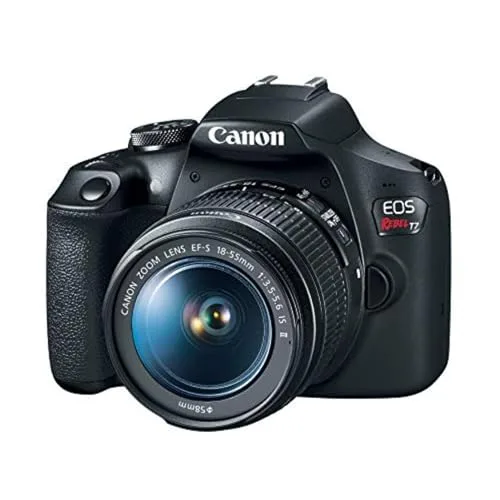
For years, my phone was my go-to camera. Like many, I just assumed it was "good enough." But I started seeing incredible photos online and felt that itch to create something more. That's what led me to the Canon Rebel T7, specifically the kit with the 18-55mm lens. It’s often touted as the perfect beginner DSLR, and I figured, why not dive in? I’ve spent the last few months really putting it through its paces, from family gatherings to landscape attempts, and I've got some honest thoughts.
If you're wondering if this is the right camera for you, especially if you're coming from a smartphone or compact point-and-shoot, stick around. I’ll break down what I loved, what frustrated me, and who I think this camera is really for. You can check today's price if you're curious.
Image Quality: A Step Up, But Don't Expect Miracles
Right out of the box, the difference from my phone was noticeable. The 24.1 Megapixel APS-C sensor definitely delivers sharper, more detailed images, especially in good lighting. Colors are vibrant and, well, very "Canon"—pleasing to the eye without being oversaturated. I found myself really enjoying the depth of field I could achieve with the 18-55mm kit lens, blurring backgrounds in portraits in a way my phone just couldn't. It really made my subjects pop.
However, when the light starts to dim, the T7 struggles a bit. High ISO settings (anything above 1600, really) introduce noticeable noise. It’s not terrible for casual sharing, but if you plan on printing large or pixel-peeping, you'll see it. This is where more advanced cameras really pull ahead, but for the price, it’s a fair trade-off.
Ease of Use & Controls: Beginner-Friendly for Sure
This is where the Rebel T7 shines for newcomers. Canon has done a fantastic job of making a DSLR approachable. The "Scene Intelligent Auto" mode actually works quite well for point-and-shoot situations, letting you focus on composition. But the real magic happens when you start exploring the manual controls. The mode dial is clear, and the buttons are laid out logically. I spent a lot of time in "Aperture Priority" (Av) and "Shutter Priority" (Tv) modes, learning how to manipulate depth of field and motion blur. The camera's built-in "Feature Guide" is genuinely helpful, explaining what each setting does as you select it. I really appreciated that learning curve assist.
The optical viewfinder is bright enough, though it only covers about 95% of the frame, which means you sometimes get a surprise in your final image that you didn't see through the viewfinder. It's a small gripe, but something I noticed after a few weeks.
Video Capabilities: Functional, Not Flashy
If you're buying this camera primarily for video, temper your expectations. It shoots Full HD (1080p) at up to 30fps. The quality is decent for casual home videos or basic vlogging, but it lacks 4K and advanced features like mic input or headphone jacks. The autofocus in Live View (when shooting video or using the LCD screen) is also quite slow and clunky. It hunts a lot, making smooth focus transitions difficult. For quick clips, it's fine, but serious videographers will want to skip this one.
Connectivity: A Little Slow, But Handy
The built-in Wi-Fi and NFC are a nice touch, especially for someone like me who loves to share photos instantly. Connecting it to my phone via the Canon Camera Connect app was pretty straightforward after the initial setup. Transferring photos is a breeze, and you can even use your phone as a remote shutter, which is great for self-portraits or long exposures. However, it's not the fastest connection, and sometimes it drops, requiring a reconnect. Still, it’s a feature I used often.
Build Quality & Ergonomics: Lightweight, Mostly Plastic
The T7 feels lightweight, which is both a pro and a con. It’s easy to carry around all day, but the mostly plastic construction doesn't scream "premium." The grip is comfortable in my hands, which aren't particularly large, and all the essential buttons are within easy reach. It feels solid enough for everyday use, but I wouldn't want to drop it. The screen is fixed, by the way—no articulating or touch functionality, which is a definite miss in this day and age, especially for low-angle shots or vlogging attempts.
Battery Life: Pretty Good for Day-to-Day
I was pleasantly surprised by the battery life. I could easily get through a full day of casual shooting, snapping a few hundred photos, without needing a recharge. If you’re doing a lot of Live View shooting or video, it’ll drain faster, but for stills using the viewfinder, it holds up well. I usually toss an extra battery in my bag, but with the T7, I rarely needed it unless I was on a multi-day trip.
What I Loved About the Canon Rebel T7
- Great Entry Point: Seriously, if you're new to DSLRs, this camera makes learning fun and accessible.
- Image Quality Upgrade: Compared to a phone, the jump in detail, color, and depth of field is significant.
- Intuitive Controls: Canon's layout is user-friendly, and the guide mode is a lifesaver.
- Canon Ecosystem: Access to a vast array of Canon lenses and accessories as you grow.
- Decent Battery Life: One less thing to worry about during a day out.
What Annoyed Me (The Cons)
- Fixed LCD Screen: Not being able to articulate or touch the screen feels very outdated.
- Slow Live View Autofocus: Trying to focus through the screen, especially for video, is a pain.
- No Mic Input: A big drawback if you have any aspirations for better audio in your videos.
- Limited Low Light Performance: Noise becomes noticeable at higher ISOs.
- No 4K Video: Not a dealbreaker for everyone, but something to be aware of.
- Basic Viewfinder: Only 95% coverage means you sometimes get unexpected edges in your shots.
Who Should Buy This?
The Canon Rebel T7 is absolutely perfect for the absolute beginner photographer. If you're tired of your smartphone photos and want to take your first real step into interchangeable lens photography without breaking the bank, this is a fantastic option. It's a great camera to learn the fundamentals of aperture, shutter speed, and ISO. If you want a camera for family photos, vacations, or just to explore a new hobby, and you want to grab it on Amazon, I’d say go for it.
Who Should Skip It?
If you're already an experienced photographer, you'll likely find the T7 too limiting. If video is a priority, especially 4K, or if you need advanced autofocus and an articulating screen, this isn't the camera for you. Also, if you plan on shooting a lot in low-light conditions without investing in a fast lens, you might be disappointed. Look at mirrorless alternatives or higher-end DSLRs if those features are crucial. And if you're expecting something revolutionary in terms of speed or advanced tech, the T7, being an older model, simply won't deliver. If any of these sound like you, you might want to consider something else before you pick one up here.
Final Thoughts
The Canon Rebel T7 isn't a groundbreaking camera, but it doesn't try to be. It's a reliable, user-friendly entry-level DSLR that delivers good image quality for its price point. It served its purpose for me beautifully, teaching me the basics and getting me excited about photography beyond auto mode. It’s a solid stepping stone, a camera that will help you grow without overwhelming you. Just be aware of its limitations, especially concerning video and screen functionality, and you’ll likely be very happy with your purchase. It's a fantastic first "real" camera.