The Cloud's New Horizon: Maturity, Nuance, and a Dose of Reality
Remember the early 2010s? The cloud was a revolution, a promised land of infinite scalability, zero infrastructure, and endless innovation. Companies rushed headlong into public cloud migration, driven by the siren song of agility and a perceived escape from the shackles of on-premise data centers. The mantra was simple: "cloud-first." But a decade and a half on, the skies aren't quite so uniformly clear. The cloud's adolescence has passed, and we're watching it grow into a complex, sometimes challenging, but undeniably essential adult.
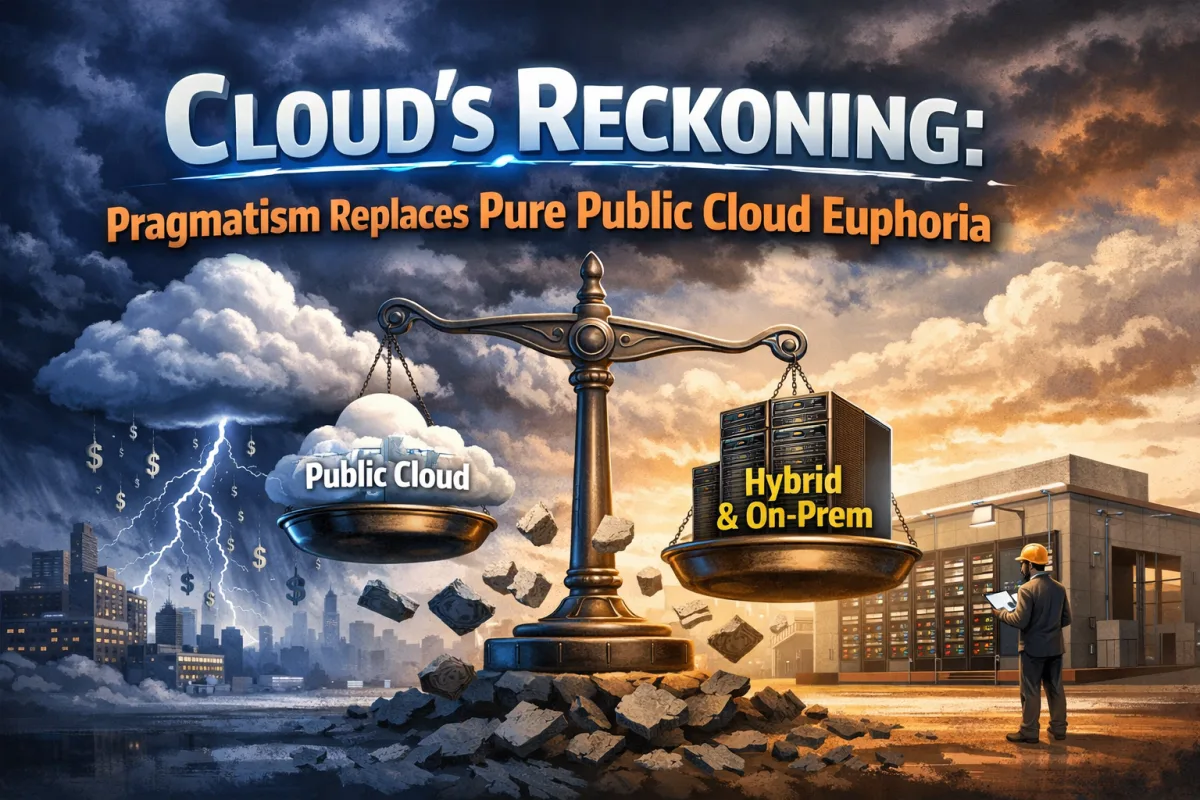
That initial euphoria? It’s giving way to a much more pragmatic, often sobering, reality. Companies aren't just asking "should we go to the cloud?" anymore. They're grappling with far more nuanced questions: "Which cloud? How many clouds? At what cost? How do we manage the sprawling complexity? And what about the planet?" The trends emerging now signal a powerful shift from simple adoption to strategic optimization, from unbridled enthusiasm to calculated deployment.
The Multi-Cloud Imperative: A Strategic Act, Not Just a Compromise
The days of pledging allegiance to a single public cloud provider are, for many enterprises, a relic of a simpler time. Today, multi-cloud isn't just a buzzword; it's a strategic imperative. Why tether your entire digital future to one vendor, however robust, when diverse needs demand diverse solutions? Businesses realize they need flexibility to avoid vendor lock-in, meet specific regulatory compliance in different jurisdictions, and leverage best-of-breed services from various providers.
Consider a global financial institution. It might use AWS for its core data analytics due to superior AI/ML capabilities, Azure for its seamless integration with existing Microsoft enterprise tools, and Google Cloud for specialized data warehousing. This isn't indecision; it’s intelligent diversification. It’s about building resilience, optimizing costs by playing providers against each other, and ensuring the right workload runs on the right infrastructure.
Hybrid Cloud: The Unsung Hero of Enterprise Transformation
While multi-cloud grabs headlines, let's not overlook the quiet power of hybrid cloud. For many established enterprises, a full public cloud migration simply isn't feasible, or even desirable. Legacy systems, stringent data sovereignty requirements, and immense capital investments in existing infrastructure mean a complete rip-and-replace strategy often makes no business sense. Hybrid cloud bridges that gap, allowing organizations to seamlessly integrate their on-premise environments with public cloud resources.
This approach gives companies the agility of the public cloud for new applications and burstable workloads, while keeping sensitive data and critical legacy systems securely within their own data centers. It's a pragmatic pathway to digital transformation, ensuring continuity while embracing innovation. We’re seeing a significant investment in technologies like Kubernetes and serverless frameworks that abstract away the underlying infrastructure, making it easier to move workloads between environments – whether that's public cloud, private cloud, or at the edge.
The Edge: Where Data is Born, and Decisions are Made
The cloud's gravitational pull is undeniable, but it can't be everywhere at once. Enter edge computing – a trend rapidly gaining momentum as the physical and digital worlds increasingly intertwine. With the proliferation of IoT devices, smart factories, autonomous vehicles, and real-time analytics, processing data at its source, rather than sending it all the way to a centralized cloud data center, has become critical.
Imagine a smart factory floor. Sending every byte of sensor data to the cloud for analysis introduces latency, eats bandwidth, and risks operational delays. Processing that data at the edge – right on the factory floor – allows for immediate anomaly detection, predictive maintenance, and robotic control. The cloud then serves as a central repository for aggregated data, long-term analytics, and AI model training. The edge isn't replacing the cloud; it's extending its reach, creating a distributed computing fabric that's far more responsive and efficient.
The Cost Conundrum: Cloud Bills and the Rise of FinOps
The promise of cost savings was a major driver for early cloud adoption. Many companies, however, discovered a harsh truth: without careful management, cloud bills can skyrocket. The pay-as-you-go model, while flexible, can become a financial black hole if resources are provisioned inefficiently, left running unnecessarily, or if organizations lack visibility into their consumption patterns.
This challenge has given rise to FinOps – a cultural practice that brings financial accountability to the variable spend model of cloud. It’s about empowering engineering and finance teams to make data-driven decisions on cloud spend, optimizing costs without sacrificing performance or innovation. We're talking about right-sizing instances, leveraging reserved instances and spot markets, and relentlessly monitoring usage. A company like "InnovateCorp" might initially save 20% by moving to the cloud, only to see its bill double within two years as developers spun up resources unchecked. FinOps helps them regain control, treating cloud spend with the same rigor as any other operational expense.
The Green Cloud: A Non-Negotiable Future
As the digital economy expands, so does its environmental footprint. Cloud data centers consume vast amounts of electricity, and the need for sustainable cloud practices is no longer a niche concern; it's a moral and business imperative. Customers, investors, and regulators are increasingly demanding transparency and action on environmental impact.
Cloud providers are responding, investing heavily in renewable energy, more efficient cooling systems, and optimized hardware. But the responsibility doesn't solely rest with them. Organizations using the cloud must also play their part. This means designing applications for efficiency, optimizing resource utilization, and choosing regions powered by greener energy sources. The future of cloud computing isn't just about performance and cost; it's about minimizing our collective impact on the planet. Can we truly innovate if we're ignoring our environmental debt?
Platform Engineering: Empowering the Builders
Managing the complexity of multi-cloud, hybrid environments, and the edge requires more than just skilled engineers; it demands streamlined processes and developer-friendly tooling. This is where platform engineering shines. Companies are realizing that asking every developer to be an expert in Kubernetes, Terraform, specific cloud APIs, and security protocols is unrealistic and inefficient.
Platform engineering teams build and maintain internal developer platforms (IDPs) that abstract away much of this underlying complexity. They provide self-service tools, standardized environments, and automated pipelines, allowing developers to focus on writing code and delivering business value, rather than wrestling with infrastructure. This trend is crucial for scaling cloud adoption effectively, reducing friction, and accelerating innovation in an increasingly distributed and complex landscape.
A More Mature, More Demanding Cloud Era
The cloud is no longer a distant destination; it's the very fabric of modern business. But this isn't the simple, single-vendor cloud of yesteryear. We’re navigating a more mature, distributed, and demanding era. It requires strategic foresight, operational discipline, financial acumen, and a deep commitment to sustainability. The future of cloud computing isn't about running in the cloud; it’s about running your business with the cloud, intelligently and deliberately. Are you ready for the journey?