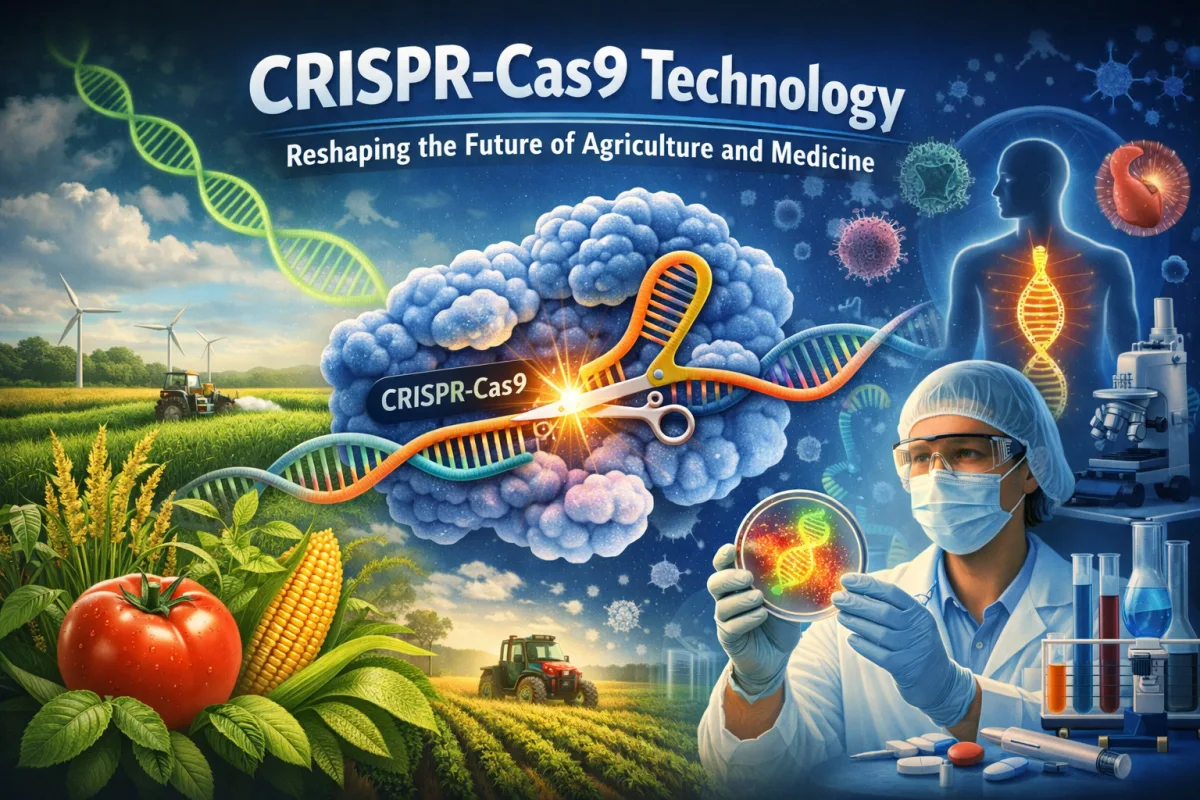
A quiet revolution is underway, one that promises to fundamentally alter how we approach health, food, and even the very fabric of life. At its core is CRISPR-Cas9 technology, a tool so precise and powerful it has been likened to a molecular scalpel capable of editing DNA with unprecedented accuracy. This isn't just another scientific advancement; it's a paradigm shift, reshaping the future of agriculture and medicine in ways we're only just beginning to comprehend.
For decades, the idea of correcting genetic errors or engineering crops to withstand blight seemed like distant dreams. Now, CRISPR makes these possibilities tangible, bringing hope for solutions to some of humanity's most persistent challenges. We're talking about a tool that could eradicate inherited diseases, create more resilient food systems, and unlock new avenues for sustainable living. It's a thrilling, complex, and sometimes controversial journey, but one that demands our attention.
CRISPR-Cas9 Technology: A Precision Scalpel for DNA
So, what exactly is CRISPR-Cas9, and how does it work? Think of it as a biological cut-and-paste function for genes. Originally discovered as a natural defense mechanism in bacteria against viruses, scientists adapted this system to edit the genomes of other organisms, including plants, animals, and humans.
The "CRISPR" part stands for Clustered Regularly Interspaced Short Palindromic Repeats – essentially, unique DNA sequences that bacteria use to remember past viral invaders. "Cas9" is the enzyme, a molecular scissor that can cut DNA at very specific locations. A guide RNA molecule directs the Cas9 enzyme to the target DNA sequence, ensuring remarkable precision. Once the DNA is cut, cells naturally try to repair the break. Scientists can then introduce new genetic material or simply disable existing genes during this repair process.
This precision is what makes CRISPR so revolutionary. Older gene editing methods were often clunky and imprecise, like trying to fix a watch with a hammer. CRISPR, however, offers surgical accuracy, opening doors that were previously firmly shut.
Reshaping Agriculture with CRISPR Gene Editing
The global food system faces immense pressure. Climate change, pests, diseases, and a growing population demand more resilient and productive crops. This is where CRISPR gene editing steps in, offering powerful solutions to enhance agricultural output and sustainability.
Farmers lose a significant portion of their crops annually to pests and diseases. For instance, the Food and Agriculture Organization of the United Nations (FAO) estimates that up to 40% of global crop production is lost to pests and plant diseases each year. CRISPR can engineer crops to be inherently resistant, reducing the need for chemical pesticides and improving yields. Imagine wheat varieties that shrug off rust fungus or rice immune to bacterial blight – that's the promise.
From Farm to Fork: Real-World CRISPR Applications
- Disease Resistance: Researchers are developing CRISPR-edited potatoes resistant to late blight, a disease responsible for the Irish potato famine, and citrus trees impervious to citrus greening disease, which devastates groves worldwide.
- Enhanced Nutritional Value: We're seeing efforts to boost the vitamin content in staple crops like rice (golden rice 2.0) or to create healthier oils in soybeans. This could combat malnutrition in vulnerable populations.
- Improved Shelf Life and Quality: CRISPR has already produced non-browning mushrooms and apples, reducing food waste and making produce more appealing to consumers. It's also being used to remove allergens from foods, like gluten from wheat, potentially making them safer for sensitive individuals.
- Climate Resilience: Scientists are engineering crops to better withstand drought, heat, and salinity, crucial adaptations as climate change alters growing conditions globally. This means more food security in regions facing environmental stress.
These applications aren't just theoretical; many are in advanced trial stages or even on the market. It's a game-changer for food security and environmental sustainability.
CRISPR's Medical Frontier: Healing at the Genetic Level
Perhaps the most profound potential of CRISPR-Cas9 technology lies in medicine. For those suffering from genetic diseases, this tool offers a glimmer of hope for cures, not just treatments. The World Health Organization estimates that over 10,000 human diseases are known to be caused by single-gene defects.
CRISPR's ability to precisely correct or disable faulty genes means we can target the root cause of these conditions. We're moving beyond managing symptoms to potentially eradicating the disease from the body's cells.
Here's a look at some of the most exciting medical applications:
- Treating Genetic Disorders: Clinical trials are underway for conditions like sickle cell anemia and beta-thalassemia, where CRISPR aims to correct the genetic mutation responsible for the disease. Early results are incredibly promising, with some patients showing significant improvements or even functional cures.
- Fighting Cancer: Researchers are using CRISPR to engineer immune cells (T-cells) to more effectively recognize and destroy cancer cells. This immunotherapy approach holds immense potential for various cancers, including solid tumors that are notoriously difficult to treat.
- Combating Infectious Diseases: CRISPR could be leveraged to target and disable viral DNA in diseases like HIV or herpes, or even to engineer cells to be resistant to viral infection.
- Drug Discovery: By creating precise genetic knockouts or insertions in cell lines, scientists can better understand gene function and identify new drug targets for a wide range of diseases.
The pace of discovery and clinical application in this field is breathtaking. It's a testament to the power of basic science leading to transformative health solutions.
Navigating the Ethical Landscape of CRISPR-Cas9
With great power comes great responsibility, and CRISPR-Cas9 technology is no exception. Its ability to alter the human genome raises significant ethical questions that we, as a society, must address thoughtfully. Where do we draw the line? Is it acceptable to edit genes to cure disease, but not to enhance traits like intelligence or athletic ability?
The most debated aspect involves germline editing – making changes to sperm, eggs, or embryos that would be inherited by future generations. While somatic cell editing (changes that affect only the treated individual) is generally seen as ethically permissible for serious diseases, germline editing enters a more complex moral territory. Concerns about unintended consequences, "designer babies," and exacerbating social inequalities are front and center.
International scientific bodies and ethics committees are working to establish guidelines and foster responsible innovation. Public dialogue, transparent research, and robust regulatory frameworks are crucial to harness CRISPR's potential while safeguarding against misuse.
CRISPR-Cas9: What This Means for Your Future
The impact of CRISPR-Cas9 technology isn't confined to labs and academic papers; it's coming to a farm, a clinic, and potentially even your family. For patients with previously untreatable genetic conditions, it means hope for a cure. For consumers, it could mean more nutritious, affordable, and sustainably grown food. For the planet, it offers tools to build resilience against climate change and reduce environmental impact.
You'll likely see more CRISPR-edited produce in grocery stores, even if you don't realize it. In medicine, while widespread application for common ailments is still years away, the foundational work being done now will pave the way for personalized genetic therapies. It's a shift towards a future where our biology isn't a fixed destiny but a dynamic blueprint we can thoughtfully refine.
The journey with CRISPR-Cas9 technology is just beginning, and it’s one filled with immense promise and profound challenges. We stand at the precipice of a new era, where our ability to precisely edit life's code could solve some of the world's most intractable problems. It's a future where healthier people and a more abundant planet are not just aspirations, but achievable realities, thanks to the tiny, mighty molecular scissors known as CRISPR. We must continue to engage with this technology, understanding its potential, navigating its complexities, and ensuring its responsible development for the benefit of all.