My Honest Take on the Dual-Lens Inspection Camera
As someone who’s always got a project going on around the house or under the hood of my car, I’ve often found myself wishing I had eyes in the back of my head, or at least a tiny camera on a stick. That’s exactly why I decided to pick up this dual-lens inspection camera (ASIN B0CMCSGPJC). I had a persistent slow drain, and rather than blindly snaking it or calling a plumber right away, I wanted to see what was going on. After spending a good few weeks using it for various tasks, I've got some pretty strong opinions.
First Impressions and Setup
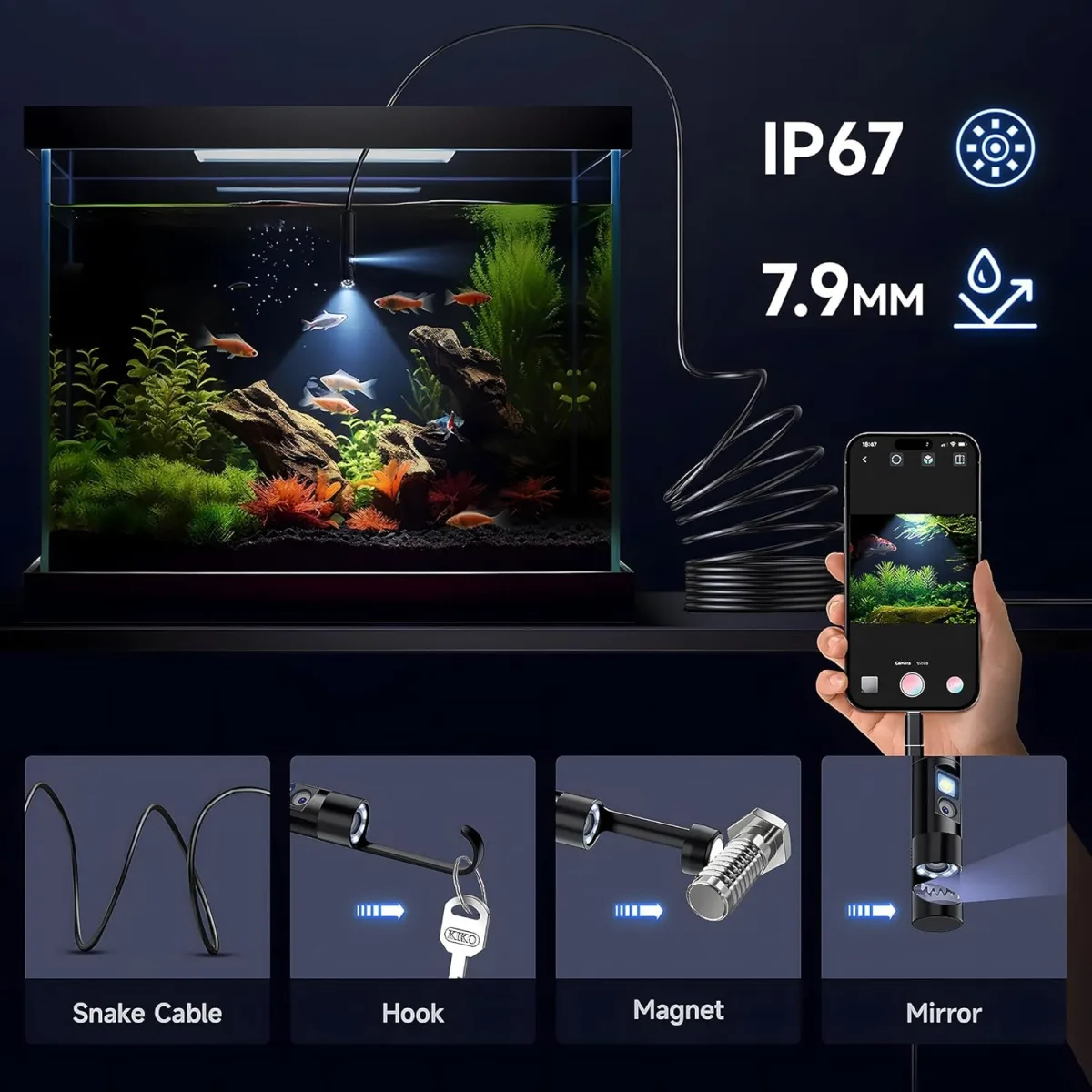
The camera arrived in a no-frills, practical box. Inside, everything was neatly packed: the main display unit, the semi-rigid cable with the dual camera head, a USB-C charging cable, and a small bag of accessories (a magnet, a hook, and a protective cap). Holding the main unit, it felt sturdy enough – not premium, but definitely not flimsy. The screen is a decent size for inspection work, and the buttons are intuitive.
Getting it set up was a breeze. I just charged it up, attached the camera cable, and powered it on. The image popped right up on the screen. No messing with apps on my phone, no Wi-Fi pairing headaches for basic operation, which was a huge relief. However, if you want to record video or snap pictures, you will need to insert a TF card (not included) or connect it to a computer, which I did later for reviewing footage.
Performance in the Wild: What I Used It For
My first mission was that slow drain. I fed the semi-rigid cable down, and immediately, I had a clear picture of the gunk. The adjustable LED lights on the camera head are fantastic; even in the pitch-black drain, I could see everything. What really impressed me was the dual-lens feature. With a press of a button, I could switch between the forward-facing camera and a side-view camera. This meant I didn’t have to twist and turn the cable endlessly to get different angles. I could see the main blockage head-on, then switch to the side to check the pipe walls around it. This alone made the whole process so much faster and less frustrating.
After successfully clearing the drain (turns out it was just a hairball monster), I started looking for other places to use it. I checked behind my dryer for lint buildup, peered into a wall cavity to see if there were any signs of rodents (thankfully, no!), and even used it to inspect some hard-to-reach areas of my car engine for fluid leaks. The 16.5-foot cable was long enough for most of my household needs, reaching deep into pipes and under appliances.
The 1080P resolution is perfectly adequate for inspection. You’re not getting 4K cinematic quality, but for identifying a crack, a dropped screw, or a blockage, it’s plenty clear. The focus range is pretty specific, though. You need to be a certain distance from the object to get a sharp image. Too close or too far, and things get a bit blurry. That's a common trait with these types of cameras, but something to be aware of.
I also tested its waterproof claim by using it in a damp area of my basement and even briefly dunking the camera head in a bucket of water. It held up perfectly fine, so the IP67 rating seems legitimate for the camera end.
If you're curious about the specific features or want to check today's price, I'd recommend taking a look.
The Good (Pros)
- Dual-Lens System: This is a game-changer. Switching between front and side views is incredibly efficient and saves a lot of maneuvering.
- Stand-Alone Display: No need for a phone app to see the live feed. Just turn it on and go. This is a huge convenience.
- Adjustable LED Lights: Essential for dark spaces, and they provide ample illumination.
- Semi-Rigid Cable: It holds its shape well enough to push it into tight spots without it just flopping around, but still flexible enough to navigate bends.
- Waterproof Camera Head (IP67): Great for plumbing or damp environments.
- Useful Accessories: The magnet attachment came in handy for retrieving a dropped washer from a tight spot. The hook could be useful too.
- Decent Battery Life: I got a couple of hours of intermittent use on a single charge, which is usually enough for most of my DIY tasks.
The Not-So-Good (Cons)
- Focus Range: As mentioned, it has a fairly narrow sweet spot for focus. You have to be mindful of your distance to the object.
- Cable Stiffness: While "semi-rigid," for very long pushes or complex turns, I sometimes wished it was a tad stiffer for more precise control. It can get a bit floppy at full extension.
- No Built-in Storage: You’ll need a TF card if you want to record video or take photos. It’s not a huge deal, but something to remember.
- Screen Resolution: The screen on the unit itself is good for inspection, but don't expect retina display quality. It's functional.
Who Should Buy This
If you're a homeowner, a DIY enthusiast, or someone who likes to tackle minor car repairs, this inspection camera is a solid investment. It’s fantastic for:
- Checking clogged drains or pipes.
- Inspecting behind appliances or inside walls for wiring, pests, or insulation issues.
- Looking into engine bays or other vehicle crevices for leaks, dropped bolts, or routing cables.
- Retrieving small dropped items from hard-to-reach places (thanks to the magnet attachment!).
It’s really about saving time, frustration, and potentially money by diagnosing problems yourself before calling a professional. If that sounds like you, then you might want to grab it on Amazon.
Who Should Skip It
If you’re a professional who needs an industrial-grade tool with ultra-high resolution, perfect clarity at all distances, or incredibly long battery life for all-day continuous use, this might not be robust enough for your daily grind. Also, if you know you’ll only ever use an inspection camera once for a very simple job and can easily borrow one, you probably don't need to purchase your own.
Final Thoughts
Overall, I'm genuinely impressed with this dual-lens inspection camera. For its price point, it delivers excellent functionality, especially with that incredibly useful dual-lens setup. It’s saved me a good deal of time and guesswork on several projects already. It’s one of those tools you don't think you need until you have it, and then you wonder how you lived without it.
It's a solid tool for the average DIYer or homeowner, and I’d recommend it. If you're looking for a reliable way to get eyes into those impossible-to-reach spots, you can pick one up here.