FosPower NOAA Emergency Weather Radio A1: A Real-World Test
Living in an area prone to unpredictable weather, I’ve always been a bit of a preparedness enthusiast. When the power goes out, my phone battery is often the first casualty, and relying solely on cell service for critical updates feels risky. That's why I decided to invest in the FosPower NOAA Emergency Weather Radio A1, hoping it would be the reliable lifeline it claimed to be. After several weeks of testing it through simulated outages and actual camping trips, I've got some honest thoughts to share.
First Impressions & Build Quality
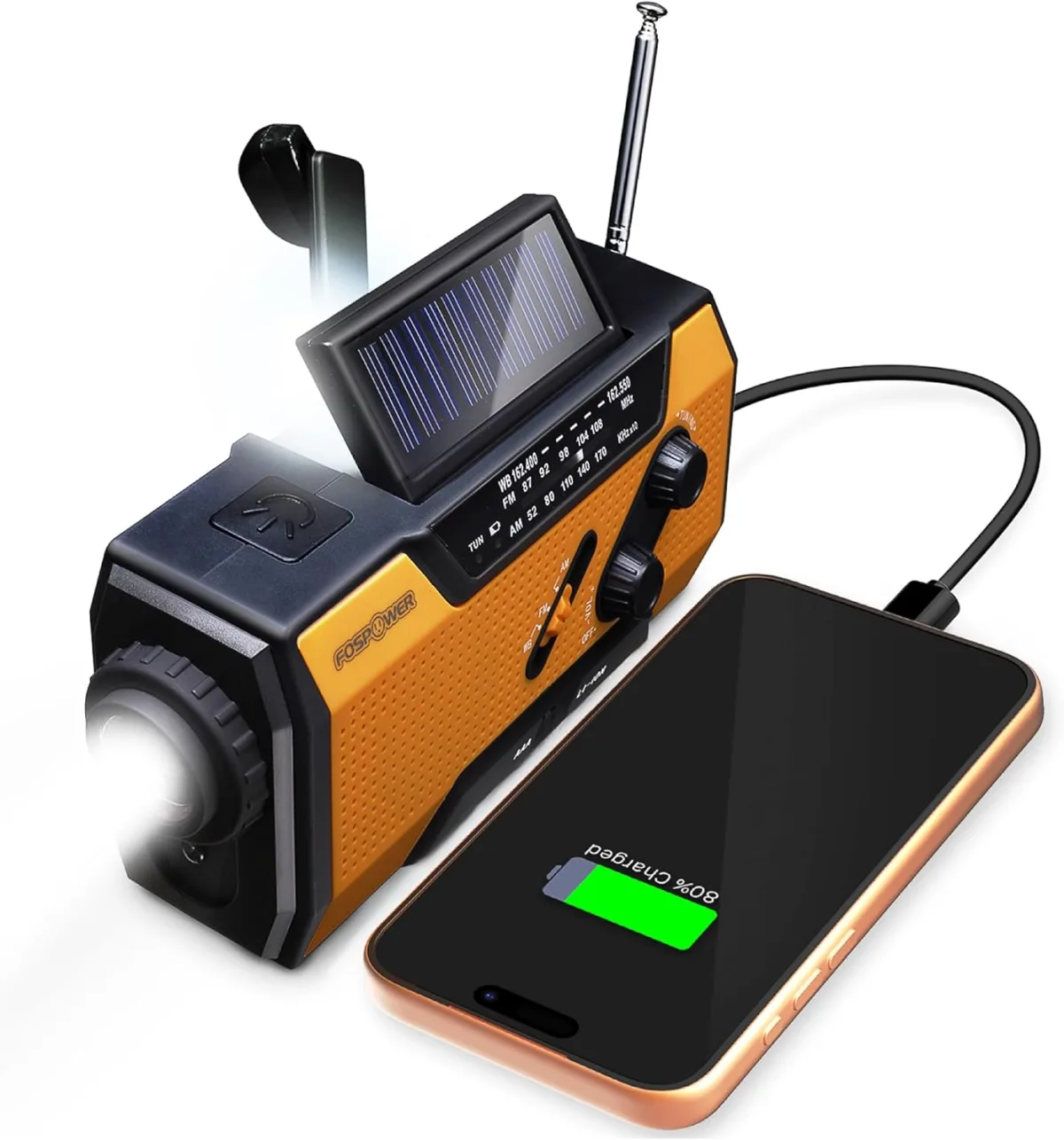
Out of the box, the first thing I noticed was its vibrant orange color. It's definitely not going to get lost in the dark, which is a huge plus in an emergency. It feels solid in the hand, not flimsy or cheap like some budget electronics. The plastic housing seems durable enough to take a few bumps, and the crank handle folds away neatly. It's got a decent heft to it, suggesting there’s some real battery capacity inside, but it’s still perfectly portable. I wouldn't call it ultra-light, but it's not a brick either.
Core Features and My Experience
NOAA Weather Alerts: A Real Lifesaver
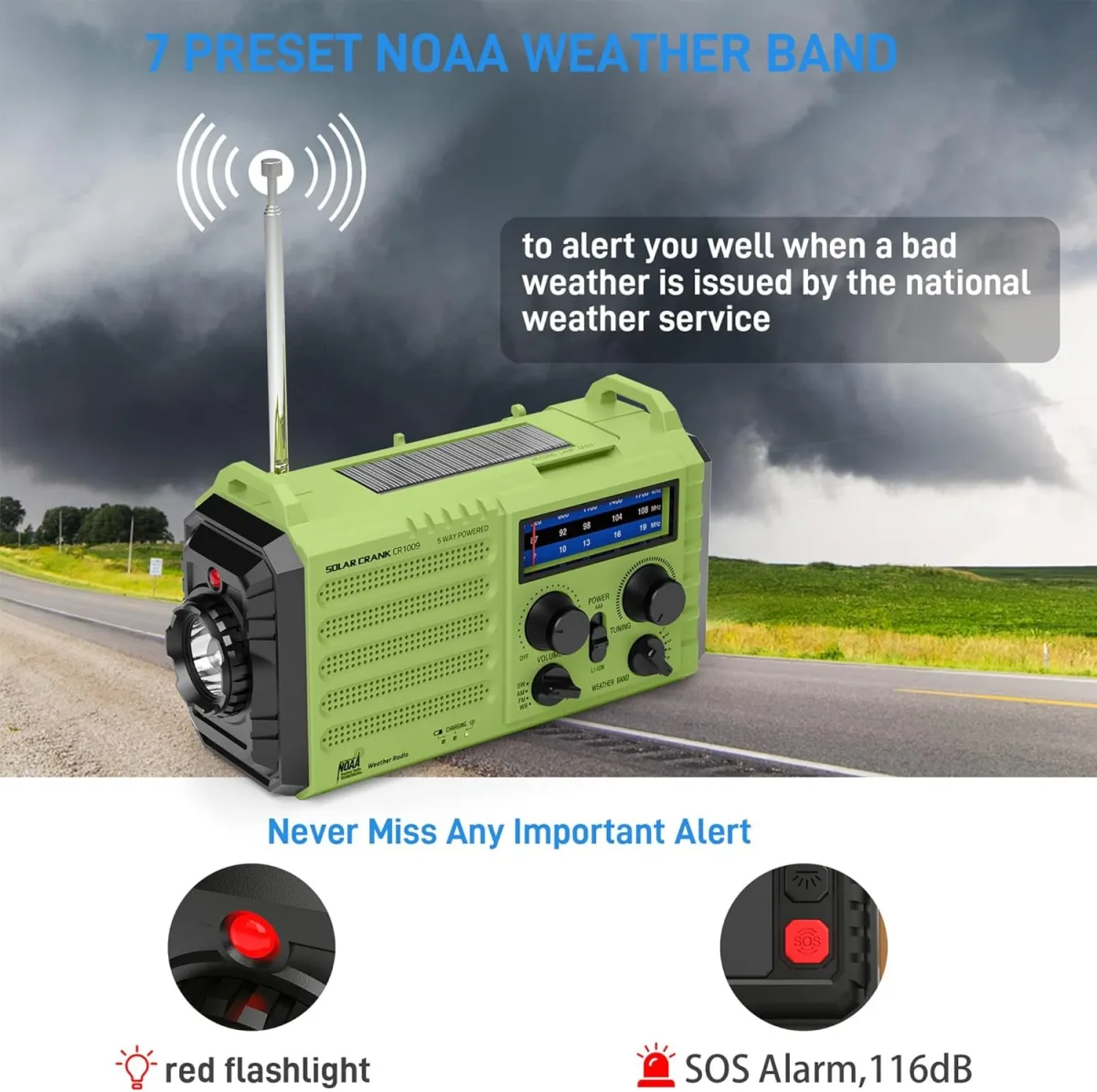
This is arguably the most critical feature, and I'm happy to report it works very well. I live in an area with a strong NOAA signal, and the FosPower A1 picked it up clearly. During a recent thunderstorm, I intentionally left it on NOAA mode, and it blared to life with a loud, clear warning just as the storm was intensifying. The alert tone is piercing enough to grab your attention, even if you’re asleep. Having that direct, uninhibited weather information is truly invaluable.
AM/FM Radio: Good Enough for Emergencies
The AM/FM tuner is straightforward. I found the reception to be quite good for local stations, even with the antenna not fully extended. The sound quality isn't going to win any awards – it's a mono speaker, after all – but it's perfectly clear for listening to news, talk radio, or just some background music to keep spirits up. It's not for audiophiles, but it absolutely serves its purpose for communication and basic entertainment.
7400mWh Portable Power Bank: Decent Juice for Phones
The integrated power bank was a big selling point for me. With 7400mWh (which translates to about 7.4Ah at 1V, or roughly 2000mAh at 3.7V for a typical phone battery, though it’s rated at 7400mWh 3.7V), it's not going to fully charge multiple modern smartphones from zero. However, I found it reliably gave my iPhone 13 Pro about a 40-50% charge, which is enough to make urgent calls, send texts, or check critical information during an outage. For older phones or just topping off, it’s even better. It’s certainly enough to get you through a rough patch, and that's precisely what it's for.
Multiple Charging Options: Versatility is Key
- USB Charging: This is the easiest and fastest way to fully charge the radio's internal battery. I just plugged it into a wall adapter like my phone. It takes a few hours to go from empty to full.
- Solar Panel: Ah, the solar panel. This is where expectations need to be managed. The small panel on top is great for *maintaining* a charge or for extremely slow, trickle charging over many, many hours of direct sunlight. Don't expect it to rapidly charge your phone or even the radio itself from empty. I left it outside for a full sunny day, and it barely moved the battery indicator. Think of it as a last resort or for keeping it topped off during a multi-day camping trip, not as a primary charging method.
- Hand Crank: This is the classic emergency feature, and it works as advertised, but it's a workout! Cranking for about 5 minutes will give you enough juice for a few minutes of radio or a quick emergency call. If you need a significant charge, be prepared for a serious arm exercise. It's good to know it's there, though, for when all else fails.
SOS Alarm & Flashlight: Practical Additions
The flashlight is surprisingly bright for its size. It’s a single LED, but it casts a strong, focused beam that's perfectly adequate for navigating a dark room, finding something in your bag, or signaling. The SOS alarm is LOUD. It's a piercing siren combined with the flashing light, and it’s definitely designed to attract attention. I hope I never have to use it, but it’s reassuring to know it’s there.
What I Liked (Pros)
- Reliable NOAA Alerts: This is its strongest suit. Clear, loud, and dependable.
- Multiple Charging Options: While some are slow, having USB, solar, and hand crank options means you're never truly without power.
- Sturdy Build: Feels durable and ready for emergency situations.
- Bright Flashlight & Loud SOS: Great for visibility and signaling.
- Portable & Visible: Easy to carry and hard to lose thanks to its bright orange.
What I Didn't Like (Cons)
- Slow Solar Charging: Don't buy this expecting quick solar recharges. It's a trickle charger at best.
- Hand Crank Effort: Generating a significant charge requires considerable effort. It’s not a casual activity.
- Power Bank Capacity: While useful, 7400mWh isn't huge by today's smartphone standards. It's for critical use, not everyday charging.
- Audio Quality: Fine for news, but don't expect rich sound for music.
Who Should Buy This?
If you're looking for peace of mind during power outages, severe weather, or outdoor adventures, this radio is an excellent choice. It's ideal for:
- Homeowners: Especially those in storm-prone regions.
- Preppers/Emergency Kits: An essential component for any bug-out bag or emergency supply.
- Campers/Hikers: Provides essential communication, light, and a backup charge for your phone when off-grid.
- Anyone without reliable power: If you live in an area with frequent outages, this is a must-have.
If this sounds like you, I highly recommend you grab it on Amazon and add it to your gear.
Who Should Skip It?
This isn't for everyone. You might want to skip this if:
- You need a primary power bank: Look for dedicated power banks with larger capacities and faster charging.
- You want high-fidelity audio: This is a utility radio, not a boombox.
- You expect quick solar charging: You'll be disappointed.
- You're an ultra-light backpacker: While not massive, its weight might be a concern for minimalist setups.
Final Verdict
The FosPower NOAA Emergency Weather Radio A1 delivers on its core promise: reliable emergency communication and basic power in a pinch. It’s not perfect, especially concerning the speed of its alternative charging methods, but for what it sets out to do, it does it well. I feel much more confident heading into storm season with this in my emergency kit. It’s a solid, practical device that earns its place as a crucial tool for preparedness. If you're considering one, I'd say it's a worthwhile investment. You can check today's price and see if it fits your budget. It’s one of those items you hope you never truly need, but you'll be incredibly glad you have it if you do. I certainly am. If you're still on the fence, you can always see what others paid and read more reviews directly on Amazon.