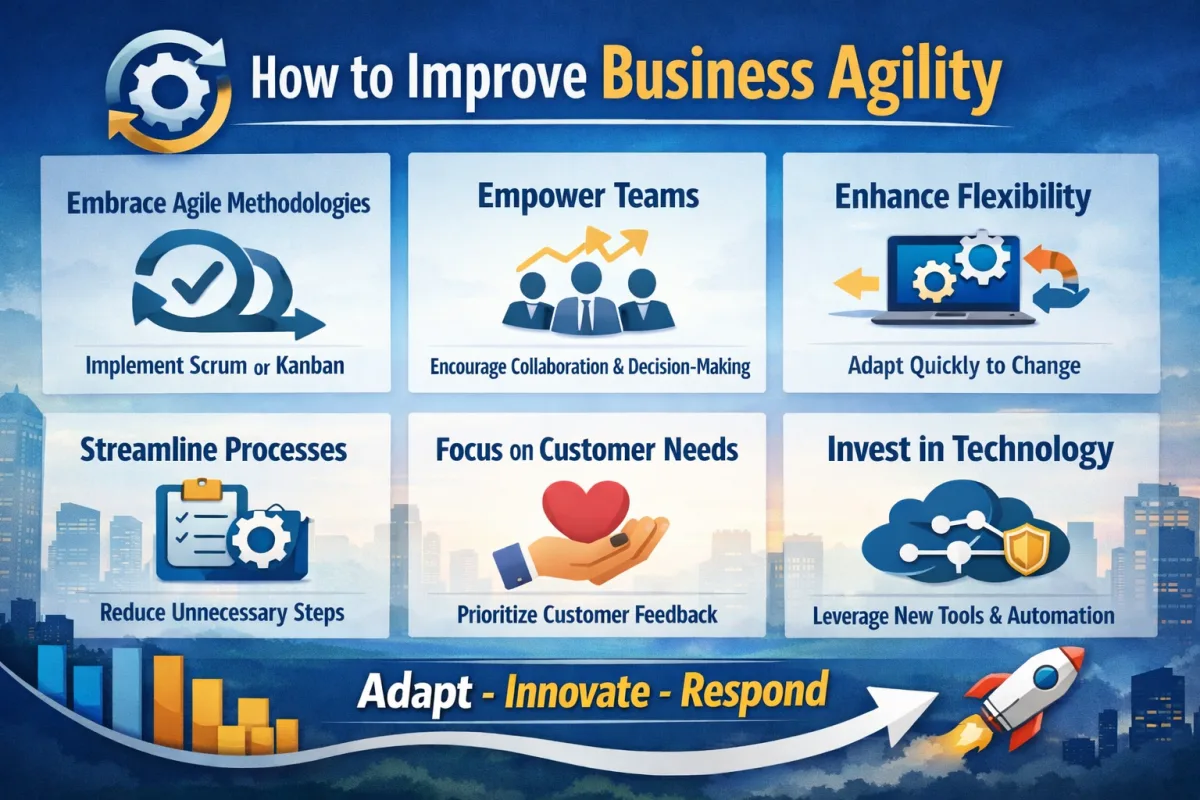
The speed of business today isn't just fast; it's relentless. Markets shift overnight, technology evolves at warp speed, and customer expectations are a moving target. In this environment, standing still means falling behind. That's why every forward-thinking leader is asking: how to improve business agility? It's no longer a nice-to-have; it's the bedrock of survival and growth. Your organization's ability to pivot quickly, respond to disruption, and innovate on the fly determines its future.
Understanding the Imperative for Agility
The concept of business agility isn't new, but its urgency has never been higher. It describes an organization's capacity to adapt quickly to changes in the market, whether those are new competitors, technological breakthroughs, or evolving customer demands. Think about it: remember Blockbuster's reign? They famously dismissed Netflix's subscription model, clinging to their brick-and-mortar video stores. That lack of foresight and willingness to adapt ultimately sealed their fate, while Netflix became a streaming giant.
This isn't just about avoiding failure; it's about seizing opportunities before they even fully materialize. A recent survey by Accenture found that 88% of executives believe their industry is changing faster than ever before. If you're not building the muscles to respond, you're leaving your success to chance. Agility ensures you can not only weather storms but also capitalize on emerging trends, turning potential threats into growth opportunities.
Cultivating an Agile Mindset and Culture
Agility isn't a methodology you can simply install; it's a deep-seated cultural shift. It starts with a mindset that embraces change, values continuous learning, and prioritizes rapid experimentation over rigid long-term planning. Leaders must champion this shift, fostering an environment where failure is seen as a learning opportunity, not a career-ending mistake. You'll want to move away from hierarchical command-and-control structures towards a more collaborative, empowered model. This means trusting your teams and giving them the autonomy to make decisions closer to the problem.
Empowering Teams and Decentralizing Decisions
True agility flourishes when decision-making power is distributed throughout the organization, not bottlenecked at the top. Empowered teams, often cross-functional, can react to challenges and opportunities much faster than waiting for approval chains. This requires clear communication of strategic objectives, so everyone understands the 'why' behind their work, but also the freedom to determine the 'how.'
Psychological safety becomes paramount here; employees must feel secure enough to voice ideas, challenge assumptions, and even admit mistakes without fear of retribution. When people feel ownership, they're far more engaged and innovative. It's about building small, self-organizing units that can innovate and deliver value independently, shortening feedback loops and accelerating response times.
Streamlining Processes to Enhance Business Agility
Once the cultural groundwork is laid, the next step involves optimizing your operational processes. This isn't about cutting corners; it's about removing unnecessary friction and adopting iterative approaches. Traditional waterfall project management, with its lengthy planning and sequential phases, often proves too slow for today's dynamic markets. Instead, consider adopting principles from Lean and Agile methodologies.
- Iterative Development: Break down large projects into smaller, manageable sprints. This allows for frequent feedback loops, quick adjustments, and continuous delivery of value. Think about software development where minimum viable products (MVPs) are launched early and refined based on user feedback.
- Value Stream Mapping: Identify and eliminate waste in your processes. Where are the delays? What steps don't add value for the customer? Streamlining these can dramatically speed up delivery and reduce costs.
- Rapid Prototyping and Experimentation: Don't wait for perfection. Develop quick prototypes, test them with real users, and learn from the results. Companies like Google are famous for their "20% time," encouraging employees to experiment with new ideas, many of which become successful products. This trial-and-error approach, often within controlled environments, allows for innovation without significant risk.
- Automation: Automate repetitive tasks wherever possible. This frees up human talent to focus on more complex, strategic, and creative work, accelerating overall throughput and reducing the potential for human error.
Leveraging Technology for Responsive Operations
In a truly agile enterprise, technology isn't just a support function; it's a strategic enabler. Modern tech infrastructure provides the backbone for rapid adaptation and data-driven decision-making, allowing businesses to pivot with precision and speed.
- Cloud Computing: Shifting to cloud-based platforms offers unparalleled scalability and flexibility. You can quickly provision or de-provision resources based on demand, reducing upfront costs and speeding up deployment cycles. This means your infrastructure can scale with your business needs, rather than becoming a bottleneck.
- Data Analytics and AI: Real-time data is the compass for agility. Investing in robust data analytics capabilities allows you to monitor market trends, understand customer behavior, and identify emerging opportunities or threats almost instantaneously. Predictive analytics, powered by AI, can even help anticipate future shifts, giving you a crucial head start. Businesses that leverage data extensively are significantly more likely to outperform their competitors.
- Integrated Platforms: Break down information silos. Implementing integrated enterprise platforms (like CRM, ERP, and project management tools) ensures that information flows freely across departments. This fosters transparency, improves collaboration, and allows for a holistic view of operations, enabling faster, more informed decision-making. Imagine the power of a sales team knowing exactly what's happening in production or customer service in real-time.
Continuous Learning and Adaptation: The Engine of Agility
Business agility isn't a destination; it's a continuous journey. To truly improve business agility, you must embed mechanisms for ongoing learning and adaptation throughout your organization. It's about building a learning organization where evolution is the norm, not the exception.
- Feedback Loops: Establish strong feedback loops—from customers, employees, and market data. Regularly solicit input, analyze it, and act on it. This could involve customer surveys, usability testing, employee pulse checks, or post-project retrospectives. What did we learn? What could we do better next time?
- Experimentation Culture: Encourage a culture of "test and learn." Instead of betting big on a single, long-term strategy, promote small, controlled experiments. This minimizes risk and provides quick insights. If an experiment fails, you've learned something valuable without significant investment. If it succeeds, you can scale it.
- Skill Development: Your workforce needs to be as agile as your processes. Invest in continuous learning and skill development, particularly in areas like problem-solving, critical thinking, digital literacy, and collaboration. Cross-training employees can also build resilience and flexibility within teams, ensuring that your organization can respond to changing demands without critical bottlenecks.
- Strategic Reviews: Regularly review your strategic objectives and initiatives. Are they still relevant? Are market conditions dictating a shift in priorities? Don't be afraid to pivot or even abandon projects that no longer align with your evolving vision or market realities. This isn't failure; it's intelligent adaptation.
What This Means for You
Improving business agility isn't about adopting a single framework or tool. It's a holistic transformation that touches every part of your organization, from leadership mindset to operational processes and technological infrastructure. For you, this means starting small but thinking big. Identify one area where lack of agility is costing you time or opportunity. Perhaps it's a slow approval process, a siloed department, or a lack of real-time market data. Begin by implementing an agile principle there – empower a small team, run a quick experiment, or automate a bottleneck. Celebrate these small wins, learn from every attempt, and gradually expand your agile practices across the enterprise. Don't expect overnight miracles; expect a journey of continuous improvement that builds resilience and innovation into your company's DNA.
The future belongs to the swift and the adaptable. In an unpredictable world, the ability to improve business agility isn't just a competitive advantage; it's a fundamental requirement for sustained success. Companies that embed agility into their core are better equipped to navigate disruption, innovate faster, and ultimately, create more value for their customers and stakeholders. It’s a commitment to constant evolution, a promise to stay curious, and a resolve to never stop learning. Start building your agile muscle today, because the market won't wait.