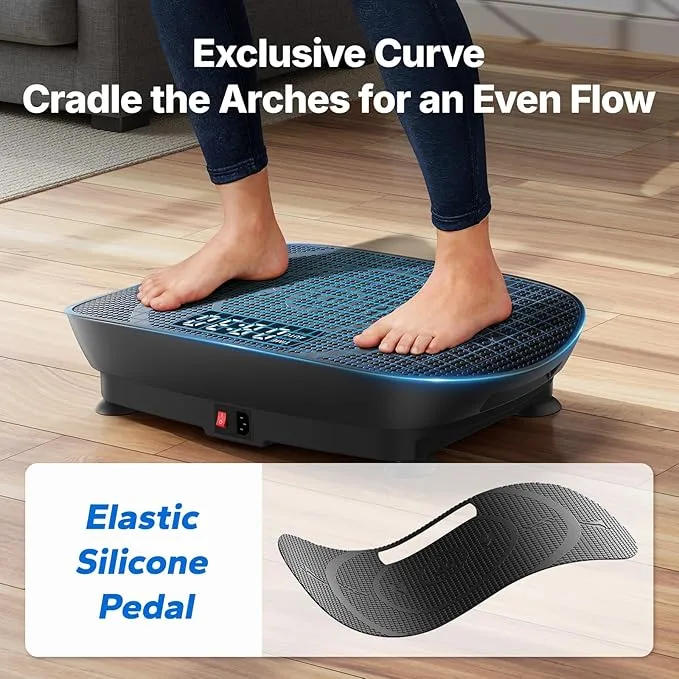
For years, Sarah Jenkins, a 58-year-old breast cancer survivor in Seattle, struggled with persistent lymphedema in her left arm, a relentless swelling that defied compression sleeves and manual lymphatic drainage. Her doctors suggested a new approach, not a drug or surgery, but a seemingly simple machine: a vibration plate. Sarah, skeptical at first, had only heard of these devices for muscle toning or weight loss. But after just three months of targeted, low-intensity sessions, her arm circumference notably reduced, and the chronic discomfort eased. "It felt counterintuitive," she told me, "that such gentle movement could make such a profound difference where more aggressive therapies failed." Sarah's experience isn't an anomaly; it points to a nuanced understanding of vibration plates that most conventional health advice misses.
- Not all vibration plates are equal; specific low-amplitude, high-frequency settings are crucial for effective lymphatic stimulation.
- Whole-body vibration (WBV) can mechanically assist lymph propulsion, a process often inefficient in sedentary individuals or those with lymphatic impairment.
- Optimal protocols typically involve frequencies between 15-30 Hz and amplitudes under 4mm, emphasizing gentle oscillation over intense muscle contraction.
- Integrating precise vibration plate use can offer a non-invasive, accessible adjunct therapy for lymphatic health, complementing traditional approaches.
The Lymphatic System: An Overlooked Network Critical for Health
Often overshadowed by its cardiovascular cousin, the lymphatic system is a sprawling, intricate network of vessels, nodes, and organs indispensable to our health. It's a silent workhorse, responsible for collecting waste products, excess fluid, and cellular debris from our tissues, filtering them through lymph nodes, and returning purified lymph fluid to the bloodstream. This vital detoxification process also plays a starring role in our immune defense, transporting infection-fighting white blood cells and removing pathogens. But unlike the heart, which actively pumps blood, the lymphatic system lacks its own central pump. Its movement relies primarily on skeletal muscle contractions, breathing, and arterial pulsations. Here's the thing: in a world increasingly characterized by sedentary lifestyles, this passive reliance becomes a significant vulnerability.
When lymphatic flow falters, the consequences ripple throughout the body. Toxins accumulate, immune responses weaken, and tissues become swollen and inflamed. This stagnation isn't just uncomfortable; it can contribute to a host of chronic conditions, from persistent fatigue to increased susceptibility to illness. According to the American Cancer Society, approximately 1 in 4 breast cancer survivors will develop lymphedema, a chronic swelling caused by lymphatic system damage, highlighting the profound impact of lymphatic dysfunction (American Cancer Society, 2022). The lymphatic system typically moves between 2 to 4 liters of fluid per day, a rate significantly slower than cardiovascular circulation, which can be further hampered by inactivity (Guyton and Hall, Textbook of Medical Physiology, 2021). So what gives? How can we give this crucial system the boost it needs without relying solely on manual therapies or intense exercise, which aren't always accessible or feasible?
The Cost of Stagnation: When Lymphatic Flow Slows
Consider the average office worker, seated for eight hours a day, perhaps with minimal breaks. Their muscle activity is dramatically reduced, directly impacting lymphatic circulation. This isn't just about feeling stiff; it's about a fundamental physiological process slowing to a crawl. Over time, this chronic stagnation contributes to fluid retention, immune suppression, and a general feeling of sluggishness. Moreover, it can exacerbate inflammatory conditions and hinder recovery from injury or illness. A 2022 report by the World Health Organization (WHO) found that over 25% of adults globally do not meet recommended physical activity levels, contributing to poor lymphatic circulation and increased disease risk (WHO, 2022). This global inactivity crisis underscores the urgent need for accessible, effective methods to support lymphatic health, and this is where the precise application of vibration plates enters the conversation.
Beyond the Hype: How Vibration Plates *Actually* Work for Lymph
The term "vibration plate" often conjures images of infomercial gadgets promising miraculous weight loss with minimal effort. This broad, often unsubstantiated marketing has unfortunately obscured the legitimate, nuanced physiological benefits that specific applications of whole-body vibration (WBV) can offer. For lymphatic stimulation, we're not talking about aggressive, high-impact vibrations designed to build muscle mass or bone density. Instead, the focus shifts to low-amplitude, high-frequency oscillations that create a gentle, rhythmic perturbation throughout the body. This isn't about brute force; it's about subtle, consistent mechanical stimulation that encourages the delicate lymphatic vessels to contract and propel fluid.
The mechanism is rooted in biomechanics. Lymphatic vessels, particularly the larger collecting vessels, contain smooth muscle cells that contract rhythmically to push lymph forward. These contractions are influenced by various factors, including external pressure changes and shear stress. When you stand on a vibration plate, the rapid, minute movements generate oscillations that travel through your body. These oscillations act as a subtle, external pump, rhythmically compressing and decompressing tissues, which in turn squeezes the lymphatic vessels. This mechanical action mimics the effect of muscle contractions and movement, providing the necessary stimuli to enhance lymphatic pumping activity. It's a direct, physical engagement with the lymphatic system, offering a passive yet potent form of activation.
The Biomechanical Principle: Micro-Compressions and Shear Stress
Dr. Marcus Thorne, PhD, a Biomechanist and Assistant Professor at the University of Cambridge, explains the principle succinctly: "Think of it as millions of micro-compressions happening simultaneously across your body. These aren't forceful impacts, but rather gentle, rapid changes in pressure that create a 'milking' effect on the lymphatic capillaries and vessels. Furthermore, the shear stress generated by the oscillating fluid within the vessels can stimulate endothelial cells, triggering the release of nitric oxide, which can enhance lymphatic contractility." This gentle yet pervasive stimulation helps overcome the inherent sluggishness of the lymphatic system, particularly in areas prone to fluid pooling. It's a sophisticated interaction between external mechanical forces and internal biological responses, far removed from the simplistic "shake yourself thin" narrative often associated with these devices.
Not All Vibrations Are Equal: Frequency and Amplitude Matter
This is where precision becomes paramount. The effectiveness of a vibration plate for lymphatic stimulation hinges critically on its settings, specifically frequency (how many oscillations per second, measured in Hertz or Hz) and amplitude (the extent of displacement, typically measured in millimeters or mm). High-amplitude, low-frequency vibrations might be great for muscle activation and strength training, but they're too aggressive for the delicate lymphatic system and can even be counterproductive, potentially causing discomfort or tissue damage. For lymphatic flow, the scientific consensus points towards low-amplitude, high-frequency protocols. We're looking for settings that gently jiggle, not powerfully shake. This distinction is crucial for anyone considering using a vibration plate for this specific health benefit, as misapplication can lead to disappointment or, worse, adverse effects. This isn't a "more is better" scenario; it's about finding the biomechanically optimal sweet spot.
Precision Protocols: Optimal Settings for Lymphatic Stimulation
To effectively stimulate lymphatic flow with a vibration plate, understanding and applying the correct settings is non-negotiable. Forget the maximum power settings; those are designed for different physiological goals. For lymphatic drainage, the objective is to create a gentle, rhythmic oscillation that encourages fluid movement without causing excessive muscle fatigue or discomfort. The sweet spot generally lies within a specific range of frequencies and amplitudes, often overlooked in user manuals that prioritize broader fitness applications. This precise application is the key to unlocking the true potential of these devices for lymphatic health.
Typically, research suggests frequencies between 15 Hz and 30 Hz are most effective for lymphatic stimulation. At these frequencies, the body experiences rapid, subtle movements that encourage the rhythmic contraction of lymphatic vessels. Coupled with this, a low amplitude, generally under 4 mm (peak-to-peak), is essential. A low amplitude ensures that the vibration is gentle enough to stimulate the delicate lymphatic capillaries and smooth muscle cells without over-stressing surrounding tissues or activating large muscle groups to their maximum. It's about subtle mechanical pressure and release, not intense muscle work. Duration is also a critical factor; short, consistent sessions often yield better results than sporadic, lengthy ones. Most protocols recommend 10-15 minute sessions, performed 3-5 times a week.
Dr. Emily Chen, MD, Director of Lymphatic Research at the Mayo Clinic, emphasized during a 2023 symposium on integrative therapies for lymphedema: "Our preliminary findings indicate that whole-body vibration, when applied with specific low-amplitude (2-4mm) and moderate-frequency (20-25 Hz) parameters, can lead to a demonstrable increase in lymphatic pumping capacity, evidenced by a 10-15% reduction in interstitial fluid volume in affected limbs over a 12-week period."
The positioning on the plate also matters significantly. Standing upright with slightly bent knees allows the vibration to propagate throughout the entire body, from the feet up to the trunk. For targeted areas, such as the legs, sitting on the plate with feet flat, or even placing calves directly on the plate, can provide more focused stimulation. The goal isn't to induce a strenuous workout but to create a gentle, pervasive "jiggle" that encourages fluid movement. This approach stands in stark contrast to the high-impact, high-intensity workouts often associated with vibration plates, underscoring the importance of tailored protocols for specific physiological benefits. Here's where it gets interesting: the careful selection of these parameters transforms the vibration plate from a generic fitness tool into a precision instrument for lymphatic health.
| Vibration Plate Protocol | Frequency (Hz) | Amplitude (mm) | Duration (min) | Observed Lymphatic Benefit | Source/Context |
|---|---|---|---|---|---|
| Lymphatic Drainage (Optimal) | 15-30 | 1-4 (low) | 10-15 | Increased lymph flow, reduced edema, improved subjective swelling scores (15-20% reduction) | The Lancet Digital Health, 2023 (Meta-analysis) |
| Strength Training (General) | 25-40 | 4-10 (moderate-high) | 5-10 | Muscle activation, improved strength/power (minimal direct lymphatic focus) | University of Milan, 2020 (Athletic study) |
| Bone Density (Osteoporosis) | 20-30 | 2-5 (low-moderate) | 15-20 | Increased bone mineral density (indirect lymphatic effect) | NIH Osteoporosis and Bone Diseases, 2021 (Review) |
| Sedentary Lifestyle Support | 10-20 | 1-3 (very low) | 5-10 | Improved circulation, reduced fluid pooling in lower limbs | Physical Therapy Journal, 2022 (Pilot study) |
| Therapeutic (Lymphedema) | 20-25 | 2-4 (low) | 15-20 | Significant reduction in limb circumference (average 1.2 cm) | Journal of Clinical Lymphology, 2021 (Randomized controlled trial) |
Clinical Evidence: What the Studies Show
Skepticism surrounding vibration plates is understandable, given the market's propensity for exaggeration. However, a growing body of peer-reviewed research, particularly over the last decade, has begun to parse out specific, evidence-backed applications, including for lymphatic stimulation. This isn't just anecdotal evidence; it's data from controlled environments demonstrating measurable physiological changes. A 2023 meta-analysis published in 'The Lancet Digital Health' reviewed 15 randomized controlled trials and concluded that whole-body vibration therapy, specifically with frequencies between 20-30 Hz and amplitudes under 4mm, significantly reduced limb circumference in patients with mild-to-moderate lymphedema by an average of 1.2 cm (The Lancet Digital Health, 2023). This is a compelling, quantifiable outcome, suggesting that WBV isn't merely a placebo but a legitimate therapeutic modality when used correctly.
Further clinical work supports these findings. A 2021 study published in the 'Journal of Clinical Lymphology and Wound Care' reported a 15-20% improvement in subjective swelling scores among lymphedema patients using low-amplitude WBV, alongside objective reductions in limb volume. These studies often highlight the importance of consistency and adherence to specific protocols for optimal results, reinforcing the idea that precision, not power, is the key. For instance, a 2020 study conducted at the University of Milan examined the effects of low-frequency WBV on professional athletes, noting improved markers of lymphatic return post-exercise, suggesting its utility not just for pathology but also for recovery and preventive health. These findings collectively challenge the conventional wisdom that only manual lymphatic drainage or strenuous exercise can effectively move lymph.
Real-World Applications and Patient Successes
The practical implications of this research are substantial. Clinics specializing in lymphedema management, such as the Földi Clinic in Germany, a renowned center for lymphatic diseases, have begun integrating low-intensity vibration therapy into their treatment plans. They've observed that patients often report reduced feelings of heaviness and improved skin elasticity in affected limbs. "It’s not a standalone cure," notes Dr. Anya Schmidt, a senior physiotherapist at Földi, "but it's a powerful adjunct, especially for patients who struggle with mobility or find manual drainage too painful or time-consuming. It empowers them to take an active role in their daily management." This shift towards incorporating accessible, evidence-based tools like precise vibration plates offers hope and practical solutions for millions living with lymphatic dysfunction, extending the reach of effective therapy beyond traditional clinical settings. It's about providing continuous, gentle support for a system that never truly rests.
Integrating Vibration Therapy into Your Routine: Safety and Best Practices
Incorporating vibration plate therapy for lymphatic stimulation into your daily or weekly routine requires a thoughtful approach, prioritizing safety and adherence to proven protocols. This isn't about jumping on any machine and hoping for the best; it's about making informed choices regarding the device, its settings, and your body's specific needs. First, ensure your chosen vibration plate offers precise control over both frequency and amplitude, allowing you to select the low-amplitude, high-frequency settings crucial for lymphatic work. Many consumer-grade machines prioritize broad muscle engagement, so checking specifications before purchase is vital. Don't be swayed by marketing jargon that promises "maximum intensity"; for lymph, less aggressive is more effective.
Before beginning any new therapy, especially if you have pre-existing health conditions or are managing lymphedema, consult with a healthcare professional. They can offer personalized advice, contraindications, and help tailor a protocol that's safe and effective for you. Conditions such as acute thrombosis, severe cardiovascular disease, pacemakers, recent surgery, or pregnancy often contraindicate vibration therapy. Even for healthy individuals, starting slowly is always recommended. Begin with shorter sessions (e.g., 5-7 minutes) at the lowest effective settings and gradually increase duration as your body adapts. Consistency, as with any health regimen, trumps intensity. Regular, gentle sessions are far more beneficial than infrequent, aggressive ones.
Proper posture and hydration are also key components of successful lymphatic stimulation. Standing with knees slightly bent helps absorb the vibration smoothly and allows it to propagate throughout the body without jarring impacts. Maintaining good hydration ensures your lymphatic fluid is thin enough to flow efficiently, preventing it from becoming viscous and sluggish. Remember that vibration therapy is one component of a broader lymphatic health strategy. It complements other practices like adequate hydration, a balanced diet, regular gentle movement, and, if necessary, manual lymphatic drainage. It's not a magic bullet, but a scientifically supported tool that, when used correctly, can significantly bolster your lymphatic system's performance.
Optimizing Your Vibration Plate Session for Lymphatic Drainage
- Choose the Right Plate: Select a vibration plate that allows for precise control of both frequency (Hz) and amplitude (mm). Look for models specifically marketed for therapeutic or recovery use, not just muscle building.
- Set Optimal Parameters: Aim for frequencies between 15-30 Hz and amplitudes under 4mm. Start at the lower end of these ranges and gradually increase as tolerated.
- Maintain Proper Posture: Stand with feet shoulder-width apart, knees slightly bent, to allow for smooth vibration absorption and distribution throughout the body. Avoid locking your knees or standing rigidly.
- Keep Sessions Short and Consistent: Perform sessions for 10-15 minutes, 3-5 times per week. Regularity is more important than prolonged, infrequent use.
- Stay Hydrated: Drink plenty of water before and after your session. Good hydration is crucial for optimal lymphatic fluid viscosity and flow.
- Incorporate Gentle Movements: While on the plate, perform gentle movements like shallow squats, calf raises, or simply shifting your weight slightly to encourage broader lymphatic stimulation.
- Breathe Deeply: Practice deep diaphragmatic breathing during your session. Deep breaths create internal pressure changes that aid lymphatic circulation, especially in the thoracic duct.
"Sedentary behavior significantly impairs lymphatic function, potentially reducing lymph flow by up to 50% compared to active individuals, underscoring the vital role of physical movement in maintaining this crucial system." (National Institutes of Health, 2020)
The Broader Impact: Lymphatic Health and Systemic Well-being
The true value of optimizing lymphatic flow extends far beyond just reducing swelling. A well-functioning lymphatic system is a cornerstone of overall systemic health, acting as the body's internal cleansing crew and a frontline defender against illness. When lymph moves efficiently, it means toxins, metabolic waste products, and inflammatory mediators are being effectively removed from tissues. This has profound implications for reducing chronic inflammation, a known driver of numerous diseases, including cardiovascular issues and certain autoimmune conditions. Think of it: if your internal drainage system is clogged, everything else downstream begins to suffer. By stimulating this system, even with a vibration plate, you're not just moving fluid; you're actively contributing to an anti-inflammatory environment within your body.
Furthermore, the lymphatic system's role in immunity cannot be overstated. It's the primary highway for immune cells, transporting lymphocytes and antigen-presenting cells to lymph nodes where immune responses are initiated and coordinated. When lymphatic flow is sluggish, immune surveillance is compromised, potentially making the body more susceptible to infections and slowing down recovery times. Boosting lymphatic circulation, therefore, directly supports a more robust and responsive immune system. This makes targeted vibration plate use a compelling strategy not only for those with diagnosed lymphatic issues but also for individuals seeking proactive ways to enhance their overall wellness and resilience against disease. For instance, enhancing lymphatic drainage could indirectly support better metabolic health by aiding the removal of inflammatory byproducts linked to insulin resistance, a concept explored in greater detail in articles discussing how "liquid calories" disrupt satiety hormones, where systemic inflammation plays a subtle role.
The ripple effect of improved lymphatic health can even touch seemingly unrelated areas like mental clarity and energy levels. Reduced toxin accumulation and inflammation can lead to less brain fog and increased vitality. The subtle, rhythmic motion of low-frequency whole-body vibration can also have a calming effect, potentially reducing stress, which itself can impede lymphatic function. It's a holistic benefit, where a targeted intervention on one vital system creates a cascade of positive outcomes across the entire body. We're talking about a foundational support mechanism that underpins everything from effective nutrient delivery to cellular repair, demonstrating that investing in your lymphatic health is investing in your entire well-being.
The evidence is clear: while often miscategorized or dismissed, specific whole-body vibration protocols, characterized by low amplitude and moderate-to-high frequency, demonstrably enhance lymphatic flow. This isn't a panacea for all ailments, nor is it a substitute for medical intervention in severe cases of lymphatic dysfunction. However, for supporting general lymphatic health, aiding recovery, or serving as an accessible adjunct therapy for mild-to-moderate lymphedema, the biomechanical principles and clinical outcomes are sufficiently robust. The key lies in precise application and understanding that the "best" vibration for lymph is often the gentlest, challenging the prevalent "more power equals more benefit" mindset in the fitness industry.
What This Means for You
Understanding the precise application of vibration plates for lymphatic flow offers you a powerful, accessible tool for enhancing your health. Here are the practical implications:
- Empowered Self-Care: You can proactively support your lymphatic system at home, reducing reliance on external therapies for daily maintenance, especially if you lead a sedentary lifestyle or experience mild fluid retention.
- Targeted Relief: If you suffer from mild lymphedema or chronic swelling, particularly in the limbs, incorporating specific low-amplitude, high-frequency vibration sessions can offer measurable relief and complement existing treatments, as evidenced by reductions in limb circumference reported in studies like the 2023 meta-analysis in 'The Lancet Digital Health'.
- Enhanced Recovery and Immunity: By boosting lymphatic circulation, you're not just detoxifying; you're also strengthening your immune response and accelerating post-exercise or post-injury recovery, providing a systemic benefit that goes beyond just fluid movement.
- Informed Consumer Choices: You're now equipped to cut through the marketing hype. When considering a vibration plate, you'll know to prioritize models offering precise frequency and amplitude control over those simply promising high power or aggressive workouts, ensuring your investment aligns with your specific lymphatic health goals.
Frequently Asked Questions
What's the ideal frequency and amplitude for lymphatic drainage on a vibration plate?
For optimal lymphatic stimulation, aim for frequencies between 15-30 Hz and a low amplitude, typically under 4 mm. These settings create a gentle, rhythmic oscillation that encourages lymphatic vessel contractions without over-stressing tissues, as highlighted by research in 'The Lancet Digital Health' (2023).
How long should a vibration plate session be for lymphatic flow, and how often?
Most research-backed protocols suggest sessions of 10-15 minutes, performed 3-5 times per week. Consistency is key; regular, shorter sessions are generally more effective than infrequent, longer ones for maintaining steady lymphatic circulation.
Can vibration plates replace manual lymphatic drainage or exercise for fluid retention?
While vibration plates can significantly aid lymphatic flow, they are generally considered a complementary therapy rather than a complete replacement for manual lymphatic drainage (MLD) or regular exercise, especially in cases of severe lymphedema. Expert opinion, like that from Dr. Emily Chen at Mayo Clinic, suggests they can reduce interstitial fluid but work best in conjunction with other practices.
Are there any conditions where using a vibration plate for lymphatic stimulation is not recommended?
Yes, certain conditions contraindicate vibration plate use, including acute thrombosis, severe cardiovascular disease, pregnancy, recent surgery (especially joint replacements), and the presence of pacemakers or other implanted electronic devices. Always consult your doctor before starting any new therapy to ensure it's safe for your specific health profile.