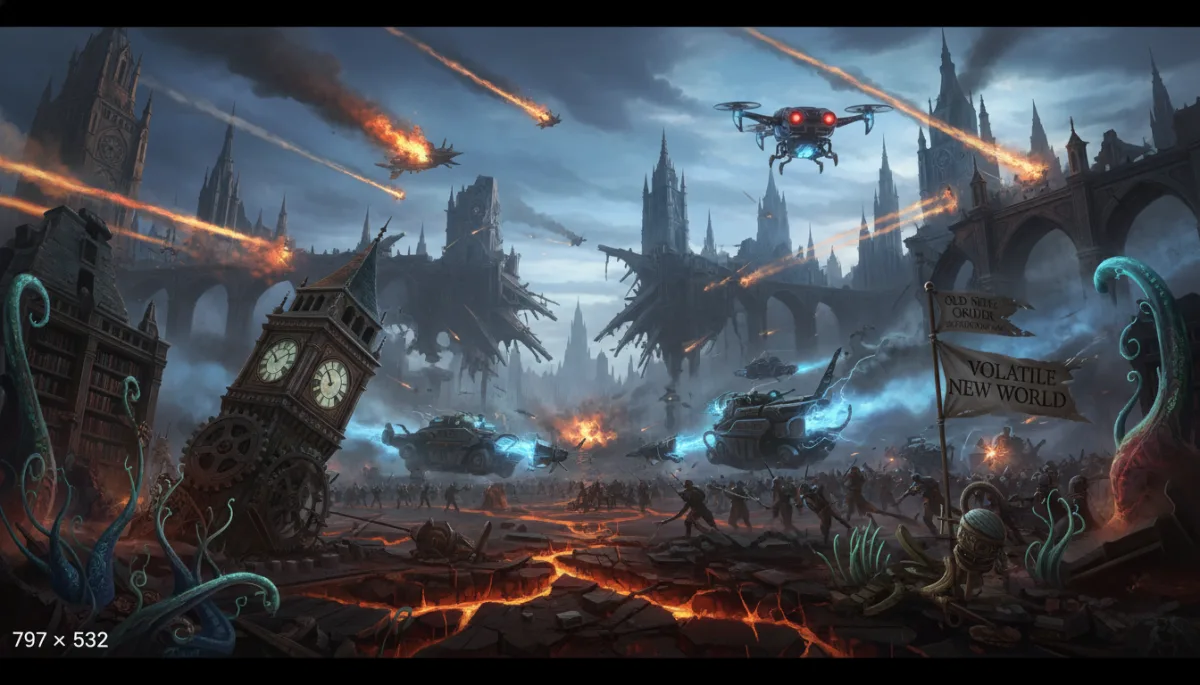
The Unraveling Threads of Global Order
For decades, we’ve grown accustomed to a certain global rhythm. A framework, however imperfect, built on multilateral institutions, international law, and a relatively clear pecking order. But let's be honest: that era's fading fast. What we’re seeing now is less an evolution and more a dramatic unraveling, leaving behind a volatile patchwork of competing interests, assertive powers, and a troubling vacuum where unified leadership once stood. It’s a messy, dangerous business, and anyone pretending otherwise isn't paying attention.
The comfortable notion of a unipolar or even a predictably bipolar world has given way to something far more complex and, frankly, unnerving. We’re in a multipolar landscape where traditional alliances are strained, and new, often transactional, partnerships are emerging at a dizzying pace. This isn't just about the rise of China or the resurgence of Russia; it’s about a broader disillusionment with the established order and a desperate scramble for influence that puts global cooperation on critical issues firmly on the back burner.
The Rise of the "Rest" and the Struggle for Influence
Look no further than the recent expansion of the BRICS bloc – Brazil, Russia, India, China, South Africa – to include nations like Saudi Arabia, the UAE, Egypt, Ethiopia, and Iran. This isn't merely an economic forum anymore; it's a defiant statement. It’s a clear challenge to the G7-dominated financial and political architecture that has long dictated global norms. Critics might dismiss it as a motley crew with little ideological cohesion, but they're missing the point. What unites these nations, despite their internal contradictions, is a shared desire to dilute Western hegemony and forge alternative pathways for trade, finance, and security. They're not asking for a seat at the table; they're building their own.
And why wouldn't they? For too long, many nations have felt marginalized, their voices unheard, their development constrained by rules they didn't help create. The allure of an alternative, however nascent, is powerful. This shift isn't about replacing one hegemon with another, at least not yet. It’s about decentralization, about creating enough options that no single power or bloc can unilaterally dictate terms. This fragmentation, however, carries immense risks. When there's no universally accepted arbiter, disputes can escalate rapidly, and the guardrails of international diplomacy can seem flimsy.
Western Myopia and the Perils of Complacency
Where does the West stand in all this? Often, it feels like we're caught in a reactive loop, struggling to shed old habits and adapt to new realities. There's a persistent tendency to view the world through a Cold War lens, categorizing nations as either "with us" or "against us." This black-and-white thinking is a luxury we can no longer afford. Many countries, particularly in the Global South, are pursuing truly non-aligned foreign policies, engaging with whoever offers the best terms, whether it's for infrastructure investment, energy deals, or security cooperation. They're not ideological pawns; they're sovereign actors navigating a complex landscape, and we ignore that at our peril.
Consider the ongoing conflict in Ukraine. While Western nations rightly condemned Russia's aggression and provided substantial aid, the global response wasn't monolithic. Many nations, while perhaps deploring the invasion, refused to impose sanctions or actively sided with Moscow due to historical ties, economic dependencies, or a cynical view of Western hypocrisy. This division highlights a crucial disconnect: what's an existential threat to one bloc is often seen as a distant, geopolitical chess move by another. The West's attempts to rally universal condemnation often fall flat when the underlying grievances and diverse interests of other nations aren't adequately acknowledged or addressed.
The Cost of Division: Unaddressed Global Challenges
The real tragedy in this fracturing international system isn't just the increased potential for regional conflicts – though that's a terrifying prospect. It's the catastrophic neglect of truly global challenges. Climate change, pandemics, food insecurity, migration crises, cyber warfare – these issues don't respect borders or ideological divides. They demand concerted, multilateral action. Yet, when nations are locked in zero-sum competition for influence and resources, effective cooperation becomes an impossible dream.
We've seen global defense spending skyrocket, exceeding pre-Cold War levels, reaching an estimated $2.2 trillion in 2022 alone. This money, diverted from development, healthcare, or green initiatives, is a stark indicator of mounting global distrust and insecurity. Nations are arming themselves, not just against perceived enemies, but often against the very uncertainty the current international climate fosters. It’s a vicious cycle, isn't it?
A Call for Pragmatism, Not Nostalgia
So, what's to be done? Clinging to the vestiges of a bygone era won't magically restore stability. We need a radical shift in perspective. First, traditional powers must embrace a more realistic, less prescriptive approach to international engagement. We must listen, truly listen, to the grievances and aspirations of nations outside our immediate sphere of influence. This doesn't mean condoning authoritarianism or abandoning our values, but it does mean understanding that our values aren't universally interpreted, and our methods aren't universally accepted.
Secondly, we must invest in genuine multilateralism, not just lip service. That means reforming institutions like the UN Security Council, making them more representative of today's world, not yesterday's. It means finding common ground on shared threats, even with rivals. It's about finding the minimum viable coalition to tackle the biggest problems. It won't be easy. It'll be messy, frustrating, and often feel like two steps forward, one step back. But what's the alternative? A world where every nation fends for itself, where the powerful dictate and the vulnerable suffer, and where the biggest threats to humanity are left to fester?
The international system isn't just evolving; it's undergoing a profound transformation. We can either adapt with foresight and pragmatism, engaging with the world as it is, not as we wish it were, or we can watch from the sidelines as the old order crumbles, taking with it the fragile peace we've long taken for granted.