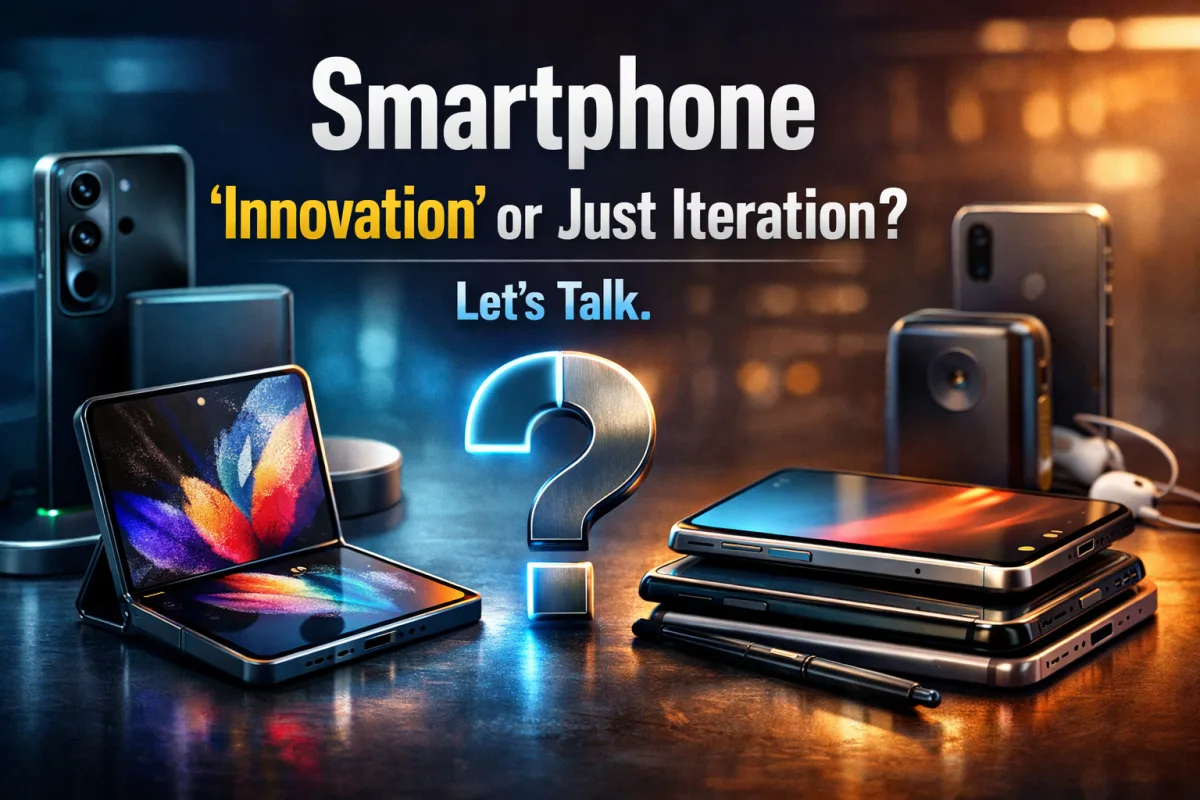
The Illusion of Breakthroughs: What's Really New?
Every year, the tech world buzzes with the unveiling of the "next big thing" in smartphones. We’re presented with sleek new designs, promises of unprecedented power, and camera systems that supposedly put DSLRs to shame. But if you’re anything like me – a journalist who’s seen more smartphone launches than hot dinners – you’re probably asking the same cynical question: Is this *really* innovation, or just a polished, slightly more expensive version of what we already have?
Let's be blunt: the smartphone industry has entered an era of diminishing returns on innovation. The groundbreaking leaps that defined the early 2010s? They’re largely behind us. What we’re witnessing now is a masterful exercise in iteration, cleverly disguised by marketing departments as revolutionary progress. It's not that phones aren't getting better; they absolutely are. But the "better" is often so marginal, so niche, that it scarcely justifies the premium price tag or the pressure to upgrade every twelve to eighteen months.
The Camera Wars: More Lenses, More Problems?
Take smartphone cameras, for instance. It seems every new flagship arrives with an additional lens, a higher megapixel count, or some computational trickery that promises to turn your blurry pet photos into works of art. We've gone from one lens to two, then three, even four on the rear, each fulfilling a specific zoom or ultra-wide fantasy. Low-light performance improves incrementally, and new software modes pop up like weeds after a spring rain. But ask yourself: how often do you truly leverage that 100x digital zoom? Does the average person really notice the difference between 12-bit and 10-bit color depth on a phone screen?
For most of us, the camera on a two-year-old mid-range phone already captures perfectly acceptable photos for social media or family albums. The "innovations" here feel like a race to impress on paper rather than deliver genuinely transformative photographic experiences for the everyday user. It’s a classic example of hardware chasing software, and then software chasing hardware, in an endless, slightly exhausting loop.
Folding Phones: A Niche Novelty or the Future?
Ah, foldable phones. Now here's a category where real, tangible innovation has occurred. The engineering feat required to make a screen bend without breaking, to develop hinges that last, is genuinely impressive. Companies like Samsung and Motorola have poured billions into making these devices a reality, giving us screens that unfold into tablets or compact clamshells. For a moment, it felt like the future had arrived.
But let's ground ourselves in reality. Foldables remain a niche product. They're significantly more expensive, often come with durability concerns (even with vast improvements), and still have visible creases. While they offer a genuinely different form factor, they haven't exactly flown off the shelves to become the mainstream choice. The market share remains tiny. Is it a true innovation? Yes, absolutely. Is it an innovation that has fundamentally changed the smartphone landscape for the masses? Not yet, and perhaps not ever in its current iteration. It’s a bold experiment, and we should applaud it, but we can’t pretend it’s driving widespread change when the vast majority of users are still opting for traditional slabs.
Under the Hood: The Invisible Upgrades
Beyond cameras and form factors, what else are we told is "innovative"?
Faster Processors:
Every year, a new chip promises unparalleled speed. Is your current phone sluggish? Probably not. The truth is, most modern processors are so powerful that for daily tasks – browsing, social media, light gaming – the difference between generations is imperceptible. We’re buying supercars to drive to the grocery store.Brighter, Smoother Displays:
Higher refresh rates (120Hz!), peak brightness levels that could rival a small sun, and ever-shrinking bezels. These are undoubtedly improvements, offering a more fluid and immersive experience. But they’re evolutionary, not revolutionary. It’s like upgrading from a really good TV to an even better one – nice, but not mind-blowing.Faster Charging:
While battery life remains a perennial complaint, many manufacturers have shifted focus to ultra-fast charging. You can juice up your phone in mere minutes. This is a practical benefit, for sure, but it feels like a workaround for batteries that haven’t seen truly significant capacity gains. We're still tethered to chargers, just for shorter periods.
These are all welcome enhancements, no doubt. But they're the kind of steady, predictable improvements we expect from mature technology. They don't fundamentally alter how we interact with our devices or what our devices enable us to do. They simply make existing interactions slightly slicker.
The Consumer's Dilemma: Why Upgrade?
This brings us to the core issue: the "why." Why should a consumer, who already owns a perfectly capable smartphone, shell out upwards of $1,000, sometimes more, for these incremental upgrades? Market data tells a clear story: people are holding onto their phones longer. The average upgrade cycle has stretched beyond three years in many regions, a stark contrast to the frantic annual upgrades of a decade ago. This isn’t because phones are breaking down; it’s because the perceived value of the "innovations" just isn't compelling enough.
The industry needs to grapple with this. Are we prioritizing flashy, easily marketable features over genuine problem-solving? Are we innovating for the sake of quarterly reports rather than truly enhancing user experience?
Where Real Innovation Lies (and What We're Missing)
So, what would real innovation look like? It wouldn't necessarily be about more megapixels or a folding screen. It would be about:
- Significantly longer battery life: Imagine days, not hours, of usage without needing a charger. That’s a game-changer.
- True repairability and modularity: Phones designed to be easily fixed, with replaceable components, reducing electronic waste and consumer costs.
- Sustainable manufacturing: Devices made with recycled materials, designed for longevity, with a minimal environmental footprint.
- Radical improvements in privacy and security: Real, tangible control over our data, beyond just software updates.
- Affordable advanced features: Bringing cutting-edge technology to a broader audience, not just the premium segment.
These are the areas where innovation would have a profound, positive impact on our daily lives and the planet. Instead, we're largely getting a faster version of the same thing, year after year.
Time for a Reality Check
The smartphone industry is an incredible engine of technological progress, and we shouldn't dismiss the engineering marvels that go into these devices. But as consumers and as a society, we need to apply a more critical lens to what’s marketed as "innovation." It’s time to push beyond the iterative, to demand genuinely transformative leaps that solve real problems, not just create new reasons to spend.
Until then, I’ll be holding onto my perfectly functional phone for a little longer, waiting for a reason to truly be impressed. And I suspect, many of you will be too.