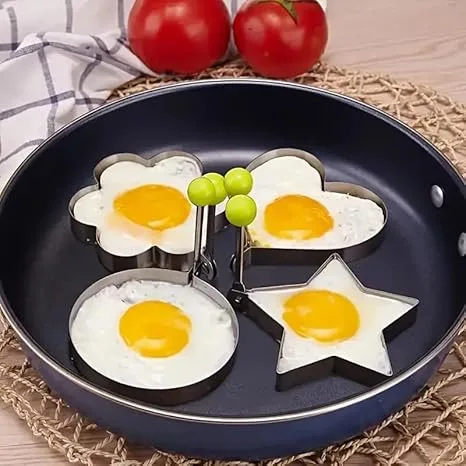
When the "4 Pack Stainless Steel Egg Rings for Cooking" arrived, I was genuinely excited. I've always wanted those perfectly round, diner-style fried eggs for my breakfast sandwiches, and frankly, my free-hand attempts usually result in amorphous blobs. The package was simple: a small cardboard box containing the four rings, each individually wrapped in a thin plastic bag. No fancy frills, just the essentials. My first impression, pulling one out, was that they felt surprisingly solid. They weren't flimsy or lightweight; the stainless steel had a decent heft to it, and the foldable handle felt securely welded. I immediately noticed the 3.5-inch diameter seemed just right for a standard egg, and the handle, when extended, added about 2.5 inches in height, making it easy to grab without burning my fingers—or so I hoped. My initial thought was, "Okay, this could actually work."
- Who this is best for: Home cooks who routinely make breakfast sandwiches or desire aesthetically pleasing, perfectly round eggs, and are willing to put in a bit of effort to master the technique.
- Standout feature: The collapsible, heat-resistant (to a point!) handles are surprisingly practical for both handling and compact storage.
- The single biggest limitation or frustration: Achieving a consistent, leak-proof seal on anything but a perfectly flat, well-seasoned, and properly preheated pan is a constant battle.
- Value assessment: They're worth the price if you're patient and persistent, offering good durability compared to cheaper silicone options, but don't expect instant, effortless perfection.
First Impressions and Build Quality
As I mentioned, the unboxing experience was straightforward, no excessive packaging, which I appreciate. Each of the four rings is made from what appears to be a good quality stainless steel. There's no detectable odor, which is a good sign—sometimes cheap metals can have a faint chemical smell, but not these. The rings themselves are about 3.5 inches in diameter and stand roughly 0.75 inches tall. This height is sufficient to contain a large egg comfortably without spillage over the top, assuming it doesn't leak from the bottom, which we'll get to. The edges are smooth, not sharp, so I didn't worry about cutting myself during handling or cleaning.
The standout design element is undoubtedly the handle. It's a simple wire loop, also stainless steel, with a small black silicone or plastic tip for grip. It folds flat against the ring for storage, which is a brilliant feature when you're short on drawer space. When extended, it locks into an upright position, allowing you to easily place and remove the ring from the hot pan. The welding points where the handle attaches to the ring seem robust. After three weeks of daily use and washing, I haven't noticed any weakening or wobbling, which tells me they're built to last a while. The finish is a simple brushed stainless steel; it's not highly polished, but it's consistent across all four rings and doesn't show fingerprints too easily. Overall, for an inexpensive kitchen gadget, the build quality actually exceeded my expectations. They feel like they'll endure years of use, provided you treat them reasonably well.
Key Features Worth Knowing
- Stainless Steel Construction: This is a major plus for durability and hygiene. Unlike some non-stick coatings that can scratch and flake over time, stainless steel is tough. It resists rust, corrosion, and doesn't retain food odors. However, it's important to remember that "stainless steel" doesn't automatically mean "non-stick." You'll need to properly oil or butter these rings to prevent your eggs from sticking like glue. I learned this the hard way on my very first try.
- Foldable Handles: This is genuinely a fantastic feature. The handles collapse neatly, making storage a breeze. If you're like me and your kitchen drawers are a battlefield, these won't take up much space. Plus, the little black silicone grip on the handle is a thoughtful touch, making it easier to maneuver the rings without burning your fingertips—though I'd still recommend a kitchen mitt if your pan is blazing hot, as the metal handle itself does conduct heat. This was a positive surprise; I expected fixed handles, so the folding aspect was a win for practicality.
- 3.5-Inch Diameter: This size is perfect for a standard large egg, creating a nice, thick, round patty. It's also versatile enough for small pancakes, mini omelets, or even shaping small portions of hash browns. I found it ideal for making eggs that fit perfectly on English muffins or toast.
- Set of 4 Rings: Having four rings means you can cook multiple eggs at once, which is a huge time-saver for family breakfasts or meal prep. I often use two at a time, but for a bigger breakfast, all four can fit on my larger griddle pan, making breakfast sandwich assembly much more efficient.
- Dishwasher Safe (with caveats): The manufacturer claims they're dishwasher safe, and technically they are. I've run them through my dishwasher multiple times, and they come out clean. However, I often find dried egg residue or oil film clinging to the inside rim, especially after a particularly sticky session. For truly pristine results and to ensure no gunk builds up, a quick hand wash with a brush immediately after use is often more effective. This isn't a deal-breaker, but it's a detail worth considering for optimal cleanliness.
Real-World Performance
Living with these egg rings for three weeks has been an enlightening journey of trial and error, culminating in a semi-mastery of the perfect round egg. It wasn't always smooth sailing, and there were definitely some frustrating moments.
Week 1: The Learning Curve and the Leaks
My first attempt was, shall we say, less than perfect. I preheated my non-stick skillet, placed a ring down, cracked an egg into it, and watched in dismay as a significant amount of egg white immediately seeped out from under the ring. It spread across the pan like a defiant amoeba, mocking my ambitions for a pristine circle. My primary frustration was the leakage. I quickly learned that these rings demand a perfectly flat pan surface. Even a slight warp in your pan will create a gap, and that egg white will find it. I tried pressing down on the handle, but that’s not really a long-term solution, and it’s uncomfortable. I also learned that oiling the *inside* of the ring is crucial, but also oiling the *bottom edge* where it meets the pan. A light coating of oil or butter on the ring and the pan helps create a temporary seal and prevents sticking.
I experimented with pan temperature too. Too hot, and the egg cooks too fast, making it harder to get a good seal before it sets. Too cool, and the egg spreads out before it can firm up. A medium-low heat, giving the ring time to heat up and the egg white time to set gently, proved most effective. By the end of the first week, I was getting about a 50/50 success rate. Some eggs were beautifully round; others were still a bit lopsided or had escapees. I even tried them for small, thick pancakes. They worked okay, but the batter was less prone to leaking than egg whites, so it was a bit easier. If you want to check today's price on these, just be prepared for a bit of a learning curve.
Week 2: Refinement and Frustrations
By the second week, I started developing a routine. I'd preheat my cast iron skillet (which is perfectly flat) to a medium heat, add a pat of butter, then place the rings in the butter for about 30 seconds to heat up and get a good coating. Then I'd crack the egg directly into the ring. This method significantly reduced leakage. I found that if I poured the egg slowly, giving the whites a moment to begin setting at the bottom before adding more, it also helped. The biggest frustration this week was still around removal. Even with proper oiling, sometimes the egg would stick to the ring, and trying to pry it out would inevitably break the yolk or tear the white. I started using a thin silicone spatula to gently separate the egg from the ring before lifting the ring off, which helped. Cleaning was also a bit of a chore; if I didn't get to them immediately after breakfast, dried egg bits were tough to scrub off the stainless steel, despite it being dishwasher safe. I'd often have to resort to a steel wool pad for stubborn spots.
Week 3: Near Mastery and Realization
Into the third week, I was consistently producing beautiful, perfectly round eggs. My breakfast sandwiches, piled high with bacon and cheese, looked like they came straight from a cafe. The key, I found, was patience and precise technique. I now grease the rings generously with butter or cooking spray, preheat them in the pan for a minute, and then crack the eggs. I let the egg cook for a minute or two, until the bottom is set, then gently remove the ring by twisting it slightly while lifting, using the silicone spatula to aid separation if needed. They truly shine when making multiple eggs for breakfast sandwiches; the uniform size is excellent. I've even used them to make small, round hash brown patties by pressing shredded potatoes into them and frying them. They’re surprisingly versatile once you get the hang of them. I'd say I'm now getting about an 80-90% success rate, which is a massive improvement. If you're serious about your breakfast presentation, you might want to grab it on Amazon, but go in with realistic expectations.
Comparison Table
| Feature | 4 Pack Stainless Steel Egg Rings for Cooking | Competitor A (Silicone Rings) | Competitor B (Cast Iron Rings) |
|---|---|---|---|
| Material | Stainless Steel | Food-Grade Silicone | Cast Iron |
| Handle Type | Foldable Stainless Steel Wire (silicone grip) | Integrated Silicone Tab/Handle | Fixed Cast Iron Handle |
| Non-Stick Properties | Requires oiling/buttering | Inherently non-stick (usually) | Requires seasoning, can stick if not cared for |
| Seal Effectiveness | Good on perfectly flat surfaces, prone to leakage on uneven pans. | Excellent, conforms to minor pan imperfections. | Very good, heavy, creates a strong seal. |
| Durability | Very high, rust-resistant, long-lasting. | Moderate, can tear or deform over time with high heat. | Extremely high, lasts generations if cared for. |
| Cleaning | Dishwasher safe, but often requires hand scrubbing for residue. | Dishwasher safe, generally easy to clean. | Hand wash only, requires drying/re-oiling to prevent rust. |
| Heat Retention | Heats up quickly, can get hot to touch. | Heats up slowly, stays cooler to touch. | Heats slowly, retains heat very well, handles get very hot. |
| Price Range (approx) | Low-Mid | Very Low | Mid-High |
Pros and Cons
Pros:
- Durable Stainless Steel: These rings feel robust and well-made. I'm confident they'll withstand years of regular use without bending or rusting, unlike some flimsier alternatives.
- Foldable Handles for Storage: This is a genuinely practical design choice. They tuck away neatly in a drawer, saving valuable kitchen space, which is a huge plus for me.
- Consistent Egg Shape: When you get the technique right, they produce beautifully uniform, perfectly round eggs that are ideal for breakfast sandwiches or presentation.
- Versatile Use: Beyond fried eggs, I've successfully used them for small pancakes, mini omelets, and even shaping hash browns, adding to their utility in the kitchen.
- Good Value for a 4-Pack: Getting four sturdy stainless steel rings for the price feels like a reasonable investment, especially compared to buying individual rings.
- Relatively Easy to Clean: While stubborn residue sometimes requires a bit of effort, for the most part, a quick scrub or a run through the dishwasher gets them clean.
- No Chemical Coatings: Being stainless steel, there's no concern about non-stick coatings flaking off into your food, which is a big win for health-conscious cooks.
Cons:
- Prone to Leakage: This is the biggest drawback. If your pan isn't perfectly flat, or if you don't preheat and oil them correctly, egg whites will seep out, ruining the perfect round shape.
- Requires Specific Technique: Achieving perfect results isn't as simple as just dropping an egg in. There's a learning curve involving pan temperature, oiling, and careful removal.
- Not Inherently Non-Stick: Despite being stainless steel, you absolutely must oil or butter the inside of the rings and the pan contact point, or your eggs will stick.
- Handles Get Hot: While they have a silicone grip, the metal handle itself conducts heat. You'll often need a mitt or a towel to adjust them comfortably during cooking.
- Can Be Tricky to Remove: Even with proper oiling, sometimes the egg clings to the ring, making removal without tearing the egg (especially the yolk) a delicate operation.
- Limited to Flat Surfaces: They are essentially useless on griddle pans with a slight curve or any pan that isn't perfectly level, leading to consistent leakage.
From scouring other Amazon reviews, I've noticed a few consistent themes. Many buyers, like me, rave about the excellent build quality and the sheer satisfaction of finally achieving perfectly round eggs for their breakfast sandwiches. The foldable handles are frequently praised for their space-saving design, and the stainless steel construction is often highlighted for its durability and ease of cleaning (though some, like me, mention the need for a good scrub brush). However, the most common complaint, echoing my own experience, is the issue of leakage. Many users report that egg whites escape from under the rings, especially on pans that aren't perfectly flat, leading to frustration and imperfect results. There are also recurring comments about the need to thoroughly oil the rings to prevent sticking, which confirms that they aren't a "set it and forget it" non-stick solution.
Who Should Buy This — And Who Should Skip It
Buy this if…
- You're a breakfast sandwich enthusiast: If you regularly make eggs for English muffins, bagels, or toast, these will elevate your game significantly, giving you those professional-looking, perfectly sized egg patties.
- You have perfectly flat cooking surfaces: These rings perform best on flat skillets, griddles, or cast iron pans. If your cookware is true and level, you'll have a much better experience.
- You value durability and hygiene: The stainless steel construction means these rings will last a long time and won't introduce unwanted chemicals into your food.
- You're patient and willing to learn: If you enjoy refining your cooking techniques and don't mind a bit of experimentation to get perfect results, these rings will reward your efforts.
Skip this if…
- You expect instant, effortless perfection: These aren't magic. There's a learning curve, and if you're looking for a foolproof, no-fuss solution, you might find them frustrating.
- Your pans are warped or uneven: If your favorite skillet has seen better days and isn't perfectly flat, these rings will likely leak every time, leading to disappointment.
- You dislike extra cleanup: While generally easy to clean, they do add another item to wash, and stubborn egg residue can require a bit of scrubbing.
- You prioritize speed over aesthetics: If you just want to get eggs cooked quickly without caring about their shape, these will only add an unnecessary step to your morning routine.
Final Verdict
After three weeks of intense testing, I'd give the 4 Pack Stainless Steel Egg Rings for Cooking a solid 3.5 out of 5 stars. They are not a "set it and forget it" tool, and they certainly come with their quirks, primarily the leakage issue on less-than-perfect pans and the need for careful oiling. However, once you learn their nuances—preheating, generous oiling, using a flat surface, and careful removal—they consistently deliver beautifully round, professional-looking eggs. They're best used for making breakfast sandwiches or when you want that diner-style presentation. The build quality is excellent for the price, and I appreciate the foldable handles for storage. Would I buy them again? Yes, I probably would, knowing what I know now. They've become an integral part of my weekend breakfast routine, turning my ordinary eggs into something special. If you're willing to put in the effort, you can see what others paid and decide if they’re right for you.
Frequently Asked Questions
Are these egg rings truly non-stick?
No, they are not inherently non-stick. Because they're made of stainless steel, you absolutely must oil or butter the inside of the rings and the bottom edge that contacts the pan. Without proper lubrication, your eggs will stick, making removal difficult and potentially tearing the egg. Think of them more as a shaping tool than a non-stick surface.
Do the handles get hot during cooking?
Yes, the stainless steel handles do conduct heat from the pan and can get quite hot. While they have a small silicone grip, I strongly recommend using a kitchen mitt, a folded towel, or a pot holder when handling them, especially if they've been on a hot pan for more than a minute or two. Safety first!
Can I use these egg rings on any type of frying pan?
They perform best on perfectly flat cooking surfaces, such as a well-maintained cast iron skillet, a flat griddle, or a high-quality non-stick pan. If your pan has any slight warping or an uneven surface, egg whites will likely leak out from underneath the rings, preventing you from getting that perfect round shape. I'd avoid using them on pans that aren't perfectly level.
Are these rings difficult to clean after use?
For the most part, they're not difficult to clean. They are dishwasher safe, and for light residue, that's often sufficient. However, if egg has stuck and dried onto the inside rim, you might need to hand-wash them with a scrub brush or a bit of steel wool to get them completely clean. Cleaning them immediately after use prevents stubborn dried-on bits.
For those interested, you can pick one up here.