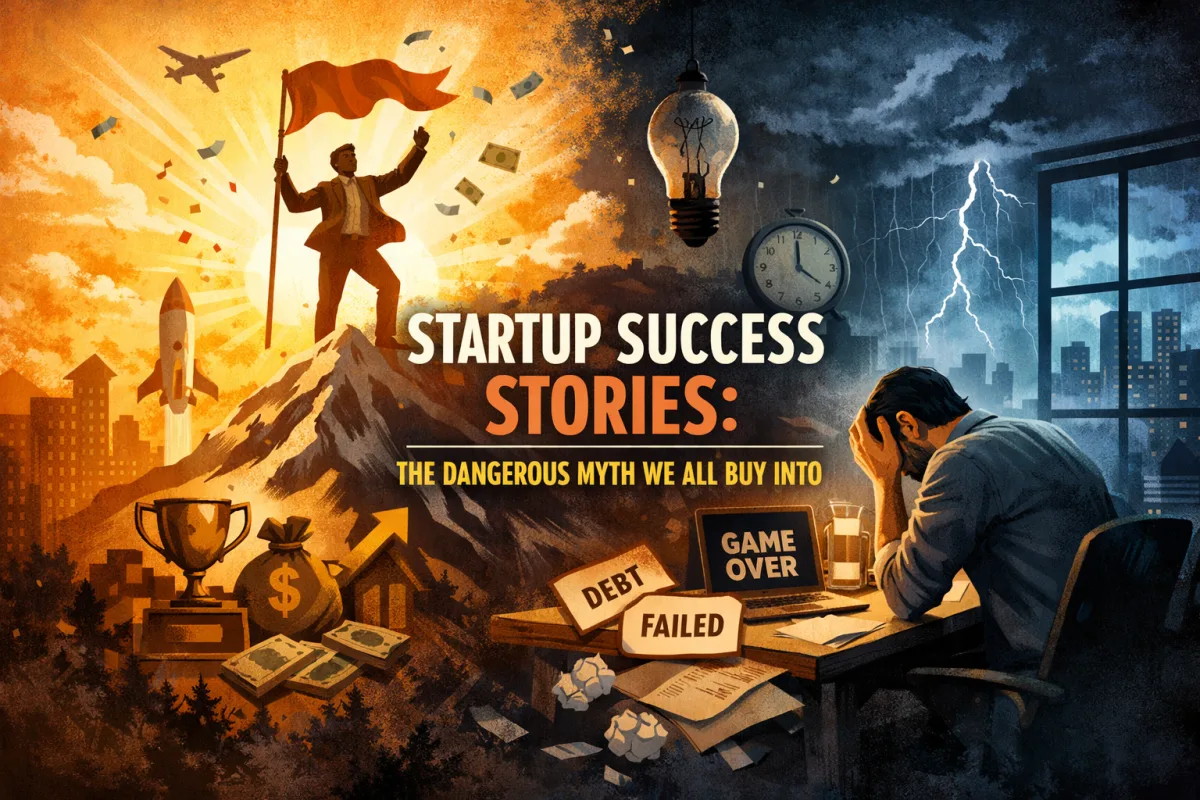
The Allure of the Unicorn: A Dangerous Fantasy
Walk into any co-working space, scroll through your LinkedIn feed, or browse the business headlines, and you'll encounter them: the startup success stories. They're everywhere. The plucky founder who started in a garage, the brilliant idea that disrupted an industry, the meteoric rise to a billion-dollar valuation. We eat them up, don't we? These narratives are intoxicating, selling us a potent cocktail of innovation, grit, and destiny.
But here's the uncomfortable truth: these narratives are often dangerous fantasies. They're meticulously curated highlight reels that obscure the brutal reality, the immense privilege, and the crushing weight of failure that define the vast majority of entrepreneurial journeys. We fixate on the unicorns, those mythical creatures of venture capital, while ignoring the graveyard of dreams that litters the startup landscape. It's time we stopped buying into this myth and started asking tougher questions about what "success" truly means.
Beyond the Glamour: The Unseen Struggles
The media loves a clean, inspiring arc: problem, solution, triumph. What they rarely show you are the years of ramen noodles, the sleepless nights, the relentless rejection from investors, the emotional toll on founders and their families. They don't often highlight the moments of existential doubt, the pivots that nearly killed the company, or the sheer, soul-crushing grind that precedes any glimmer of widespread recognition. Remember Airbnb? It's now a household name worth billions, but before its Series A funding in 2009, founders Brian Chesky and Joe Gebbia were famously selling novelty cereal boxes ("Obama O's" and "Cap'n McCain's") just to make ends meet and keep their fledgling idea alive. That wasn't just bootstrapping; that was desperation. That's the kind of untold story that truly defines the early stages of most "successful" ventures.
We're fed a diet of instant gratification – the overnight sensation, the rapid exit. But real success, even for the most celebrated companies, is almost always a marathon of setbacks, resilience, and often, sheer luck. To present it otherwise isn't just misleading; it's irresponsible, setting aspiring entrepreneurs up for disillusionment and burnout when their own journey doesn't mirror the sanitized version they see in the news.
The Elephant in the Room: Privilege and Access
Let's talk about something uncomfortable: privilege. While the narrative often champions the underdog, a closer look reveals that many "successful" founders aren't starting from scratch in the way we imagine. They often have access to networks, capital, and educational backgrounds that provide a significant head start. Think about the children of successful entrepreneurs or those with Ivy League connections – they're not just "grinding"; they're leveraging inherited social and financial capital. This isn't to diminish their hard work, but to acknowledge that the playing field isn't level.
Venture capital, the lifeblood of many startups, is notoriously insular. Women and founders of color consistently receive a disproportionately tiny fraction of funding, despite often leading more efficient and profitable companies. A 2023 report showed that Black founders received just 0.6% of all venture capital funding. Does that sound like a meritocracy to you? The "success story" often overlooks these systemic barriers, implying that anyone can make it if they just work hard enough. That's a dangerous lie that ignores the very real structural inequities baked into the system.
Redefining "Success": More Than Just Valuation
What defines a "successful" startup anyway? For most publications and investors, it boils down to one thing: valuation. How much is the company worth on paper? How quickly can it achieve unicorn status? This narrow definition ignores so much that truly matters.
- Does the company treat its employees well, or does it burn them out in pursuit of growth?
- Is its product genuinely adding value to the world, or is it merely optimizing for engagement and ad revenue?
- Is it sustainable in the long run, or is it a house of cards built on inflated metrics and endless funding rounds?
- What about the startup that provides stable, well-paying jobs for a community, grows steadily for decades, and never seeks venture capital? Isn't that a success?
We've become so fixated on the "exit" – the IPO or acquisition – that we've forgotten the deeper purpose of building a business. True success should encompass impact, ethical practices, employee well-being, and long-term viability, not just a fleeting paper valuation.
Learning from the Unsung Majority: The Lessons of Failure
For every celebrated unicorn, there are hundreds, if not thousands, of startups that didn't make it. The statistics are grim: estimates suggest that 90% of startups fail. These aren't just numbers; they're stories of passion, innovation, and immense effort that ultimately fell short. Yet, we rarely hear their stories, do we?
Imagine the invaluable lessons we could glean from the founders who tried and failed. What went wrong? What did they learn about market timing, team dynamics, or product-market fit? There's an immense wealth of knowledge locked away in these untold narratives of struggle and dissolution. We're so afraid to acknowledge failure that we miss out on its most potent teachings. Perhaps it's time to celebrate the brave souls who tried, learned, and moved on, as much as we celebrate those who merely reached a monetary milestone.
A Call for Honesty
The romanticized "startup success story" serves a purpose: it inspires, it motivates. But it also perpetuates a harmful illusion. We need a more honest, nuanced conversation about entrepreneurship. We need to acknowledge the immense challenges, the systemic biases, and the role of luck and privilege. We need to redefine success beyond mere financial metrics.
Only then can we foster a truly resilient and equitable entrepreneurial ecosystem, one that prepares aspiring founders for the real journey, celebrates diverse forms of achievement, and learns as much from the struggles as it does from the triumphs. It's time to stop chasing myths and start building a more truthful narrative.