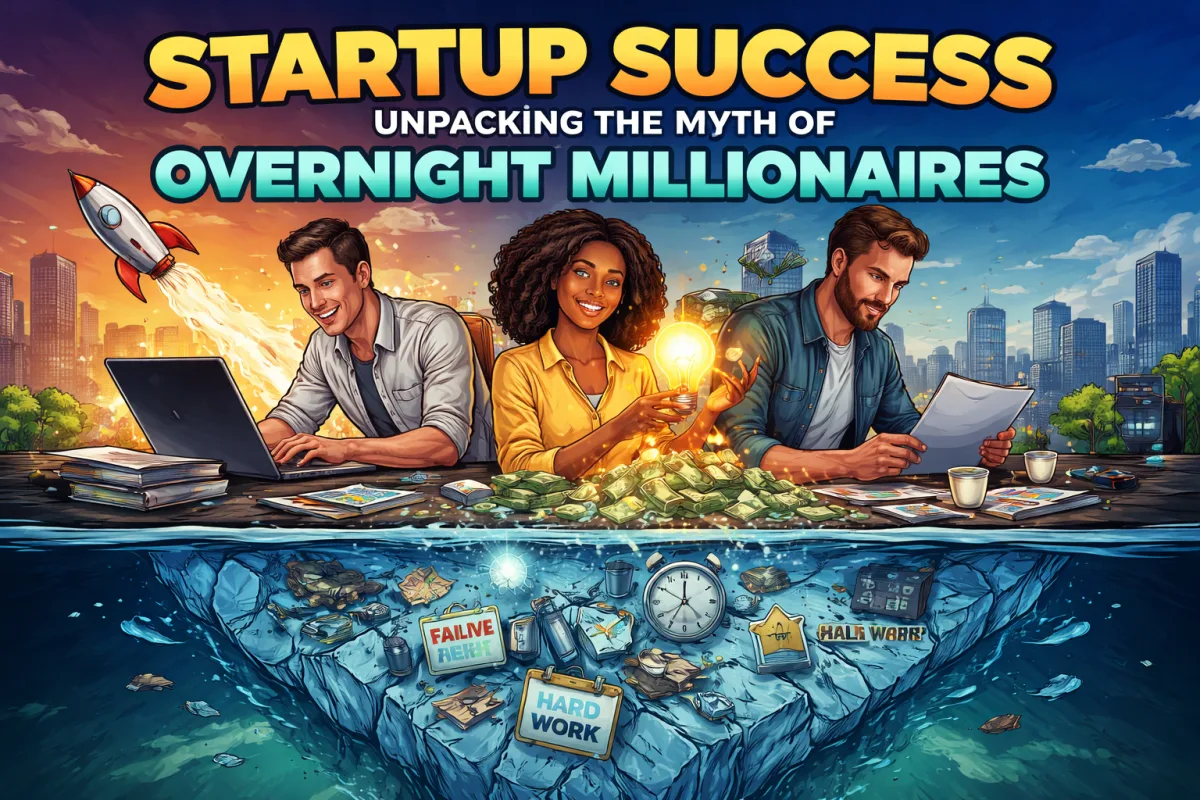
The Glamour, The Grind, and The Hidden Truths of Startup Success
We're all familiar with the narrative, aren't we? The plucky founder, a brilliant idea scribbled on a napkin, a few late nights in a garage, and then – *poof!* – a billion-dollar valuation. It's the modern-day fairy tale, constantly broadcast across our screens, fueling dreams and venture capital alike. But for anyone who's truly dipped a toe into the icy waters of entrepreneurship, that picture feels about as real as a unicorn riding a skateboard.
Here's the harsh truth: the startup success stories we celebrate are often sanitized, polished, and presented with all the rough edges sanded smooth. They inspire, yes, and they absolutely should. But they also inadvertently create a dangerously skewed perception of what it actually takes to build something meaningful, lasting, and genuinely successful. We're fed the highlight reels, never the endless bloopers, the near-death experiences, or the sheer, soul-crushing grind that defines the vast majority of these journeys.
Beyond the Headlines: What We Don't Often See
When you hear about a company like Airbnb or Instagram, you think of their meteoric rise. You don't often dwell on the fact that Airbnb founders ate cereal for dinner and maxed out credit cards to stay afloat, or that Instagram pivoted multiple times from a location-based check-in app. These weren't overnight sensations; they were products of stubborn perseverance, timely pivots, and more than a little bit of luck. And for every one of those stories, there are thousands of equally brilliant, equally dedicated teams who simply didn't make it.
Don't get me wrong, celebrating success is vital. It fuels ambition and proves what's possible. But we do a disservice to aspiring entrepreneurs by not dissecting these triumphs with a surgeon's precision. We need to talk about the brutal reality that a staggering 9 out of 10 startups reportedly fail. That's not a minor setback; that's a statistical massacre. And it's a massacre that the glossy "success story" narrative conveniently sidesteps.
The Unsung Heroes of Victory: Luck, Timing, and Privilege
No founder likes to admit that luck played a significant role in their success. It diminishes the myth of their singular genius. But let's be honest: timing is everything. Launching the right product at precisely the moment the market is hungry for it isn't just foresight; it's often serendipity. Did the pandemic accelerate the adoption of certain technologies? Absolutely. Did some founders just happen to be building solutions for a world that suddenly changed? You bet they did. That's not to say they didn't work tirelessly, but a tailwind can make all the difference.
Moreover, we can't ignore the often-unspoken role of privilege. Access to networks, early capital from family or friends, an elite education, or even just the stability to take significant financial risks – these are not universally available. They provide a crucial safety net that allows founders to endure the lean times, experiment, and ultimately, survive long enough to find their footing. It's a truth that often gets buried under the "bootstrapped from nothing" mantra, but it's essential to a realistic understanding of the entrepreneurial landscape.
What "Success" Really Means (and Why Valuation Isn't Everything)
Another distortion in the startup narrative is the singular focus on valuation. A "unicorn" (a company valued at over a billion dollars) becomes the ultimate benchmark. But is a company truly successful if it achieves a massive valuation at the cost of its employees' well-being, ethical standards, or environmental impact? Are we confusing financial exit with actual, sustainable value creation?
True success, I'd argue, extends far beyond the cap table. It's about building a sustainable business that provides meaningful employment, solves genuine problems, fosters innovation, and contributes positively to its community. It's about creating a culture where people thrive, not just burn out in pursuit of a liquidity event. Many small businesses, never featured in tech headlines, achieve this kind of success every single day, quietly and consistently, without ever hitting a "unicorn" valuation.
Drawing the Right Lessons from the Journey
So, what should aspiring founders take away from these stories? Not a blueprint for guaranteed riches, but a testament to human resilience and adaptability. Here's what the best success stories actually teach us:
- Relentless Problem Solving: Every successful startup solved a real problem, often in a novel way. Focus on that problem, not just the idea.
- Grit and Persistence: Things will go wrong. Repeatedly. The ability to pivot, learn from failure, and keep pushing forward is non-negotiable.
- Team Matters Most: A strong, complementary team with shared vision and diverse skills is crucial. You can't do it alone.
- Customer Obsession: The market dictates success, not your ego. Listen to your customers, iterate, and build what they truly need.
- Financial Prudence: Money runs out. Understanding your burn rate and extending your runway is critical to survival.
The Path Forward: Realistic Inspiration
Let's continue to celebrate those who build remarkable companies. Their achievements are genuinely inspiring. But let's also commit to telling the full story – the gritty, messy, often terrifying reality of the entrepreneurial journey. Let's acknowledge the role of luck, the systemic advantages, and the countless failures that pave the way for the few who break through.
Because it's in those unvarnished truths that we find the most valuable lessons. It's there, in the struggle and the near misses, that real wisdom resides, offering a far more robust and realistic foundation for the next generation of founders than any polished fairy tale ever could.