Why I Finally Bought a Digital Microscope
I have been doing a lot of minor electronics repair lately, mostly fixing broken traces on old game console motherboards and replacing tiny surface-mount components. Staring through a cheap jeweler's loupe for hours was giving me a massive headache and terrible neck cramps. I knew I needed a digital solution, but professional stereo optical microscopes cost a small fortune. I stumbled across this wireless digital microscope and figured it was worth a shot for my workbench. If you are dealing with eye strain from detailed hobbies, you might want to check today's price to see if it fits your budget.
Unboxing and First Impressions
When the box arrived, I was honestly a little skeptical. The microscope unit itself is incredibly lightweight and mostly made of plastic. It does not exactly scream "premium laboratory equipment." However, the metal base and stand have a decent amount of weight to them. This is super important because a flimsy stand makes a microscope useless at high magnifications.
Setup was surprisingly painless. I was dreading a fussy Bluetooth pairing process, but this device creates its own local Wi-Fi network. You just download the companion app, connect your phone or tablet to the microscope's Wi-Fi, and open the app. I had a live video feed running on my iPad in less than three minutes. I also noticed the app did not ask for a bunch of creepy privacy permissions, which was a huge relief.
Image Quality and Real-World Performance
The manufacturer makes some big claims about the megapixels and magnification capabilities. In practice? The image quality actually blew me away for a budget-friendly tool. I placed a dusty 1943 steel penny under the lens, and I could clearly read the tiny imperfections, scratches, and mint marks on the surface.
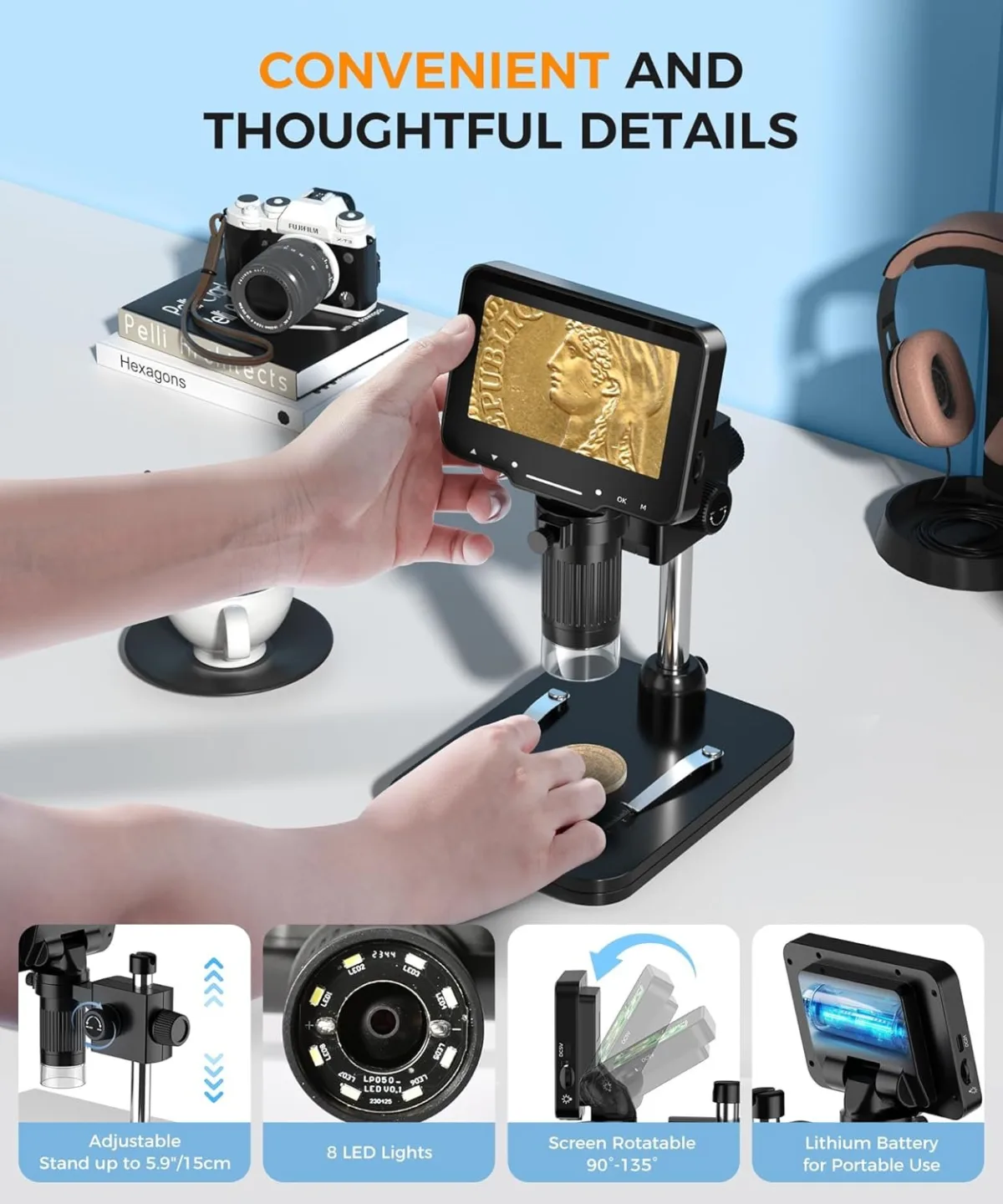
The built-in LED ring light is a total lifesaver. You can adjust the brightness via a little dial, which is crucial when you are looking at shiny solder joints or glossy coins that throw off horrible glare. The video recorder function works seamlessly through the app, saving photos and MP4 videos directly to my camera roll. I recorded a quick video of a soldering job to test the latency. While it is not perfectly zero-lag, the delay is minimal enough that I can easily drag a soldering iron across a board while watching my tablet screen.
What Annoyed Me
It is definitely not perfect. After a few weeks of testing, my biggest gripe is the focus wheel. On my specific unit, the wheel is pretty stiff. When you are zoomed in super close, trying to turn that stiff wheel requires enough force that it bumps the camera out of alignment. You have to use a really light, careful touch to get the image perfectly sharp.
Also, the battery life is just okay. I get about two hours of continuous use with the LED lights turned up to maximum brightness before it needs a recharge. If you plan on using this for a massive, all-day project, you will definitely want to keep a portable power bank handy. Still, for short sessions, the wireless freedom is amazing, and you might want to grab it on Amazon before your next intricate repair.
Pros:
- Excellent image clarity and high magnification for the price.
- Wireless connection to tablets and phones is stable and easy to set up.
- Adjustable LED ring light effectively eliminates shadows and glare.
- Takes photos and records video directly to your device's storage.
- Highly portable—I even took it outside to show my kids bugs on our plants.
Cons:
- The plastic body feels a little cheap compared to the heavy stand.
- The focus wheel is stiff, making fine-tuning a bit frustrating.
- Battery life caps out around two hours on maximum brightness.
Who Should Buy This
This is a fantastic tool for hobbyists. If you collect coins, inspect stamps, fix small electronics, appraise jewelry, or just want a really cool STEM gadget for your kids to explore the backyard with, this is a home run. The ability to cast the image to a large tablet screen makes sharing the view with others incredibly easy.
Who Should Skip It
If you are a professional who micro-solders all day for a living, you should skip this. You will want an optical stereo microscope with absolutely zero latency and a longer working distance for your hot air station. It is also not meant for viewing cellular structures on glass slides—this is a surface-level inspection tool, not a high-school biology lab microscope.
Final Verdict
I have used this little gadget almost daily for the past month. It totally saved my neck and eyes during a tricky Nintendo Switch motherboard repair, and my kids absolutely love using it to look at leaves and fabric weaves. It is fun, functional, and the wireless feature makes it incredibly versatile. If you are on the fence about getting one for your workbench or hobby desk, I highly recommend you pick one up here. It punches way above its price tag.