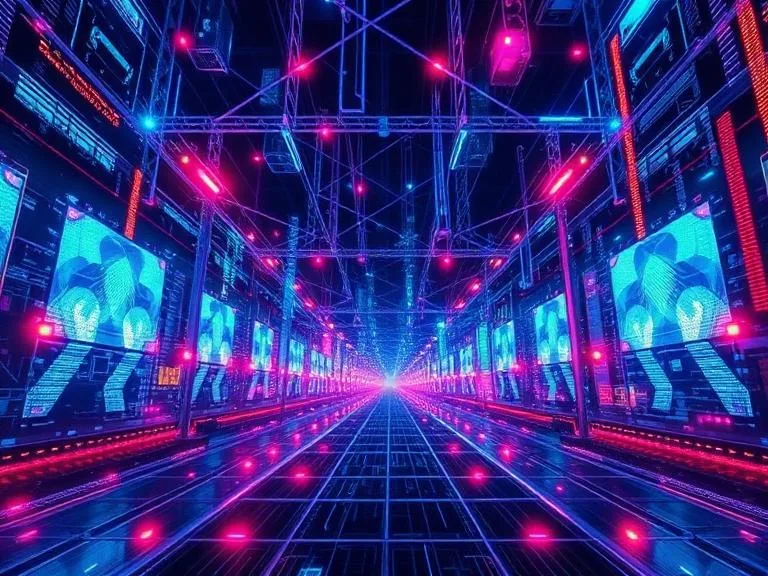
The ground beneath our feet feels less stable each day, not because of geological shifts, but due to the relentless, accelerating pace of technological innovation. We're not merely observing change; we're living through a fundamental reshaping of society, economy, and individual experience. The digital future that is unfolding before us isn't some distant sci-fi fantasy; it's here, now, manifesting in ways both subtle and profound, demanding our attention and adaptation.
This isn't just about faster internet or fancier gadgets. It's about an entirely new operating system for human existence, a paradigm shift where the lines between the physical and digital blur, creating opportunities and challenges we're only just beginning to grasp. Let's unpack some of the most impactful currents driving this transformation.
The Hyper-Connected World: A Seamless Digital Tapestry
Connectivity is no longer a luxury; it's the fundamental infrastructure of our modern lives. We're witnessing the culmination of decades of progress, leading to a hyper-connected world where nearly everything, and everyone, has a digital presence. This isn't just about smartphones; it's about a vast, intricate network of devices, sensors, and data streams communicating in real-time.
Consider the rollout of 5G and its successors. This isn't just a marginal speed increase; it's a leap that enables entirely new applications. Low latency and massive bandwidth mean instantaneous communication, critical for everything from remote surgery to autonomous vehicle networks. By 2030, analysts predict there will be over 29 billion IoT devices globally, each contributing to a deluge of data that paints an ever more detailed picture of our world.
This seamless digital tapestry connects our homes, workplaces, vehicles, and even our bodies. Smart cities, once a futuristic concept, are emerging realities, utilizing interconnected sensors to manage traffic, optimize energy consumption, and enhance public safety. We're building a nervous system for civilization, one pulse at a time.
Beyond the Smartphone: The Ubiquitous Computing Paradigm
Our interaction with technology is moving beyond the screen in our pocket. Wearable technology, smart home devices, and embedded sensors are making computing truly ubiquitous. Your smart watch monitors your health, your thermostat learns your habits, and soon, your car will navigate rush hour with minimal input. These devices aren't just tools; they're becoming extensions of ourselves, seamlessly integrating into our daily routines.
This pervasive computing environment creates incredible convenience but also raises questions about data privacy and digital boundaries. Who owns the data generated by your smart home? How much information are we comfortable sharing for the sake of efficiency and comfort? These aren't easy questions, and our societies are only beginning to grapple with the answers.
Intelligent Automation: Reshaping Work and Life in the Digital Future
Perhaps no aspect of the unfolding digital future generates more discussion than intelligent automation. This isn't just about factory robots; it's about sophisticated systems that can learn, adapt, and perform complex tasks that once required human intellect. From customer service chatbots that handle queries with surprising nuance to sophisticated algorithms that manage supply chains, automation is everywhere.
The impact on the global workforce is undeniable. A 2023 report by McKinsey & Company estimates that automation could displace tens of millions of jobs worldwide by 2030, particularly in routine, predictable roles. Yet, it also projects the creation of new jobs requiring skills in areas like data science, engineering, and creative problem-solving. This isn't a zero-sum game, but a profound shift in the nature of work itself.
Beyond the workplace, automation is transforming our daily lives. Autonomous vehicles promise safer roads and more efficient transportation. Smart appliances anticipate our needs, making our homes more intuitive. We're seeing a future where mundane tasks are increasingly handled by machines, freeing up human potential for more creative, strategic, and interpersonal pursuits. It's a future that demands a re-evaluation of what it means to work, and what it means to be human.
Personalized Realities: Tailoring the World to You
The vast amounts of data generated by our hyper-connected world fuel another powerful trend: hyper-personalization. Every online interaction, every purchase, every click contributes to a digital profile that companies use to tailor experiences specifically for you. Recommendation engines on streaming services, customized ads, and even personalized news feeds are just the beginning.
This goes beyond simple recommendations. Augmented Reality (AR) and Virtual Reality (VR) are poised to create deeply immersive, personalized realities. Imagine trying on clothes virtually, walking through a digital recreation of a historical site from your living room, or collaborating with colleagues in a shared virtual workspace. The global AR/VR market is projected to reach over $1.5 trillion by 2030, indicating a massive shift in how we interact with digital content.
This level of personalization offers incredible convenience and relevance. It can make education more engaging, healthcare more precise, and entertainment more captivating. However, it also raises concerns about filter bubbles, echo chambers, and the potential for manipulation when our digital experiences are so finely tuned to our preferences and biases. Are we ready for a world where our reality is constantly curated just for us?
The Ethical Crossroads of Our Digital Evolution
As the digital future unfolds, it brings with it a complex array of ethical dilemmas. The sheer power of these technologies — from mass surveillance capabilities to the potential for deepfake manipulation — necessitates careful consideration and robust governance. We're at a critical juncture where the choices we make today will define the ethical landscape of tomorrow.
Privacy remains a paramount concern. With every smart device, every data point, we're trading personal information for convenience. Ensuring data security and protecting individual autonomy against increasingly sophisticated data harvesting techniques is a monumental challenge. Furthermore, algorithmic bias, often an unintended consequence of the data used to train systems, can perpetuate and amplify societal inequalities, from hiring practices to criminal justice.
The digital divide also looms large. While much of the world is rapidly connecting, significant portions remain unconnected or underserved. This creates a two-tiered society where access to essential services, education, and economic opportunities are increasingly contingent on digital access. Bridging this gap isn't just an economic issue; it's a moral imperative to ensure that the benefits of this digital evolution are shared broadly.
What This Unfolding Digital Future Means For You
This isn't just a story for technologists or policymakers; it's a narrative that directly impacts your life, your career, and your future. Understanding these shifts is no longer optional; it's essential for navigating the coming decades. Here's what you can do:
- Embrace Lifelong Learning: The skills needed for tomorrow are different from those of yesterday. Focus on critical thinking, creativity, complex problem-solving, and digital literacy. Continuous learning isn't just a buzzword; it's a survival strategy.
- Cultivate Digital Fluency: Don't just consume technology; understand its mechanisms, its benefits, and its potential pitfalls. Learn to critically evaluate information, protect your digital footprint, and adapt to new tools.
- Demand Ethical Technology: As consumers and citizens, we have a voice. Support companies that prioritize privacy and ethical design. Advocate for policies that promote responsible innovation and address the digital divide.
- Focus on Human Skills: As automation handles more routine tasks, uniquely human attributes — empathy, emotional intelligence, collaboration, and ethical reasoning — will become even more valuable.
The digital future isn't a passive destination; it's a dynamic landscape we're actively shaping. Your engagement, your adaptability, and your ethical awareness will play a crucial role in determining what kind of world emerges from this unprecedented transformation.
The digital future that is unfolding before us is a tapestry woven from innovation, ambition, and profound societal change. It promises unparalleled convenience, interconnectedness, and new frontiers of human potential. Yet, it also presents complex challenges related to privacy, equity, and the very definition of work and reality. Our collective journey into this new era demands vigilance, adaptability, and a commitment to shaping technology for the betterment of all. The story isn't written yet; we're holding the pen.