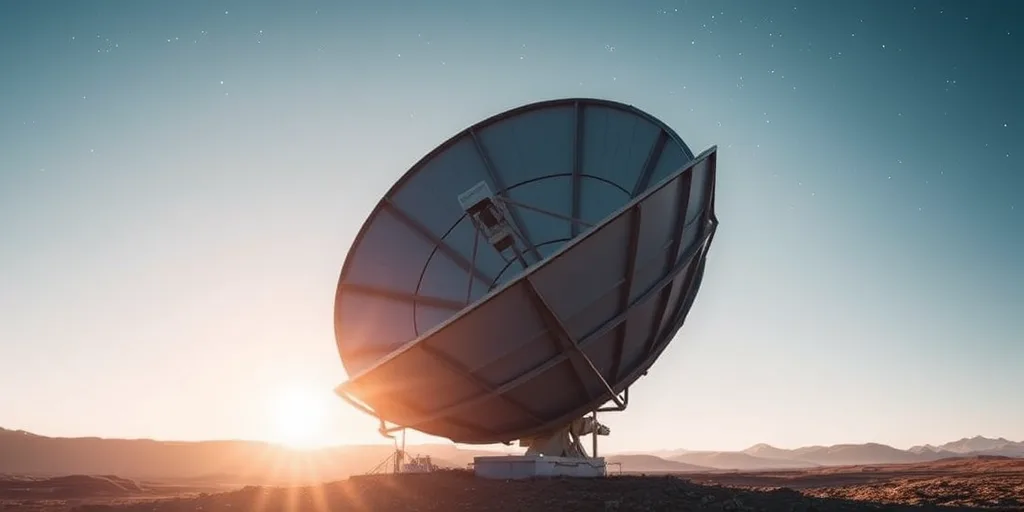
In November 2023, Northrop Grumman’s Mission Extension Vehicle-2 (MEV-2) successfully docked with the Intelsat 10-02 communications satellite, extending its operational life for another five years. This wasn't a glamorous launch or a billionaire's joyride into the cosmos; it was a complex act of orbital maintenance, a robotic dance performed 22,000 miles above Earth. This seemingly mundane event, far from the public eye, whispers a truth often missed in the hype surrounding space tourism: the real future of our off-world ambitions isn't just about luxury flights for the ultra-rich, but about the pragmatic, industrial infrastructure quietly taking shape in Earth's orbit and beyond. It's a future where technology isn't just for looking at Earth from afar, but for building a sustainable, economically viable presence in space.
- The conventional focus on luxury space tourism obscures a deeper, industrial shift towards in-orbit manufacturing and servicing.
- Technological advancements in reusable rockets and propulsion systems are driving down costs, making space access more routine and economically feasible.
- Resource utilization from the Moon and asteroids will underpin future space colonies and deep-space missions, moving beyond Earth-dependency.
- The long-term vision for space isn't just about temporary visits, but about creating self-sustaining orbital economies and permanent human settlements.
Beyond the Billionaires: The Industrial Pivot in Orbit
When most people hear "space tourism," they picture Sir Richard Branson floating weightlessly after a suborbital flight, or perhaps a futuristic orbital hotel. This popular image, while exciting, often overshadows the profound technological shifts happening behind the scenes. The real narrative isn't just about leisure; it's about industrialization. Companies aren't just selling tickets; they're building the infrastructure that will eventually make space travel, and even living in space, a genuine possibility for a broader population. This includes everything from advanced propulsion to orbital assembly and manufacturing.
Consider Redwire’s Archinaut One, a fascinating project backed by NASA. In 2021, Redwire successfully manufactured and assembled a structural beam in a vacuum chamber, demonstrating the potential for complex structures to be built directly in space, rather than launched fully formed. This capability dramatically reduces the constraints of launch vehicle fairings, allowing for significantly larger and more capable spacecraft. This shift from "launch and deploy" to "launch and assemble" is foundational for future space stations, large telescopes, and even lunar bases. It's a critical technological leap that redefines what’s possible off-world.
The global space economy, projected by Morgan Stanley in 2023 to exceed $1 trillion by 2040, isn't solely driven by tourism dollars. A significant portion of this growth comes from satellite services, broadband internet, and, increasingly, in-space services and manufacturing. Here's the thing: the infrastructure built for these industrial applications will ultimately pave the way for more widespread and affordable space tourism, making it a byproduct of a robust orbital economy, not its primary driver.
The Quiet Rise of In-Space Manufacturing
In-space manufacturing (ISM) isn't science fiction anymore; it's a rapidly developing field with tangible benefits. The ability to print tools, repair parts, and even construct entire habitats in orbit eliminates the enormous costs and risks associated with launching everything from Earth. Think about the International Space Station (ISS). Every single component had to be designed to withstand launch forces, fit within a rocket fairing, and be assembled by astronauts in a complex and dangerous environment.
Now, imagine a future where materials are launched in bulk, then fabricated into custom structures on demand. Companies like Varda Space Industries are already planning to manufacture high-value materials, such as specialized fiber optics and pharmaceuticals, in the microgravity environment of space, then return them to Earth. They aim for their first orbital manufacturing mission by 2024. This isn't just about building things for space; it's about leveraging space's unique environment to create products for Earth. The technological implications are immense, from creating stronger alloys to purer biological compounds, all of which demand precise engineering and a robust orbital presence.
Orbital Logistics: Making Space Sustainable
The dream of routine space travel, whether for tourism or industry, hinges on a sustainable orbital environment. For decades, space has been treated as an infinite dump, leading to a growing problem: space debris. The European Space Agency (ESA) estimated over 36,500 pieces of space debris larger than 10 cm were tracked in 2024, posing a significant threat to operational satellites and future missions. Addressing this requires innovative technological solutions in orbital logistics and servicing.
Companies like Astroscale are developing technologies for active debris removal and satellite life extension. Their ELSA-d mission, launched in 2021, demonstrated the ability to magnetically capture and deorbit a simulated piece of debris. This isn't just environmental cleanup; it's about protecting the very highways that future space tourism and technology depend on. Without clean and safe orbital pathways, the cost and risk of every launch skyrocket, making widespread access impossible.
Beyond debris, orbital refueling and servicing are critical for sustainability. Why launch a new multi-million dollar satellite when you can refuel or repair an existing one? Northrop Grumman’s Mission Robotic Vehicle (MRV), slated for launch in 2024, will be capable of performing complex robotic repairs and upgrades to satellites in orbit. These are the unsung heroes of the space economy, ensuring that assets remain operational longer and reducing the need for costly replacements. This kind of technological advancement helps create a truly circular economy in space, where resources are conserved and missions extended.
From Debris Fields to Orbital Refueling Stations
The vision of orbital refueling stations, once confined to science fiction, is becoming a strategic imperative. Imagine a future where rockets don't need to carry all their fuel from Earth, but can top off their tanks in orbit before heading to the Moon or Mars. This significantly increases payload capacity and reduces launch costs. Think of it like gas stations on a highway.
While no commercial orbital refueling station is fully operational yet, several companies are investing heavily in the technology. Orbit Fab, for example, is developing "gas stations in space" and specialized refueling interfaces for satellites. Their goal is to create a ubiquitous fuel supply network in orbit, much like terrestrial gas stations. This infrastructure won't just benefit deep-space missions; it'll also allow future space hotels to stay in orbit longer, and orbital tourism vessels to make longer, more ambitious journeys. It’s a foundational technology that underpins nearly every other long-term space ambition, including advanced branding strategies for future space ventures.
The Lunar Gateway and Martian Ambitions: Infrastructure for Deep Space
The push for space tourism, particularly to lunar destinations, intertwines directly with government-led deep-space exploration initiatives. NASA's Artemis program isn't just about returning humans to the Moon; it's about establishing a sustained human presence and using the Moon as a proving ground for Mars. The Lunar Gateway, a planned small space station orbiting the Moon, exemplifies this synergy. It will serve as a science laboratory, a short-term habitation module, and a staging point for missions to the lunar surface and potentially beyond.
This station, developed with international partners like ESA and the Canadian Space Agency, isn't a tourist hotel in itself. However, the technologies developed for its construction, operation, and resupply – such as advanced life support systems, autonomous rendezvous and docking, and robust communication networks – are directly transferable to commercial space stations and deep-space tourism ventures. What's more, the very presence of such an outpost makes the Moon a more accessible and appealing destination for future private expeditions.
The long-term goal of sending humans to Mars also relies heavily on these foundational technologies. The ability to live and work sustainably on the Moon, utilizing lunar resources (In-Situ Resource Utilization, or ISRU), directly informs how we'll establish a presence on the Red Planet. This symbiotic relationship between government exploration and commercial innovation is critical. Without NASA and other agencies pushing the boundaries, many of the high-risk, high-reward technologies wouldn't see the initial investment required for commercialization.
Dr. Laura Forczyk, Founder of Astralytical and adjunct faculty at Embry-Riddle Aeronautical University, stated in a 2023 interview, "The true economic viability of space tourism won't come from a handful of ultra-wealthy individuals flying to orbit. It will emerge from the parallel development of a robust space economy that reduces launch costs, enables in-space manufacturing, and facilitates resource extraction. Tourism will be a luxury byproduct of a thriving industrial ecosystem in space, not its primary driver."
Resource Rush: Tapping Asteroids and the Moon
For any sustained human presence in space, including large-scale tourism or permanent settlements, reliance on Earth for every resource simply isn't feasible. The cost of launching water, oxygen, and construction materials is astronomical. This is where the concept of In-Situ Resource Utilization (ISRU) becomes paramount. The Moon and near-Earth asteroids are rich in valuable resources, from water ice that can be converted into rocket fuel and breathable air, to rare earth metals and structural materials.
NASA's Commercial Lunar Payload Services (CLPS) initiative, for instance, awards contracts to private companies to deliver payloads to the lunar surface, often with ISRU objectives. Intuitive Machines' Nova-C lander, which successfully landed on the Moon in February 2024, carried NASA instruments designed to analyze lunar regolith, assessing its properties for construction and resource extraction. This directly supports the Artemis program's goal of establishing a sustainable lunar presence.
Asteroid mining, while further in the future, holds even greater potential. Estimates suggest a single asteroid could contain trillions of dollars worth of platinum group metals. Companies like TransAstra are developing technologies like "optical mining" to capture and process asteroids in space. While the economic models are complex and the initial investment huge, the long-term vision is clear: unlock the vast resources of the solar system to fuel humanity's expansion. This will drastically reduce the cost of deep-space missions and provide the raw materials for an orbital economy far beyond anything we can imagine today, making long-term space hotels and settlements a real possibility.
Economic Models for Off-World Mining
The economic models for off-world mining are still nascent but rapidly evolving. Initial efforts will likely focus on water ice extraction from lunar poles, which can be electrolyzed into hydrogen and oxygen propellants. This "fuel depot" model offers a clear, immediate market by reducing the cost of missions beyond Low Earth Orbit. A report by McKinsey & Company in 2022 highlighted that the space resources market, though niche, is attracting significant private capital, particularly in areas related to lunar water ice. They project substantial growth in this sector as the technology matures and demand for orbital fuel increases.
Further down the line, asteroid mining for metals will present different challenges and opportunities. The high upfront costs and long return on investment necessitate sophisticated financial instruments and international regulatory frameworks. However, the potential to alleviate resource scarcity on Earth and provide abundant materials for in-space construction is a powerful driver. It’s a long game, but one that promises to fundamentally alter our industrial capabilities, creating an entirely new supply chain for space endeavors. Investors are increasingly looking at these ventures as long-term plays, understanding their foundational role in the future of space tourism and technology.
The True Cost of a Cosmic View: Accessibility Challenges
Despite the grand visions, the cost of space tourism remains prohibitive for the vast majority of people. A suborbital flight with Virgin Galactic in 2024 costs around $450,000. An orbital trip to the ISS, even if available, could easily exceed $50 million. These aren't just high prices; they reflect the immense technological challenges and the sheer energy required to escape Earth's gravity well. So what gives? The core issue boils down to launch costs and the inherent complexity of human spaceflight systems.
Every kilogram launched to Low Earth Orbit still costs thousands of dollars, despite significant reductions. The technological advancements driving down these costs are primarily in reusable rocket technology. SpaceX's Falcon 9, which has flown hundreds of missions with first-stage reusability, revolutionized the industry. Its success forced competitors to innovate, leading to Blue Origin's New Glenn and other reusable systems. The ultimate goal, embodied by SpaceX's Starship, is a fully and rapidly reusable system capable of launching hundreds of tons to orbit at dramatically reduced costs.
But wait. Even with Starship aiming for costs possibly as low as $1 million per launch for massive payloads, the infrastructure for accommodating tourists – life support, safety systems, orbital hotels – still represents a significant investment. This isn't just about getting a human to space; it's about getting thousands, or millions, there safely, comfortably, and affordably. It's a scaling problem that requires more than just cheaper rockets; it demands an entire ecosystem of supporting technologies and services.
Driving Down Launch Costs
The relentless pursuit of lower launch costs is perhaps the single most important factor enabling the future of space tourism and technology. When NASA's Space Shuttle program was active, the cost per kilogram to orbit was estimated at over $54,500. By 2023, a SpaceX Falcon 9 could achieve costs closer to $2,700 per kilogram. This dramatic reduction is due to reusability, improved manufacturing techniques, and increased launch cadence. This is a staggering change, making previously unthinkable missions economically viable.
Further reductions are anticipated with the advent of super heavy-lift vehicles like SpaceX's Starship and Blue Origin's New Glenn, both designed for full reusability and high flight rates. These vehicles aren't just bigger; they represent a fundamental shift in design philosophy, treating rockets more like aircraft that can be quickly turned around for another flight. This technological evolution makes everything from deploying large satellite constellations to establishing lunar bases, and eventually mass-market space tourism, significantly more achievable. It's the economic backbone for every other space ambition.
When Will You Go? The Timeline for the Average Citizen
The question on many minds isn't if space tourism will happen, but when it will become accessible to the average person. The answer is complex, hinging on a confluence of technological maturity, regulatory frameworks, and economic scaling. For suborbital flights, the timeline is closer, perhaps within the next decade for a niche, high-net-worth market. Companies like Virgin Galactic and Blue Origin are already flying paying customers, albeit at premium prices. As their operations scale and competition increases, prices will likely come down, but perhaps not to an "average person" level for many years.
Orbital tourism, the kind that allows for stays in space stations or visits to the Moon, is a much longer-term prospect. While companies like Axiom Space are building commercial modules for the ISS and planning their own free-flying stations, costs remain astronomical. A 2024 report by Deloitte projected that significant expansion of orbital tourism for the general public would likely not occur until the 2040s, and even then, it will likely be a luxury offering. This isn't just about the technology of spaceflight, but the comfort and safety standards of a genuine space hotel, complete with all the documentation and support infrastructure. We're talking about a vast industrial complex to make it happen.
The global space economy is projected to grow from approximately $469 billion in 2023 to over $1 trillion by 2030, according to a 2023 report by the Space Foundation, with commercial revenue constituting 87% of this total.
The true inflection point for accessibility will be when the underlying space industrial economy reaches a critical mass. When in-space manufacturing can produce habitats affordably, when orbital refueling is routine, and when launch costs are orders of magnitude lower than today. This might mean we're looking at the latter half of the 21st century for truly widespread, affordable space travel. Until then, the focus remains on building the technological foundations.
The Future of Space Tourism and Technology: What Comes Next
The trajectory of space tourism and technology isn't a straight line to luxury resorts in orbit. It's a complex, multi-faceted journey driven by fundamental shifts in how we approach space. The conventional wisdom focuses on the end-user experience, but the critical advancements are happening in the background: the engineering of reusable vehicles, the chemistry of in-situ resource utilization, and the robotics of orbital assembly. These are the unsung heroes that will truly open up the cosmos.
What comes next is a period of intense industrial expansion in space. We'll see more private space stations, not just for tourists but for manufacturing, research, and logistics hubs. Lunar bases will evolve from temporary outposts to semi-permanent settlements. Asteroid mining will move from concept to pilot programs. These developments, while not always glamorous, are the bedrock upon which any widespread space tourism industry will eventually be built. It's an economy first, then a destination.
Ultimately, the future of space tourism and technology isn't just about going to space; it's about staying there, building there, and thriving there. This long-term vision requires sustained investment, audacious technological leaps, and a global commitment to creating a sustainable off-world economy. The thrill of seeing Earth from orbit will remain a powerful draw, but the true revolution lies in the quiet, persistent work of engineers and entrepreneurs building an industrial future among the stars.
How to Establish a Sustainable Orbital Economy for Space Tourism and Technology
- Invest in Fully Reusable Launch Systems: Prioritize funding and development for rockets like SpaceX Starship and Blue Origin New Glenn to drastically cut launch costs and increase flight cadence.
- Accelerate In-Space Manufacturing (ISM): Support companies developing capabilities to 3D print and assemble structures, tools, and even habitats directly in orbit, reducing reliance on Earth-launched components.
- Develop Robust Orbital Servicing & Refueling Infrastructure: Build networks of satellite repair vehicles and fuel depots to extend spacecraft lifespans and enable longer, more complex missions beyond LEO.
- Advance In-Situ Resource Utilization (ISRU): Fund projects focused on extracting water ice and other resources from the Moon and asteroids, turning them into propellant, oxygen, and construction materials.
- Establish Clear Regulatory Frameworks: Create international agreements and national policies for space traffic management, debris removal, resource ownership, and commercial space operations to foster stability.
- Promote Public-Private Partnerships: Encourage collaboration between government space agencies and commercial entities to share risks and accelerate technological development, as seen in NASA's CLPS program.
- Develop Sustainable Waste Management Solutions: Implement technologies for active debris removal and responsible end-of-life disposal for satellites to maintain safe orbital environments.
The evidence overwhelmingly points to a future where space tourism, as a mass market, will be a derivative benefit of a burgeoning industrial space economy, not its primary driver. While high-net-worth individuals will continue to experience space, the real growth and accessibility will stem from innovations in reusable launch technology, in-space manufacturing, orbital servicing, and resource extraction. These foundational technologies are driving down costs and enabling a sustainable presence beyond Earth, which will eventually make space travel more routine and affordable for many, albeit decades from now. The narrative must shift from exclusive luxury to industrial expansion to grasp the true trajectory of human endeavor in space.
What This Means for You
For the average person, the immediate future of space tourism still involves significant financial barriers. However, the underlying technological advancements have tangible implications beyond personal travel. First, the growth of the orbital economy means more jobs in engineering, manufacturing, logistics, and data analysis in the space sector. Second, improvements in satellite technology, driven by cheaper launches and in-orbit servicing, will enhance everyday services like GPS, weather forecasting, and global internet connectivity. Third, the long-term potential for asteroid mining and lunar resource utilization could eventually lead to new materials and energy sources, impacting global economics and resource availability on Earth. You might not go to space tomorrow, but space technology will continue to shape your world.
Frequently Asked Questions
When will space tourism become affordable for the average person?
True affordability for widespread space tourism is likely several decades away, projected by some analysts like Deloitte to be in the 2040s or even later in the second half of the 21st century. This depends heavily on further dramatic reductions in launch costs, the establishment of robust orbital infrastructure, and scalable space habitats, none of which are fully mature yet.
What are the biggest technological hurdles for space tourism?
The biggest hurdles include reducing the cost of access to space, developing reliable and safe life support systems for long-duration stays, managing space debris risks, and creating comfortable, enjoyable environments in microgravity. Reusability and in-space resource utilization are key technologies addressing these challenges.
How will space mining impact the future of space travel?
Space mining, particularly for lunar water ice, will drastically reduce the cost of deep-space travel by providing in-situ propellant, breathable air, and water. This enables missions to go further and last longer without relying on expensive Earth-launched resources, making destinations like the Moon and Mars more accessible for both industrial and eventual tourism purposes.
Are there currently any space hotels or orbital resorts?
As of early 2024, there are no dedicated space hotels or orbital resorts for tourists. Axiom Space is developing commercial modules for the International Space Station (ISS) that will host private astronauts and eventually form a free-flying commercial space station, but these are not yet operating as conventional hotels. Orbital Assembly Corporation has proposed future stations like Voyager Station, but these are still in conceptual or early development phases.