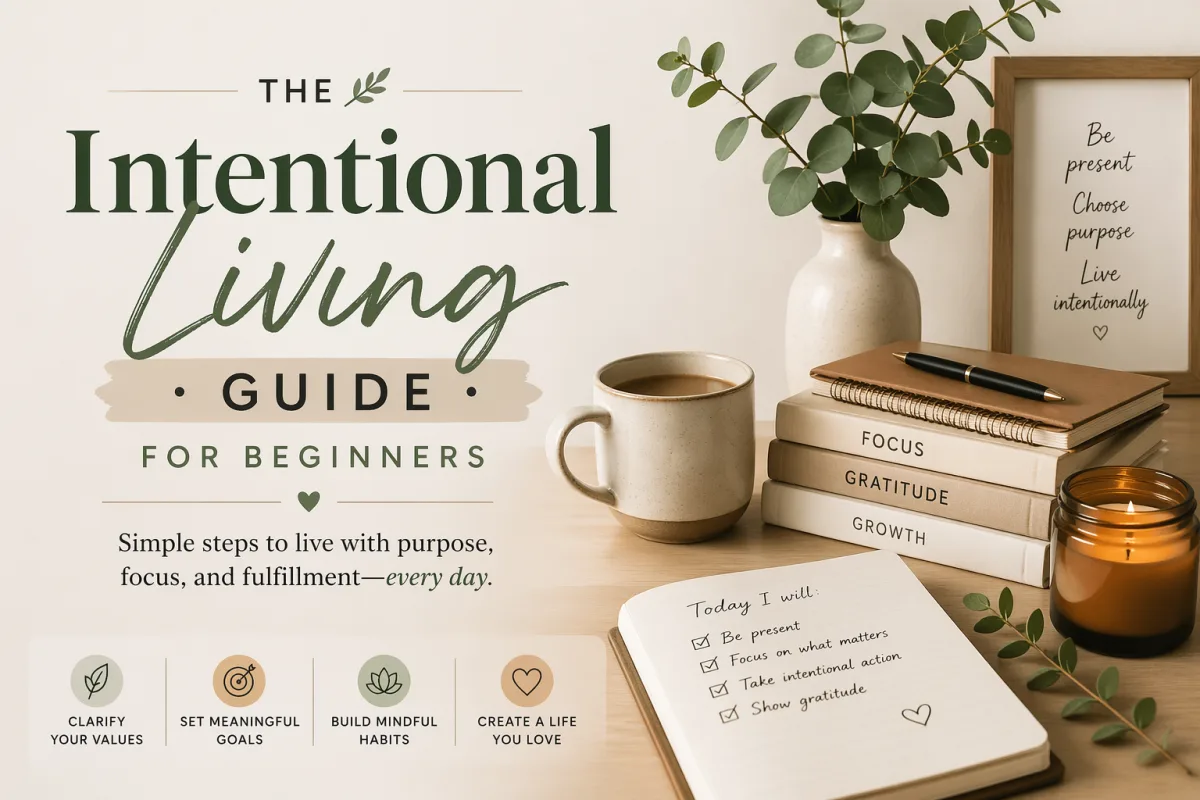
Does it ever feel like you're simply going through the motions? Wake up, work, scroll, sleep, repeat. Many of us find ourselves caught in a relentless current, swept along by external demands and societal expectations, often without a conscious thought about where we're headed or why. You're not alone in feeling this way. The good news? You can hit the pause button and redirect your journey. This isn't about grand gestures or radical overhauls; it's about making small, consistent choices that align with your deepest desires. Welcome to the world of intentional living, a powerful framework for beginners ready to reclaim their agency and craft a life that truly resonates.
What Exactly *Is* Intentional Living?
At its core, intentional living means making conscious choices about how you spend your time, energy, and resources, rather than letting life happen to you. It's an active process of aligning your daily actions with your core values and long-term goals. Think of it as being the architect of your own existence, rather than just a tenant.
It's a deliberate shift from autopilot to pilot. Instead of mindlessly consuming, you'll choose what you bring into your life. Instead of reacting to every notification, you'll decide where your attention goes. This isn't about perfection; it's about progress, awareness, and a commitment to living authentically.
This approach moves beyond simply "getting by" to actively designing a life filled with purpose and meaning. It asks you to consider why you do what you do, what truly matters to you, and how you can best allocate your precious finite resources – time, energy, and attention – to reflect those priorities.
The Core Pillars of a Purposeful Life
Intentionality isn't a single action; it's a way of being built on several foundational elements:
- Values Identification: What principles guide your life? Is it freedom, creativity, connection, security, or something else? Knowing your values is the compass for all your decisions.
- Conscious Choices: Every day, you make hundreds of choices. Intentional living encourages you to pause, reflect, and choose in alignment with your values, even in small moments.
- Action & Alignment: It's not enough to know your values; you must act on them. This means building habits and routines that support your desired life, rather than detract from it.
- Reflection & Adjustment: Life changes, and so do you. Regularly reflecting on your choices and making adjustments keeps you on a genuinely intentional path.
Why Embracing Intentionality Matters for Your Well-being
The benefits of adopting an intentional living mindset are profound and far-reaching. When you live with purpose, you'll experience a significant reduction in decision fatigue and overwhelm. You'll find clarity amidst the chaos, making choices that feel right for *you*, not just what's expected.
Consider this: a 2023 survey by Deloitte found that 46% of Gen Z and 45% of Millennials feel stressed all or most of the time. This pervasive stress often stems from feeling out of control, constantly reacting to external pressures. Intentional living offers a powerful antidote, shifting you from a reactive stance to a proactive one.
Beyond stress reduction, intentionality cultivates deeper satisfaction. You'll build stronger relationships because you're consciously investing in them. Your work becomes more meaningful when it aligns with your values. Even your leisure time feels more restorative because you've chosen activities that genuinely recharge you. It’s about creating a life that feels authentic and fulfilling, reducing regret and increasing a sense of personal agency.
Your Blueprint for an Intentional Life: Core Principles
Starting your journey with intentional living doesn't require a complete life overhaul. It begins with small, consistent steps rooted in self-awareness and deliberate choice. Here's a blueprint to guide you:
- Define Your Values: This is the crucial first step. Grab a pen and paper. What truly matters to you? List 3-5 core values that define your ideal life. Is it growth, family, adventure, peace, contribution? Don't overthink it; trust your gut. These values will become your decision-making filter.
- Audit Your Current Life: Look at your calendar, your bank statements, and your daily habits. Where are you currently spending your time, money, and energy? Does it align with those values you just identified? Be honest, without judgment. This audit reveals the gaps between your current reality and your desired intentional life.
- Set Clear Intentions (Not Just Goals): Goals are outcomes; intentions are about how you want to *be* and *show up*. For instance, instead of "lose 10 pounds," an intention might be "to nourish my body with wholesome food and joyful movement." This subtle shift focuses on the process and mindset.
- Practice Mindful Pauses: Before you automatically respond to an email, buy something, or commit to an engagement, take a brief pause. Ask yourself: "Does this align with my values? Is this how I want to spend my time/money/energy?" These micro-pauses prevent autopilot decisions.
- Establish Boundaries: Intentional living often means saying "no" to things that don't serve you. Set clear boundaries around your time, energy, and digital consumption. This protects your most valuable resources and allows you to say "yes" to what truly matters.
Practical Strategies for Intentional Living: Daily Habits
Once you've grasped the core principles, it's time to integrate intentionality into your daily routine. These aren't rigid rules, but flexible practices that help you stay aligned:
- Morning Rituals: Start your day with purpose. Instead of immediately grabbing your phone, dedicate 10-30 minutes to something that grounds you – meditation, journaling, reading, or a quiet cup of tea. This sets a calm, intentional tone for the hours ahead.
- Digital Detox Moments: Our devices are powerful tools, but they can also be massive distractions. Schedule specific times to disconnect. Put your phone away during meals, turn off notifications for an hour before bed, or designate "no-screen" zones in your home.
- Conscious Consumption: Apply intentionality to what you buy, eat, and use. Do you truly need it? Is it ethically sourced? Does it bring you joy or serve a real purpose? This extends beyond material goods to information and entertainment, too.
- Financial Awareness: Understand where your money goes. Create a budget that reflects your values. If freedom is a value, perhaps you're saving for travel. If security is key, you might prioritize an emergency fund. Money becomes a tool for your intentional life, not a source of stress.
- Regular Reflection: Dedicate time weekly or monthly to review your progress. What went well? Where did you deviate? What adjustments can you make? This continuous feedback loop is essential for growth.
What This Means For You: Designing Your Purposeful Path
The beauty of the “intentional living” guide for beginners is its adaptability. There's no single right way to do this; it's deeply personal. What intentionality looks like for you will differ from your neighbor, your friend, or your colleague. Your path is unique because your values, dreams, and circumstances are unique.
This means giving yourself permission to experiment. Try a new habit for a week. Revisit a forgotten hobby. Decline an invitation that doesn't excite you. Some things will stick, others won't. That's perfectly fine. The goal isn't to create a perfectly curated life overnight, but to consistently lean into choices that bring you closer to genuine fulfillment.
Remember, this is a journey, not a destination. You'll have days when you slip back into old patterns, and that's okay. Acknowledge it, learn from it, and gently guide yourself back to your chosen path. What matters is the ongoing commitment to making conscious choices, day by day, moment by moment. You're building a legacy of purpose, one intentional decision at a time.
You possess the incredible power to shape your reality. The default path is always there, waiting to pull you back into its current. But you don't have to take it. By embracing the principles of intentional living, you're not just making minor adjustments; you're fundamentally shifting your relationship with your own life. You're stepping into the driver's seat, mapping out a route that leads to genuine satisfaction and meaning. Start small, stay consistent, and watch as your life transforms from something that happens to you into something you actively, beautifully create.