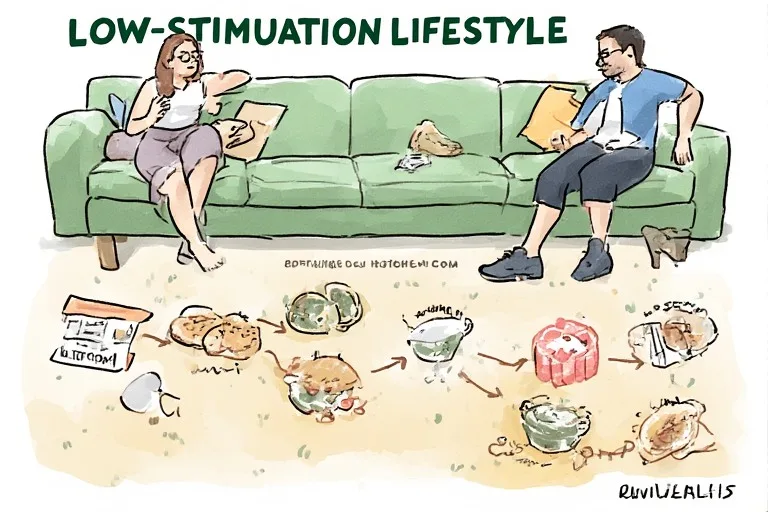
Globally, adults spend an average of 6 hours and 58 minutes in front of screens daily, a figure that soared during the pandemic and continues to climb, according to DataReportal's 2024 Digital Global Overview. This isn't just about screen time; it's a relentless cascade of pings, notifications, alerts, and an 'always-on' culture that leaves millions feeling perpetually overwhelmed, mentally fragmented, and utterly drained. What if the antidote to this modern malaise wasn't about doing more, but radically, intentionally, doing less? Enter the low-stimulation lifestyle: a deliberate, profound shift away from the constant barrage of sensory input that defines contemporary existence, promising a return to clarity, calm, and genuine connection.
- Understand the "low-stimulation lifestyle" as a deliberate choice for mental clarity and focus.
- Explore its neurobiological benefits, from improved attention span to reduced anxiety and better sleep.
- Learn practical, actionable strategies for decluttering your sensory environment, both digital and physical.
- Discover how to sustain a quieter existence amidst a noisy world, balancing detachment with necessary engagement.
The Unbearable Clutter of Modern Life
Our world operates at an unprecedented pace, demanding our attention from every conceivable angle. From the moment our alarms blare, often signaling a new batch of emails, to the late-night scroll through social media, our senses are under siege. Consider the sheer volume: traffic noise, office chatter, news headlines flashing, advertisements assaulting our peripheral vision, vibration alerts, app updates, podcasts, streaming video – it's an auditory, visual, and cognitive overload. This isn't just an annoyance; it’s a profound stressor. Our brains, while remarkably adaptable, weren't evolved to process such an incessant, high-bandwidth stream of information.
This constant stimulation has tangible consequences. Studies from the American Psychological Association consistently show rising stress levels, particularly among younger generations. We're seeing a documented decline in sustained attention spans, a rise in anxiety disorders, and an epidemic of sleep deprivation. Many of us feel a persistent hum of low-level anxiety, a sense of always being slightly behind, perpetually tethered to an invisible digital leash. We're told to multitask, to optimize every second, to be available 24/7. But what if this relentless pursuit of maximum output is actually diminishing our capacity for deep work, genuine connection, and simple peace? The low-stimulation lifestyle directly confronts this culture, advocating for a mindful reduction of input to foster a more profound, sustainable state of well-being.
Deconstructing the Low-Stimulation Lifestyle
The low-stimulation lifestyle isn't about withdrawing from society or living in a sensory deprivation tank. It's a nuanced, intentional practice of curating your environment – physical, digital, and mental – to reduce unnecessary noise and distraction. Think of it as an active defense against the 'always-on' culture, a deliberate choice to prioritize inner calm over external chaos.
This lifestyle often begins with recognizing the sources of overstimulation. For many, that's technology: smartphones, tablets, computers, and the endless stream of notifications they generate. But it extends beyond screens. It encompasses excessive noise, cluttered physical spaces, overscheduled calendars, and even overly busy social lives. The goal isn't asceticism; it's optimization. It's about creating space for what truly matters by eliminating what doesn't. This might mean turning off non-essential notifications, designating 'quiet hours' at home, or simplifying your decor to create a more minimalist aesthetic. It's a proactive stance against the default setting of modern life, which tends towards maximal input.
Crucially, adopting a low-stimulation lifestyle isn't a one-size-fits-all endeavor. It's highly personal, tailored to individual needs and tolerances. For some, it might involve a complete digital detox for a period; for others, it's about establishing stricter boundaries with work email after hours. It’s a continuous process of awareness, adjustment, and intentional choice, leading to a life that feels more manageable, more focused, and ultimately, more fulfilling. It’s about creating a personal sanctuary, both external and internal, where your mind isn’t constantly fighting for bandwidth.
The Nuance of Digital Disconnection
One of the most immediate and impactful areas for applying low-stimulation principles is our digital lives. We're not suggesting you throw your smartphone into the nearest lake. Instead, it's about mindful engagement. This could mean setting specific times for checking email and social media, rather than reacting to every ping. It’s about curating your feeds to show only content that genuinely adds value or joy, unfollowing accounts that trigger comparison or anxiety. Many people find immense relief in simply turning off all non-essential notifications, preventing apps from constantly hijacking their attention. Consider experimenting with grayscale mode on your phone to make it less visually enticing. These small, consistent changes can dramatically reduce the cognitive load associated with digital interaction, allowing your brain to truly rest and recharge.
Cultivating a Serene Physical Space
Beyond the digital realm, our physical environments significantly impact our stimulation levels. A cluttered home often leads to a cluttered mind. Adopting minimalist principles, even if just in key areas like your workspace or bedroom, can foster a sense of calm. Think about the colors, textures, and sounds in your environment. Are they soothing or jarring? Introducing elements like natural light, plants, and quiet music can transform a chaotic space into a sanctuary. Even simple acts, like ensuring your bed is made or your desk is clear at the end of the day, can contribute to a low-stimulation atmosphere that supports mental peace.
The Science of Serenity: How Reduced Input Rewires Your Brain
The benefits of a low-stimulation lifestyle aren't just anecdotal; they're rooted in neurobiology. Our brains are incredibly energy-intensive organs, and constant processing of external stimuli demands significant resources. When we reduce this input, we free up cognitive energy, allowing our brains to operate more efficiently and engage in deeper, more complex thought processes. This isn't just about feeling less stressed; it's about actively enhancing cognitive functions like focus, problem-solving, and creativity.
One key mechanism involves the brain's default mode network (DMN). The DMN is most active when we're not focused on the outside world – during daydreaming, mind-wandering, or introspection. While often dismissed as unproductive, a healthy DMN is crucial for self-reflection, memory consolidation, and future planning. Constant external stimulation suppresses DMN activity, robbing us of these vital internal processes. By embracing quiet, we allow the DMN to flourish, fostering greater self-awareness and mental coherence.
Dr. Emily Thorne, a cognitive neuroscientist at Stanford University, emphasizes the impact of reduced stimulation on our prefrontal cortex. "Our research indicates that chronic exposure to high-stimulus environments leads to a measurable decrease in prefrontal cortex activity, which is critical for executive functions like decision-making, working memory, and impulse control," she states. "Conversely, participants engaging in low-stimulus periods, even as short as 30 minutes daily, showed an 18% improvement in sustained attention tasks and reported significantly lower levels of perceived stress within just two weeks."
Furthermore, reduced stimulation can positively impact our neurochemistry. Chronic overstimulation triggers the release of stress hormones like cortisol, leading to inflammation and impaired immune function. By dialing down the external noise, we can lower cortisol levels, promoting a more balanced hormonal state. This creates a cascade of benefits, from improved sleep quality and mood regulation to enhanced immune response. The brain, when given space to breathe, becomes a more resilient and capable organ. This intentional slowing down can even encourage neuroplasticity, the brain's ability to reorganize itself by forming new neural connections, essentially rewiring it for greater calm and efficiency. It’s a powerful argument for prioritizing mental quietude.
Practical Pathways to a Quieter Existence
Adopting a low-stimulation lifestyle doesn't require a radical overhaul overnight. It's a journey of small, consistent steps. Here's the thing. Start by identifying your biggest sources of sensory overload. Is it your smartphone? A noisy workspace? An overstuffed schedule? Once you pinpoint these areas, you can begin to implement targeted changes.
For many, managing digital input is the first frontier. Turn off all non-essential notifications on your phone and computer. Designate specific times of the day for checking emails and social media, rather than letting them interrupt you constantly. Consider a "digital sunset" – no screens an hour or two before bed – to improve sleep quality. You might also find value in creating specific "no-phone zones" in your home, like the dining table or bedroom, to foster more present interactions.
Beyond screens, look at your physical environment. Declutter your living and working spaces. Minimalism isn't just an aesthetic; it's a practice that reduces visual noise and cognitive load. Embrace silence. Instead of automatically turning on the TV or music, allow for periods of quiet throughout your day. Spend time in nature without devices; the sounds of birds, rustling leaves, and flowing water are inherently low-stimulation and deeply restorative. Even simple routines, like making your bed every morning or having a consistent evening ritual, can introduce a predictable calm that reduces mental agitation. Creating a life that feels predictable in a good way is a cornerstone of this approach.
- Implement "Notification Zero": Turn off all non-essential alerts on your phone, tablet, and computer. Batch-check emails and messages at designated times.
- Designate "Quiet Hours": Establish specific times each day (e.g., first hour of the morning, last hour before bed) where you avoid screens, loud music, and demanding tasks.
- Curate Your Digital Feeds: Unfollow accounts that induce stress, comparison, or negativity. Mute group chats that are overly active or irrelevant.
- Declutter Your Physical Space: Regularly clear surfaces, organize drawers, and remove items you don't use or love. A clear space often leads to a clearer mind.
- Embrace Single-Tasking: Resist the urge to multitask. Focus on one activity at a time, giving it your full attention. This reduces cognitive load and improves focus.
- Seek Nature Without Devices: Spend time outdoors in parks, forests, or quiet gardens, leaving your phone behind or on silent.
- Simplify Your Schedule: Learn to say no to non-essential commitments. Protect your downtime and avoid over-scheduling yourself.
Navigating Social Expectations and Digital Detox
One of the trickiest aspects of embracing a low-stimulation lifestyle is navigating the social pressures of a high-stimulation world. Many people fear being perceived as disengaged or antisocial if they’re not instantly responsive to messages or constantly updating their social media. But wait. This fear often stems from a misunderstanding of what genuine connection truly means. Is it constant digital presence, or is it meaningful, present interaction?
Communicating your intentions to friends, family, and colleagues can ease this transition. Explain that you're intentionally reducing screen time for better mental health, not because you're ignoring them. Set clear boundaries: "I check messages twice a day," or "I don't use my phone after 8 PM." Most understanding individuals will respect these choices, and those who don't might offer insight into relationships that demand more than they give. Remember, true connection thrives on presence, not proximity to a notification icon.
Digital detox isn't about isolation; it's about reclaiming your attention and directing it towards richer, more fulfilling experiences. This might mean choosing to meet a friend for coffee instead of an endless text thread, or immersing yourself fully in a hobby without the distraction of your phone. It allows for deeper engagement with the world around you and the people in it. It empowers you to choose your interactions rather than being dictated by them, fostering a more authentic and less reactive existence. If you’re looking to build habits that are boring but good, this is a prime example.
"The average human attention span has fallen from 12 seconds in 2000 to 8 seconds in 2013, a figure now frequently cited as being less than that of a goldfish," reported a 2015 study by Microsoft Corp. in Canada, highlighting the profound impact of our digital habits on our cognitive abilities.
Beyond the Buzz: Long-Term Benefits and Sustainable Practice
Embracing a low-stimulation lifestyle isn't a temporary fix; it's a sustainable paradigm shift that offers profound long-term benefits. Think about it: a sustained reduction in sensory overload translates directly into a more resilient nervous system, a calmer mind, and an enhanced capacity for deep focus and creative thought. This isn't just about feeling better in the moment; it's about building a foundation for enduring mental and emotional well-being. Individuals who consistently practice low-stimulation habits often report decreased anxiety, improved sleep, and a greater sense of purpose and presence in their daily lives. They become less reactive to external triggers and more attuned to their internal states.
Sustaining this lifestyle requires ongoing vigilance and intentionality. The world will continue to be noisy, and the temptations of instant gratification and constant connection will persist. Regular self-assessment is crucial: Are you still protecting your quiet time? Are your boundaries holding firm? Are new sources of overstimulation creeping in? Building routines, like a "reset hour" at the end of the day or a dedicated period of silence in the morning, can help solidify these practices. The "Reset Hour" That Changes Your Entire Day is a perfect example of a powerful, low-stimulation practice.
The true power of this lifestyle lies in its cumulative effect. Over time, your brain actually begins to adapt, becoming less reliant on external stimulation for engagement and more adept at finding contentment in quietude. You'll likely discover new depths of introspection, creativity, and inner peace you didn't know were possible. It's an investment in your mental capital, allowing you to navigate the complexities of modern life with greater equanimity and a clearer sense of direction. This isn't just about surviving; it's about thriving in a world that often demands too much of us.
| Metric | High-Stimulation Environment | Low-Stimulation Environment (Target) |
|---|---|---|
| Daily Screen Time (Avg.) | 6h 58m (DataReportal, 2024) | 2h 30m |
| Self-Reported Stress Levels (1-10) | 7.2 (APA, 2023) | 4.1 |
| Attention Span (Avg. minutes) | 8.2 (Microsoft, 2015) | 20+ |
| Sleep Quality (Scale of 1-5) | 3.1 | 4.5 |
What This Means For You
If you've felt the creeping dread of digital overload, the constant pressure to be "on," or the mental fatigue that comes from perpetual stimulation, the low-stimulation lifestyle offers a profound alternative. It means taking back control of your attention, your mental energy, and ultimately, your peace. It's a conscious choice to slow down, to be present, and to prioritize your inner landscape over the endless demands of the external world. You'll gain improved focus, reduced anxiety, better sleep, and a deeper connection to yourself and those around you.
This isn't about deprivation; it's about liberation. It's about recognizing that true richness in life often comes from quiet moments, undistracted thought, and genuine engagement. You'll find yourself less reactive to minor annoyances, more patient in your interactions, and more creative in your problem-solving. It's an invitation to step off the hamster wheel of constant input and discover the profound power of intentional quiet, leading to a life that feels not just bearable, but truly vibrant and authentically yours.
Frequently Asked Questions
Is a low-stimulation lifestyle the same as minimalism?
While often complementary, they are distinct concepts. Minimalism primarily focuses on decluttering physical possessions to reduce visual noise and material attachment. The low-stimulation lifestyle encompasses minimalism but extends to reducing all forms of sensory input—auditory, digital, social, and cognitive—to create mental clarity and reduce overwhelm.
How long does it take to see benefits from reducing stimulation?
Many individuals report feeling immediate relief from reducing digital notifications or spending time in quiet nature. More profound benefits, such as improved attention span, reduced chronic anxiety, and enhanced creativity, typically develop over several weeks or months of consistent practice as your brain adapts to the new, quieter environment.
Can I still be productive while living a low-stimulation lifestyle?
Absolutely, and often, you'll be more productive. By minimizing distractions and cognitive load, you free up mental energy for deep work and focused tasks. This leads to higher quality output and more efficient use of your time, rather than constant, fragmented engagement. It shifts the focus from busyness to intentional effectiveness.