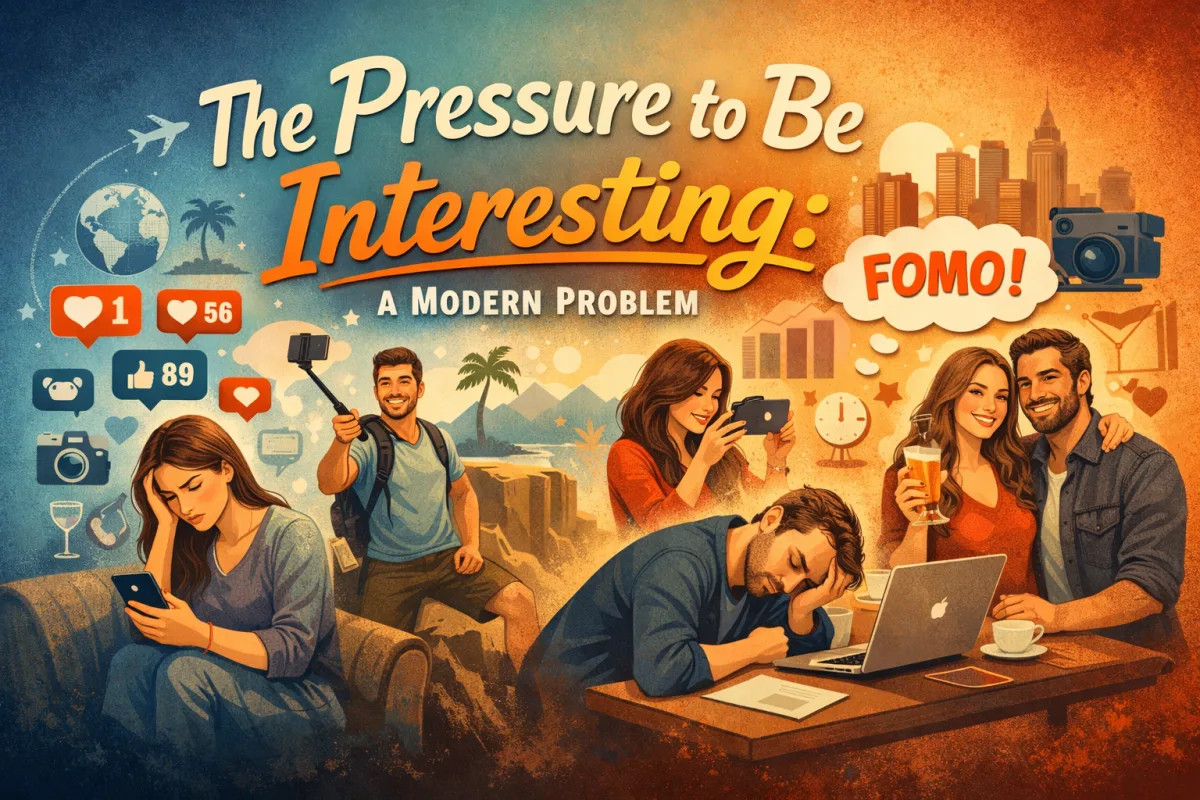
You’re scrolling through your feed, and there it is: another friend on an exotic vacation, another colleague launching a side hustle, another acquaintance mastering a new skill. Each post a curated glimpse into a life that seems effortlessly vibrant, endlessly engaging. Suddenly, your own quiet evening, or your perfectly normal work day, feels… inadequate. This feeling isn't unique; it's a symptom of a widespread cultural phenomenon: the pressure to be interesting. It’s a modern problem that quietly dictates how we present ourselves, often at the expense of our genuine selves and our peace of mind.
The Relentless Scroll: Where "Interesting" Becomes Currency
Social media platforms weren't just built for connection; they're stages. Every shared photo, every witty caption, every meticulously crafted story is a performance. We're all both audience and performer, constantly evaluating and being evaluated. This creates an environment where "interesting" isn't merely an adjective; it's a form of social currency, directly tied to likes, shares, and follower counts.
What does it mean to be interesting in this digital age? It often translates to being visually appealing, constantly active, opinionated, or aspirational. It's about showcasing a life that’s always "on"—always doing, always achieving, always experiencing. The quiet moments, the ordinary struggles, or the simple joys that don't translate into a viral post often remain unseen, creating a skewed perception of reality for everyone involved.
The algorithms, designed to maximize engagement, only amplify this dynamic. They reward novelty, controversy, and anything that stops the scroll. This feedback loop inadvertently teaches us that to exist meaningfully online, we must constantly provide content that is, by definition, interesting. If we don't, we risk falling into digital obscurity.
Curating the Self: The Performance of Personality
Before the digital age, our identities were largely shaped by face-to-face interactions and the immediate communities we inhabited. Now, we have multiple online personas, each carefully constructed. We're not just living our lives; we're producing them for an audience. This isn't inherently bad; self-expression is vital. However, when the desire to appear interesting overshadows the desire to simply be, authenticity suffers.
Think about the last time you uploaded a photo. Did you just post it, or did you consider the angle, the filter, the caption, and the potential reaction? This isn't vanity; it's a strategic act. We're all, to some degree, marketing ourselves. We're compelled to present a highlight reel, editing out the mundane, the messy, and the outright boring parts of our existence. This curated self becomes a standard that's impossible to live up to, even for ourselves.
The Echo Chamber Effect
When everyone is performing, and everyone else is also performing, we create an echo chamber of perceived perfection. You see your friends' highlights, they see yours, and we all assume everyone else's life is genuinely more exciting. This collective illusion fuels anxiety and self-doubt. It makes us question our own pursuits, our own contentment, and even our own worth if our lives don't measure up to the idealized narratives we constantly consume.
Research consistently shows a link between heavy social media use and increased feelings of loneliness, envy, and decreased life satisfaction. A 2018 study published by the University of Pennsylvania found a causal link between reducing social media use and significant decreases in depression and loneliness. It suggests that comparing oneself to others online, driven by this pressure to be interesting, plays a critical role in these negative outcomes.
The Toll of Constant Performance: Mental Health and Authenticity
Living under the constant pressure to be interesting takes a significant toll on our mental and emotional well-being. It's exhausting to maintain a façade, to constantly seek external validation, and to fear that our authentic selves aren't "enough." This perpetual state of performance can lead to burnout, anxiety, and even identity confusion.
When our sense of self becomes tied to how "interesting" we appear to others, our internal compass can go awry. We might start making choices not because they genuinely align with our desires, but because they'll make good content. Are you choosing that vibrant, expensive brunch spot for the food, or for the Instagram shot? Are you pursuing a hobby because you love it, or because it looks impressive on your profile?
This constant external focus erodes our authenticity. We lose touch with what truly brings us joy and meaning when we're always thinking about how our experiences will be perceived by an invisible audience. It's a subtle but insidious shift that can leave us feeling hollow, even amidst a flurry of online "success."
Beyond the Likes: Redefining What Matters
Breaking free from the pressure to be interesting requires a conscious recalibration of our values. It means shifting our focus from external validation to internal fulfillment. What truly makes life rich and meaningful, beyond the fleeting thrill of a viral post?
Often, it's the quiet moments, the deep conversations, the personal growth, the acts of kindness, and the genuine connections that don't need an audience. These are the things that build resilience, foster true happiness, and create a life that feels authentically lived, regardless of how "interesting" it appears on a screen.
It's about recognizing that our inherent worth isn't tied to our online performance. We are valuable simply for existing, for learning, for loving, and for contributing in our own unique ways. True interestingness often emerges from a deep engagement with life, not from a manufactured presentation of it.
Reclaiming Your Narrative: Practical Steps to Break Free
It's not about abandoning social media entirely, but about using it mindfully and intentionally. Here's what you can do:
- Audit Your Feed: Unfollow accounts that make you feel inadequate or pressured. Curate your digital space to reflect inspiration and genuine connection, not comparison.
- Practice Digital Detoxes: Schedule regular breaks from your phone and social platforms. Even an hour or a day can help reset your perspective and remind you of the richness of offline life.
- Create for Yourself: Engage in hobbies and activities purely for your own enjoyment, without the intention of posting about them. Rediscover the joy of doing something just because you love it.
- Cultivate Real Connections: Prioritize face-to-face interactions, phone calls, or video chats with loved ones. Invest in relationships that offer genuine support and understanding, not just likes.
- Embrace the Mundane: Find beauty and contentment in the ordinary. Not every moment needs to be extraordinary or shareable. Sometimes, the most profound experiences are the quietest.
- Define Your Own Success: What does a "good life" mean to you, independent of external validation? Write it down. Let your values guide your choices, not the perceived expectations of others.
Cultivating True Connection in a Hyper-Connected World
The paradox of our hyper-connected world is that it often leaves us feeling more isolated than ever. We're constantly exposed to everyone else's highlight reels, leading us to believe that our own struggles are unique, our own lives somehow less vibrant. But the truth is, everyone experiences mundane moments, challenges, and quiet joys that don't make it to the feed.
When we shed the pressure to be interesting, we create space for authenticity, for vulnerability, and for genuine human connection. We allow ourselves to be seen as we truly are, imperfections and all, and in doing so, we invite others to do the same. This isn't about being boring; it's about being real. And in a world saturated with curated content, isn't genuine reality the most interesting thing of all?
Choosing authenticity over performance isn't just an act of self-care; it's a revolutionary act. It’s a quiet rebellion against the relentless demand to constantly entertain and impress. It’s an invitation to yourself, and to others, to finally breathe, to simply exist, and to discover the profound beauty in a life lived truly, not just displayed.