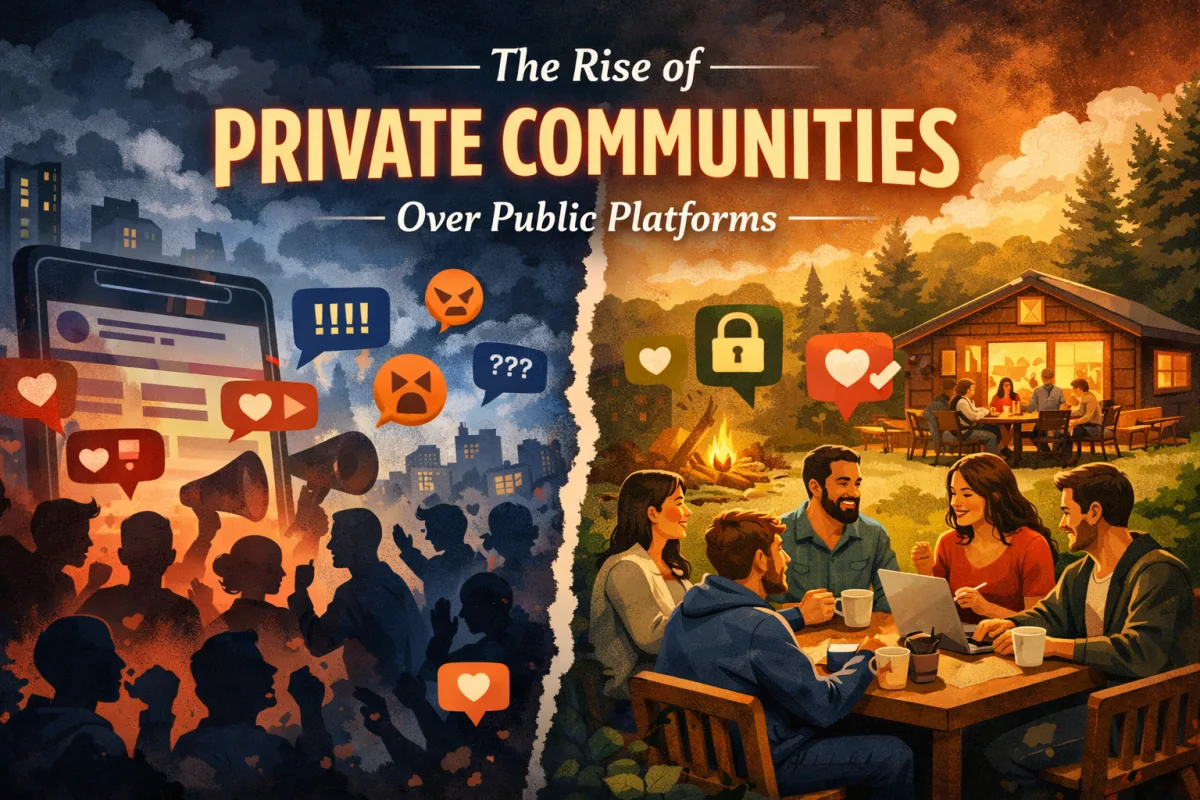
Remember when social media promised to connect us all? For a while, it delivered. But somewhere along the line, the digital town square became less of a welcoming gathering place and more of a chaotic, often hostile, free-for-all. We've grown accustomed to endless scrolling, algorithm-driven feeds, and the constant pressure to perform for an unseen audience. It's exhausting, isn't it? This widespread fatigue is precisely what’s fueling the rise of private communities over public platforms, signaling a profound shift in how we seek connection online.
The Public Platform Paradox: More Connections, Less Connection
Public social media platforms, once heralded as tools for global unity, now often feel like sources of division and anxiety. The sheer volume of content, coupled with the pressure to maintain a certain online persona, has eroded the very authenticity they once fostered. We're bombarded by everything from political arguments to carefully curated highlight reels, leaving us feeling isolated even amidst millions of potential connections.
Data privacy concerns are another significant driver in this exodus. Users are increasingly wary of how their personal information is collected, used, and monetized by tech giants. It's a fundamental breach of trust that makes many question the true cost of "free" services.
Then there's the algorithm. Designed to maximize engagement, it often prioritizes sensationalism and outrage, pushing us into echo chambers or exposing us to content that leaves us feeling drained. The promise of an open forum has, for many, devolved into a frustrating, unfulfilling experience.
Building Your Digital Sanctuary: The Appeal of Private Communities
Against this backdrop of public platform fatigue, private communities offer a refreshing alternative. These are spaces built on shared interests, mutual respect, and a genuine desire for deeper interaction. Think of them as digital clubhouses where you know the bouncer, and everyone inside is there for a reason.
What makes these spaces so compelling? It's the intentionality. Members actively choose to be there, often paying a subscription or applying for entry. This creates a higher barrier to entry, filtering out casual trolls and fostering a more committed, engaged user base.
These communities aren't about broadcasting to the masses; they're about conversing with a curated group. You'll find less performative posting and more authentic dialogue. This shift allows for nuanced discussions and the formation of real bonds, something increasingly rare on open networks.
Cultivating Authentic Connections in Niche Spaces
The beauty of private communities lies in their specificity. Whether it's a group for indie game developers, sourdough bread enthusiasts, or single parents navigating remote work, these spaces cater to niche passions. This focus ensures that conversations are always relevant and meaningful to the members.
You're not just a number in a vast audience; you're a recognized individual with shared experiences. This sense of belonging is a powerful antidote to the loneliness that can paradoxically arise from hyper-connected public platforms. It's about quality over quantity, every single time.
For example, platforms like Mighty Networks and Circle have seen significant growth by empowering creators and businesses to build these very kinds of exclusive, branded communities. These aren't just glorified forums; they're comprehensive ecosystems for learning, networking, and personal growth, all within a safe, controlled environment.
The Shifting Landscape: Why Private Communities Are Thriving
The numbers don't lie. While Facebook's user growth has slowed in key markets, and Twitter faces ongoing challenges, platforms dedicated to private group interactions are booming. Discord, for instance, a platform initially popular with gamers, reported an astonishing 150 million monthly active users in 2021, up from 56 million in 2019. It's a clear indicator of people's hunger for more intimate, interest-driven interactions.
This growth isn't limited to tech-savvy younger demographics either. Professionals are flocking to private Slack channels for industry insights, artists are connecting on Patreon for creative support, and countless educators and coaches are building learning hubs on platforms like Teachable or Kajabi that integrate private community features. These aren't just fleeting trends; they represent a fundamental re-evaluation of our digital lives.
From a creator's perspective, private communities offer stable revenue streams through subscriptions and more direct engagement with their most dedicated fans. For members, it's about access to exclusive content, direct interaction with experts, and a feeling of genuine membership that public platforms simply can't replicate.
What This Means for You: Curating Your Digital Home
So, what does this shift mean for your own online experience? It's an invitation to be more intentional about where and how you spend your digital time. You don't have to tolerate the noise and negativity of public platforms if they're no longer serving you.
Here's how you can embrace the rise of private communities:
- Identify Your Passions: What are your hobbies, interests, or professional pursuits? There's likely a private community out there for it.
- Explore Different Platforms: Look beyond the usual suspects. Check out Discord, Slack, Mighty Networks, Circle, Geneva, or even exclusive Facebook or LinkedIn groups. Many creators also host communities directly on their websites.
- Consider Paid Communities: Don't shy away from communities that charge a fee. This often ensures a higher quality of content, moderation, and member commitment. Think of it as investing in your digital well-being and growth.
- Be an Active Participant: Once you join, engage! The more you contribute, the more you'll get out of the experience. These spaces thrive on active participation and genuine connection.
- Think About Starting Your Own: If you can't find the perfect community, perhaps you're the one to build it. Tools are more accessible than ever for creating your own curated digital space.
This isn't about abandoning public platforms entirely, but rather about creating a healthier, more balanced digital diet. It's about choosing connection over consumption, depth over breadth.
The move towards private communities isn't just a fleeting trend; it’s a powerful testament to our innate human need for belonging and authentic connection. We're collectively seeking refuge from the digital cacophony, choosing quality conversations and shared values over the endless scroll. As we redefine our online identities, these intimate digital spaces are becoming the true hubs of meaningful interaction, offering a blueprint for a more fulfilling and intentional digital future.