In a sterile operating room at Stanford Medical Center, a surgeon guides a miniature robotic tool deep within a patient. There are no wires trailing from the robot, no batteries to swap, no interruptions to the delicate procedure. This isn't science fiction; it's the quiet revolution of wireless power transfer, happening right now. While most of us associate wireless charging with the slow, often finicky pad on our nightstand, the real story – the one missed by countless superficial analyses – is far more profound. It’s a tale of physics pushed to its limits, solving some of humanity's most intractable power challenges, from electrifying surgical suites to fueling autonomous electric vehicle fleets without a single plug. The global wireless charging market, valued at USD 11.2 billion in 2023, is projected by Grand View Research to surge at a compound annual growth rate (CAGR) of 22.8% through 2030, a testament to its expanding, critical role.
- Wireless charging's efficiency narrative is evolving; advanced resonant coupling achieves over 90% efficiency, outperforming basic inductive pads.
- Beyond consumer gadgets, the technology's most impactful applications are in critical sectors like implantable medical devices and high-power electric vehicle charging.
- Safety standards from bodies like ICNIRP rigorously govern electromagnetic field (EMF) exposure, making certified wireless charging systems safe for everyday use.
- The future isn't just about convenience; it's about seamless, autonomous power delivery that enables new levels of automation and resilience in infrastructure.
Beyond the Charging Pad: Inductive Basics and Limitations
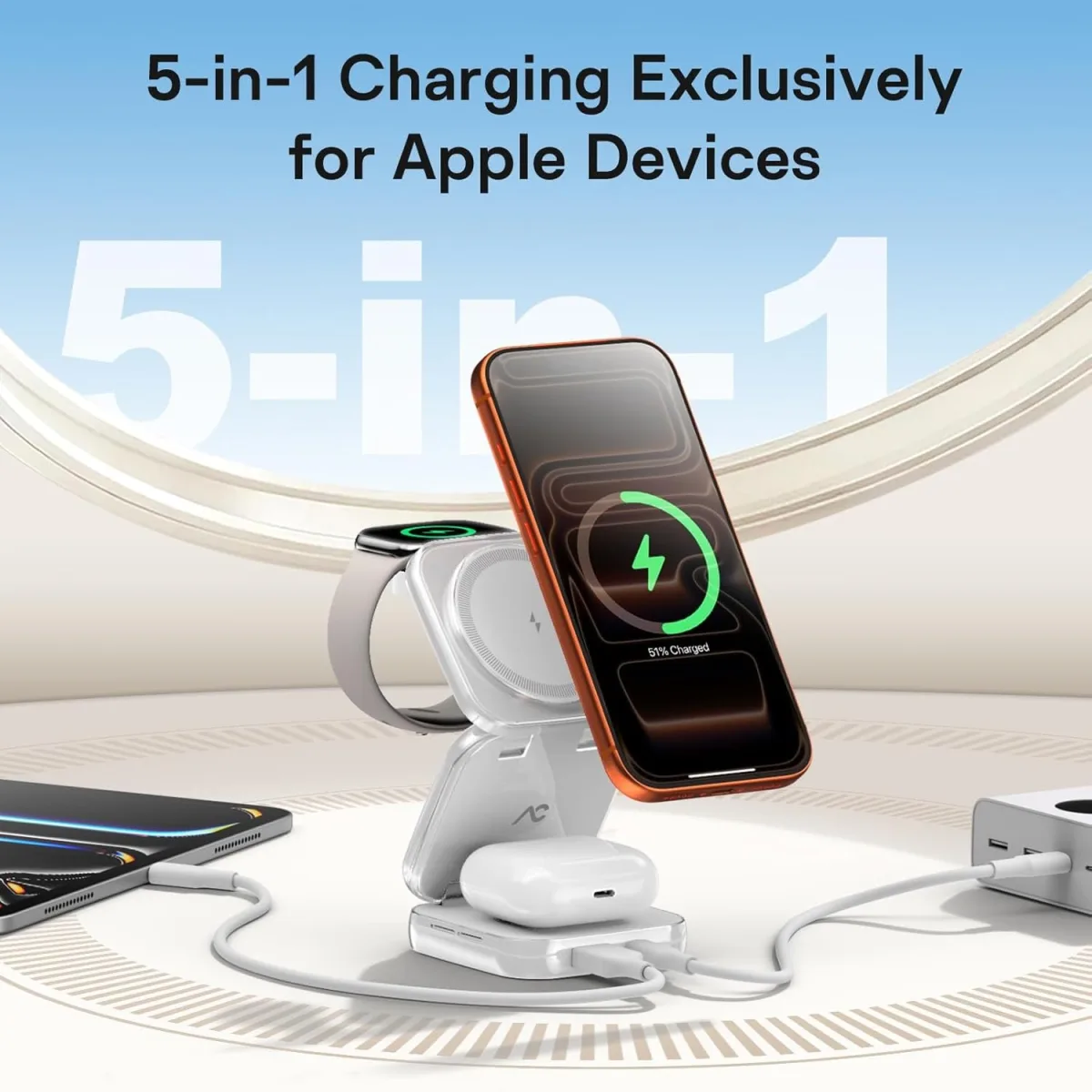
To truly grasp the advancements in wireless power, you've got to start with the fundamentals: electromagnetic induction. It's the same principle that powers electric motors and transformers. When you place your smartphone on a standard Qi charging pad, you're engaging two coils – one in the pad, one in your phone. An alternating electric current flows through the pad's coil, generating a fluctuating magnetic field. This field, in turn, induces an electric current in the phone's coil, which then charges its battery. It's Faraday's Law of Induction in action, a principle discovered way back in the 19th century. This near-field inductive coupling works best when the coils are extremely close and perfectly aligned.
For years, this close-proximity requirement defined wireless charging, making it a convenience, but often a clunky one. The Qi standard, developed by the Wireless Power Consortium (WPC), became the industry benchmark, adopted by major players like Apple and Samsung. When Samsung integrated Qi charging into its Galaxy S6 back in 2015, it promised a cable-free future. But here's the thing: basic inductive charging, while reliable, suffers from significant efficiency drops as the distance between coils increases or if they're misaligned. Early systems often converted only 60-70% of the input power into usable energy for the device, losing the rest as heat. This perceived inefficiency cemented the idea that wireless power was a luxury, not a necessity. It’s a far cry from the instantaneous, precise electrical responses we see in how touchscreens detect your finger, which rely on different physical principles.
The inherent limitation of basic inductive power transfer is its "coupling coefficient" – how effectively the magnetic field from one coil links with another. The further apart, the weaker the link, the greater the energy loss. For a phone resting directly on a pad, it's acceptable. For charging a drone mid-air, or powering an implantable medical device, it's a non-starter. This foundational hurdle pushed researchers and engineers to look beyond simple induction, toward a more sophisticated and powerful application of physics.
The Resonant Revolution: Unlocking Distance and Efficiency
If basic induction is a whisper across a short distance, magnetic resonant coupling is a targeted shout across a room. This is where the science behind wireless charging truly gets interesting. Instead of relying on brute-force magnetic fields, resonant charging uses two coils tuned to oscillate at the exact same frequency, much like two tuning forks resonating when one is struck. When the transmitting coil emits a magnetic field at its resonant frequency, the receiving coil, also tuned to that frequency, "captures" the energy with remarkable efficiency, even over greater distances and through non-metallic obstacles.
The breakthrough in magnetic resonance came from a team at MIT in 2007, demonstrating they could power a 60-watt light bulb from seven feet away with 40% efficiency. While 40% might seem low, it was a monumental leap for non-radiative, medium-range power transfer. Since then, companies like WiTricity, spun out of MIT research, have pushed these efficiencies dramatically higher. Dr. Morris Kesler, CTO of WiTricity, stated in a 2021 interview, "We're regularly achieving over 90% end-to-end efficiency in our electric vehicle charging systems, even with air gaps of several inches. That's comparable to, or even better than, many wired charging solutions when you factor in cable losses." This level of performance fundamentally changes the economic and practical calculus of wireless power.
Overcoming the Air Gap Barrier
The ability to transfer power efficiently across an air gap is the holy grail for many applications. For electric vehicles, it means simply parking over a pad and charging without the hassle of cables. For industrial robots, it means continuous operation without needing to dock for a physical connection. This is where resonant coupling shines. By carefully designing the coils and tuning them to specific frequencies – often in the kilohertz or megahertz range – energy can "tunnel" between them, largely unaffected by the intervening space or minor misalignment. It's a testament to the elegant solutions physics provides when harnessed correctly.
Frequency Matters: The Role of MHz
The choice of operating frequency is crucial in resonant wireless charging. Lower frequencies (kilohertz range) are often used for high-power applications like EV charging, allowing for larger coil designs and deeper penetration through materials. Higher frequencies (megahertz range) offer more compact coil designs and are well-suited for smaller devices or medical implants, where space is at a premium. Researchers at the University of Tokyo, for instance, have demonstrated successful power transfer for miniature medical devices using frequencies in the tens of megahertz, showcasing the versatility of the technology for different scales and power demands. The precise tuning of these frequencies is what differentiates highly efficient resonant systems from their simpler inductive counterparts.
Powering the Impossible: Industrial and Medical Frontiers
Forget your phone for a moment. The true transformative potential of wireless charging lies in environments where physical connections are hazardous, impractical, or impossible. The global market for implantable medical devices reached an estimated USD 53.6 billion in 2023, according to MarketsandMarkets, and the integration of wireless power is a key driver of innovation within this sector. Consider the humble pacemaker: traditionally, these life-saving devices rely on internal batteries that eventually need surgical replacement. Imagine a future where a pacemaker could be wirelessly recharged from outside the body, eliminating invasive procedures and extending device longevity. This isn't just convenience; it's a paradigm shift in patient care.
In industry, wireless power is equally revolutionary. Autonomous guided vehicles (AGVs) on factory floors, for example, can charge on the go, eliminating downtime for manual plugging in and optimizing their operational efficiency. Robotics in harsh environments, such as underwater exploration or space applications, can receive power without vulnerable cables susceptible to damage or corrosion. It’s about enabling continuous, reliable operation where wired solutions simply fail. The ability to deliver power through walls or floors opens up entirely new architectural and design possibilities, reducing clutter and improving safety in workplaces.
Sterility and Safety in Healthcare
In medical settings, wireless power is a game-changer for maintaining sterility. Surgical tools, implants, and diagnostic equipment can be powered or recharged without breaking the sterile field, significantly reducing the risk of infection. Researchers at Stanford University, led by Professor Shanhui Fan, demonstrated in a 2023 study the successful wireless powering of miniature robotic surgical tools through biological tissue, achieving efficiencies necessary for practical application. This not only enhances patient safety but also streamlines surgical workflows, allowing for more complex and less invasive procedures. The removal of batteries and wires from implantable devices also reduces device size and potential failure points, contributing to greater patient comfort and safety.
Automation in Harsh Environments
The factory floor of a modern automobile plant is a symphony of automated precision. Robots lift, weld, and assemble components with incredible speed. Yet, even these marvels of engineering often rely on cumbersome charging cables or battery swaps. Wireless charging offers a seamless solution. AGVs can drive over charging pads embedded in the floor, receiving power without operator intervention. This "opportunity charging" keeps robots operational for longer, boosting productivity and reducing labor costs. In potentially explosive atmospheres, where electrical sparks from wired connections pose a significant risk, intrinsically safe wireless power systems can provide energy without the danger, opening up new possibilities for automation in industries like oil and gas, or chemical manufacturing.
The Electromagnetic Spectrum: A Closer Look at Safety
Any discussion of wireless technology inevitably leads to questions about safety, particularly concerning electromagnetic fields (EMF). It's a valid concern. However, the science behind wireless charging safety is well-established and rigorously regulated. Wireless charging systems operate within specific frequency bands and power levels, designed to be well below the limits set by international bodies. The International Commission on Non-Ionizing Radiation Protection (ICNIRP) guidelines, last updated in 2020, provide comprehensive exposure limits for electromagnetic fields, including those used in wireless charging, to ensure public safety.
These guidelines are based on extensive scientific research and are adopted by regulatory bodies worldwide, including the U.S. Federal Communications Commission (FCC). For instance, a standard Qi charger operates at very low frequencies (typically 100-200 kHz) and low power, generating localized magnetic fields that rapidly diminish with distance. The energy is primarily contained within the small volume between the charging pad and the device. Concerns about "radiation" often conflate ionizing radiation (like X-rays, which can cause cellular damage) with non-ionizing radiation (like radio waves or magnetic fields, which primarily cause heating at high power). Wireless charging falls firmly into the non-ionizing category, and its power levels are far too low to cause significant heating or other adverse health effects under normal operating conditions.
Here's where it gets interesting: the careful design of resonant systems focuses energy transfer directly between the tuned coils, minimizing stray fields. Devices like Apple's MagSafe use magnetic alignment to optimize this coupling, further reducing energy leakage and maximizing efficiency. The consensus among major health organizations, including the World Health Organization (WHO), is that exposure to low-frequency electromagnetic fields at levels typically encountered from wireless charging devices poses no established health risk, provided the systems adhere to international safety standards. It's a stark contrast to the dramatic narratives often circulated online, which frequently lack scientific backing.
The Quest for Standardized Power: From Phones to Electric Vehicles
Standardization is the bedrock of widespread adoption for any technology. For low-power wireless charging, the Wireless Power Consortium's (WPC) Qi standard has achieved remarkable ubiquity. You'll find it in phones, smartwatches, and a growing array of small electronics, ensuring interoperability across brands. But as wireless power scales to higher wattages and more critical applications, the need for robust, universal standards becomes even more pressing. This is particularly true for electric vehicles (EVs), where charging infrastructure is a major public investment and safety is paramount. Global EV sales surged by 35% in 2023, reaching nearly 14 million, according to the International Energy Agency (IEA), underscoring the urgency of efficient charging solutions.
The Qi Standard: Ubiquity and Its Limits
The Qi standard, first introduced in 2008, has been instrumental in making wireless charging a mainstream feature. It uses inductive coupling at frequencies between 80-300 kHz and delivers power from 5W to 15W. Its success lies in its simplicity and the broad industry support it garnered. However, Qi was never designed for high-power applications or charging over significant distances. Its inherent limitations in efficiency and range meant that for anything larger than a smartphone, a different approach was needed. This divergence highlights a key tension in the wireless power landscape: the balance between widespread, low-power convenience and specialized, high-power performance.
High-Power Standards for EVs
For electric vehicle charging, the stakes are much higher. We're talking about kilowatts of power, often needing to transfer over several inches of ground clearance, and critically, requiring absolute safety and reliability. This is where standards like SAE J2954 come into play. Developed by the Society of Automotive Engineers (SAE), J2954 specifies a common frequency (85 kHz) and various power classes (3.7 kW, 7.7 kW, 11 kW, and 22 kW) for ground-based wireless power transfer between the grid and EVs. It mandates strict interoperability and safety protocols, including foreign object detection (FOD) to prevent overheating from metallic objects left on the charging pad. Qualcomm's Halo technology, for instance, demonstrated SAE J2954 compliance early on, even powering the Formula E safety cars from 2014 to 2019, showcasing the feasibility and robustness of wireless EV charging in a demanding, high-performance environment.
Dr. Morris Kesler, CTO of WiTricity, a pioneer in resonant wireless power, emphasized in a 2021 industry briefing, "Standardization, particularly for high-power applications like EV charging, isn't just about convenience; it's about building trust and ensuring a scalable, safe infrastructure. Our systems, compliant with SAE J2954, consistently achieve over 90% transfer efficiency, proving wireless power is a viable, high-performance alternative to plugs."
Far-Field Futures: True Wireless Freedom?
While inductive and resonant coupling dominate the current wireless charging landscape, a third category – far-field or radiative wireless power – promises the ultimate freedom: charging devices from across a room. This technology uses radio frequency (RF) waves, microwaves, or lasers to transmit energy over meters, akin to how Wi-Fi sends data. Companies like Energous with its WattUp technology and Ossia with Cota are at the forefront of this research. Energous, for example, received FCC certification in 2017 for its WattUp Mid Field transmitter, enabling power delivery to small devices up to three feet away. This marked a significant milestone, proving that true "power-at-a-distance" is scientifically possible and can meet regulatory safety requirements.
However, far-field wireless power faces significant scientific and engineering challenges. Firstly, efficiency drops dramatically with distance, as the energy spreads out over a larger area. Directing enough power to a small device over a significant range without exceeding human exposure limits for RF energy is complex. Beamforming, where multiple antennas focus energy toward a specific device, is a common technique, but it's computationally intensive and requires precise tracking. Secondly, the power density delivered to a device is typically very low, suitable for tiny sensors or low-power IoT devices, but insufficient for smartphones or laptops. We're not talking about charging your MacBook from the kitchen while it's in the bedroom anytime soon.
The science here involves sophisticated antenna design, advanced signal processing, and careful management of the electromagnetic spectrum. It also raises novel safety considerations, as the energy is broadcast rather than contained. Regulatory bodies are moving cautiously, typically limiting far-field power to very low levels. While the vision of a truly wire-free environment is compelling, the practical application of far-field wireless charging for anything beyond trickle-charging very small devices remains a long-term scientific pursuit, requiring breakthroughs in energy harvesting and highly efficient directional power transmission.
The Economic and Environmental Equation of Wireless Power
The argument against wireless charging often includes its perceived energy inefficiency, translating to higher electricity bills and a larger carbon footprint. While early inductive pads did indeed suffer from losses, the advancements in resonant technology challenge this assumption. When comparing total cost of ownership (TCO) and environmental impact, it's crucial to look beyond raw transfer efficiency and consider the broader system. For instance, eliminating charging cables reduces material waste (plastics, copper) and manufacturing complexity. Moreover, the enhanced longevity of devices like medical implants due to wireless recharging means fewer replacements and less medical waste.
A 2022 report by McKinsey & Company on future EV charging infrastructure highlighted that while wireless charging systems might have a slightly higher upfront cost due to the embedded infrastructure, they can significantly reduce operational costs and enhance vehicle uptime in fleet applications. The ability to charge autonomously and opportunistically during short stops means vehicles spend less time plugged in and more time in service, leading to increased productivity and economic gains. Furthermore, the robust, sealed nature of wireless charging pads means they're more resistant to wear and tear, vandalism, and environmental factors than exposed wired connectors, reducing maintenance and replacement costs over the system's lifespan. Wireless charging isn't just about the watts; it's about the entire ecosystem.
"By 2030, wireless charging technology could enable the autonomous operation of up to 70% of warehouse and factory vehicles, drastically cutting downtime and labor costs associated with manual charging, according to a 2023 analysis by Deloitte."
Optimizing Your Wireless Charging Experience
While the science is complex, optimizing your everyday wireless charging experience is straightforward. Here are some actionable tips:
- Use Certified Devices: Always opt for Qi-certified chargers and devices. This ensures compatibility, safety, and a baseline level of efficiency.
- Ensure Proper Alignment: For inductive pads, precise alignment is key. Many modern chargers use magnets (like Apple's MagSafe) to help with this, but manually center your device for best results.
- Remove Obstructions: Thick phone cases, pop sockets, or metallic objects between your device and the pad can hinder power transfer and generate heat.
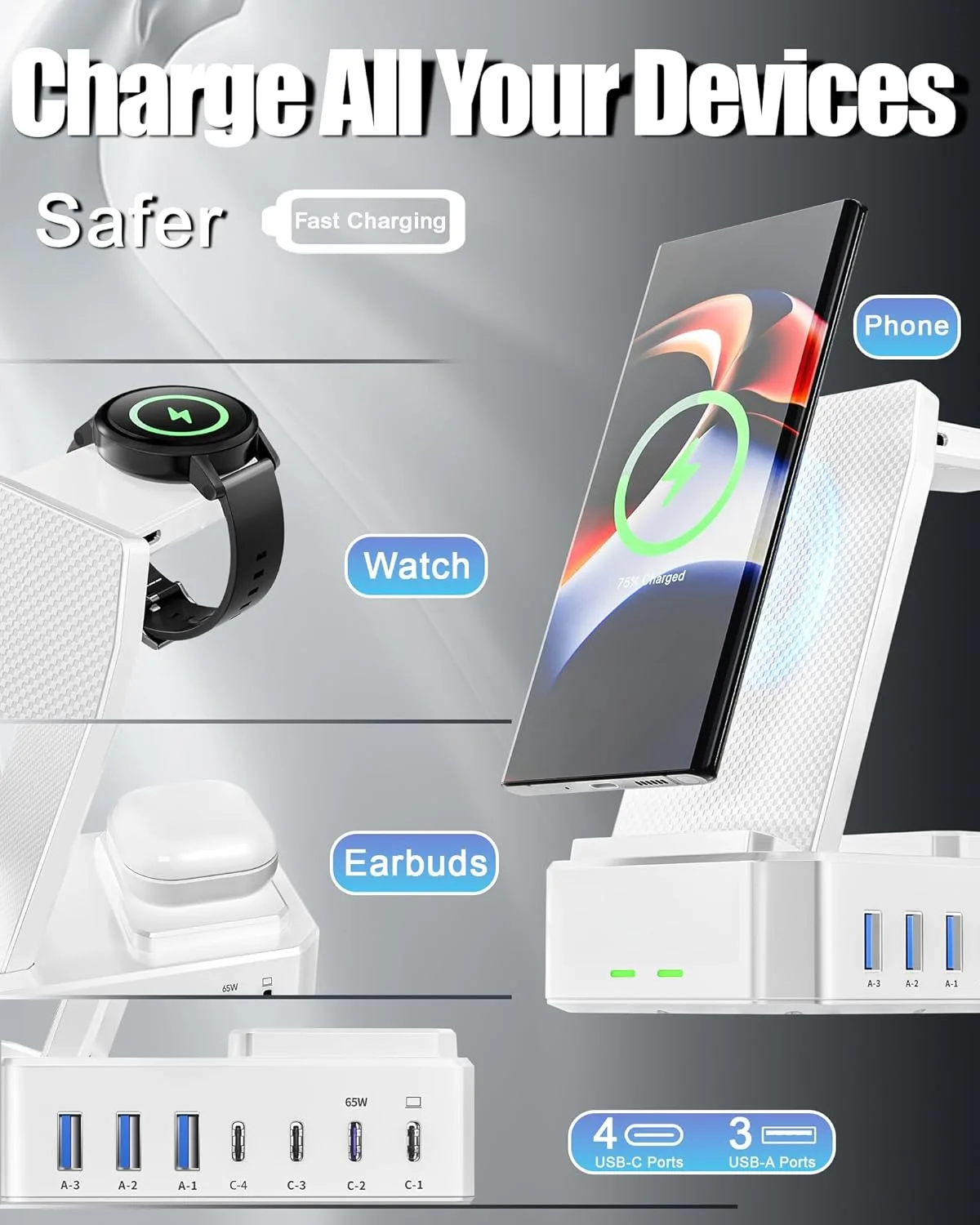
- Understand Charging Speeds: Not all wireless chargers are created equal. Check the wattage output of your charger (e.g., 5W, 7.5W, 15W) and ensure your device supports that speed for optimal performance.
- Monitor Heat: Some heat generation is normal during wireless charging. Excessive heat can indicate poor alignment, a faulty charger, or an obstruction. If your device feels unusually hot, remove it.
- Consider Resonant Systems for Specific Needs: For higher power or longer-distance requirements, explore resonant charging solutions, which offer superior performance in those contexts.
The data unequivocally demonstrates that the old narrative of wireless charging as inherently inefficient and limited is outdated. While basic inductive pads for consumer devices do have efficiency trade-offs, advancements in magnetic resonant coupling have pushed transfer efficiencies to over 90% for critical applications like EV charging and medical implants. The benefits of wireless power – sterility, safety in hazardous environments, and seamless automation – often far outweigh any minor energy losses, particularly as the technology matures and standards solidify. This isn't a niche luxury; it's an enabling technology poised to underpin significant infrastructure and healthcare advancements.
What This Means For You
The deeper science behind wireless charging isn't just for engineers and researchers; it has tangible implications for everyday users and the future of technology:
- Smarter Device Choices: Understanding resonant vs. inductive helps you choose the right charging solution. For convenience, basic Qi works. For faster, more flexible charging, look for devices supporting higher-wattage resonant systems.
- Enhanced Safety Confidence: Knowing that international bodies rigorously regulate wireless charging frequencies and power levels should alleviate common safety concerns, allowing you to use these technologies with greater peace of mind.
- Future-Proofing Your Investments: As electric vehicles and smart home ecosystems become more prevalent, standardized wireless charging will be a key feature. Investing in compatible technology now can streamline your future connected experience.
- Broader Societal Benefits: Recognizing wireless charging's role in medical advancements and industrial automation highlights its profound impact beyond personal gadgets. It's enabling healthier lives and more efficient economies, whether you directly interact with it or not.
Frequently Asked Questions
How efficient is wireless charging compared to wired charging?
Modern inductive wireless charging pads typically achieve energy transfer efficiencies between 70% and 80%, while advanced resonant systems can push this to over 90% in specific applications, according to a 2022 review published in Nature Electronics. Wired charging, by comparison, often achieves 95-99% efficiency, though cable quality and length can introduce losses.
Is wireless charging safe for my health?
Yes, wireless charging is considered safe when devices adhere to international safety standards. The International Commission on Non-Ionizing Radiation Protection (ICNIRP) provides guidelines, updated in 2020, which ensure electromagnetic field (EMF) exposure from wireless chargers is well below harmful levels. The energy is non-ionizing and localized.
Can wireless charging work through walls or furniture?
Basic inductive wireless charging requires very close proximity and generally won't work through thick walls or furniture. However, advanced magnetic resonant coupling can transfer power efficiently through non-metallic materials like wood, plastic, and even thin drywall over short to medium distances (several inches to a few feet), enabling hidden charging solutions.
What is the difference between inductive and resonant wireless charging?
Inductive wireless charging (like standard Qi pads) uses a fluctuating magnetic field to induce current in a nearby coil, requiring very close contact. Resonant wireless charging uses two coils tuned to the same frequency to efficiently transfer energy over greater distances (up to several feet) with less sensitivity to alignment, making it suitable for higher power and more flexible applications.