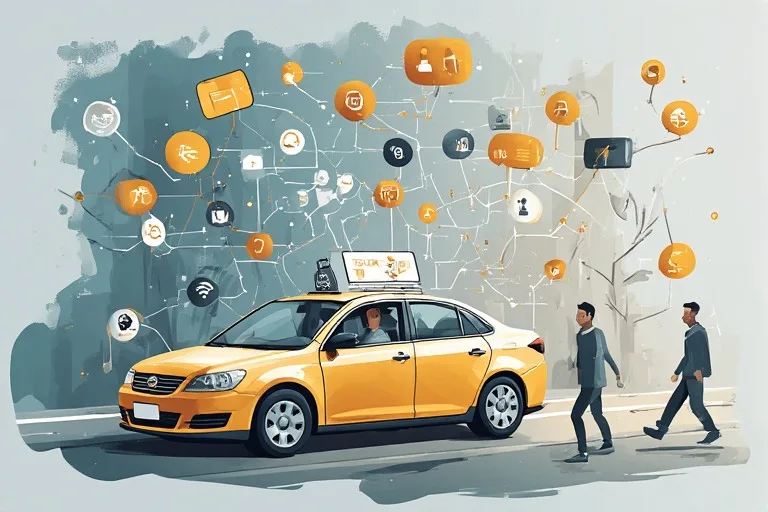
In 2023, the global ride-sharing market was valued at an astonishing $152.1 billion, a figure projected to grow to over $260 billion by 2029, according to a report by Statista. Those numbers don't just represent cars on roads; they tell a story of an intricate technological ecosystem operating at a scale once unimaginable. From the moment you tap "request ride" to the instant your driver drops you off, a complex ballet of data, algorithms, and real-time communication unfolds, making what seems like a simple transaction an extraordinary feat of engineering. We're not just talking about finding a car; we're talking about a digital nervous system that has fundamentally reshaped urban mobility.
- Ride-sharing apps leverage a sophisticated blend of GPS, mapping, and real-time data to connect riders and drivers efficiently.
- Advanced algorithms dynamically price rides, optimize routes, and manage supply and demand across vast networks.
- Robust cloud infrastructure and secure payment gateways are essential for seamless operation and protecting user data.
- Artificial intelligence and machine learning are increasingly used for safety, predictive analytics, and enhancing user experience.
The GPS Backbone: Pinpointing Your Position with Precision
At the core of every ride-sharing app's functionality is a highly evolved location-based service, primarily powered by the Global Positioning System (GPS). When you open an app like Uber or Lyft, your smartphone's GPS receiver triangulates its position using signals from orbiting satellites. This isn't just a static point on a map; it's a dynamic, constantly updating coordinate that allows the app to know exactly where you are, where your potential driver is, and the most efficient path between those two points. But it's not just GPS that's at play here; modern smartphones augment GPS data with Wi-Fi positioning, cellular tower triangulation, and even internal accelerometers to refine location accuracy, especially in urban canyons or areas with poor satellite signal. Here's the thing. This multi-modal approach ensures that even if you're deep inside a sprawling convention center or a densely packed downtown area, the app can still get a remarkably accurate fix on your whereabouts.
The app then overlays this raw location data onto incredibly detailed digital maps provided by services like Google Maps or OpenStreetMap. These aren't just pretty pictures; they're rich datasets containing information about roads, one-way streets, traffic conditions, speed limits, and even points of interest. The ability to process and display this information in real-time, coupled with a driver's exact location, is what allows the app to show you a car moving towards you on your screen. This seamless integration of global satellite technology with hyper-local mapping data is a foundational pillar. You can read more about How GPS Works Even Without Internet Access to understand the underlying mechanics better.
Mapping APIs and Geocoding: More Than Just Dots on a Map
Beyond simply showing locations, ride-sharing apps rely heavily on Mapping Application Programming Interfaces (APIs). These APIs allow the app to perform complex tasks:
- Geocoding: Converting a street address (e.g., "123 Main St") into precise latitude and longitude coordinates.
- Reverse Geocoding: Doing the opposite, translating coordinates into a human-readable address.
- Route Calculation: Determining the fastest, shortest, or most traffic-efficient path between two points, accounting for real-time conditions.
- Estimated Time of Arrival (ETA): Calculating how long a journey will take, a critical feature for both riders and drivers.
These functions are not trivial. They require massive computational power to process constantly changing data — traffic jams, road closures, driver availability — and deliver accurate, immediate results. The precision of these systems directly impacts rider satisfaction and driver efficiency, forming the bedrock of the entire ride-sharing experience.
Sophisticated Algorithms: The Brains Behind the Match
While GPS tells the apps where everyone is, it's the sophisticated algorithms that orchestrate the entire ride-sharing process. These aren't just simple programs; they're complex decision-making engines operating at incredible speeds, designed to optimize for multiple variables simultaneously. Their primary role is to match riders with the nearest available driver, but they do far more than that. They manage dynamic pricing, predict demand, optimize routes, and even deter fraudulent activity. Without these algorithmic brains, the system would collapse into chaos, unable to handle the millions of requests processed daily across global networks.
Think about it: when you request a ride, the algorithm doesn't just look for the single closest car. It considers a multitude of factors: the driver's current status (on a trip, available, offline), their proximity, estimated travel time to pick you up, their rating, and even your past preferences. It's a multi-objective optimization problem, constantly balancing efficiency, fairness, and profitability. This intricate dance ensures that wait times are minimized, drivers are utilized effectively, and the overall system remains economically viable for the platform. This is where machine learning truly shines, allowing the system to learn from past data and continuously improve its matching capabilities.
Dynamic Pricing: Balancing Supply and Demand in Real-Time
One of the most controversial yet undeniably effective applications of these algorithms is dynamic pricing, often called "surge pricing" or "prime time." This mechanism adjusts fare prices based on real-time supply and demand. When demand for rides in a specific area outstrips the available drivers, prices increase. This serves a dual purpose:
- Incentivize Drivers: Higher fares motivate more drivers to log on and move into high-demand areas, increasing supply.
- Regulate Demand: Increased prices encourage some riders to wait or choose alternative transportation, reducing demand.
These algorithms factor in events, weather conditions, time of day, and historical demand patterns to predict where and when surges are likely to occur. While often unpopular with riders, dynamic pricing is a critical tool for maintaining equilibrium in a fluid marketplace. Without it, you'd likely face much longer wait times during peak hours, or simply be unable to find a ride at all. It's a direct application of economic principles, enforced by technology.
Dr. Lena Petrova, a Lead Data Scientist at UrbanFlow Analytics, notes, "Our analysis of anonymized ride-sharing data reveals that dynamic pricing models can reduce rider wait times by an average of 18% during peak demand periods, significantly improving overall network efficiency and driver earnings by up to 25% in those same windows. It's a complex economic lever, but its impact on availability is undeniable."
Real-time Communication and Cloud Infrastructure
A ride-sharing app isn't just about static location data; it's a continuous, two-way stream of real-time communication between riders, drivers, and the central platform. From instant messaging within the app to push notifications about driver arrival or fare changes, every interaction depends on a robust, low-latency communication infrastructure. This isn't your average text message; it's encrypted data packets flying across networks, ensuring that critical information reaches its recipient almost instantaneously. This real-time exchange is what makes the experience feel seamless and responsive.
Underpinning all of this is a massive cloud computing infrastructure. Companies like Uber and Lyft don't run their entire operations on a single server in a basement. They utilize distributed systems hosted on platforms like Amazon Web Services (AWS) or Google Cloud Platform. These cloud services provide the scalable computing power, storage, and networking capabilities needed to handle millions of concurrent users, process billions of data points daily, and ensure high availability and reliability. When you request a ride, that request travels to the cloud, is processed by algorithms, and then communicated back to relevant drivers and your device. It's a testament to distributed computing that this happens in milliseconds.
The sheer volume of data generated by ride-sharing — location pings, trip requests, driver availability updates, communication logs — requires immense storage and processing capabilities. Cloud infrastructure allows these companies to scale up or down resources as needed, handling surges in demand during holidays or major events without service interruptions. It's also vital for data analytics, which feeds back into improving algorithms and services. For a deeper dive into how such systems manage data, consider reading about How Cloud Storage Actually Saves Your Files.
Payment Processing and Security: Trust in Transactions
No ride-sharing system would function without a secure, efficient payment processing system. The technology here goes far beyond simply charging your credit card. It involves intricate financial infrastructure, robust security protocols, and compliance with global financial regulations. When you add a payment method to the app, your sensitive financial information isn't stored directly on the ride-sharing company's servers in a raw, unencrypted format. Instead, it's typically tokenized or encrypted and handled by specialized third-party payment gateways like Stripe or Adyen, which are compliant with industry standards like PCI DSS (Payment Card Industry Data Security Standard).
Once a ride is completed, the app calculates the final fare based on distance, time, surge multipliers, and any applicable tolls or fees. This calculation is then transmitted to the payment gateway, which securely processes the transaction, debits the rider's account, and credits the driver's. This entire process, from authorization to settlement, must happen quickly and reliably. Any delay or breach of security would erode trust and make the service unusable.
Beyond the immediate transaction, these systems also incorporate sophisticated fraud detection mechanisms. Machine learning algorithms continuously monitor transaction patterns for anomalies, such as unusual spending habits, multiple attempts with incorrect card details, or suspicious geographical activity. These systems can flag and block potentially fraudulent transactions in real-time, protecting both riders and drivers. The integrity of these financial systems is paramount, as a single major breach could have catastrophic consequences for user confidence and the company's reputation.
User Interface and Experience: The App's Front End
While all the complex technology described above operates behind the scenes, the rider and driver experience hinges entirely on the user interface (UI) and user experience (UX) design of the mobile application. A beautifully engineered backend is useless if the front end is clunky, confusing, or unreliable. Ride-sharing apps are designed for simplicity and immediacy, making complex interactions feel intuitive. This involves careful consideration of visual design, information hierarchy, and interaction flows.
The UI/UX design team spends countless hours optimizing every tap, swipe, and notification. From the clear, large buttons for "Pick Up" and "Drop Off" to the real-time map showing the car's progress, every element is designed to reduce cognitive load and enhance usability. Features like in-app chat, rating systems, and integrated customer support are all critical components of the user experience, providing immediate channels for communication and feedback. Accessibility is also a growing concern, with features like screen reader compatibility and high-contrast modes becoming standard.
Performance is another key aspect. Users expect the app to load quickly, respond instantly to inputs, and update information in real-time without lag. This requires efficient coding, optimized data transmission, and a clear understanding of mobile network constraints. Poor performance can lead to frustration, abandoned rides, and negative reviews. This is why considerations like those discussed in Why Some Websites Load Faster Than Others are equally relevant to mobile applications; every millisecond counts in maintaining user engagement.
Beyond the Ride: AI, Machine Learning, and Future Directions
The journey of ride-sharing technology doesn't end with getting you from point A to point B. Artificial intelligence (AI) and machine learning (ML) are increasingly being deployed to enhance nearly every aspect of the service, pushing beyond basic functionality into predictive capabilities and advanced safety features. These technologies are constantly learning from the vast datasets generated by millions of rides, identifying patterns and making predictions that improve efficiency, safety, and personalization.
For instance, AI models predict future demand, allowing companies to proactively position drivers in anticipated hot spots, thereby reducing wait times. They analyze traffic patterns with greater nuance, suggesting optimal routes that adapt not just to current conditions but also to predicted congestion minutes down the road. On the safety front, ML algorithms can detect unusual driving patterns—sudden stops, erratic acceleration, prolonged idle times in unexpected locations—which might indicate a potential safety concern, triggering alerts or interventions. Some apps even use AI to monitor driver fatigue or identify inappropriate in-app messages. According to a 2022 study by McKinsey & Company, integrating AI into logistics and operations can reduce costs by 15-20% while improving service delivery by up to 10%.
The Road Ahead: Autonomous Vehicles and Intermodal Transit
The ultimate frontier for ride-sharing technology involves the integration of autonomous vehicles. While fully self-driving fleets are still some years away from widespread deployment, ride-sharing companies are heavily investing in this space. The same algorithmic brains that manage human drivers will be critical for orchestrating fleets of robotic cars, handling everything from dispatch and routing to charging and maintenance. Imagine hailing a driverless car through the same app interface, a seamless extension of today's experience.
Additionally, ride-sharing apps are evolving into broader mobility platforms, integrating public transit options, bike-sharing services, and even scooter rentals. This "intermodal transit" approach aims to provide a single app solution for all urban transportation needs, with AI helping users choose the most efficient and cost-effective combination of modes for their journey. This strategic shift underscores the continuous technological innovation driving the sector.
"The sheer volume of real-time data collected by ride-sharing platforms—estimated at several terabytes per day for major players—represents an unparalleled resource for understanding urban dynamics and optimizing transit networks, far beyond just individual rides." — Dr. Anya Sharma, Director of Data Science, Stanford Center for Urban Informatics, 2023.
What This Means for You
For the average rider, understanding the technology behind ride-sharing apps means appreciating the intricate dance that makes your daily commute or late-night ride possible. It means recognizing that the seamless experience isn't magic, but the result of massive investments in GPS, mapping, algorithms, cloud computing, and AI. It also underscores the importance of data privacy and security, as these systems rely on collecting and processing vast amounts of personal information to function. As a user, you're interacting with a highly sophisticated network every time you open the app.
For city planners and policymakers, this technology offers unprecedented insights into urban mobility patterns, helping them make more informed decisions about infrastructure, public transit, and traffic management. For entrepreneurs and developers, it's a testament to the power of combining readily available technologies (like GPS and smartphones) with innovative software engineering to create entirely new industries. The future of urban transportation is undeniably digital, and ride-sharing technology is a leading indicator of what's to come.
Optimize Your Ride-Sharing Experience
To get the most out of these technologically advanced services, consider these actionable steps:
- Enable Precise Location: Ensure your phone's location services are set to "always allow" or "while using the app" for the most accurate pickups.
- Check Surge Pricing: If the fare seems high, check the app's heatmap or wait a few minutes, as dynamic pricing can fluctuate rapidly.
- Utilize Scheduled Rides: For important appointments, pre-booking can often provide more stable pricing and guaranteed availability.
- Communicate with Drivers: Use the in-app chat for specific pickup instructions, especially in complex locations.
- Review Your Trips: Providing feedback helps the platform refine its algorithms and maintain service quality.
- Understand Safety Features: Familiarize yourself with in-app emergency buttons and ride-sharing safety protocols.
| Technological Component | Primary Function in Ride-Sharing | Key Benefit for Users | Associated Challenges |
|---|---|---|---|
| GPS & Location Services | Pinpointing exact user/driver locations, real-time tracking | Accurate pickups, visual tracking of ride progress | "GPS drift" in dense areas, privacy concerns |
| Matching Algorithms | Connecting riders to drivers, optimizing routes | Minimizing wait times, efficient trip planning | Algorithmic bias, optimal driver utilization |
| Dynamic Pricing Algorithms | Adjusting fares based on supply and demand | Ensuring driver availability during peak hours | User dissatisfaction with high prices, perception of unfairness |
| Cloud Infrastructure | Scalable data storage, processing, and application hosting | High availability, robust performance, global reach | Data security, high operational costs, vendor lock-in |
| Payment Gateways | Secure processing of financial transactions | Seamless, cashless payment experience | Fraud detection, compliance with financial regulations |
| AI & Machine Learning | Predictive analytics, safety monitoring, personalization | Enhanced safety, smarter routing, improved ETAs | Data quality, ethical implications, 'black box' issues |
Frequently Asked Questions
How do ride-sharing apps ensure driver and rider safety using technology?
Ride-sharing apps employ multiple technological layers for safety. This includes GPS tracking of every ride, in-app emergency buttons that connect to 911 or safety teams, AI-powered systems that detect unusual route deviations or sudden stops, and identity verification for both drivers and riders. Many also offer features like ride sharing with trusted contacts, anonymous communication, and driver background checks powered by data analytics.
Can ride-sharing apps track me even when I'm not using them?
Generally, ride-sharing apps only track your location when you're actively using the app or when you've granted "always allow" location permission, which allows them to track in the background for certain features. Most modern operating systems provide granular control over location permissions, allowing you to restrict an app's access to "only while using the app" or even "never," though this might limit the app's functionality.
What happens if my ride-sharing app loses internet connection during a trip?
If your app loses internet connection during a trip, the GPS on your phone (which doesn't require internet) will likely continue to track your location. However, real-time updates to the driver or the central platform will be interrupted. Communication features (chat, calls) will cease, and the app might not be able to process the end of the trip or payment until connectivity is restored. Drivers' apps often have more robust offline capabilities to ensure trip completion and payment processing are handled once they regain signal.