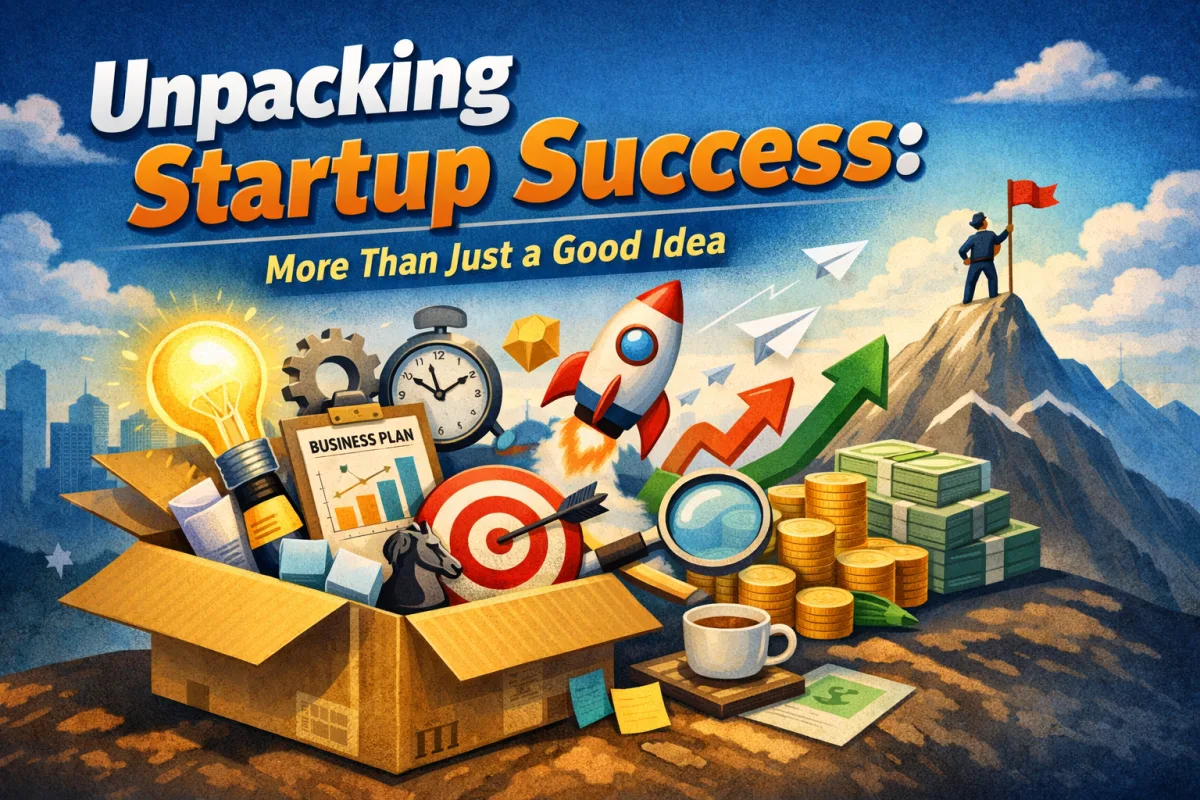
The Allure of the Startup Myth
You know the narrative. A brilliant mind, toiling in a garage or dorm room, strikes gold with an idea so revolutionary it changes the world overnight. Investors flock, headlines blaze, and presto – another unicorn is born. We devour these startup success stories like candy, don't we? They're aspirational, intoxicating, and frankly, a little too neat. They feed into a deeply held belief that anyone with a good idea and enough gumption can make it big. But here’s a truth bomb: that polished narrative often obscures a far messier, more complex reality, one that rarely fits neatly into an inspirational LinkedIn post.
We're conditioned to celebrate the finish line, not the grueling marathon. We see the IPO bell ringing, the acquisition headlines, the founder on the cover of a glossy magazine. What we don't often see is the decade of near-failures, the mountain of debt, the strained relationships, the countless pivots, and the sheer, unadulterated luck that frequently paved the way. It’s a classic case of survivor bias, where we only hear from the victors, forgetting the legions who fought just as hard and lost.
Beyond the Spark: The Grind and the Grit
Let's be clear: a great idea is essential. But it's just the tip of the iceberg. The real work, the soul-crushing, exhilarating, make-or-break work, happens in the execution. How many brilliant ideas have withered on the vine because the team couldn't build it, market it, or adapt it? Countless. Startups aren't just about innovation; they're about relentless problem-solving, day in and day out. It's about staring down a cash crunch, convincing skeptical customers, and leading a team through uncertainty when you yourself are often terrified.
Consider the stark statistics. According to a report by CB Insights, roughly 70% of tech startups fail, usually within 20 months of their first funding round. That's a brutal landscape. For every Airbnb, Stripe, or SpaceX that makes it, thousands of equally passionate founders with equally "good" ideas crash and burn. Why? It's rarely just one thing. Often, it's a cocktail of market timing, team dynamics, funding woes, and an inability to adapt fast enough.
The Overlooked Role of Privilege and Network
Here’s where the narrative gets even less convenient. While we love the bootstrapped hero myth, the reality is that access to capital, mentorship, and networks often plays an outsized role in a startup's trajectory. It’s far easier to quit your well-paying job and dedicate yourself to a risky venture if you have a safety net – family support, a spouse's stable income, or a healthy savings account. It's easier to secure that crucial seed funding if your uncle is a VC, or if your university alumni network connects you directly to influential angels.
This isn't to diminish the incredible work ethic of successful founders. Far from it. But it's naive to ignore the structural advantages that often accelerate their journey. When we lionize startup success solely through the lens of individual genius and grit, we risk perpetuating a myth that disadvantages those without similar access, making the already difficult path seem impossible. We’re not just talking about money; we’re talking about social capital, educational background, and even geographic location. Being in Silicon Valley or New York often provides a distinct advantage in terms of talent pool and investor density that a brilliant founder in, say, Omaha, Nebraska, just doesn't have.
What We Should Really Learn from Success Stories
So, should we stop celebrating startup success? Absolutely not. These stories are vital. They push boundaries, create jobs, and solve real-world problems. But we need to look at them with a more discerning eye. What lessons can we truly extract from the journey of a company like Airbnb, for instance? Everyone remembers the story of Brian Chesky and Joe Gebbia renting out airbeds in their apartment during a conference. It's iconic. But what about the endless rejections from VCs, the credit card debt they racked up, the cereal boxes they sold just to stay afloat, or the countless iterations they went through to perfect their product and build trust?
That's the real story. It's not just about a clever idea; it's about:
- Unwavering Resilience: The ability to absorb rejection, learn from failure, and keep pushing forward despite overwhelming odds.
- Market Obsession: A deep, almost pathological understanding of customer needs and a willingness to pivot until you meet them.
- Team Building: The skill to attract, inspire, and retain exceptional talent, because no one builds a unicorn alone.
- Strategic Adaptability: The agility to change course when the market dictates, even if it means abandoning a beloved initial vision.
- Networking Prowess: The capacity to build relationships with mentors, investors, and partners who can open crucial doors.
A More Honest Conversation
Let's have a more honest conversation about startup success. Let's acknowledge the brilliance, the hard work, and the sheer audacity it takes. But let's also pull back the curtain on the privilege, the painstaking iterations, and the brutal grind that often go unmentioned. By doing so, we don't diminish the achievements of successful founders; instead, we make their stories more accessible, more human, and ultimately, more genuinely inspiring for the next generation of entrepreneurs who might not have a direct line to Sand Hill Road. Because true inspiration comes not from the myth of overnight success, but from the raw, unvarnished truth of enduring struggle and eventual triumph.