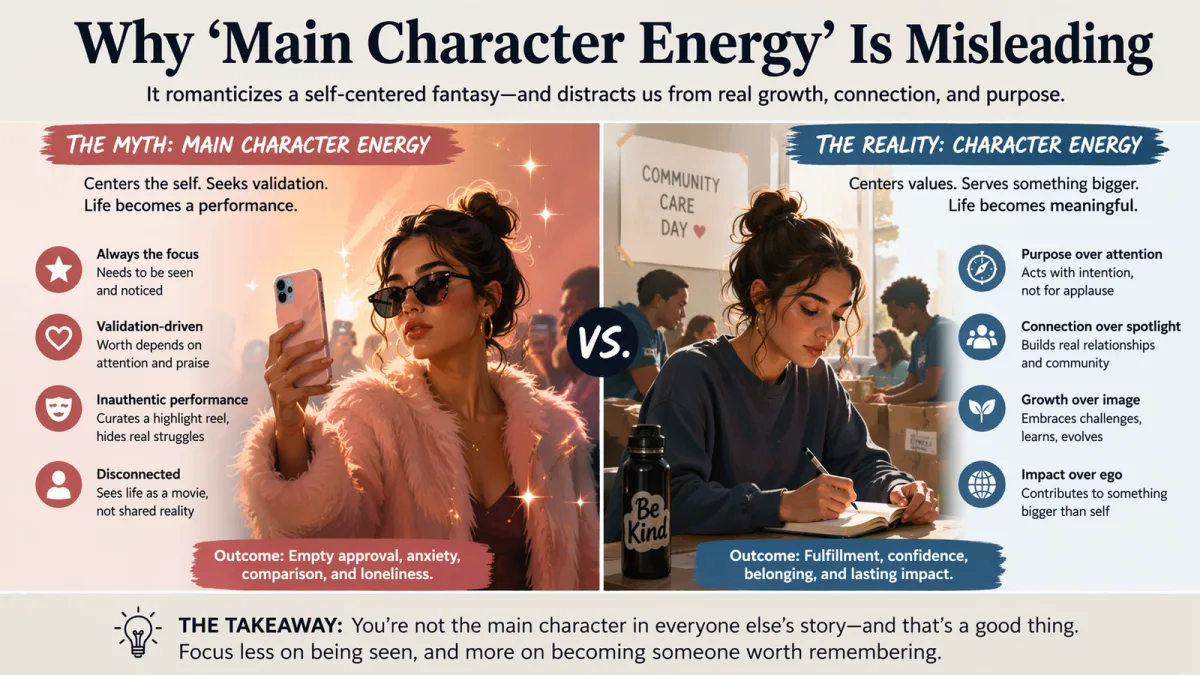
You’ve seen the TikToks, the Instagram reels, the endless calls to embrace your "main character energy." It’s the idea that your life is a movie, and you’re the undeniable star, the protagonist around whom all plots revolve. This trend, promising empowerment and a cinematic existence, has swept through our digital lives, encouraging us to romanticize our routines, narrate our days, and live unapologetically in the spotlight of our own making. It sounds liberating, doesn't it? A chance to reclaim agency and find joy in the mundane. But beneath the filtered veneer and the perfectly curated soundtrack, the concept of "main character energy" is deeply misleading, fostering a self-centered perspective that can quietly undermine your well-being and your connections.
The Allure of the Spotlight: Why We Crave Main Character Energy
The appeal of being the "main character" is understandable. We live in a world that often feels chaotic, overwhelming, and indifferent. The thought of taking control, of imbuing our daily lives with purpose and drama, offers a potent escape. It’s a fantasy of significance, a belief that our experiences hold intrinsic narrative weight. This mindset encourages self-care, self-expression, and a focus on personal growth – all positive attributes in moderation. It suggests that you shouldn't wait for permission to live your best life, that you should dress up for yourself, dance in the kitchen, and embrace every moment as if it's a pivotal scene.
This trend gained significant traction during the pandemic, when many people felt a profound loss of control and connection. Creating a personal narrative, even a fictional one, offered a way to cope, to find beauty in isolation, and to feel active in a world that had suddenly become very passive. It was a digital coping mechanism, a way to spin mundane moments into something magical, often shared with an eager online audience ready to affirm your unique story.
The Illusion of a Solo Narrative: Why "Main Character Energy" Isolates
Here’s where the illusion begins to crumble: real life isn't a solo performance. Movies, by their very nature, simplify complex human interactions into clear plot lines with a central figure. But human existence is a vast, interconnected web of supporting characters, ensemble players, and even other protagonists living their own rich stories. When you adopt "main character energy," you risk reducing everyone else in your life to mere extras, existing only to further your plot or reflect your glory.
This mindset subtly encourages a transactional view of relationships. Friends become sidekicks, partners become love interests, and colleagues become obstacles or stepping stones. It diminishes their inherent value, their independent lives, and their equally valid struggles and triumphs. True connection thrives on mutual recognition, empathy, and shared experience, not on a hierarchy where one person's story takes precedence over all others. Isn't genuine warmth found in shared vulnerability, not in maintaining a polished facade?
The Social Media Echo Chamber
Social media amplifies this isolating effect. Platforms reward curated perfection and individualistic narratives. We're encouraged to post our "glow-ups," our "dream lives," and our "unbothered" moments. This creates an echo chamber where everyone is trying to out-main-character each other, leading to a pervasive sense of comparison and inadequacy. A 2023 study by the Pew Research Center revealed that 35% of teens feel pressure to present a perfect image of themselves online, directly contributing to the curated, often solitary, "main character" aesthetic. This constant performance drains energy and often masks deeper insecurities, pushing authentic connection further out of reach.
The Mental Health Pitfalls of Self-Centricity
While self-focus can be healthy, an extreme "main character" mindset can tip into genuine self-centeredness or even narcissism. It can breed an inflated sense of self-importance and a reduced capacity for empathy. If you always believe you’re the protagonist, you'll struggle to understand perspectives that don't align with your narrative, leading to frustration and conflict.
This constant need to be "on," to perform your life for an imagined audience, also takes a significant toll on mental health. It can lead to anxiety, burnout, and a deep sense of loneliness. The pressure to always be interesting, always aesthetically pleasing, and always moving towards some grand cinematic climax is unsustainable. What happens when the "plot" gets boring, or when real-life challenges don't fit into your curated narrative? This disconnect between idealized self and reality can fuel self-criticism and despair.
- Increased anxiety: The pressure to constantly perform and curate your life for an audience.
- Burnout: The exhaustion from maintaining an idealized image and narrative.
- Reduced empathy: Difficulty understanding others' perspectives when yours is always central.
- Loneliness: A shallow sense of connection due to transactional relationships.
- Disappointment: When real life inevitably fails to live up to the "cinematic" ideal.
Reclaiming Your Agency Without the Spotlight
It's crucial to distinguish between healthy self-love and the potentially damaging aspects of "main character energy." You absolutely deserve to feel significant, to pursue your dreams, and to find joy in your daily life. The difference lies in how you define that significance and where you place your focus. Instead of being the main character, consider yourself a vital, cherished member of a rich, unfolding story that includes everyone around you.
Embrace "ensemble energy" or "community energy" instead. Recognize that your story is intertwined with countless others, and that true richness comes from collaboration, shared laughter, and mutual support. This doesn't diminish your individuality; it enhances it by grounding it in genuine connection. You are important, not because you're the sole star, but because you're an irreplaceable thread in the vibrant tapestry of human experience.
What This Means For You: Cultivating a Healthier Perspective
So, how do you navigate a world saturated with "main character" rhetoric without falling into its traps? It starts with intentional shifts in perspective and practice:
- Practice Radical Empathy: Actively listen to others without framing their stories through your own lens. Understand that everyone is living a complex, nuanced life as rich as your own. Ask questions and truly absorb their answers.
- Seek Authentic Connection: Prioritize relationships where you can be your full, unedited self, and where you're equally invested in the well-being of others. Engage in activities that foster collaboration and shared experiences, rather than individual performance.
- Embrace the Mundane: Find beauty and meaning in the ordinary moments without needing to romanticize or perform them for an audience. A quiet cup of coffee or a walk in the park doesn't need a soundtrack or a dramatic voiceover to be fulfilling.
- Define Your Own Success: Detach your self-worth from external validation or the need to always be the most interesting person in the room. Focus on internal growth, personal values, and the impact you have on those around you.
- Limit Social Media Consumption: Consciously reduce time spent on platforms that encourage comparison and performance. Engage with content that inspires connection, learning, or genuine joy, rather than aspirational perfection.
Your life is a precious, singular journey, full of unique experiences and profound moments. You don't need a fictional narrative or a starring role to validate its importance. True empowerment comes from recognizing your inherent worth, cultivating genuine connections, and contributing meaningfully to the world around you, not from pretending you're the only one on screen. Ditch the "main character energy" and step into the vibrant, messy, beautiful reality where everyone has a vital part to play.