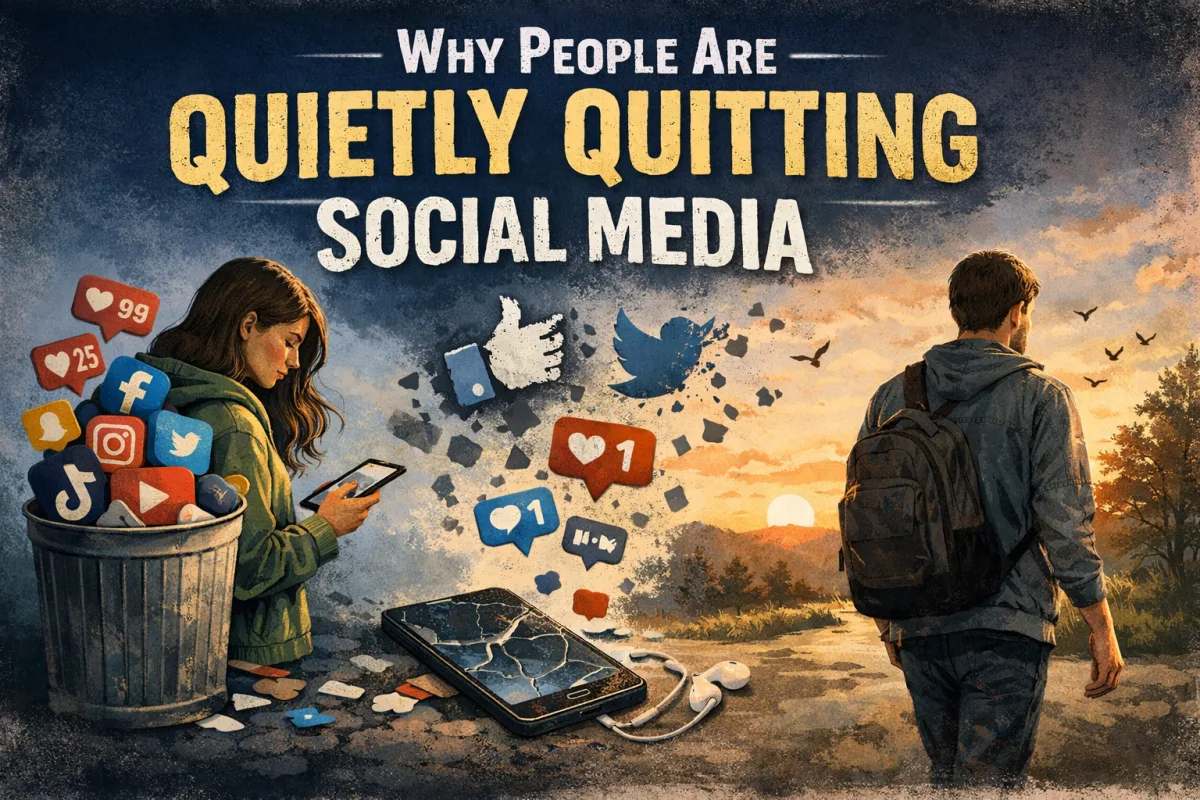
There's a subtle shift happening in our digital landscape. It's not a loud, public declaration, but a quiet, almost imperceptible exodus. More and more people are quietly quitting social media, stepping back from platforms that once dominated their daily lives. You might have noticed fewer updates from certain friends, or perhaps you've felt that nagging urge yourself – the desire to simply disconnect. This isn't just a fleeting trend; it's a profound re-evaluation of our relationship with technology, driven by a complex mix of mental fatigue, privacy concerns, and a yearning for authenticity.
The Mental Health Toll: Why Users Are Stepping Back
For years, social media promised connection and community. But for many, it's delivered anxiety, comparison, and a pervasive sense of inadequacy. The relentless highlight reel of others' lives, often meticulously curated, creates an impossible standard. We're constantly bombarded with images of perfect vacations, thriving careers, and flawless appearances, making our own realities feel dull by comparison. It's a psychological burden that's becoming too heavy to bear.
Studies consistently link heavy social media use to increased rates of depression, anxiety, and loneliness. A 2022 Pew Research Center study, for instance, found that a significant percentage of teens feel worse about their lives due to social media. This isn't just about young people; adults too are grappling with the emotional weight of constant digital engagement. It's an exhausting cycle, leaving users drained rather than enriched.
The Comparison Trap and FOMO
The "comparison trap" isn't a new phenomenon, but social media amplifies it to unprecedented levels. Every scroll is an invitation to compare your ordinary day to someone else's extraordinary moment. This constant comparison fuels a pervasive "Fear Of Missing Out" (FOMO), making us feel like our lives are less exciting, less successful, or less meaningful. It's a self-perpetuating loop that erodes self-esteem and fosters discontent.
Many individuals are realizing that this emotional cost simply isn't worth the perceived benefits. They're choosing to protect their peace of mind over staying updated on every fleeting digital interaction. The quiet act of quitting social media becomes an act of self-preservation, a conscious decision to prioritize mental wellbeing over virtual validation.
Reclaiming Privacy and Authenticity in a Digital World
Another major driver behind people quietly quitting social media is a growing unease about privacy. Data breaches, targeted advertising that feels eerily personal, and the sheer volume of information collected about us have made many users deeply uncomfortable. We're increasingly aware that our digital footprint isn't just a harmless trail; it's a valuable commodity for tech giants, often used in ways we don't fully understand or consent to.
The desire for authenticity also plays a crucial role. Social media often encourages a performative self, where we present an idealized version of our lives rather than our true selves. This constant performance can be exhausting and alienating. People are yearning for genuine connections, real conversations, and experiences that aren't filtered through a lens or optimized for likes. They're realizing that true connection thrives offline, not within the confines of a carefully curated feed.
- Concerns over how personal data is collected and used.
- Frustration with increasingly intrusive targeted advertising.
- A longing for genuine, unfiltered interactions over curated online personas.
- The realization that digital 'friends' don't always translate to real-world support.
Escaping the Algorithm's Grip and Content Fatigue
Have you ever found yourself endlessly scrolling, feeling like you're not really seeing anything new or interesting, but unable to stop? That's the algorithm at work. Social media platforms are designed to maximize engagement, often by feeding us content that triggers emotional responses or reinforces existing biases. This creates an echo chamber, limiting our exposure to diverse perspectives and fostering a sense of digital monotony.
The sheer volume of content is also overwhelming. From viral videos to political debates, personal updates to advertising, our feeds are a chaotic torrent. This content fatigue leads to a feeling of being constantly inundated, yet paradoxically, under-stimulated in a meaningful way. Users are tired of feeling manipulated and exhausted by the endless stream of information, much of which adds little value to their lives.
Many are discovering that breaking free from this algorithmic loop provides a profound sense of liberation. It allows them to choose what information they consume, rather than having it dictated to them by an opaque system. This control over their digital diet is a powerful incentive for quietly quitting social media or significantly reducing their usage.
Shifting Priorities: Valuing Real Life Over Digital Validation
Perhaps the most significant reason people are quietly quitting social media is a fundamental shift in priorities. There's a growing realization that time spent online often detracts from time that could be spent on more fulfilling activities: pursuing hobbies, engaging in meaningful conversations with loved ones, enjoying nature, or simply being present in the moment. The fleeting satisfaction of a 'like' pales in comparison to the richness of real-world experiences.
People are actively choosing to invest their energy and attention elsewhere. They're rediscovering passions that fell by the wayside, fostering deeper relationships, and investing in their physical and mental health. This re-prioritization isn't about rejecting technology entirely, but about using it more intentionally and understanding its place in a balanced life. The allure of digital validation is waning as the value of authentic, offline living shines brighter.
What This Quiet Exodus Means for You
If you've felt the pull to step back from social media, you're not alone. This growing trend isn't about shaming those who use these platforms; it's about fostering a more intentional and healthier relationship with our digital tools. It's an invitation to reflect on your own usage and ask some important questions:
- Does social media genuinely enhance your life, or does it primarily cause stress or anxiety?
- Are you spending time online that you'd rather dedicate to other activities or people?
- Do you feel authentic and uplifted by your online interactions, or do they leave you feeling drained?
You don't have to completely delete your accounts to benefit. Even small changes can make a big difference. Consider setting time limits, unfollowing accounts that don't serve you, or designating specific 'no-phone' zones or times during your day. Reclaiming your attention and time is a powerful act in an increasingly noisy world. It's about finding a balance that supports your wellbeing, not just your digital presence.
The quiet quitting of social media signals a broader cultural shift towards digital consciousness. It's a collective realization that while these platforms offer undeniable benefits, their costs—to our mental health, privacy, and sense of self—have become too high for many. As more individuals choose intentional disconnection, they're paving the way for a future where technology serves us, rather than the other way around. It's a powerful statement, one quiet step at a time, towards a more present and fulfilling life.