My Honest Review of the Dingdongwu Smart Robot Dog
As someone who’s always a little skeptical of "smart toys" that promise the world, I decided to take the plunge and pick up the Dingdongwu Smart Robot Dog. My nephew had been hounding me for a robot pet, and frankly, I was curious if these things had evolved beyond simple walk-and-bark mechanisms. The packaging was pretty standard, nothing overly fancy, but secure enough to protect the little guy inside. Pulling it out of the box, I was immediately struck by its size – it’s bigger than I expected, which is a good thing for younger kids as it feels more substantial. The plastic felt robust, not flimsy, which was a relief. Setting it up was a breeze; pop in some batteries (for the remote, the dog itself is rechargeable via USB), and you’re pretty much good to go. The instructions were clear, which isn't always a given with these types of products.
First Impressions and Playtime Fun
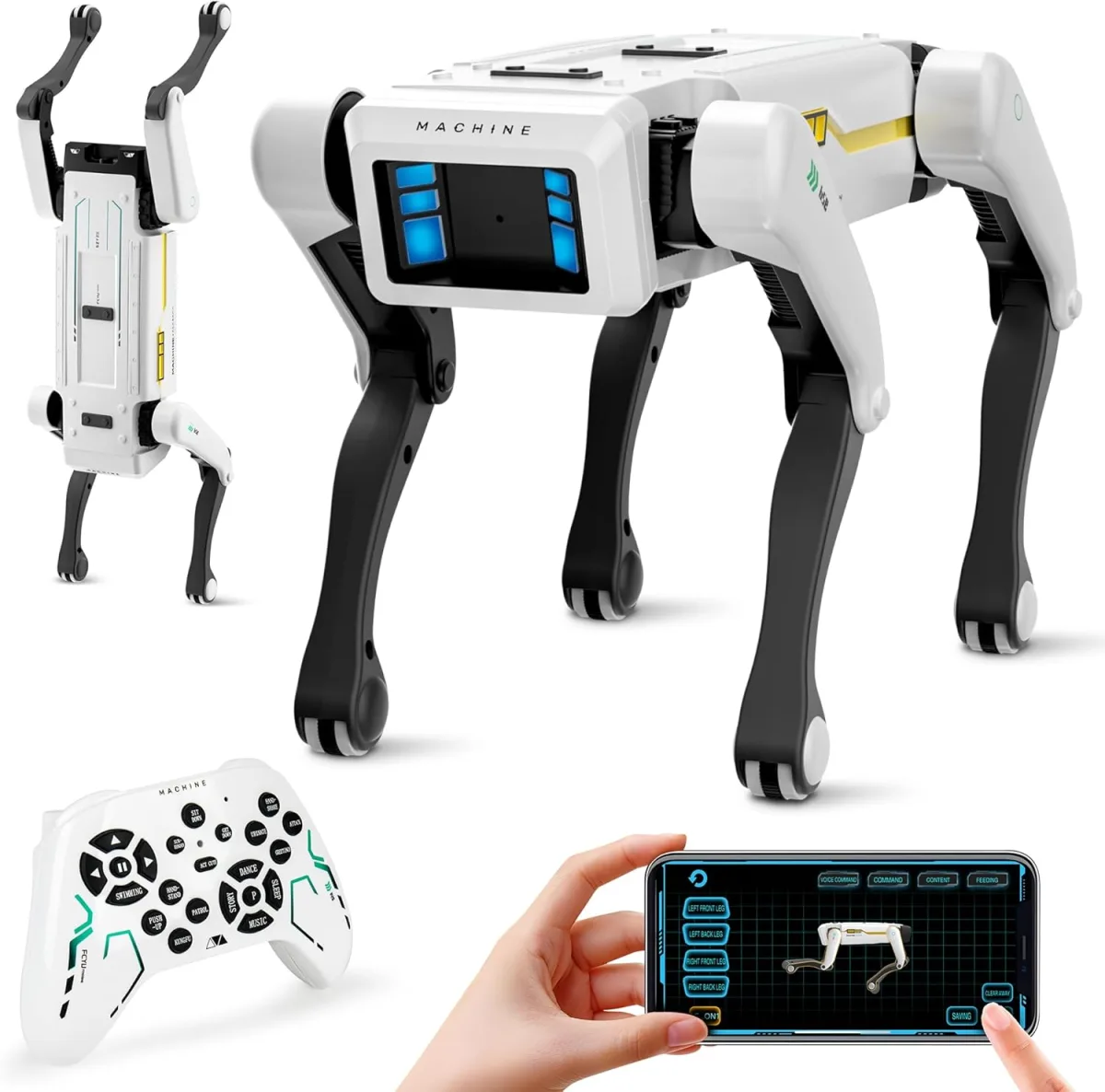
The first thing I did was try out the basic commands. This little robot dog does a surprising number of tricks! It barks, wags its tail (a cute little LED display on its rear), walks, trots, and even does a few dance moves. The LED eyes are expressive, changing patterns and colors to indicate different moods or actions, which adds a lot to its personality. I noticed that it responds fairly quickly to the remote control, and the range is decent for a typical living room. My nephew, who's six, absolutely loved chasing it around and making it perform. He particularly enjoyed the music mode – it plays a few catchy tunes while performing a little dance routine, which is quite entertaining to watch.
One feature that surprised me was the touch sensor on its head. When you pet it, the dog responds with happy barks and tail wags, almost like a real puppy. This really upped the interactive factor and made it feel less like a rigid robot and more like a playful companion. After a few weeks of pretty consistent play, including a few tumbles off the sofa (don't ask), it's held up remarkably well. The plastic body hasn't cracked, and all the functions still work perfectly. The battery life is also pretty solid; we usually get about 45-60 minutes of continuous play on a full charge, which is enough to keep my nephew entertained without needing constant recharging. If you're curious about this little gadget, you can check today's price.
What I Liked and What Annoyed Me
The sounds it makes are generally cute, though the barking can get a little repetitive if you're in a quiet room for too long. Luckily, there's a volume control, which is a godsend for parents and caregivers! The range of motions is quite impressive for its price point; it doesn't just shuffle, it actually has distinct gaits and trick movements. It can sit, lie down, do push-ups, and even a "yoga" pose, which always gets a giggle. The remote control is intuitive enough for a child to pick up quickly, with clearly labeled buttons for each action. The rechargeable battery is a huge plus, saving on endless battery purchases.
My main annoyance, if I had to pick one, is that while it does a lot of tricks, it doesn't really "learn" or adapt over time. It's programmed to do what it does, and that's it. For a "smart" robot dog, I was hoping for perhaps a little more evolution in its play patterns or responses after prolonged interaction. Also, it struggles a bit on carpeted surfaces, especially thicker pile. It moves best on hard floors, which is something to consider depending on where your child will be playing with it. Considering everything it does, if you're thinking of getting one, you can grab it on Amazon.
Pros and Cons
- Pros:
- Durable build quality, withstood falls.
- Wide range of interactive tricks and movements.
- Expressive LED eyes and tail.
- Touch-sensitive head for realistic interaction.
- Rechargeable battery (dog) and adjustable volume.
- Easy-to-use remote control for kids.
- Good battery life per charge.
- Cons:
- Performance on carpet can be limited.
- No "learning" or adaptive behavior over time.
- Barking sounds can become repetitive if not controlled by volume.
- Remote still requires separate AAA batteries.
Who Should Buy This?
This robot dog is absolutely perfect for kids aged 3-8 who are looking for an interactive pet without the commitment of a real animal. It's also a great gift for children who love gadgets and seeing things move and respond. Parents looking for a durable, engaging toy that doesn't require constant supervision (beyond initial setup) will find this appealing. It's a fantastic entry-level robot toy that introduces basic robotics and interactive play. If you have a child who dreams of a puppy but isn't quite ready for the real deal, this could be a wonderful substitute.
Who Should Skip It?
If you're looking for a highly advanced robot with AI capabilities, deep learning, or complex programming options, this isn't it. This is primarily a fun, interactive toy, not an educational coding platform. Adults seeking a sophisticated tech gadget might find it a bit simplistic. Also, if your primary play area is thick, plush carpet, you might find its movement limitations frustrating. It’s also probably not for older kids or teenagers who might quickly outgrow its pre-programmed tricks.
Final Thoughts
Overall, I'm genuinely impressed with the Dingdongwu Smart Robot Dog. It delivers on its promise of being an interactive and entertaining toy. My nephew absolutely adores it, and it's held up great to enthusiastic play. It's not going to replace a real pet, but it provides a lot of joy and engagement for its target audience. For the price, you're getting a well-made, feature-rich robot companion that's sure to bring smiles. Before you make your final decision, I recommend you see what others paid to ensure it fits your budget.