My Honest Take on the Gskyer AZ Refracting Telescope
I’ve always had a fascination with the night sky, but let’s be real, dedicated astronomy equipment can get pricey. So, when I started looking for an entry-level telescope that wouldn’t break the bank, the Gskyer AZ Astronomical Refracting Telescope kept popping up. I decided to give it a shot, mostly for casual moon gazing and perhaps a peek at some planets. After several weeks of using it, I’ve got some pretty solid opinions to share that might help you decide if it’s right for you.
First Impressions & Setup
The telescope arrived well-packaged, and getting it out of the box was straightforward. Assembly wasn't too bad, though the instructions could be a little clearer for someone who’s never touched a telescope before. I managed to get it set up in about 15-20 minutes on my first try. The tripod felt a bit lighter than I expected, but it was sturdy enough for the telescope tube itself. Attaching the finderscope was a bit fiddly, requiring some patience to align it properly.
What I Saw Through the Lens
Okay, let's get to the fun part: the views! I started with the moon, of course. Using the 25mm eyepiece, the moon filled the field of view beautifully. The craters were surprisingly crisp and clear, especially along the terminator line. It was absolutely breathtaking the first time I saw it – way more detail than binoculars offer.
Next up, planets. I managed to spot Jupiter and its four Galilean moons on a clear night. They looked like tiny, bright dots, and Jupiter itself showed a hint of banding, but don't expect Hubble-level detail. Saturn's rings were visible, but again, as a very small, defined oval around the planet, not a grand spectacle. Mars was just a reddish dot. This is pretty typical for a scope of this aperture, so I wasn't disappointed. The included 10mm eyepiece and the 3x Barlow lens definitely helped magnify things, but more magnification also means a dimmer, shakier image, especially if your skies aren’t perfectly dark and steady.
I also used it for some terrestrial viewing during the day. Birdwatching from my backyard was pretty fun. The images were clear and bright, making it a decent dual-purpose scope if you need one.
The Good Stuff (Pros)
- Easy to Assemble (Mostly): Once you get the hang of it, setup is quick.
- Great for Lunar Views: Seriously, the moon looks fantastic through this. It's truly its strong suit.
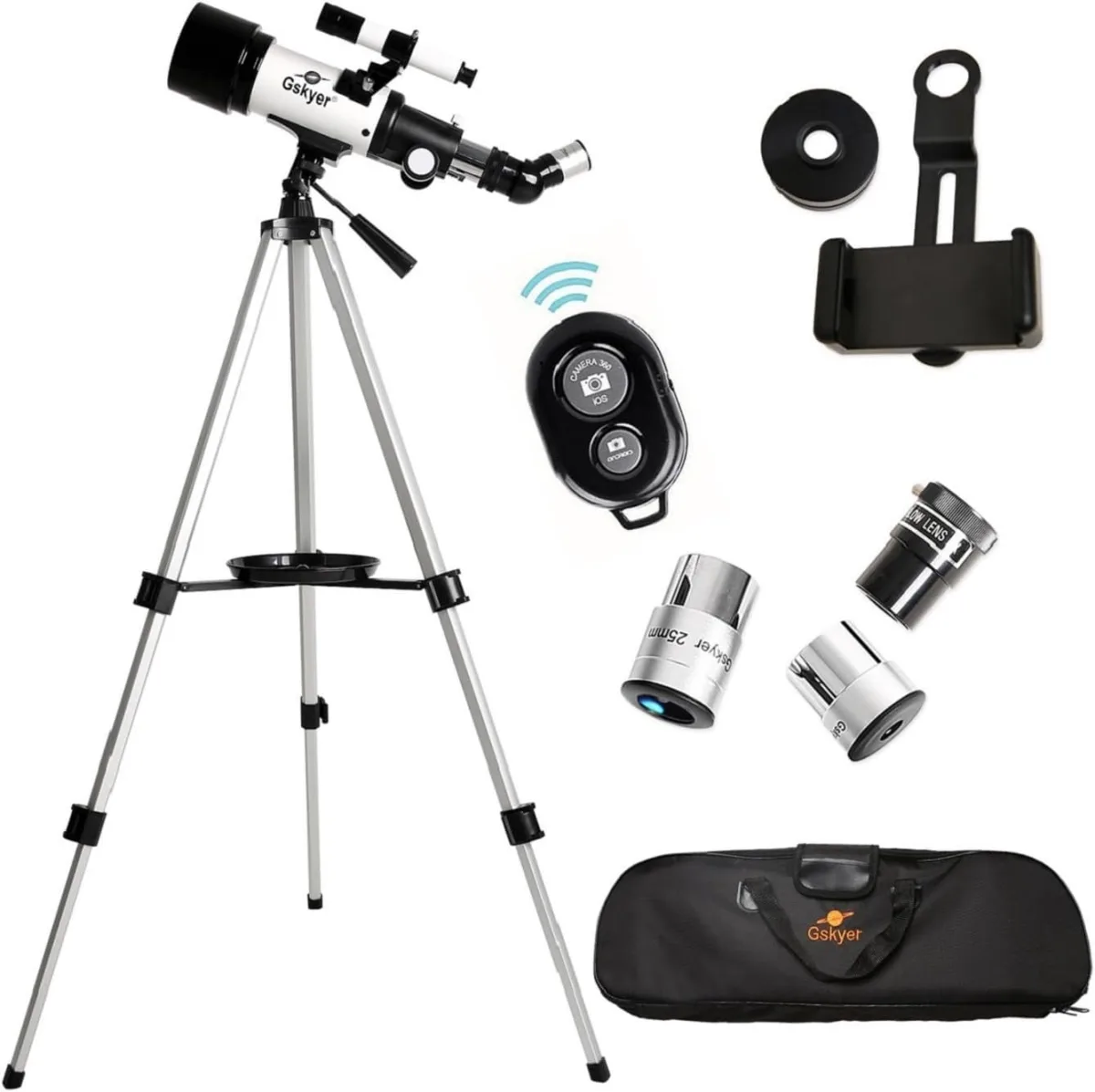
- Good Starter Kit: It comes with multiple eyepieces (25mm, 10mm), a 3x Barlow lens, and even a phone adapter. This is a huge plus for beginners who don't want to buy extra accessories right away.
- Portable: It’s lightweight enough to carry out to the backyard or even take on a camping trip easily.
- Affordable Entry Point: For what you get, the price point is very attractive for someone just dipping their toes into astronomy. You can check today's price and you'll see what I mean.
- Phone Adapter: The phone adapter is a neat addition for attempting some astrophotography, though it takes practice to get good shots.
The Not-So-Good (Cons)
- Wobbly Tripod: While functional, the aluminum tripod is a bit lightweight. Any slight bump or breeze can cause vibrations, making high-magnification viewing a bit frustrating.
- Finderscope Alignment: Getting the 5x24 finderscope perfectly aligned with the main telescope takes a bit of patience and fiddling with small screws. If it's not aligned, finding objects is a pain.
- Alt-Az Mount Limitations: The alt-azimuth mount is simple to use (up/down, left/right), but it makes tracking celestial objects challenging. As the Earth rotates, objects drift out of view quickly, especially at higher magnifications. You're constantly nudging it.
- Chromatic Aberration: As a refractor, it exhibits some chromatic aberration (color fringing) around very bright objects, like the moon's edge or bright stars. It’s not terrible, but it's there.
- Basic Eyepieces: The included eyepieces are fine for starters, but serious hobbyists will likely want to upgrade for better eye relief and wider fields of view.
Who Should Buy This Telescope?
This telescope is absolutely perfect for:
- Kids and Teens: It's an excellent educational tool to spark interest in science and space. My kids loved looking at the moon through it.
- Beginner Stargazers: If you've never owned a telescope and want to see if astronomy is for you without a huge investment, this is a solid choice.
- Casual Lunar Observers: If your main goal is stunning views of the moon and brighter planets (as small disks), you'll be happy.
- Those on a Budget: It offers good value for its price, especially with the included accessories. If you're looking to grab it on Amazon, you'll find it's a solid budget-friendly option.
Who Should Skip It?
You might want to look elsewhere if:
- You're an Experienced Astronomer: This isn't an upgrade for serious hobbyists. You'll quickly outgrow its capabilities.
- You Want Deep-Sky Objects: Nebulae, galaxies, and faint star clusters will be very challenging, if not impossible, to see well with this aperture.
- You're Serious About Astrophotography: While it has a phone adapter, serious astrophotography requires a much more stable equatorial mount and specialized cameras.
- You Demand Pin-Sharp Views with No Aberration: The slight chromatic aberration might bother you.
Final Thoughts
Overall, I’m quite pleased with the Gskyer AZ Refracting Telescope for what it is: an entry-level instrument designed to introduce people to the wonders of the night sky. It's not perfect, and you'll run into the limitations of its price point – mainly the mount stability and basic optics – but it delivers where it counts for beginners. The views of the moon alone are worth the price of admission, and seeing Jupiter's moons for the first time through my own scope was an unforgettable moment. If you're curious about space and want an accessible way to start exploring, I'd say pick one up here and start your journey.