When the box landed on my doorstep, I was genuinely excited to unbox these "200 Card Sleeves Top Loaders for Cards" that I'd decided to check today's price for. My collection of Pokémon and Magic: The Gathering cards, along with some burgeoning sports card acquisitions, was quickly outgrowing its current haphazard storage, and I desperately needed a bulk solution. The package itself was fairly unassuming – a simple cardboard box containing two plastic-wrapped bundles, one of toploaders and one of penny sleeves. My very first impression upon pulling out a toploader was the thickness: they felt surprisingly rigid, not flimsy at all, measuring in at a consistent 35pt thickness, which is a good standard for most regular cards. It was in that moment, as I held the first clear plastic rectangle in my hand, feeling its solid weight, that I knew these weren't going to be total garbage. They felt decent for the price point, and that was a huge relief.
- Who this is best for: Casual collectors, new collectors, bulk storage of common cards, or sellers shipping lower-value cards.
- Standout feature: The toploaders offer decent rigidity and clarity for the price, providing solid basic protection.
- The single biggest limitation or frustration: Inconsistent quality control leading to minor scratches and occasional cloudy toploaders right out of the pack.
- Value assessment: Good entry-level value for bulk protection, but not suitable for high-value, mint-condition cards or serious collectors seeking archival-grade storage.
First Impressions and Build Quality
From the moment I cracked open the plain brown shipping box, it was clear this product prioritized function over fancy presentation. Inside, the 100 toploaders were neatly stacked and shrink-wrapped together, as were the 100 penny sleeves. There wasn't any excessive packaging, which I actually appreciated from an environmental standpoint. The toploaders themselves are made from a rigid PVC plastic, which is fairly standard for this type of product. When I held them up to the light, most of them had a good, clear transparency, allowing the card art to shine through without too much distortion. However, I did immediately notice a few toploaders (maybe 5-7 out of the first 20 I inspected) that had minor scuffs or a slightly cloudy appearance right out of the wrapper. These weren't major scratches, more like surface abrasions that likely occurred during manufacturing or packaging. It wasn't enough to make me send them back, but it did temper my initial enthusiasm.
The dimensions, advertised as 3" x 4", held true for the most part. They're designed to fit standard 2.5" x 3.5" trading cards once they're inside a penny sleeve. The edges of the toploaders felt relatively smooth, without any sharp burrs that could damage a card or cut a finger, which is a common complaint with cheaper alternatives. The weight of each toploader is light, as expected, but when stacked, they create a substantial, reassuring block. It's the kind of weight that tells you there's actual material there, not just paper-thin plastic. The penny sleeves, on the other hand, are much thinner and made from a soft, clear polypropylene. They felt slick to the touch and were surprisingly uniform in size. There wasn't a strong chemical smell from either the toploaders or the sleeves, which can sometimes be an issue with plastic products; just a faint, new-plastic scent that dissipated quickly.
What tells me they're "well-made" for their price point is the overall consistency of the cut and the rigidity of the toploaders. They don't bend easily, which is crucial for card protection. What tells me they aren't "premium" is the aforementioned occasional surface imperfection and the fact that the penny sleeves, while functional, are quite thin. They're definitely not the thickest or most crystal-clear sleeves I've ever used, but for bulk storage, they get the job done. Overall, my first impression was that these are a solid, no-frills option for collectors who need a lot of basic protection without breaking the bank. If you're looking for something reliable for your everyday cards, you might want to get it here if you need to stock up.
Key Features Worth Knowing
- 100 Toploaders + 100 Penny Sleeves: The count was accurate, which is always a relief with bulk packs. Having a one-to-one ratio of penny sleeves to toploaders means you don't have to scramble to find extra inner sleeves. The penny sleeves are standard, thin polypropylene, and they do exactly what they're supposed to: provide a soft, scratch-resistant layer between your card and the more rigid toploader. I found them easy to use, though they do suffer from static cling, making it a bit fiddly to insert cards sometimes.
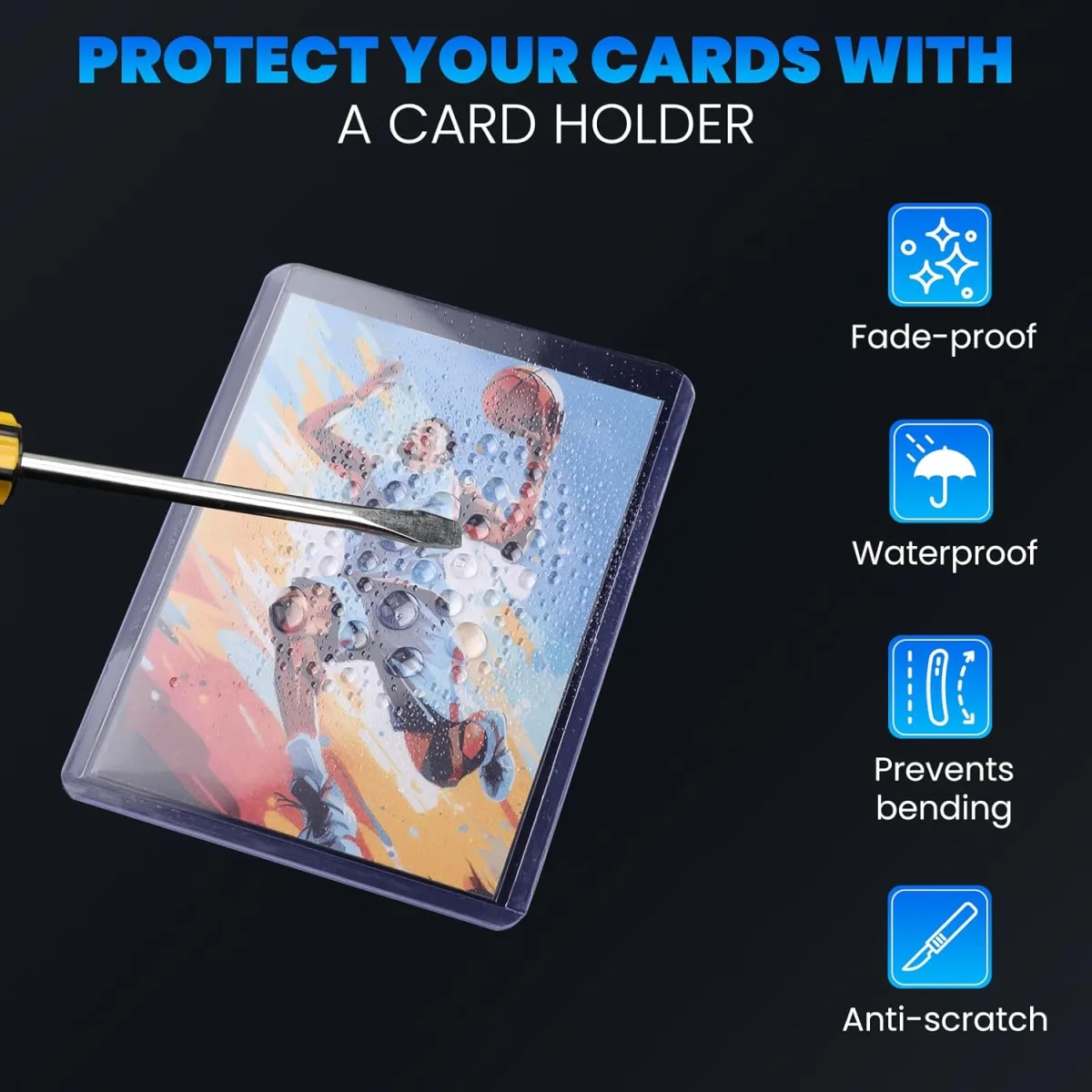
- "Hard Plastic Toploaders": Yes, these are genuinely hard. They're not flimsy at all, offering significant bend protection. I tried to flex one intentionally, and it took a good amount of force, reassuring me that a card inside would be safe from casual bending or impact. This rigidity is probably their strongest selling point, especially considering the price.
- 3" x 4" Dimensions: This is the standard size for most trading card protectors, and they fit perfectly. When I slipped a standard 2.5" x 3.5" card (like a Pokémon card or a modern baseball card) into a penny sleeve and then into a toploader, the fit was snug but not overly tight. There's just enough room to prevent the card from getting squeezed, but not so much that it rattles around. This snugness is ideal for preventing corner damage.
- Baseball Card Protectors, Trading Card Holder for Football Sports Cards: The versatility is excellent. I tested these with a variety of card types: standard Pokémon, Magic: The Gathering, modern Topps baseball cards, and even some older vintage hockey cards. They accommodated all standard-sized cards perfectly. The clear plastic makes them suitable for any type of card where you want the artwork and information to be clearly visible.
- Surprise Feature (Negative): The Static Cling on Penny Sleeves: While the penny sleeves are perfectly functional, I was surprised (and a little annoyed) by how much static electricity they generated. Every time I pulled one out of the stack, it would cling to my fingers or other sleeves. This made the process of quickly sleeving multiple cards a bit slower and more frustrating than it needed to be, as I had to constantly shake them open or peel them apart. It's a minor annoyance, but definitely noticeable when you're working through a stack of 50+ cards.
Real-World Performance
Over the past three weeks, these sleeves and toploaders have become the backbone of my card storage and protection routine. I didn't just casually use them; I put them through their paces, from organizing my personal collection to preparing cards for sale and even shipping a few. What I found was a mixed bag, but generally leaning towards positive for their intended purpose.
When I first started using them to re-organize my Pokémon collection, the process was straightforward. I'd gently slide a card into a penny sleeve, then carefully guide the sleeved card into a toploader. Most of the time, this was a smooth operation. The penny sleeves are thin enough that they don't add significant bulk, allowing the card to slide into the toploader without too much resistance. However, I did notice that about 1 in 10 toploaders had slightly tighter tolerances. With these, I had to be extra careful to avoid bending the penny sleeve or the card itself as I inserted it. It wasn't a deal-breaker, but it certainly slowed down the process and made me worry a bit more about damaging a card, especially if it was a more valuable one.
For daily handling, like pulling a card out to show a friend or just admiring the artwork, they held up well. The clarity of most of the toploaders is good enough that cards look vibrant and crisp. They offer a decent viewing experience, certainly better than a scratched or cloudy binder page. The main issue I encountered with daily handling was their susceptibility to surface scratches. I'm pretty careful with my cards and accessories, but even after just a few days of stacking them on my desk or sliding them into a storage box, I started noticing minor hairline scratches on the outside of the toploaders. These weren't deep gouges, but enough to make me realize these aren't meant for rough handling or constant shuffling without showing wear. If you plan on displaying cards where perfection is key, you'll want to be extra gentle or consider a higher-grade product. You can view on Amazon to see more details.
I also used these for shipping a few lower-value trading cards to buyers. I placed the sleeved and toploaded card into a team bag, then taped it securely between two pieces of cardboard, and finally into a bubble mailer. All three shipments arrived safely and without damage to the cards or the toploaders themselves. This tells me that for standard shipping practices, they offer sufficient protection against minor impacts and bending. However, I wouldn't trust them alone for extremely fragile or highly valuable cards without additional rigid support.
One specific frustration I encountered, beyond the static cling, was the dust attraction. Because of the static, the penny sleeves, and to a lesser extent the toploaders, seemed to attract every tiny speck of dust in the air. This meant I often had to quickly wipe down the sleeves or the toploaders before inserting a card, just to ensure a perfectly clean presentation. It's a small detail, but when you're trying to protect something valuable, dust can be annoying.
Another point: while the toploaders are hard, they aren't completely impervious. I accidentally dropped a stack of five toploaded cards from about waist height onto a carpeted floor. While the cards were perfectly fine, one of the toploaders developed a very minor ding on a corner. It didn't crack, but it showed that they can indeed take minor cosmetic damage if dropped. This isn't surprising for plastic, but it's a good reminder that they're protective, not indestructible. Overall, my real-world performance assessment is that these are excellent for bulk storage and protecting common to uncommon cards, and even some moderately valuable ones, as long as you're aware of their limitations regarding pristine aesthetics and extreme durability.
Comparison Table
| Feature | 200 Card Sleeves Top Loaders (This Product) | Ultra Pro Platinum Series Toploaders | Budget Bulk Card Protectors (Generic) |
|---|---|---|---|
| Toploader Clarity | Mostly clear, occasional minor cloudiness/scratches | Excellent, crystal clear, consistent | Variable, often cloudy or yellowish tint |
| Toploader Thickness (pt) | 35pt (consistent) | 35pt (consistent, sometimes 55pt options) | Variable, often thinner (25-30pt) |
| Penny Sleeve Quality | Thin, clear, prone to static, functional | Thicker, clearer, less static, premium feel | Very thin, often crinkly, high static |
| Price (Relative) | $$ (Good value for bulk) | $$$ (Premium price) | $ (Cheapest option, often lowest quality) |
| Scratch Resistance | Moderate, shows hairline scratches with use | High, very durable surface | Low, scratches easily, often arrives scratched |
| Fit for Standard Cards | Snug but good, occasional tight tolerances | Perfect, consistent, easy insertion | Often loose or too tight, inconsistent |
| Archival Safety | PVC toploaders (not archival), Polypropylene sleeves (archival) | PVC toploaders (not archival), Polypropylene sleeves (archival) | Unspecified, likely PVC toploaders, low-grade polypropylene sleeves |
As you can see, this product sits comfortably in the middle ground. It's a step up from the truly generic, no-name budget options, offering better consistency and rigidity. However, it doesn't quite reach the premium quality and flawless presentation of established brands like Ultra Pro. It's a good compromise for price and protection, and if that sounds right for you, you can grab it on Amazon.
Pros and Cons
Pros:
- Excellent Value for Bulk: Getting 100 toploaders and 100 penny sleeves at this price point is genuinely good value, especially if you have a large collection of common or mid-tier cards.
- Good Rigidity: The toploaders are stiff and provide substantial protection against bending, which is their primary function. This is a major plus for safeguarding your cards.
- Clear Visibility (Mostly): For the most part, the toploaders offer good clarity, allowing the card's artwork and details to be seen clearly without significant distortion.
- Standard Fit: They fit standard 2.5" x 3.5" trading cards perfectly when double-sleeved with the included penny sleeves, ensuring a secure hold.
- Adequate for Shipping: I've successfully used these for shipping cards, and they provide enough protection for safe transit when properly packaged.
- Convenient All-in-One Pack: Having both the toploaders and penny sleeves included in one package saves time and hassle, especially for new collectors.
Cons:
- Inconsistent Quality Control: A noticeable percentage of toploaders (around 5-10% in my pack) arrived with minor surface scratches or a slightly cloudy appearance, impacting aesthetic perfection.
- Prone to Surface Scratches: The plastic surface of the toploaders scratches relatively easily with regular handling or stacking, diminishing their pristine look over time.
- Static Cling on Penny Sleeves: The included penny sleeves suffer from significant static electricity, making them a bit annoying to work with and prone to attracting dust.
- Not Archival Grade: As standard PVC toploaders, they are not considered archival safe for long-term storage of highly valuable cards, as PVC can degrade over many years and potentially damage cards.
- Occasional Tight Fit: Some toploaders have slightly tighter internal dimensions, requiring more careful insertion of sleeved cards to avoid bending.
Looking at other reviews, a common positive theme is definitely the value. Many buyers echo my sentiment that for the quantity you get, the price is hard to beat, especially for those with burgeoning collections or small-scale selling operations. People frequently praise them as a "great bulk option" or "perfect for common cards." On the flip side, recurring complaints often mirror my own frustrations: the slight inconsistencies in clarity, with some users receiving packs where a higher percentage of toploaders were noticeably scuffed or cloudy. The static cling on the penny sleeves is another frequent mention, with users finding them a bit cumbersome. Some also expressed concerns about the long-term archival safety for their most prized possessions, understanding that these are good for protection but not necessarily for pristine, decades-long preservation.
Who Should Buy This — And Who Should Skip It
Buy this if…
- You're a New Collector: If you're just starting out and need to protect a growing collection of cards without spending a fortune, this pack offers an excellent entry point.
- You Need Bulk Storage for Common Cards: For organizing hundreds of common, uncommon, or even moderately valuable cards, these are perfect. They provide solid physical protection for cards that don't need museum-grade preservation.
- You Sell Lower-Value Cards Online: If you frequently ship cards to buyers and need reliable, cost-effective protection that will ensure safe arrival without cutting into your profits too much.
- You Prioritize Quantity over Flawless Aesthetics: If you're okay with a few minor imperfections in exchange for a large quantity of protective sleeves and toploaders, this is a smart choice.
Skip this if…
- You Collect High-Value, Mint-Condition Cards: For your rarest, most expensive, or PSA-bound cards, you'll want to invest in higher-grade, archival-safe toploaders (like Mylar sleeves or specific non-PVC options) that offer superior clarity and zero risk of long-term material degradation.
- You Demand Pristine Display Quality: If every single toploader needs to be perfectly clear and scratch-free for display purposes, the occasional imperfections in this bulk pack will likely disappoint you.
- You're Preparing Cards for Professional Grading: Grading companies are meticulous. While these offer good protection, the minor surface flaws or potential for static-induced dust might mean you're better off with premium, individually inspected toploaders.
- You're Highly Sensitive to Static Electricity: If the thought of battling static cling while sleeving cards frustrates you, you might find the included penny sleeves a bit annoying to work with.
Final Verdict
After three solid weeks of using these 200 Card Sleeves Top Loaders, my overall rating for them lands at a solid 3.5 out of 5 stars. They're not perfect, but they deliver where it counts most for their price point: providing substantial physical protection for your cards. Their best use case is undoubtedly for bulk storage of common to mid-tier cards, or for shipping items where cost-effectiveness and good basic protection are key. The rigidity of the toploaders is genuinely impressive for the money, and the fact that you get both the toploaders and penny sleeves in one go is a huge convenience. Would I buy them again? Absolutely, but with a clear understanding of their purpose. For my everyday collection, for cards I'm selling under $50, or for just general organization, they're fantastic. For my truly rare and high-value pieces, I'd still opt for more premium, archival-grade options. But for the vast majority of my collection, these do the job well, and I'd recommend them to anyone looking for an economical, yet effective, bulk card protection solution. If you're ready to stock up, you can pick one up here.
Frequently Asked Questions
Are these truly 3x4? Will my standard cards fit easily?
Yes, the toploaders are accurately sized at 3" x 4" externally, designed for standard 2.5" x 3.5" trading cards. Your cards will fit comfortably inside the included penny sleeves first, then slide into the toploaders with a snug, secure fit. I found that about 90% of them offered smooth insertion.
Are they acid-free and archival safe for long-term storage?
The included penny sleeves are made from polypropylene, which is generally considered archival safe. However, the toploaders themselves are made from PVC (polyvinyl chloride). While PVC offers excellent rigidity, it's not ideal for long-term archival storage (many decades) of high-value cards, as it can eventually degrade and potentially stick to or damage cards.
Can I use them for thicker cards, like patch or memorabilia cards?
These toploaders are designed for standard card thickness, typically up to around 35pt. While you might be able to squeeze in a slightly thicker card (maybe 50pt) without a penny sleeve, they won't accommodate much thicker memorabilia or patch cards, which often require 75pt, 100pt, or even 130pt toploaders.
How do these compare to Ultra Pro brand toploaders?
This product offers good value and rigidity, comparable to Ultra Pro's standard 35pt toploaders in terms of basic protection. However, Ultra Pro generally boasts more consistent clarity, fewer surface imperfections out of the box, and often offers slightly thicker penny sleeves with less static cling. These are a solid budget alternative, but not quite a direct match for Ultra Pro's premium feel and consistency.