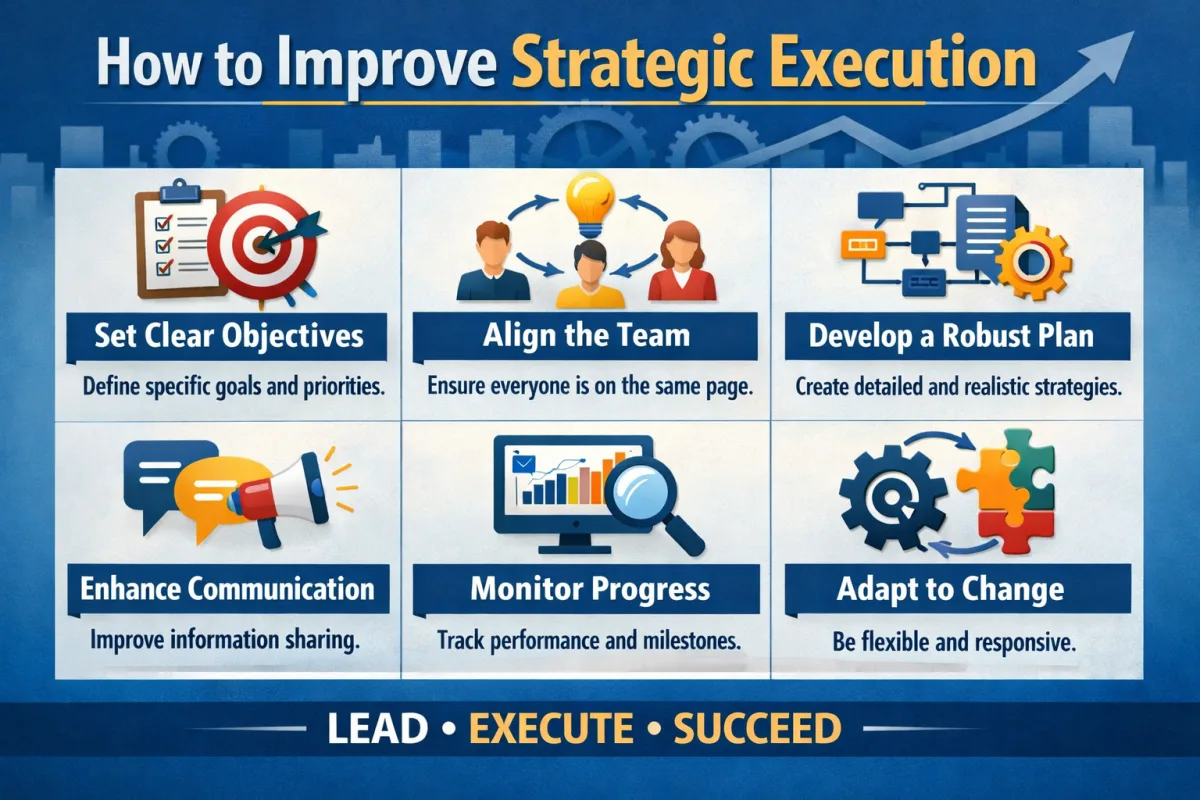
You’ve invested countless hours, resources, and brainpower into crafting a brilliant strategy. It's innovative, well-researched, and promises transformative growth. But here’s the stark reality: a compelling strategy is only as good as its execution. Far too often, even the most ingenious plans falter, failing to translate vision into tangible results. Why does this happen, and more importantly, how can you dramatically improve strategic execution within your organization?
Beyond the Blueprint: Understanding the Strategy-Execution Gap
The chasm between strategy formulation and successful implementation is a well-documented business challenge. Research from various sources, including Harvard Business Review, frequently cites that a staggering 70% of strategic plans fail to achieve their stated objectives. This isn't usually due to flawed strategy, but rather a breakdown in execution. The reasons are multifaceted: unclear communication, lack of accountability, insufficient resources, or simply an inability to adapt to changing circumstances.
Leaders often focus intensely on the 'what' – the strategic goals – but neglect the 'how' – the intricate process of bringing those goals to life. Effective strategic execution isn't a single event; it's a continuous, disciplined organizational capability. It demands more than just a well-articulated PowerPoint; it requires a deep understanding of your organization's capacity, culture, and commitment.
Cultivating Crystal Clarity and Unwavering Alignment for Better Execution
One of the primary inhibitors of good strategic execution is a lack of clarity. If your team doesn't fully understand the strategy, its objectives, or their specific role in achieving it, how can they possibly execute effectively? It's a fundamental hurdle many organizations face.
- Communicate Relentlessly: Don't just announce the strategy; embed it. Senior leaders must articulate the vision, goals, and rationale repeatedly and through various channels. Make it a constant conversation, not a one-time presentation.
- Translate Strategy to Action: Break down high-level strategic objectives into concrete, measurable actions for every department and individual. What does "increase market share by 15%" mean for the sales team? For product development? For marketing?
- Foster Ownership: People support what they help create. Involve key stakeholders from different levels in the planning and translation process. When employees understand their direct impact on the strategy's success, they're far more likely to commit. For example, when Satya Nadella took the helm at Microsoft, he didn't just dictate a new strategy; he fostered a culture of learning and empathy, aligning thousands of employees around a shared mission to "empower every person and every organization on the planet to achieve more." This wasn't just words; it became the lens through which every decision and action was viewed, dramatically improving their execution capabilities.
Breaking Down Silos for Seamless Strategic Delivery
A common organizational dysfunction that cripples strategic execution is the existence of departmental silos. Initiatives often require cross-functional collaboration, yet teams frequently operate in isolation, optimizing for their own departmental goals rather than the overarching strategic objective. This can lead to duplicated efforts, conflicting priorities, and significant delays.
To overcome this, leaders must actively promote and incentivize cross-functional teamwork. Establish clear inter-departmental responsibilities and shared metrics that require collaboration to succeed. Consider forming temporary, cross-functional project teams dedicated to specific strategic initiatives, giving them the autonomy and resources they need. This approach ensures that diverse perspectives are integrated, potential roadblocks are identified early, and collective ownership of the strategy's success is fostered across the entire organization.
The Power of Agile Implementation and Adaptive Leadership
The business landscape is rarely static. A strategy meticulously crafted today might face unforeseen market shifts or competitive pressures tomorrow. Rigid, waterfall-style implementation plans often fail because they lack the agility to adapt. To improve strategic execution, you'll need to embrace a more dynamic approach.
- Iterate and Learn: Instead of launching a massive, all-encompassing plan, break your strategy into smaller, manageable initiatives or sprints. Implement, measure, learn, and then adjust. This agile methodology allows for course correction without derailing the entire strategy.
- Empower Front-Line Teams: Those closest to the customer or the operational process often have the best insights into what's working and what isn't. Empower them to make decisions, experiment, and provide feedback on the strategy's effectiveness in real-time.
- Adaptive Leadership: Leaders must become facilitators and coaches, not just commanders. They need to provide clear direction but also foster an environment where teams can innovate, learn from failures, and pivot when necessary. This means being open to feedback and willing to adjust elements of the strategy as new information emerges.
Metrics, Accountability, and Continuous Feedback Loops for Strategic Success
You can't manage what you don't measure. Effective strategic execution demands robust systems for tracking progress, ensuring accountability, and providing continuous feedback. Without these, even the best-laid plans can drift off course unnoticed.
- Define Clear KPIs: For each strategic objective and its corresponding initiatives, establish specific, measurable, achievable, relevant, and time-bound (SMART) Key Performance Indicators (KPIs). These aren't just activity metrics; they're indicators of progress towards the strategic goal itself.
- Establish Accountability: Assign clear ownership for each KPI and strategic initiative. Who is responsible for what, by when? Hold individuals and teams accountable for their commitments. Regular reviews aren't about blame, but about understanding challenges and finding solutions collaboratively.
- Implement Regular Reviews: Schedule frequent, dedicated strategy review meetings – weekly for tactical progress, monthly for overall strategic trajectory, and quarterly for deeper dives. These aren't operational meetings; they're forums to assess strategic progress, identify roadblocks, and make necessary adjustments. This discipline keeps the strategy alive and top-of-mind.
- Foster a Feedback Culture: Encourage an environment where feedback flows freely, both upward and downward. Are the strategic assumptions still valid? Are teams facing unexpected challenges? Is the strategy creating the intended impact? Listen to your people and be prepared to act on their insights.
What This Means For You: Taking Action on Strategic Execution
Improving strategic execution isn't an overnight fix; it's a commitment to organizational discipline and adaptive leadership. For you, as a leader, this means shifting your focus from merely crafting strategy to actively orchestrating its delivery. It means becoming a chief executor, not just a chief strategist. Start by assessing where your organization currently stands. Is communication clear? Are teams aligned? Do you have the right metrics and accountability structures in place? Identify your biggest gaps and prioritize addressing them. Invest in developing your leaders' execution capabilities and foster a culture where action, learning, and adaptability are celebrated. Remember, the goal isn't just to have a strategy; it's to realize its full potential.
The journey from strategy to success is paved with disciplined execution. It demands relentless clarity, unwavering alignment, agile adaptation, and rigorous accountability. Organizations that master this capability don't just plan for the future; they actively build it. It’s an ongoing commitment, but the payoff — sustainable growth, market leadership, and a truly impactful organization — is undeniably worth the effort.