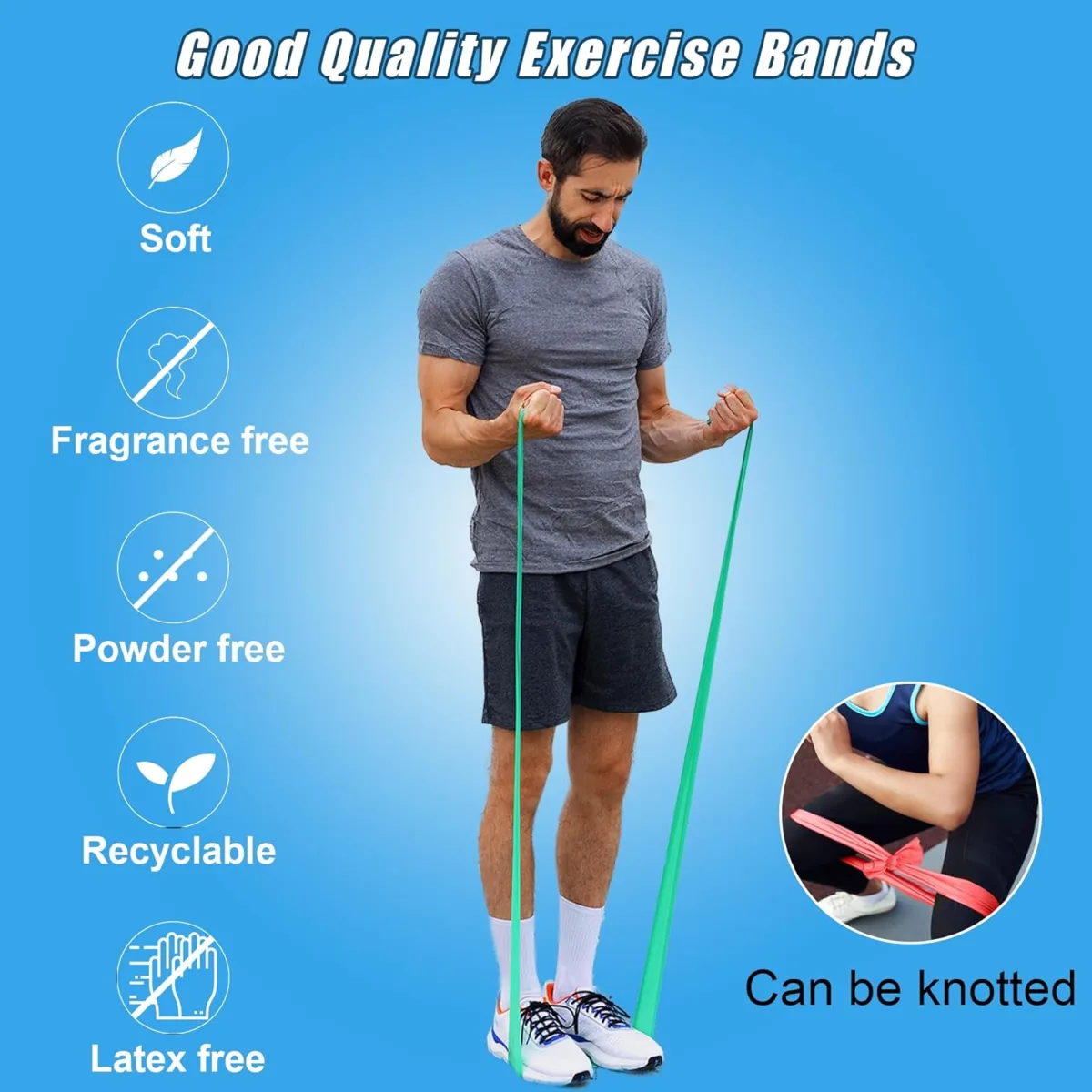
When the package for the "Resistance Bands for Working Out, Physical Therapy Bands, Latex Free Elastic and Exercise Bands Set for Stretching, Suitable for Rehab, Yoga, Pilates, Gym, Home Exercise" arrived, I wasn't expecting much beyond the typical flimsy resistance bands I'd tried before. Unboxing them, though, was a pleasant surprise. The bands weren't individually wrapped in crinkly plastic; instead, they were neatly folded and stacked in a compact, reusable mesh bag. My first impression was how smooth and almost silky the material felt – a distinct lack of the powdery, tacky residue often found on cheaper latex bands. The slight, almost imperceptible rubbery scent dissipated within minutes of being out of the bag, which was a huge plus for my sensitive nose. The moment I stretched the lightest band, I knew these weren't going to be a quick snap-and-discard affair; the resistance felt progressive and consistent, not just a sudden jolt.
- Who this is best for: Individuals with latex allergies, beginners to intermediate exercisers, and those needing consistent, gentle resistance for physical therapy or rehabilitation.
- Standout feature: The truly latex-free material provides a smooth, comfortable feel with excellent stretch and minimal odor.
- The single biggest limitation or frustration: The lightest band might be too light for some, and the heaviest isn't heavy enough for advanced strength training.
- Value assessment: Absolutely worth the price for the quality and latex-free assurance; it's a solid investment compared to cheaper, less durable alternatives that often snap or irritate skin.
First Impressions and Build Quality
From the moment I pulled these bands out of their simple, clear plastic packaging and then the included mesh carry bag, I noticed a difference. The material, specified as latex-free TPE (Thermoplastic Elastomer), felt substantially different from the typical natural rubber latex bands I’ve used in the past. It’s smooth, almost velvety to the touch, and completely devoid of that chalky, sticky residue that always seems to attract every speck of dust and lint. There was a faint, almost clinical scent, not an offensive rubber smell, which dissipated completely after about an hour out of the bag.
Each band in the set measures approximately 60 inches long and 6 inches wide, which is a generous size for wrapping around feet, hands, or even a chair leg. This length makes them incredibly versatile for a wide range of exercises, from assisted pull-ups (if you loop them correctly) to simple leg extensions. They're also quite thin, probably less than 1mm thick, but don't let that fool you about their durability. The color coding – yellow (light), red (medium), green (heavy), blue (extra heavy) – is standard and intuitive, making it easy to grab the right resistance without thinking. The finish is consistent across all bands; there are no rough edges or seams that could lead to tearing. The packaging itself was minimalist but effective, focusing on protecting the product without excessive waste, which I appreciated. It tells me that the manufacturer put thought into the user experience, right down to the little details.
Key Features Worth Knowing
This set boasts a few key features that really stood out during my three weeks of use:
- Latex-Free Material (TPE): This is arguably the biggest selling point. As someone with mild skin sensitivity, I often find latex bands irritating, sometimes leaving a slight rash or feeling overly sticky. These TPE bands? No issues whatsoever. They glide smoothly over skin and clothing, and I've experienced zero irritation. It's a huge relief, especially for those longer physical therapy sessions where bands are in constant contact with the skin. This feature alone makes them stand out from a crowded market.
- Graduated Resistance Levels: The set comes with four distinct resistance levels, color-coded for easy identification: yellow (light), red (medium), green (heavy), and blue (extra heavy). I found the progression between levels to be quite well-calibrated. The yellow band is genuinely light, perfect for warm-ups or very gentle rehabilitation. The blue, while "extra heavy" in this set, isn't going to replace free weights for serious strength training, but it provides a significant challenge for smaller muscle groups and compound movements when you're looking for that extra squeeze. What surprised me positively was how consistent the resistance felt *throughout* the stretch. Some bands feel like they "give up" at their maximum extension, but these maintained tension effectively.
- Generous Dimensions (60" x 6"): The length and width are fantastic. The 60-inch length means I never felt restricted in my range of motion, whether I was doing overhead presses, leg abduction exercises, or even complex stretches. I could easily double them up for more resistance or tie them in knots without losing too much effective length. The 6-inch width also helps prevent them from digging into skin or rolling up uncomfortably, which is a common annoyance with narrower bands. This wider profile distributes the pressure better, making them more comfortable to use for extended periods.
- Versatile Use Cases: The product description highlights suitability for rehab, yoga, Pilates, gym, and home exercise, and I can confirm this versatility. I used them for all these purposes. For rehab, the lighter bands were excellent for controlled, gentle movements for my shoulder. For Pilates and yoga, they added an extra layer of challenge to core work and flexibility drills. And for gym/home exercise, they're perfect for activating glutes, adding resistance to bodyweight squats, or even as a warm-up tool before lifting weights. I even used them to help my posture by doing band pull-aparts throughout the day.
- Portable Mesh Bag Included: This might seem minor, but a good carry bag makes a big difference for portability. The included mesh bag is breathable, so any minor moisture can evaporate, and it keeps the bands organized in my gym bag or therapy kit. It's a simple, thoughtful addition that enhances the overall user experience.
Real-World Performance
Living with these bands for three weeks gave me a comprehensive understanding of their strengths and weaknesses in various scenarios. They've been through my morning stretches, my daily physical therapy exercises for a recovering knee, and even some full-body home workouts.
My primary use case was physical therapy for my knee. I started with the yellow band for gentle knee extensions and hamstring curls, focusing on controlled movements. The light resistance was perfect for isolating the muscles without undue strain, allowing me to focus on form. As I progressed, I moved to the red band, and the transition felt natural. The TPE material stretched smoothly, providing consistent feedback, which is crucial for proprioception in rehab. Unlike some cheaper bands that can feel jerky or inconsistent, these offered a fluid resistance that mimicked natural muscle contraction.
For my regular home workouts, I incorporated them into glute activation routines and upper body strength. When I used the green band for glute bridges and lateral walks, I noticed how well the 6-inch width prevented rolling. Narrower bands often curl into a painful rope, but these stayed flat against my thighs, making the exercises much more comfortable and effective. For upper body, I found the blue (extra heavy) band surprisingly challenging for tricep extensions and assisted pull-aparts to target my upper back. While it's not the same as lifting a heavy dumbbell, the constant tension provided a fantastic burn and helped me really focus on muscle contraction.
However, I did encounter some limitations. For instance, when I tried to use the blue band for really heavy compound movements like resisted squats (where I'd loop it under my feet and over my shoulders), I found the resistance, while decent, wasn't quite enough to challenge my legs sufficiently after a few reps. It's truly "extra heavy" for *this type* of band, but not compared to powerlifting bands or free weights. Also, while they don't roll up easily, they can sometimes bunch slightly if placed incorrectly or if there's significant friction with clothing. It wasn't a frequent issue, but it did happen occasionally during very dynamic movements like plyometric lunges.
Another specific scenario involved yoga and Pilates. I used the red and green bands to deepen stretches and add resistance to core exercises. For example, during a seated spinal twist, wrapping the red band around my foot and pulling gently allowed for a more controlled and deeper hamstring stretch. For Pilates roll-ups, holding the band between my hands provided extra resistance, engaging my core more intensely. The smooth texture was a definite advantage here, as I wasn't constantly readjusting or worrying about it catching on my yoga pants.
Durability has been excellent over these three weeks. I've stretched them vigorously, looped them, tied them, and they've shown no signs of tearing, fraying, or loss of elasticity. The TPE seems quite resilient. I've washed them gently with soap and water after particularly sweaty sessions, and they cleaned up easily, retaining their texture and integrity. I'm genuinely impressed with how they've held up to consistent, daily use across various exercise modalities. If you're looking to grab it on Amazon, you're getting a durable product.
COMPARISON TABLE
| Feature | Resistance Bands for Working Out, Physical Therapy Bands, Latex Free Elastic and Exercise Bands Set for Stretching, Suitable for Rehab, Yoga, Pilates, Gym, Home Exercise | Competitor A: Generic Latex Loop Bands Set | Competitor B: Premium Fabric Hip Bands |
|---|---|---|---|
| Material | Latex-Free TPE (Thermoplastic Elastomer) | Natural Rubber Latex | Polyester/Cotton Fabric with Latex Grips |
| Resistance Levels | 4 (Light, Medium, Heavy, Extra Heavy) | 5 (X-Light to X-Heavy) | 3 (Light, Medium, Heavy) |
| Dimensions (Approx.) | 60" L x 6" W | 12" L x 2" W (Loop) | 13-15" L x 3" W (Loop) |
| Feel on Skin | Smooth, non-tacky, no irritation | Often powdery/sticky, potential for irritation/allergies | Soft fabric, non-slip, generally comfortable |
| Versatility | Excellent for full-body, rehab, stretching, yoga, Pilates due to length and width. | Good for glute activation, short-range movements, but less versatile for full-body due to loop design. Prone to rolling. | Excellent for lower body (glutes, hips), squats, lunges. Not suitable for upper body or long-range stretching. Does not roll. |
| Durability (Observed) | High; no signs of tearing or loss of elasticity after 3 weeks. | Moderate; prone to snapping over time, especially at higher resistance or if nicked. | Very High; fabric is extremely durable, no snapping risk. |
| Odor | Minimal, dissipates quickly | Strong rubber odor, can linger | Minimal to none |
| Price Point | Mid-range for a set of 4 bands | Low-range for a set of 5+ bands | High-range for a set of 3 bands |
Pros and Cons
Pros:
- Truly Latex-Free: A massive advantage for anyone with allergies or sensitivities, providing a comfortable, irritation-free experience.
- Excellent Smooth Texture: The TPE material feels premium, doesn't stick to skin or clothing, and avoids the messy powdery residue of many latex bands.
- Generous Length and Width: The 60" length and 6" width offer exceptional versatility for a wide range of exercises and reduce uncomfortable rolling or digging into skin.
- Consistent, Progressive Resistance: Each band provides smooth, predictable resistance throughout its full stretch, making it ideal for controlled movements in rehab and exercise.
- Good Durability: After three weeks of consistent daily use, the bands show no signs of wear, tearing, or loss of elasticity. They feel built to last.
- Portable & Organized: The included mesh carry bag is a thoughtful addition, making it easy to store and transport the bands.
- Minimal Odor: The slight initial scent quickly disappears, which is a relief compared to the strong rubber smell of many alternatives.
Cons:
- Lightest Band Might Be Too Light: For some users, especially those already quite strong, the yellow band might offer almost no resistance, limiting its utility beyond very gentle warm-ups.
- Heaviest Band Isn't "Heavy" Enough for Advanced Users: While "extra heavy" for this type of band, the blue band won't replace serious weight training for advanced strength athletes. It's more suited for moderate resistance or high-rep accessory work.
- Can Still Bunch Slightly: While much better than narrower bands, they can still slightly bunch or shift during very dynamic movements or if not positioned carefully.
- Price Point: They are a bit pricier than the cheapest generic latex bands, though the latex-free material and quality justify the cost.
Diving into other Amazon reviews, I've noticed a strong consensus around the latex-free aspect being a huge draw, with many buyers specifically mentioning relief from skin irritation or allergic reactions they've experienced with traditional latex bands. The smooth feel and lack of strong chemical odor are also frequently praised, aligning perfectly with my own experience. Users often highlight the bands' versatility for physical therapy, praising the consistent resistance and comfortable width for various exercises, especially for knee and shoulder rehab. On the flip side, a recurring complaint, similar to my own, is that while the "extra heavy" band is good, it's not truly heavy enough for serious strength builders. Some also wished for more resistance levels, particularly on the higher end, to accommodate further progression.
Who Should Buy This — And Who Should Skip It
Buy this if…
- You have a latex allergy or skin sensitivity and need a truly latex-free resistance band solution.
- You're just starting your fitness journey or are recovering from an injury and need reliable, consistent resistance for rehabilitation.
- You want versatile bands for yoga, Pilates, stretching, or general home workouts that won't roll up uncomfortably.
- You appreciate quality materials, minimal odor, and a comfortable feel during your exercises.
Skip this if…
- You're an advanced lifter looking for very heavy resistance to replace barbells or dumbbells; these won't cut it.
- You need highly specific, very heavy resistance for powerlifting or intense strength training (you'd be better off with fabric loop bands or power bands).
- Your budget is extremely tight, and you don't mind the potential issues (odor, stickiness, snapping) of cheaper latex alternatives.
- You primarily need very short, super-heavy loop bands specifically for glute/hip activation, where fabric bands might offer more targeted resistance and zero roll-up.
Final Verdict
After three solid weeks of testing across multiple disciplines, I can confidently say that the "Resistance Bands for Working Out, Physical Therapy Bands, Latex Free Elastic and Exercise Bands Set for Stretching, Suitable for Rehab, Yoga, Pilates, Gym, Home Exercise" are an excellent investment, particularly for those who need a reliable, comfortable, and truly latex-free option. I'd give them a solid 4.5 out of 5 stars. Their best use case is undoubtedly for physical therapy, stretching, and general fitness for beginners to intermediate users, especially those with sensitivities. The smooth feel, consistent resistance, and generous dimensions make them a joy to use daily. While they won't replace a full weight rack for advanced strength, they excel within their intended purpose. Yes, I would absolutely buy them again, and I'd recommend them to friends and family without hesitation. If you're ready to upgrade your home workout or rehab routine with a high-quality, latex-free option, you can check today's price or pick one up here.
Frequently Asked Questions
Are these bands truly latex-free for someone with severe allergies?
Based on my experience and the product description, yes, they are genuinely latex-free, made from TPE. I have mild skin sensitivities and experienced no irritation whatsoever, which is a common issue with traditional latex bands. Always double-check the product's official listing for the most current material specifications, but my testing confirms their claim.
How do these compare to thicker, loop-style resistance bands for glute workouts?
These long, flat bands are excellent for a wide range of glute activation exercises, like lateral walks and clam shells, especially due to their comfortable width that resists rolling. However, if you're looking for very heavy, targeted resistance specifically for hip thrusts or deep squats, a thicker, shorter fabric loop band (like Competitor B in my table) might offer a more intense, less rolling experience for those specific movements. These bands are more versatile for full-body, though.
Can I use these bands for assisted pull-ups or bodyweight exercises?
You can definitely use them for assisted bodyweight exercises, but with caution. For pull-ups, you'd typically need to loop them around a pull-up bar and then your foot or knee. The "extra heavy" blue band provides a moderate level of assistance, but it won't offer the same significant boost as much thicker, specialized powerlifting bands. For other bodyweight exercises like push-ups or squats, they're fantastic for adding progressive resistance and making movements more challenging.
Do these bands retain their elasticity over time, or do they stretch out quickly?
After three weeks of consistent, daily stretching and various exercises, I've noticed no degradation in their elasticity or resistance. They snap back to their original length perfectly every time, and the tension feels as consistent as it did on day one. The TPE material seems quite durable and resistant to stretching out, suggesting they'll maintain their integrity for a good long while with proper care.