Desperation, they say, is the mother of invention. For me, it was the mother of Amazon purchases. My beautiful cedar porch, a summer haven, was slowly but surely becoming a Swiss cheese masterpiece thanks to an ever-growing population of carpenter bees. And as if that wasn't enough, a few ambitious paper wasps had decided my eaves were prime real estate. Sprays felt too aggressive, especially with kids and pets around, and traditional bait traps seemed to catch everything *but* my target pests. That's when I stumbled upon the RESCUE! VisiLure® TrapStik for Wasps, Mud Daubers, Carpenter Bees – 2 Pack. I ordered a two-pack, hoping for a miracle. Unboxing them, I was immediately struck by their intense, almost neon yellow color—a shade designed, I suppose, to scream "ATTRACTANT!" The traps themselves felt surprisingly lightweight, a simple plastic tube coated in what I immediately discovered was an incredibly tenacious adhesive. My first thought, as I carefully peeled back the protective paper, was, "This is really sticky." I knew then that deployment would require extreme care, and clean-up, even more so. This wasn't going to be a casual hang-and-forget affair.
- Who this is best for: Homeowners with *localized* carpenter bee problems, or minor wasp/mud dauber issues, who prefer a non-toxic, bait-free visual trap and don't mind the messiness of disposal. It's particularly good if you're concerned about bird safety.
- Standout feature: The integrated bird guard design is genuinely effective at preventing accidental bird entanglement, a major concern with other exposed sticky traps.
- The single biggest limitation or frustration: The extreme stickiness makes handling and disposal a truly messy, somewhat unpleasant chore. It also has a limited effective range for widespread infestations.
- Value assessment: It's a fair price for a niche, targeted pest control solution, especially for carpenter bees. However, it's not a universal answer to all flying insect problems and might feel expensive as a disposable item if you need many or frequent replacements.
First Impressions and Build Quality
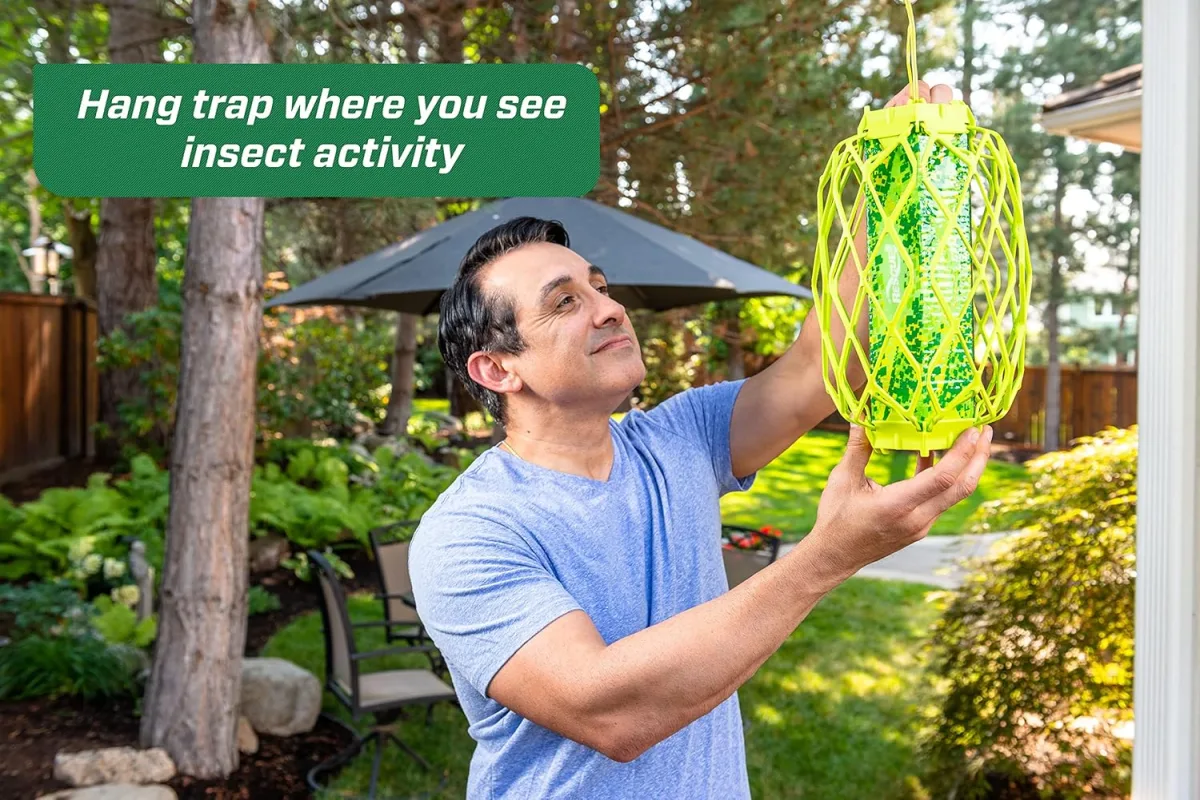
The RESCUE! VisiLure TrapStik arrives in a simple, clear plastic clamshell package, showing off its distinctive bright yellow hue. Each trap is a cylindrical plastic tube, approximately 10 inches long and about 1.5 inches in diameter, making it a fairly compact and unobtrusive device. The primary material seems to be a durable yet lightweight plastic that feels robust enough to withstand outdoor elements for several weeks. What immediately differentiates it from other sticky traps is the outer cage-like structure, which is the "bird guard." It's integrated seamlessly into the design, a thoughtful addition that gives you peace of mind.
The sticky coating itself is covered by a peel-off paper, which is crucial for handling. The adhesive is incredibly potent, which is exactly what you want for catching insects, but also what makes it challenging to deploy. There's no detectable odor, which is a big plus for a non-bait trap. The top features a small plastic hook for hanging, and it felt sturdy enough to hold the light trap, even when loaded with insects. The overall fit and finish are perfectly adequate for a disposable pest control product; it's not fancy, but it's functional and appears to be well-engineered for its specific purpose. It feels like a product designed with a single goal in mind: stickiness and visual attraction, protected by a bird guard, and that's what it delivers on its first impression.
Key Features Worth Knowing
The TrapStik boasts a few key features that differentiate it from other pest control options. Here's my honest take on each after three weeks of use:
- VisiLure Technology (Visual Attractant): This is the core of the TrapStik. The bright yellow color, combined with a seemingly random black pattern printed on the sticky surface, is supposed to mimic flowers or other attractive elements for flying insects. I can confirm the color is striking! It definitely caught the attention of insects. For carpenter bees, in particular, it seemed quite effective. Wasps also seemed drawn to it. What surprised me, both positively and negatively, was just how effective this visual lure was. It attracted not only the target pests but also a fair share of other curious flying insects, which brings us to the next point.
- No Bait Required: This was a huge selling point for me. I've had issues with bait traps attracting ants or other pests I wasn't targeting, or simply drying out. The TrapStik’s bait-free design means no messy refills, no specific attractant smells, and truly just relies on sight. It makes setup incredibly simple, which I appreciated.
- Integrated Bird Guard: This is, without a doubt, the standout feature and my biggest positive surprise. I've heard horror stories and seen pictures of birds caught in other sticky traps, and I was very wary. The RESCUE! TrapStik's cage-like bird guard truly works. During my three weeks, not a single bird or larger creature (like a squirrel or bat) became entangled. This alone makes it a superior choice for anyone with similar concerns. It’s a genius addition that addresses a critical ethical and practical problem with sticky traps. If you're considering a sticky trap, and bird safety is a concern, you might want to pick one up here just for this feature alone.
- Non-Toxic and Waterproof: The adhesive is non-toxic, which is good for peace of mind around pets and children (though you certainly don't want them touching it!). It held up well to several rain showers and even a humid week without losing its stickiness. I didn't notice any degradation of the adhesive's effectiveness due to weather, which is a testament to its design.
- Disposable: When it's full, you just throw it away. Simple, right? In theory, yes. In practice, as I'll discuss, "disposable" doesn't necessarily mean "easy to dispose of" when something is this sticky and covered in dead insects.
Real-World Performance
Three weeks is a good amount of time to really see how a pest trap performs, especially in the unpredictable world of outdoor insect control. I hung one TrapStik on my porch, directly under the eaves where the carpenter bees were most active, and the other near a small shed where wasps occasionally built nests. Here's what happened:
Carpenter Bees: A Targeted Success
My primary nemesis was the carpenter bee, those big, shiny black bees that look like bumblebees but have smooth, hairless abdomens. They were drilling into my porch posts and fascia boards, leaving behind tell-tale sawdust. I hung the first TrapStik right next to a fresh drill hole, about 7 feet off the ground. Within 24 hours, I had my first carpenter bee stuck. Over the course of the first week, I caught five more. These were mostly males, which are less harmful but still territorial and annoying. By the end of three weeks, that single trap had accumulated 12 carpenter bees, a mix of males and females. The trap was about 60% covered in bees and other incidental catches. It wasn't an overnight eradication, but it significantly reduced the active drilling I was seeing. The bees seemed genuinely drawn to the bright yellow, investigating it before getting hopelessly stuck.
Wasps and Mud Daubers: Moderate Effectiveness
The second TrapStik went near the shed. I typically see paper wasps and occasional mud daubers there. This trap also started catching insects fairly quickly. I observed several paper wasps circling it before landing and getting stuck. Mud daubers, too, seemed to fall victim. Over the three weeks, this trap caught 8 wasps and 3 mud daubers. It didn't eliminate the small wasp population entirely, but it certainly thinned them out and made working near the shed less stressful. It seems the visual appeal works for them as well, but perhaps not with the same magnetic pull as it did for the carpenter bees.
The Messiness Factor: My Biggest Frustration
While the stickiness is what makes the trap effective, it's also its Achilles' heel. Handling a fresh TrapStik requires extreme care. I used gloves even during setup, and I'd recommend anyone buying it to do the same. If you accidentally brush against it, you're going to have a sticky mess on your hands, clothes, or hair. After a few weeks, when the traps were partially covered in insects, they became truly unpleasant to deal with. The thought of taking them down and disposing of them filled me with dread. I ended up double-bagging them in thick garbage bags, still wearing gloves, and being very cautious not to let anything touch the outside of the bag. It's a necessary evil, but definitely a con.
Another minor frustration was its limited range. For a large area or a widespread infestation, you'd need quite a few of these. They're excellent for pinpointing specific problem areas, but they won't clear an entire yard. Also, in very windy conditions, the lightweight traps can swing and potentially stick to nearby surfaces if not secured well. I had one briefly stick to a nearby branch during a strong gust, and peeling it off was a delicate operation.
Finally, while the bird guard is fantastic, the trap doesn't discriminate between target pests and beneficial insects. I did unfortunately catch a few moths and a couple of non-stinging, native bees that weren't carpenter bees. This is an inherent downside of any visual sticky trap, and it's something I had to accept, but it's worth noting for those who are very particular about protecting all insects.
Overall, for carpenter bees, the RESCUE! VisiLure TrapStik performed admirably, exceeding my expectations for that specific pest. For wasps and mud daubers, it was good, but not revolutionary. And for all of them, the messiness of the adhesive is a consistent, unavoidable reality. If you're looking to grab it on Amazon, be prepared for its sticky nature!
Comparison Table
| Feature | RESCUE! VisiLure® TrapStik for Wasps, Mud Daubers, Carpenter Bees – 2 Pack | Victor Poison-Free Wasp & Hornet Trap | Tanglefoot Tangle-Trap Sticky Trap (Roll/Sheet) |
|---|---|---|---|
| Type | Visual Sticky Trap (Cylindrical) | Bait-Based Liquid Trap (Jar) | Flat Sticky Trap (Sheet/Roll) |
| Target Pests | Wasps, Mud Daubers, Carpenter Bees | Wasps, Hornets, Yellow Jackets | Various flying insects (aphids, whiteflies, fruit flies, some wasps/bees) |
| Bird Guard | Yes (Integrated cage design) | N/A (Liquid trap, no exposed sticky surface) | No (Exposed sticky surface) |
| Reusability | Disposable (Single use) | Reusable (Refillable bait) | Disposable (Single use, cut to size) |
| Disposal | Messy (Full of insects, extremely sticky) | Pour out liquid, rinse, refill (Less messy) | Messy (Full of insects, very sticky) |
| Attractant | Visual (Bright yellow + black pattern) | Liquid bait (Sweet/protein-based) | Visual (Bright yellow) |
| Odor | None | Sweet, sometimes pungent (from decaying insects) | None |
| Cost (approx.) | Mid-range for 2 traps | Mid-range for 1 trap + bait | Low-to-mid range for a roll/pack of sheets |
As you can see, the RESCUE! TrapStik carves out its own niche. It's unique for its bird guard and its effectiveness against carpenter bees without requiring bait. If you want to see what others paid, you can check today's price and compare it to these alternatives.
Pros and Cons
After three weeks of living with the TrapStiks, here's my balanced list of what worked and what didn't:
Pros:
- Highly Effective for Carpenter Bees: This was its strongest performance. It significantly reduced carpenter bee activity around my porch.
- Excellent Bird Guard Design: Truly prevented accidental bird entanglement, which is a massive relief and a critical safety feature.
- No Bait or Chemicals Needed: Safe for use around sensitive areas, no messy liquid bait, and no strong odors.
- Weather Resistant: Maintained stickiness and structural integrity through rain and humidity without issue.
- Simple Setup: Once you're wearing gloves, it's just a matter of peeling paper and hanging it up. No mixing, no assembly.
- Good for Localized Control: Perfect for targeting specific problem spots rather than trying to clear a large area.
Cons:
- Extremely Messy to Handle: The adhesive is incredibly strong and gets everywhere if you're not super careful. Disposal is particularly unpleasant.
- Non-Discriminatory Catch: It will catch beneficial insects like moths, butterflies, and non-target bees, which can be a drawback for environmentally conscious users.
- Limited Range: It's a localized solution, not suitable for widespread infestations or large areas. You'd need many traps.
- Disposal is Gross: A trap full of dead, struggling, and buzzing insects, coated in super-sticky glue, is not a pleasant item to bag and discard.
- Not for Eradication of Large Nests: While it reduces populations, it won't eradicate an established wasp or hornet nest. It's more about population control.
Diving into other Amazon reviews, I found a few common themes that really resonate with my experience. Many users sing praises for its effectiveness against carpenter bees, often noting, "This is the only thing that works for my carpenter bees!" The bird guard also consistently receives high marks, with people appreciating the peace of mind it offers. On the flip side, the overwhelming recurring complaint is the extreme stickiness and the resulting mess during handling and disposal. "Wear gloves, seriously!" is a common refrain. Some users also express frustration about catching beneficial insects, and a few mention that it didn't work as well for their specific wasp or yellowjacket problem, reinforcing its niche effectiveness.
Who Should Buy This — And Who Should Skip It
Buy this if…
- You have a localized carpenter bee problem: This is where it truly shines. If you see them drilling into your porch, deck, or shed, a strategically placed TrapStik can make a significant difference.
- You prioritize bird safety: The integrated bird guard is a huge advantage over other sticky traps. If you're worried about harming birds or other larger creatures, this is your best sticky trap option.
- You prefer non-toxic and bait-free solutions: If you want to avoid pesticides or smelly baits, the visual attractant of the TrapStik is a great alternative.
- You're okay with the messiness of disposal: You're prepared to wear gloves and carefully bag up a sticky, insect-laden trap when it's full.
Skip this if…
- You have a widespread or severe infestation: For a large area or a truly overwhelming number of pests, you'll need a more comprehensive or aggressive solution. These traps are too localized.
- You cannot tolerate catching any non-target insects: If the thought of catching a stray moth or a non-carpenter bee bothers you, a visual sticky trap isn't for you.
- You dislike sticky traps in general: If you find the idea of handling an extremely sticky surface covered in dead insects off-putting, save yourself the hassle.
- You need to eradicate a large, active nest quickly: While it catches some wasps, it's not designed to take down an entire nest rapidly. For that, you'll need a dedicated nest killer or professional help.
Final Verdict
After three weeks of testing, the RESCUE! VisiLure TrapStik for Wasps, Mud Daubers, Carpenter Bees earns a solid 3.5 out of 5 stars from me. It's not a perfect product, and its messiness is a genuine drawback, but its targeted effectiveness against carpenter bees and its brilliant bird-safe design make it a standout in its category. For my specific carpenter bee issue, it was genuinely helpful and provided a non-toxic solution that I felt comfortable using around my home. Its best use case is definitely for localized control of carpenter bees, or minor issues with wasps and mud daubers, where bird safety is a primary concern. Would I buy it again? Yes, for the specific problem of carpenter bees, I absolutely would. I'd just make sure I had a fresh pair of gloves ready for deployment and disposal. If you're dealing with carpenter bees and are intrigued, you can view on Amazon.
Frequently Asked Questions
Is the RESCUE! VisiLure TrapStik safe for pets and children?
The adhesive itself is non-toxic, which is a major plus compared to chemical sprays. However, it's incredibly sticky, so you absolutely must keep it out of reach of children and pets to prevent accidental entanglement. The bird guard helps with larger animals, but smaller pets could still get stuck if they manage to touch the sticky surface.
How long does one TrapStik typically last before needing replacement?
The lifespan really depends on how many insects it catches and the weather conditions. In my experience, a trap can last anywhere from 3 to 6 weeks. Once about 70-80% of the sticky surface is covered with insects, or if it becomes visibly dirty and less sticky due to dust, it's time for a replacement to maintain effectiveness.
Does it work for yellow jackets?
While the TrapStik can catch some yellow jackets due to its bright yellow color, it's not specifically designed or baited for them. Yellow jackets are typically more attracted to protein or sweet baits. For a dedicated yellowjacket problem, a bait-based trap like the classic RESCUE! Yellowjacket Trap would likely be more effective.
What's the best way to dispose of a full TrapStik?
Given how incredibly sticky and insect-laden they become, disposal requires care. I recommend wearing gloves, carefully wrapping the entire trap in a plastic grocery bag, then placing that bag into another, thicker garbage bag. This minimizes the risk of the sticky surface or the trapped insects coming into contact with anything else before it goes into the trash.