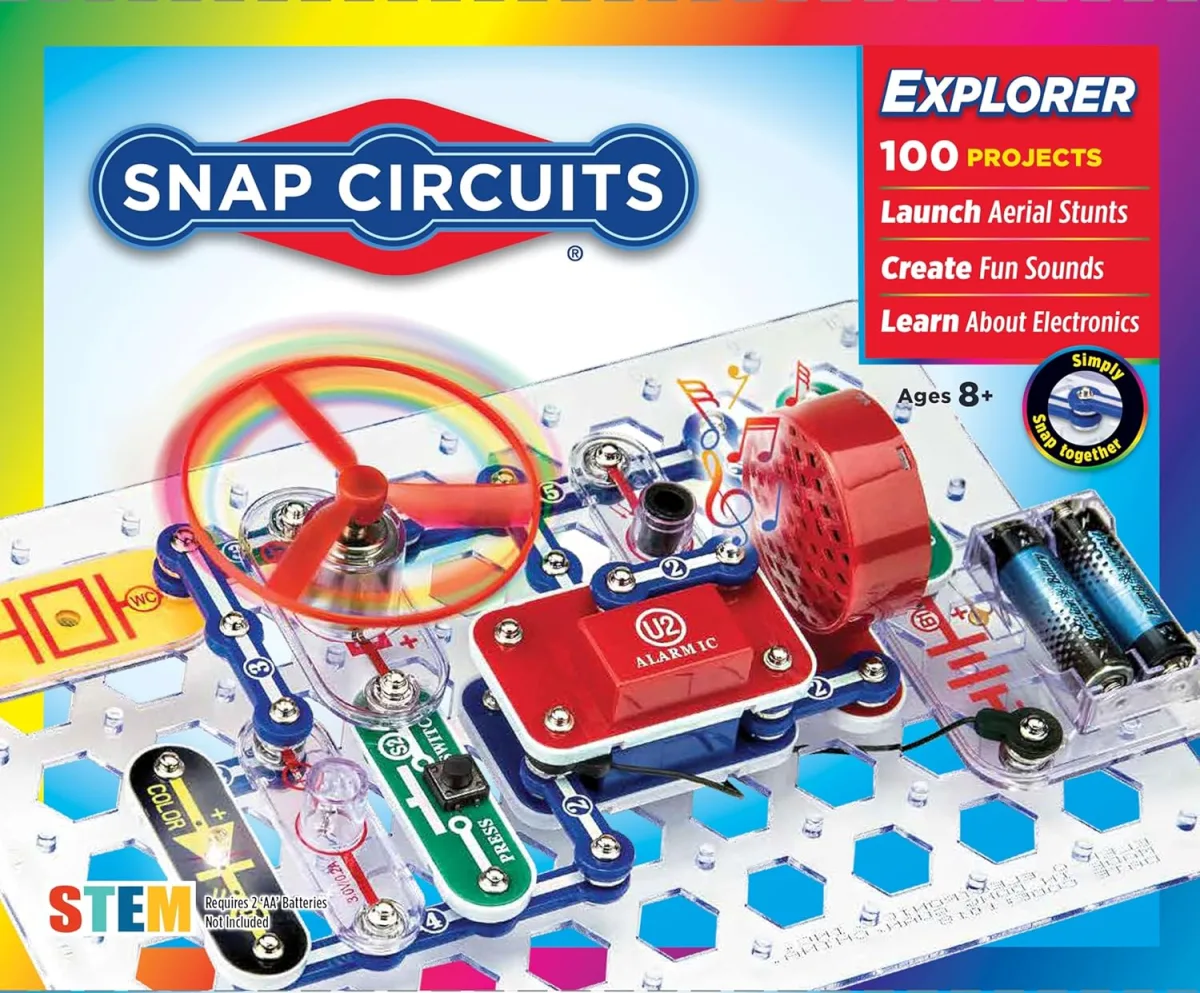
I’ve been trying to find ways to drag my 10-year-old away from his screen for months. We tried board games, outdoor sports, and various craft kits, but nothing held his attention for more than an hour. Then I stumbled across the Snap Circuits SC-750R Electronics Exploration Kit. I remember playing with basic wire-and-bulb kits when I was a kid, but this thing looked like a beast. I decided to take the plunge. After a few weeks of having it in our living room, here is my honest take on what works, what doesn't, and if it's worth the hefty price tag.
First Impressions and Unboxing
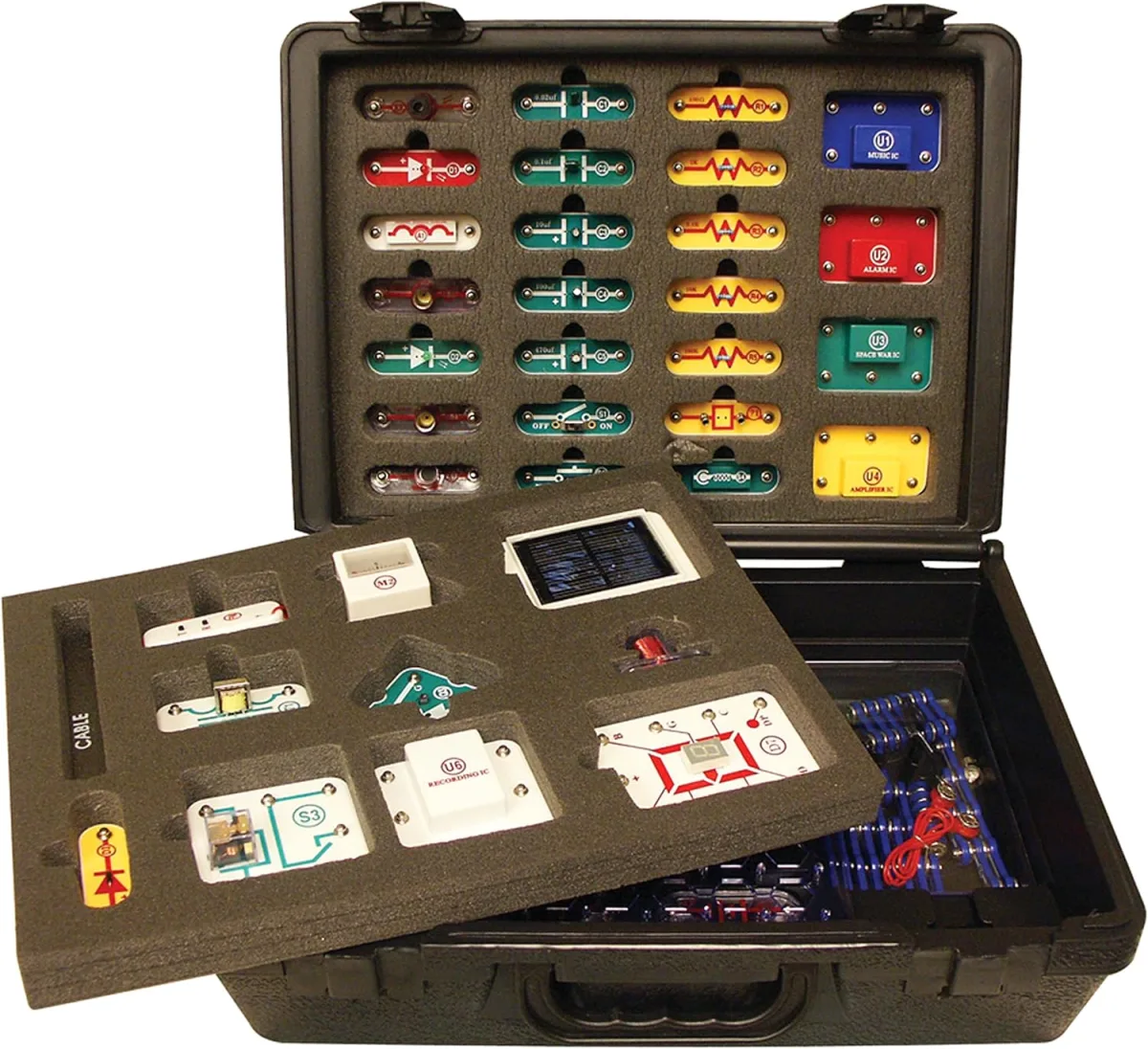
When the box arrived, I was immediately surprised by how heavy it was. The "R" in SC-750R stands for the educational training version, which means it comes in a rugged, heavy-duty plastic case with custom foam inserts. If you are a parent, you already know why this is a massive win. Having a specific, molded spot for every single resistor, switch, and battery pack means I can instantly tell if a piece is missing before we pack it away. Over 80 parts are packed into this thing, so organization is crucial.
If you're on the fence about the cost, you can check today's price to see if it fits your budget. It's definitely an investment piece.
What I Really Liked
The core mechanism of Snap Circuits is brilliant. Instead of messy wires or dangerous soldering irons, the components are mounted on sturdy plastic modules that snap together like the buttons on a winter coat. They snap onto a clear plastic grid base, which keeps everything stable. My son figured out the physical building aspect in about two minutes flat.
But the real star of the SC-750R is the educational material. While the standard kits just give you assembly diagrams, this training version includes comprehensive student guides. It doesn't just show you how to build an AM radio; it explains the physics of radio waves and why the capacitor is necessary. We built a lie detector, a sound-activated switch, and a flying saucer fan. The fan was easily the biggest hit. When you break the circuit, the fan blade launches a few feet into the air. We spent an entire Saturday morning just seeing how high we could get it to fly.
A Few Annoyances
It's not all perfect. I noticed a few minor flaws after we got deep into the project manual.
- The Solar Panel is Finicky: Several projects rely on a small solar panel. Unfortunately, modern LED house lights don't trigger it at all. You need strong, direct outdoor sunlight or an old-school, high-wattage incandescent bulb. This was pretty frustrating on a rainy Tuesday afternoon.
- Space Requirements: You need a large, flat table to really spread out. The case is huge, the grid is large, and the manuals are thick. Don't expect to play with this on a cramped desk.
- Fragile Prongs: While most parts are incredibly durable, a few of the more complex modules (like the integrated circuits) have tiny metal prongs underneath. If a kid steps on one, it's game over for that piece.
Despite these gripes, the overall quality is impressive. If you want to see if it's currently on sale, you can grab it on Amazon.
Who Should Buy This
I highly recommend this kit for homeschoolers, science teachers, and parents of naturally curious kids aged 8 to 14. If your child constantly takes apart their toys to see how they work, this is going to blow their mind. The progression from simple light-switch circuits to complex computer-logic arrays is smooth and highly rewarding.
Who Should Skip It
Skip this if your child gets easily frustrated by following step-by-step instructions. These projects require careful attention to detail. If you put a diode in backward, the circuit won't work. It's also not suitable for kids under 8, as the concepts are too advanced and the small parts are definitely a choking hazard. Finally, if you are on a tight budget, the SC-750R might be overkill. You could easily start with one of their smaller, cheaper 100-project kits instead.
Final Verdict
After a few weeks of daily use, the Snap Circuits SC-750R has completely won me over. It successfully bridged the gap between a fun toy and a legitimate educational tool. I've even found myself tinkering with it after my son goes to bed. It teaches real-world physics and engineering concepts without ever feeling like homework.
Yes, the price is steep, and the solar panel could be better. But the sheer volume of projects—over 750 of them—means this isn't a toy that will be forgotten in a closet after a week. It has serious staying power. If you're ready to add this amazing STEM kit to your home, you can pick one up here.