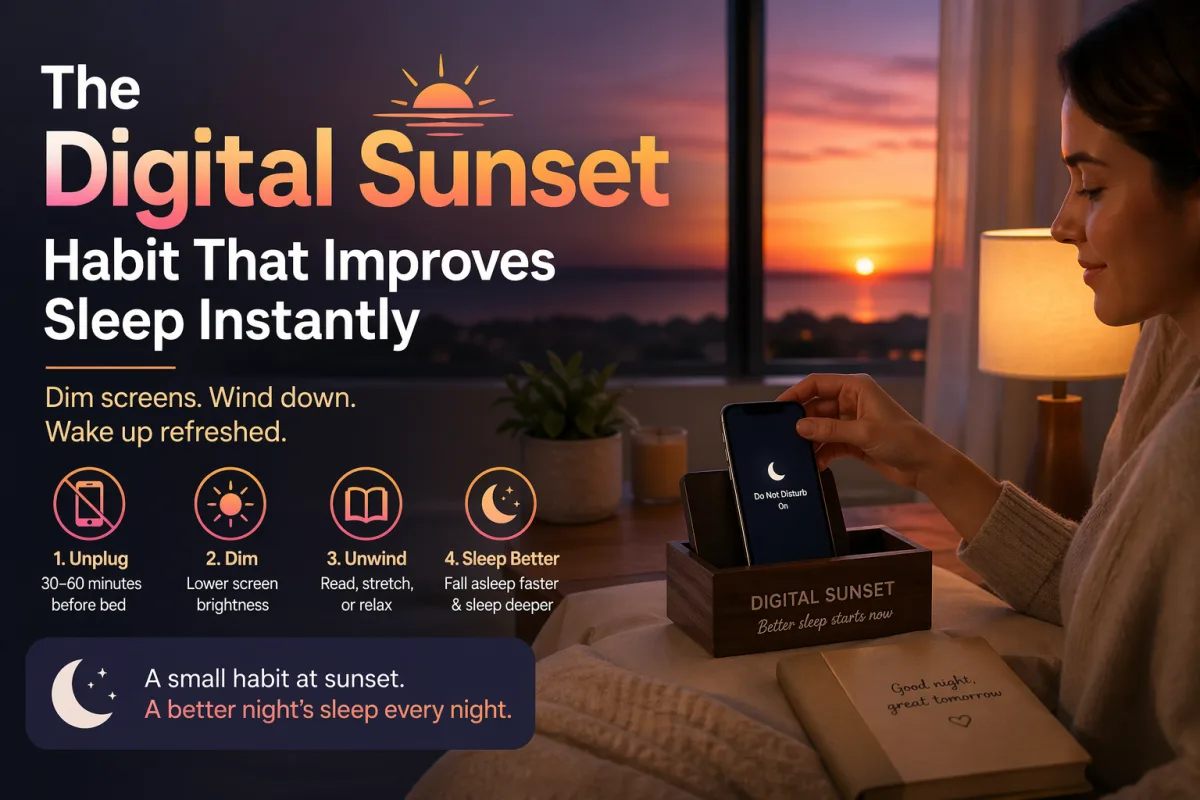
Sarah, a 38-year-old marketing executive in Chicago, used to dread bedtime. She'd scroll through LinkedIn, check emails "just one last time," or get lost in a TikTok rabbit hole, often until past midnight. Then, she’d lie awake, her mind racing, the lingering blue light from her phone still burning behind her eyelids. Her mornings were a fog of caffeine and regret, her productivity a shadow of what it could be. Sarah isn't alone. A staggering 70 million Americans suffer from chronic sleep problems, with digital devices often playing a starring, if unwelcome, role in this nightly struggle. But what if a surprisingly simple, almost counterintuitive habit could instantly reverse this trend, ushering in nights of profound, restorative rest?
- Understanding the "digital sunset" involves intentionally disconnecting from all digital screens a set period before bed.
- Blue light emitted by devices actively suppresses melatonin production, disrupting your natural sleep cycle.
- Cognitive arousal from late-night screen engagement keeps your brain wired, making it difficult to transition to sleep.
- Implementing a digital sunset doesn't require drastic lifestyle changes; small, consistent steps yield instant benefits.
- The habit isn't just about avoiding screens; it's about replacing them with calming, sleep-inducing activities that promote psychological unwinding.
The Insidious Glow: Why Your Devices Are Stealing Your Sleep
For many of us, the smartphone is the last thing we see before closing our eyes and the first thing we reach for upon waking. This constant digital tether has profound implications for our sleep architecture. The core issue lies with blue light, the specific wavelength emitted by LEDs in smartphones, tablets, computers, and even modern televisions. This isn't just about eye strain; it’s about a fundamental biological signal. Our bodies are exquisitely tuned to the natural light-dark cycle, a rhythm known as the circadian clock. Bright light, particularly blue light, signals "daytime" to our brains, halting the production of melatonin, the hormone crucial for initiating and regulating sleep.
Studies have consistently shown that exposure to blue light in the evening can delay the onset of melatonin secretion by up to three hours. Think about that: three hours of your body actively fighting its natural urge to sleep, all because of a few minutes scrolling through social media. The 30-Minute Daily Reset That Improves Your Entire Lifestyle often starts with understanding these insidious intrusions. It’s not just the light; it's the content. Late-night work emails, intense gaming, or emotionally charged news feeds activate our sympathetic nervous system, the "fight or flight" response. This spikes cortisol levels, floods the brain with stimulating information, and keeps us in a state of hyper-arousal, the exact opposite of what we need for peaceful slumber. This dual assault – biological disruption from blue light and cognitive overstimulation – creates a perfect storm for sleeplessness, turning what should be a serene transition into a nightly battle.
Beyond Blue Light: The Cognitive Overload
It's easy to focus solely on blue light, and indeed, its impact is undeniable. But the "digital sunset" habit addresses a broader, often overlooked problem: cognitive overload. Our screens are designed to capture and hold our attention, constantly feeding us new information, notifications, and stimuli. Engaging with this endless stream right before bed is like trying to calm a race car engine by revving it harder. Your brain, already working overtime processing the day's events, is suddenly tasked with absorbing more data, reacting to new inputs, and anticipating future interactions. This keeps your prefrontal cortex, the hub of executive function and decision-making, highly active. To fall asleep, the brain needs to disengage, to slow down its processing, and to transition into a more quiescent state. Persistent screen use actively prevents this essential winding-down process, prolonging sleep latency and diminishing sleep quality.
Defining Your “Digital Sunset”: More Than Just Flipping a Switch
The concept of a "digital sunset" isn't complicated, but its execution requires intentionality. It's the deliberate decision to power down all digital screens – phones, tablets, laptops, e-readers (unless they use a non-backlit display like true e-ink), and even televisions – for a defined period before your intended bedtime. For most people, a minimum of 60 to 90 minutes is recommended, though some sleep experts advocate for two hours. Think of it as creating a "digital twilight" zone, a period where your brain can gradually transition from the hyper-stimulation of the day to the calm required for sleep. This isn't about deprivation; it's about replacement. It's about consciously choosing activities that promote relaxation and mental serenity over stimulation.
The beauty of the digital sunset is its flexibility. You define the start time based on your schedule and sleep goals. If you aim to be asleep by 10:00 PM, your digital sunset might begin at 8:30 PM. The key is consistency. Make it a non-negotiable part of your evening routine, much like brushing your teeth. This habit creates a powerful psychological cue for your body and mind, signaling that the day's demands are over and it's time to prepare for rest. It’s a deliberate act of self-care, a reclaiming of your evening hours from the relentless pull of the digital world. This habit can feel challenging at first, but the instant improvements in sleep quality and ease of falling asleep often provide enough motivation to stick with it.
Dr. Michael Gradisar, a clinical psychologist and sleep expert at Flinders University, emphasizes the immediate impact of this habit: "Our research shows that even just 30 minutes of reducing screen time before bed can significantly improve sleep latency and quality in adolescents. The effects are not subtle; people feel the difference almost immediately because you're removing a major physiological and psychological barrier to sleep."
The Instant Impact: What Happens When You Power Down
The word "instantly" might sound hyperbolic, but for many, the effects of a digital sunset are surprisingly swift and profound. Here's why. When you remove blue light exposure in the hours before bed, your pineal gland, which produces melatonin, receives the correct signal. Melatonin production kicks in earlier and at higher levels, priming your body for sleep. You'll likely feel a natural drowsiness descend, rather than having to force yourself to "try" to sleep. This isn't just about feeling tired; it’s about feeling sleepy in the way your body is biologically designed to feel at the end of the day.
Beyond the hormonal shift, the cognitive benefits are equally rapid. Without the constant influx of notifications, emails, and social media feeds, your brain gets a much-needed break. The mental chatter begins to quiet. You're less likely to be plagued by intrusive thoughts about work or worries about what you might be missing online. This reduction in mental activity allows your brainwave patterns to shift towards the slower frequencies associated with relaxation and sleep. Many individuals report falling asleep faster, experiencing fewer awakenings during the night, and waking up feeling more refreshed – often after just one or two nights of consistent digital sunset practice. It’s a stark reminder of how deeply intertwined our digital habits are with our fundamental biological processes.
| Pre-Bed Activity | Average Melatonin Suppression | Reported Sleep Latency (Minutes) | Subjective Sleep Quality (1-5 scale) |
|---|---|---|---|
| Reading on Backlit Tablet (2 hrs) | 55% | 45-60 | 2.5 |
| Watching TV (2 hrs) | 30% | 30-45 | 3.0 |
| Scrolling Smartphone (1 hr) | 40% | 35-50 | 2.8 |
| Reading Print Book (2 hrs) | 5% | 15-25 | 4.5 |
| Listening to Podcast/Music (2 hrs) | 0% | 10-20 | 4.7 |
Crafting Your Evening Sanctuary: Alternative Activities for Unwinding
The biggest hurdle to adopting a digital sunset isn't the decision to turn off screens, but rather figuring out what to do instead. The key is to replace stimulating digital activities with calming, analog ones. This is where you reclaim your evening for true rest and rejuvenation. Here's the thing. This isn't about boredom; it’s about rediscovery. Think about activities that genuinely relax you and prepare your mind and body for sleep. You might find that these moments become the most cherished part of your day, a peaceful buffer between the demands of work and the embrace of sleep.
- Read a Physical Book: Ditch the e-reader for a paper novel, magazine, or non-fiction book. The lack of blue light and the tactile experience are inherently calming.
- Journal or Reflect: Dedicate 10-15 minutes to writing down your thoughts, worries, or gratitudes. This can help clear your mind and process the day's events.
- Practice Gentle Stretching or Yoga: A few minutes of slow, deliberate movements can release physical tension and promote relaxation.
- Listen to Calming Music or a Podcast: Choose instrumental music, nature sounds, or a soothing podcast (ensure the content isn't too stimulating). Consider The "Quiet Productivity" Method for Getting More Done Without Burnout to manage your day, so evenings can truly be for unwinding.
- Engage in a Hobby: Knitting, drawing, puzzling, or even a simple board game with family can be wonderfully relaxing and screen-free.
- Take a Warm Bath or Shower: The drop in body temperature after leaving the warm water signals to your body that it's time for sleep.
- Connect with Loved Ones: Spend quality, screen-free time talking with a partner, family member, or housemate.
The goal is to create a pre-sleep routine that you look forward to, a sanctuary from the relentless demands of the digital world. Experiment with different activities to find what resonates most with you. Remember, consistency is more important than perfection. Even 30 minutes of intentional screen-free time can make a noticeable difference.
Overcoming the Addiction: Strategies for Sticking to Your Digital Sunset
Let's be honest: breaking up with our devices isn't easy. Our brains are wired for novelty and instant gratification, and smartphones are masters at delivering both. The fear of missing out (FOMO), the habit loops, and the sheer convenience make it a formidable challenge. But wait. Recognizing this "addiction" is the first step towards breaking free. One effective strategy is to physically remove devices from your bedroom. Charge your phone in another room, or at least place it out of arm's reach. This creates a physical barrier that makes it harder to succumb to the temptation of a late-night scroll. Another approach is to use your phone's built-in "do not disturb" or "bedtime mode" features, which can block notifications and grayscale your screen during your digital sunset hours.
Consider setting alarms not just for waking up, but also for starting your digital sunset. A gentle reminder that it's time to power down can be incredibly helpful in the initial stages. Gradually extending the duration of your screen-free period can also make the transition smoother. Start with 30 minutes, then increase to 60, and eventually 90 minutes. Involve your household; if everyone participates, it creates a supportive environment and makes it less likely you'll feel isolated or tempted. Remember that lapses will happen. Don't let one slip-up derail your progress. Simply acknowledge it and recommit to your digital sunset the following evening. The long-term benefits to your health, mood, and productivity are far too great to let a momentary craving win.
"In a world saturated with digital distractions, creating a 'digital sunset' is not just a trend; it's a critical act of self-preservation for our sleep and mental well-being. Research from the Pew Research Center in 2021 found that 45% of U.S. adults say they are online 'almost constantly,' making intentional disconnection more vital than ever."
What This Means For You
Adopting the “digital sunset” habit isn't just about getting more sleep; it's about reclaiming your evenings, reducing stress, and fostering a healthier relationship with technology. It means waking up feeling genuinely refreshed, with a clearer mind and more energy to tackle your day. Imagine a morning where you don't feel groggy, where your coffee is a pleasure, not a necessity. That's the promise of consistent, quality sleep. This simple habit empowers you to take control of your sleep environment and, by extension, your overall well-being. It’s an investment in your physical health, your mental clarity, and your emotional resilience. By consciously choosing to disconnect, you're not just improving your nights; you're enhancing every aspect of your waking life. For many, it's the missing piece in their quest for better health and more balanced living, a practice that truly delivers instant, tangible benefits.
Frequently Asked Questions
What is the ideal duration for a "digital sunset"?
While any amount of screen-free time before bed is beneficial, most sleep experts recommend a minimum of 60 to 90 minutes. For optimal results and to allow sufficient melatonin production, aiming for two hours before your intended bedtime is even better.
Can I use my e-reader during a digital sunset?
It depends on the type of e-reader. Traditional e-ink readers (like older Kindles) that don't emit their own light and rely on ambient light are generally fine. However, tablets or e-readers with backlit screens (even if they have a "night mode" or "blue light filter") should be avoided, as they still expose you to light that can disrupt melatonin.
What if I use my phone as an alarm?
If your phone is your alarm, the simplest solution is to buy a dedicated, inexpensive alarm clock and charge your phone outside the bedroom. Alternatively, if you must keep your phone in the room, place it across the room and ensure all notifications are off, and resist the urge to pick it up once the digital sunset has begun. Check out How to Create a Morning Routine That Doesn’t Feel Forced for more ideas on setting up your sleep environment.