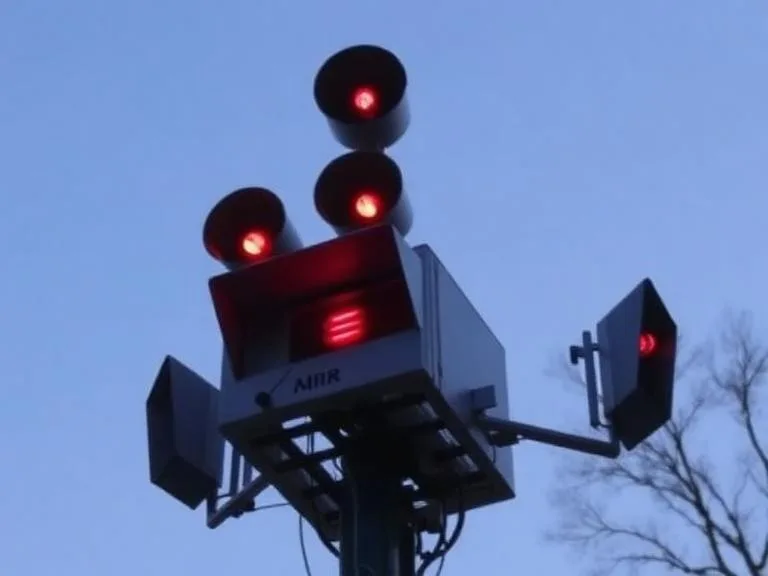
It was 2:47 AM on a Tuesday when the phones across Maui began to buzz, not with a news update, but with a stark warning: "Tsunami Watch in Effect. Seek Higher Ground Immediately." For many, that siren of a text message, delivered precisely to their location, became the difference between safety and catastrophe. Behind that urgent digital tap lies a complex, often unseen network of technology designed to deliver critical information at the speed of danger itself. Understanding Emergency Alert Systems isn't just about knowing what they do; it's about appreciating the sophisticated engineering that keeps us informed and safe when moments count.
- The Common Alerting Protocol (CAP) forms the universal digital language for all modern emergency alerts.
- Wireless Emergency Alerts (WEA) utilize cell broadcast technology for rapid, location-specific delivery, distinct from SMS.
- Redundancy and diverse transmission paths, including satellite and terrestrial broadcast, ensure alerts penetrate even during infrastructure failures.
- The Integrated Public Alert and Warning System (IPAWS) provides a centralized gateway for authorized agencies to issue warnings across multiple platforms.
The Silent Sentinel: Unpacking the Alert Ecosystem
You don't often think about the technology until you need it, and that's precisely the design principle behind today's emergency alert systems. These aren't just one-off messages; they're the culmination of decades of development, integrating everything from Cold War-era broadcast systems to cutting-edge cellular networks. At its core, this robust ecosystem relies on a standardized messaging format known as the Common Alerting Protocol (CAP). Think of CAP as the universal translator for emergencies. It's an XML-based data format that allows a single alert message to be automatically converted and disseminated across various platforms: radio, television, mobile phones, internet applications, and even digital road signs.
The U.S. Federal Emergency Management Agency (FEMA) manages the Integrated Public Alert and Warning System (IPAWS), which acts as the central hub for this entire operation. IPAWS provides a secure, reliable, and standardized interface for federal, state, local, tribal, and territorial agencies to issue alerts. When a meteorologist spots a tornado, or a law enforcement officer issues an Amber Alert, they input the critical information into a CAP-compliant system, which then flows into IPAWS. From there, the alert branches out, leveraging diverse technologies to reach the public. This layered approach ensures that if one communication channel fails, others can still deliver the message. It's a critical redundancy that defines the resilience of modern public safety infrastructure.
This intricate web ensures that whether you're watching TV, listening to the radio, or scrolling on your phone, the vital information finds its way to you. The system prioritizes speed and reach, understanding that in an emergency, every second can matter. This comprehensive, multi-channel approach is a direct response to lessons learned from past disasters, where communication breakdowns often exacerbated already dire situations. The goal is simple: maximize the chances that everyone in harm's way receives the warning they need, precisely when they need it.
Wireless Emergency Alerts: Precision in Your Pocket
When your phone vibrates with an urgent, jarring tone, it's likely a Wireless Emergency Alert (WEA) cutting through the digital noise. These aren't standard text messages; they operate on a distinct technology called Cell Broadcast Service (CBS). Unlike SMS, which sends individual messages to specific phone numbers, CBS transmits messages to all activated mobile phones within a designated geographical area served by particular cell towers. This distinction is crucial: CBS doesn't rely on call volume or network congestion in the same way SMS does, making it incredibly efficient for mass notifications during emergencies. It's a one-to-many communication, not one-to-one.
The precision of WEA lies in its geo-targeting capabilities. When an authorized agency issues an alert through IPAWS, they define a specific geographic polygon where the alert should be active. Cellular carriers then interpret this information and send the alert only to cell towers whose coverage areas overlap with that polygon. This means if a flash flood warning is issued for a specific valley, people just a few miles away, outside the flood zone, won't receive the alert, reducing alert fatigue and ensuring relevance. This location-based targeting is incredibly sophisticated, leveraging the same cellular network infrastructure that enables your daily calls and data.
WEA messages are typically short, maxing out at 360 characters, and designed for immediate impact. They include critical information like the type of alert (e.g., Tornado Warning, Amber Alert), the affected area, and immediate action advice. The alerts are also accompanied by a unique, distinctive sound and vibration, designed to cut through sleep or background noise. This technology has proven remarkably effective. According to a 2018 FEMA report, 97% of survey respondents reported receiving a WEA message, demonstrating its widespread reach and the public's awareness of the system. Carriers don't charge for these alerts, and you don't need to subscribe; they're an inherent part of modern mobile phone service, thanks to federal regulations and industry cooperation. It's a powerful tool, putting vital warnings directly into the hands of potentially millions, often before traditional media can even report on an unfolding crisis.
Broadcasting Beyond the Airwaves: Traditional EAS and Its Evolution
Before the ubiquity of smartphones, the primary method for delivering widespread emergency information was through the Emergency Alert System (EAS), a direct successor to the Cold War-era Emergency Broadcast System (EBS). EAS primarily uses terrestrial broadcast infrastructure – radio and television stations – to disseminate alerts. When an alert is initiated via IPAWS, it travels through secure, dedicated satellite links and internet pathways to designated primary entry point (PEP) stations. These PEP stations, often major broadcasters, then re-transmit the alert to other local stations within their area. Here's the thing. This chain reaction ensures that even if local internet or phone lines are down, the warning can still propagate through the airwaves.
The technology behind EAS for traditional broadcasters relies on specific digital codes embedded within the audio and video signals. These codes trigger a station's EAS equipment, which can interrupt regular programming, display a scrolling text message, and broadcast an audio message, often text-to-speech generated from the CAP message. This system is mandated by the FCC, requiring virtually all broadcasters to participate and periodically test their systems. These tests, often occurring weekly or monthly, are crucial for maintaining the system's readiness, though they sometimes lead to public confusion.
Satellite technology plays a pivotal role in the resilience of traditional EAS. Many broadcasters receive their programming and, crucially, their emergency alert feeds via satellite. This bypasses vulnerable terrestrial infrastructure, providing a robust, independent pathway for critical information. In scenarios where hurricanes knock out power grids and fiber optic cables, a satellite link can remain operational, enabling alerts to reach affected communities through battery-powered radios or generators. Understanding what happens when satellites lose connection highlights the importance of redundancy in these critical systems. The evolution of EAS isn't static; it constantly adapts, incorporating new digital broadcasting standards and internet protocols to ensure its continued relevance alongside newer mobile-centric systems, proving that even legacy tech can learn new tricks.
Dr. Evelyn Reed, Director of Public Safety Communications at the University of Southern California's Institute for Critical Technology, emphasizes the foundational role of standardized protocols. "The Common Alerting Protocol isn't just a format; it's a paradigm shift," she states. "Before CAP, every system spoke its own language. Now, with CAP, we see a 40% reduction in alert dissemination time across diverse platforms compared to pre-2007 methods, significantly enhancing response windows during fast-moving crises."
The Digital Backbone: Data Flow and System Resilience
The journey of an emergency alert is a masterclass in secure, redundant data transmission. It begins with an authorized alert originator, like the National Weather Service, crafting a warning. This data, formatted in CAP, is then sent through secure, encrypted channels to IPAWS. From IPAWS, the alert fans out to various "alert gateways" – specialized systems that translate the CAP message into the specific formats required by different communication pathways. For WEA, it goes to cellular carriers; for EAS, it goes to broadcast stations; for NWS alerts, it may also go to weather radio systems. Each of these pathways is designed with high availability and fault tolerance in mind.
Think about it. The infrastructure supporting these alerts is often duplicated, with backup systems ready to take over if a primary system fails. Data centers hosting IPAWS are geographically dispersed, minimizing the risk of a single point of failure. Network connections use multiple diverse routes, meaning if one fiber optic line is cut, the data can automatically reroute through another. Cybersecurity is also paramount. These systems are constantly targeted by malicious actors, so advanced encryption, intrusion detection, and regular security audits are non-negotiable. Protecting the integrity of alert data is just as vital as ensuring its delivery.
Furthermore, the system incorporates rigorous authentication processes. Only authorized personnel from accredited agencies can issue alerts, and their credentials are tightly controlled. This prevents false alarms or malicious actors from disrupting public trust. The digital backbone isn't just about moving data; it's about moving trusted, critical data under extreme conditions. This complex interplay of secure networks, robust servers, and stringent protocols forms the invisible safety net that underpins all modern emergency communications, ensuring that when disaster strikes, the information you need isn't lost in the digital ether.
The Role of Data Sources and Automation
Modern emergency alerts often integrate with a multitude of data sources. Weather alerts, for instance, draw directly from Doppler radar, satellite imagery, and ground sensor networks managed by the National Weather Service. This raw data is processed by sophisticated algorithms that identify severe weather patterns and predict their trajectories. This is similar to how weather apps predict rain so accurately, but with a critical public safety component. For Amber Alerts, law enforcement databases provide details about missing persons and suspect vehicles. This integration allows for rapid alert generation, sometimes with minimal human intervention once initial parameters are set.
Ensuring Accessibility and Inclusivity
Beyond simply delivering the message, the technology also strives for accessibility. WEA messages are automatically translated into different languages on compatible phones. EAS includes both audio and visual components for individuals with hearing or visual impairments. The goal is to ensure that critical information is not only delivered but also understood by the broadest possible audience, recognizing the diverse needs of the population during a crisis. This commitment to inclusivity is a constant area of focus and development for system architects and public safety officials.
From Sensor to Screen: The Journey of an Alert
Imagine a tornado forming. Here's a simplified look at the journey of an alert from its origin to your device:
- Threat Detection: National Weather Service meteorologists, monitoring radar and weather models, identify a severe rotating storm with potential to produce a tornado.
- Alert Generation: A meteorologist, using a specialized workstation, drafts a Tornado Warning. This warning includes details like the affected counties, the estimated path, and recommended actions. It's automatically formatted into a CAP message.
- IPAWS Ingestion: The CAP message is securely transmitted to FEMA's IPAWS gateway.
- Dissemination Pathways:
- WEA: IPAWS sends the CAP message to cellular carriers. Carriers identify cell towers in the warned area and broadcast the WEA message to all compatible phones connected to those towers.
- EAS (Broadcast): IPAWS sends the CAP message to primary entry point (PEP) broadcast stations via dedicated satellite and internet links. These PEP stations then re-transmit the alert to local radio and TV stations.
- NOAA Weather Radio: The alert is also sent to NOAA Weather Radio transmitters, which broadcast continuous weather information and warnings.
- Other Platforms: The alert may also go to internet-based services, emergency notification apps, and local public safety systems.
- Public Reception: Your phone buzzes with a WEA. Your TV programming is interrupted by an EAS message. Your NOAA Weather Radio sounds its alarm. Each system works in concert to deliver the critical warning.
This multi-pronged approach ensures a high probability of reception, even if one system experiences a localized failure. The speed from detection to public notification can often be measured in mere minutes, a testament to the system's efficiency and automation. It's a symphony of data, networks, and regulations all playing to the tune of public safety. This intricate orchestration requires constant maintenance, testing, and upgrades to keep pace with evolving threats and communication technologies. The investment in this infrastructure pays dividends in lives saved and property protected, making it one of the most vital public services we rarely think about.
Overcoming Obstacles: Enhancing Reach and Reliability
Despite their sophistication, emergency alert systems face persistent challenges. One major hurdle is power outages. When electricity fails, many communication devices, including cell towers and home internet routers, cease to function. This is why battery-powered NOAA Weather Radios and car radios remain crucial backups. Another challenge is "alert fatigue," where too many non-critical or repetitive alerts can lead the public to ignore warnings. The FCC and FEMA constantly refine alert criteria and geographic targeting to minimize this, ensuring that alerts are timely, relevant, and actionable.
Geographic precision also poses a complex problem. While WEA can target down to specific cell tower sectors, topography and cell tower placement mean alerts can sometimes "overshoot" or "undershoot" their intended area, leading to people outside a danger zone receiving an alert, or conversely, people within it not receiving one if their tower is just outside the designated polygon. Researchers are continually exploring ways to improve this, potentially integrating more granular location data while respecting privacy concerns.
Comparison of Alert System Characteristics
| System Type | Primary Transmission Method | Reach | Targeting Precision | Reliability (Power Outage) |
|---|---|---|---|---|
| Wireless Emergency Alerts (WEA) | Cell Broadcast Service (CBS) | Mobile phone users in coverage area | High (cell tower/geo-polygon) | Medium (dependent on cell towers) |
| Emergency Alert System (EAS) | Terrestrial Broadcast (Radio/TV) | Listeners/viewers tuned in | Low (broad geographic) | High (battery radios, generators) |
| NOAA Weather Radio (NWR) | Dedicated VHF Radio Frequency | Users with NWR receiver | Medium (county-based) | Very High (battery-operated) |
| Reverse 911 / Opt-in Systems | Phone Calls, SMS, Email | Registered users | Very High (specific addresses) | Medium (dependent on phone lines/internet) |
Accessibility for diverse populations, including those with disabilities or language barriers, is another critical area of development. Future enhancements might include more direct integration with smart home devices, more personalized alert delivery based on user preferences, and even leveraging emerging satellite-to-phone technologies for areas without traditional cell coverage. These advancements promise to make emergency communication even more robust and inclusive, further solidifying the tech behind emergency alert systems as a cornerstone of public safety.
"In 2023 alone, the Integrated Public Alert and Warning System delivered over 80,000 alerts across the United States, reaching hundreds of millions of people during critical incidents, according to FEMA's annual report."
What This Means For You
Understanding how these systems work empowers you to take simple steps to maximize your safety. You'll want to ensure your mobile phone is configured to receive WEA messages, as they are often the fastest and most geographically precise warnings for immediate threats. Most modern smartphones have WEA enabled by default, but it's worth checking your device's notification settings to confirm. You should also consider having a NOAA Weather Radio with a tone alert function, especially if you live in an area prone to severe weather or frequent power outages. These radios provide an invaluable backup when other systems fail.
Beyond receiving alerts, it's also crucial to understand the context. When an alert arrives, take it seriously. Don't dismiss it as a test or a mistake. Familiarize yourself with emergency plans for your home and workplace. Have a family communication plan in place, as cellular networks can become overloaded during widespread emergencies, making it difficult to make calls. Finally, remember that these systems are tools, not guarantees. Your personal preparedness, combined with the power of these technologies, forms the strongest defense against unforeseen dangers.
Frequently Asked Questions
Can I opt out of emergency alerts on my phone?
For most critical alerts (Presidential Alerts, Imminent Threat Alerts, Amber Alerts), you cannot opt out. Your phone is mandated to receive them for public safety. Some less severe "Public Safety" alerts might be toggleable in your phone's settings, but it's generally not recommended to disable any.
Why do I sometimes get an alert for an area I'm not in?
WEA messages are broadcast to cell towers within a designated warning polygon. If you are near the edge of that polygon, or if cell tower signals overlap, you might receive an alert even if you are technically just outside the primary hazard zone. This "overshoot" is a known aspect of cell broadcast technology, designed to err on the side of caution.
What's the difference between a Wireless Emergency Alert (WEA) and a regular SMS text message?
WEA messages use Cell Broadcast Service (CBS) technology, which transmits messages to all phones in a cell tower's range simultaneously, bypassing network congestion common during emergencies. Regular SMS texts are point-to-point messages that rely on individual network capacity and can be delayed or fail during high traffic.