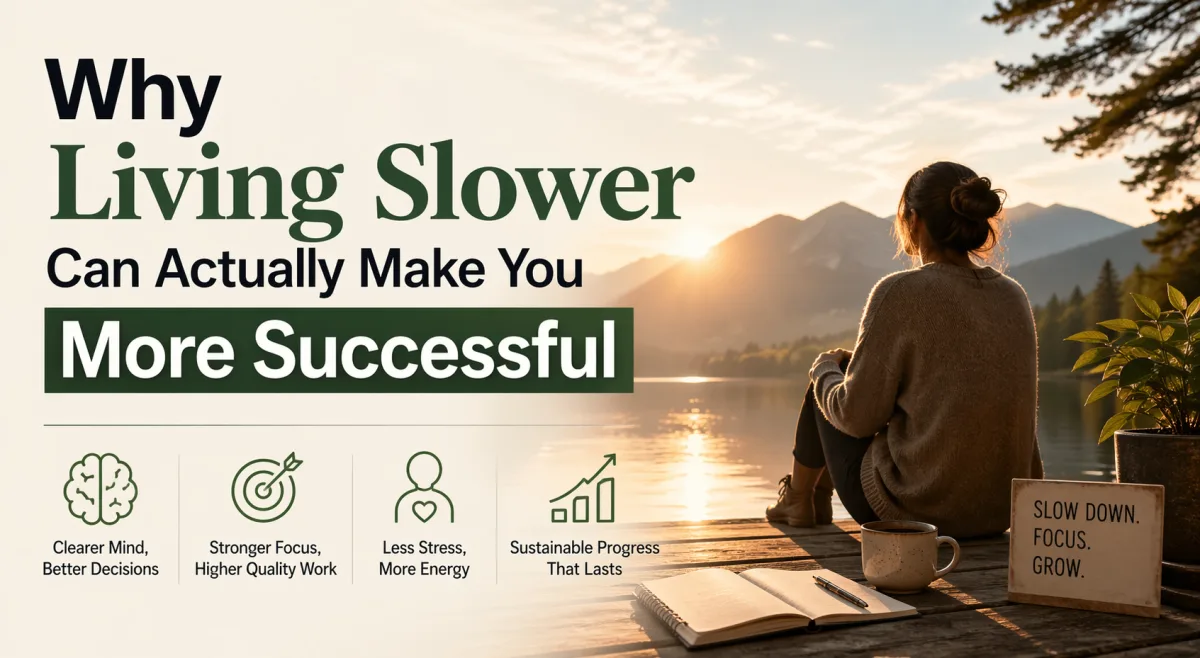
In a world that ceaselessly demands more — more speed, more output, more connectivity — the idea of deliberately slowing down feels not just counterintuitive, but almost rebellious. We're told that busyness equates to importance, that a packed schedule signifies ambition, and that constant motion is the only path to achievement. Yet, what if this relentless pursuit of speed isn't just exhausting, but actively undermining our ability to truly succeed? Consider the story of Alex, a tech founder who, after years of 80-hour workweeks and chronic stress, found himself at the brink of burnout. His startup was growing, but his health and decision-making were deteriorating. On a doctor’s advice, he reluctantly scaled back, scheduling dedicated blocks for deep work and, crucially, for nothing at all. Within six months, his team reported higher morale, product development cycles became more efficient, and Alex himself felt a clarity he hadn't experienced in years. His company didn't just survive; it thrived, directly because he chose to live slower. This isn't an anomaly. It's a growing body of evidence suggesting that the “quiet productivity” method, born from a slower approach, can fundamentally reshape our path to success.
- Slowing down enhances cognitive function, leading to clearer thinking and better decision-making.
- A deliberate pace fosters creativity and innovation by allowing for deeper processing and reflection.
- Prioritizing intentional slowness reduces stress and burnout, thereby improving long-term productivity and well-being.
- Embracing a slower lifestyle cultivates stronger relationships and a more meaningful sense of personal success.
The Relentless Pace and the Illusion of Achievement
We've been conditioned to believe that speed is paramount. The faster you respond, the faster you execute, the faster you climb the ladder. This mindset, deeply embedded in modern work culture, often confuses activity with productivity. We fill our calendars to the brim, toggle between countless tasks, and respond to emails at all hours, convinced that this constant flurry of motion signals progress. But here's the thing: busyness isn't a measure of effectiveness. It’s often a symptom of poor prioritization, diffused focus, and an inability to say "no." A recent study by Future Forum found that 42% of knowledge workers report feeling burned out, a statistic that underscores the unsustainable nature of our current pace. This pervasive burnout isn't just about feeling tired; it erodes creativity, impairs judgment, and ultimately diminishes our capacity for meaningful achievement. We're running faster, but are we actually getting closer to our most important goals? Or are we simply expending energy without direction, caught in a cycle that leaves us feeling perpetually behind?
The illusion of achievement in a fast-paced world is a powerful one. We chase external metrics – promotions, financial gains, social media likes – often at the expense of internal well-being. The constant pressure to be "on" means less time for reflection, for deep thought, and for the kind of restorative breaks that genuinely recharge our cognitive batteries. We sacrifice sleep, healthy meals, and meaningful connections, all in the name of perceived progress. But this isn’t success. It’s a fast track to exhaustion and disillusionment. To truly understand why living slower can actually make you more successful, we must first dismantle this ingrained belief that faster is always better. It’s time to challenge the myth that constant acceleration is the only route to the top.
Strategic Pause: Reclaiming Cognitive Bandwidth for Clarity
When you slow down, you're not just reducing your activity; you're intentionally creating space for your brain to function optimally. Our prefrontal cortex, responsible for executive functions like decision-making, planning, and problem-solving, is like a muscle. When constantly bombarded with information and demands, it gets fatigued, leading to what psychologists call "decision fatigue." Think about it: how many times have you made a rash decision at the end of a long, hectic day that you later regretted? This isn't a character flaw; it's a cognitive limitation. The human brain simply isn't designed for sustained, high-intensity multitasking without regular periods of rest and recovery.
The Neuroscience of Deliberate Downtime
Research published in Nature Reviews Neuroscience (2014) highlights the importance of the brain’s "default mode network" (DMN), which becomes active when we're not focused on a specific task. This is when our brains engage in crucial processes like memory consolidation, future planning, and creative thinking. By consciously stepping back, taking breaks, or engaging in low-stimulus activities, we activate this DMN, allowing for deeper processing and insight. It’s during these moments of "unfocus" that solutions to complex problems often emerge, or new ideas suddenly click into place. Living slower isn't about doing nothing; it's about doing the right things at the right speed, giving your brain the necessary room to breathe and connect disparate pieces of information.
This strategic pause is not a luxury; it's a necessity for anyone aiming for sustained success. It's about recognizing that clarity and insight don't come from frantic activity, but from periods of calm reflection. Embracing a 30-minute daily reset, for instance, can drastically improve your entire lifestyle by allowing your mind to defragment and re-prioritize. When we operate from a place of mental clarity, our decisions are sharper, our focus is more concentrated, and our output becomes exponentially more valuable. This deliberate deceleration is the engine of true cognitive power.
Slower Decisions, Better Outcomes: The Power of Deliberation
In a world obsessed with instantaneous results, the idea of taking more time to make decisions might seem counterproductive. Yet, countless studies across psychology, economics, and business reveal the profound benefits of deliberation over haste. Rushed decisions are often reactive, based on incomplete information or emotional impulses. They can lead to costly mistakes, missed opportunities, and the need for subsequent corrective actions, which ultimately waste more time and resources than a thoughtful initial approach would have. A slower pace allows for deeper analysis, consideration of multiple perspectives, and a more thorough understanding of potential consequences.
Dr. Daniel Kahneman, Nobel laureate and co-author of "Thinking, Fast and Slow," has extensively documented how our "System 1" (fast, intuitive) thinking often leads to cognitive biases and errors, while "System 2" (slow, deliberative) thinking is essential for complex problem-solving and rational decision-making. His research with Amos Tversky, detailed in numerous papers and the book, highlights that consciously engaging System 2, which requires time and mental effort, significantly improves the quality and accuracy of judgments, especially in high-stakes situations. It's about knowing when to trust your gut and when to pause for deeper consideration.
Consider the contrast between rapid-fire email responses and carefully crafted communications. The former might save a minute, but the latter prevents misunderstandings, builds stronger relationships, and projects a more professional image. In business, a company that rushes a product to market without adequate testing often faces recalls or reputational damage, whereas one that takes a deliberate, iterative approach tends to build more robust and successful offerings. This isn't about paralysis by analysis; it's about strategic patience. It’s about recognizing that true success isn't measured by the speed of action, but by the quality and impact of the outcomes. Embracing a slower, more deliberate approach to decision-making is a hallmark of truly effective leaders and organizations.
Cultivating Creativity Through Stillness
Creativity, the lifeblood of innovation, rarely flourishes under duress or in a state of constant busyness. Instead, it often emerges from moments of quiet contemplation, when the mind is allowed to wander, connect disparate ideas, and explore possibilities without the pressure of immediate deadlines. Think of the famous "aha!" moments that often strike in the shower, on a walk, or just before falling asleep – moments when our conscious mind is disengaged, and our subconscious is free to play.
A slower pace provides the fertile ground for this kind of creative incubation. When you're not rushing from one task to the next, you have the mental space to observe, to question, and to synthesize information in novel ways. This is why many highly creative individuals, from artists to scientists, often incorporate periods of solitude, nature immersion, or meditative practices into their routines. They understand that genuine breakthroughs rarely happen in a state of frantic activity; they require a degree of mental stillness and an openness to serendipity. By embracing slowness, you’re not just reducing stress; you’re actively cultivating a mind primed for innovative thought.
In a world where new ideas and solutions are more valuable than ever, making time for stillness is a competitive advantage. It’s about understanding that the most profound insights don't come from pushing harder, but from pausing, reflecting, and allowing the mind to make unexpected connections. This deliberate cultivation of space is a powerful tool for anyone looking to foster original thinking and drive meaningful innovation in their field.
Reimagining Productivity: Focus Over Frenzy
The conventional view of productivity often equates to cramming as much as possible into every waking hour. But this "frenzy" approach often leads to superficial work, high error rates, and ultimately, burnout. True productivity, the kind that leads to significant achievements, is about deep focus and intentional effort. It's about concentrating on high-value tasks and eliminating distractions, rather than merely staying busy.
The Deep Work Advantage
Cal Newport, author of "Deep Work," argues that the ability to focus without distraction on a cognitively demanding task is becoming increasingly rare and valuable. He suggests that in an economy driven by complex information, those who can master deep work will thrive. This requires cultivating a slower, more deliberate approach to your workday, scheduling uninterrupted blocks of time for concentration, and ruthlessly protecting yourself from constant interruptions. When you commit to a slower, more focused work style, you produce higher quality output in less time, because your mental resources aren't being constantly fragmented. You become more efficient not by working faster, but by working smarter and with greater intensity of focus.
This shift from frenzy to focus also involves a re-evaluation of what constitutes "work." Is it answering every email immediately, or is it completing the project that will genuinely move the needle? Often, the most impactful work requires sustained, deliberate attention – a luxury that a fast-paced, constantly interrupted schedule rarely affords. By consciously slowing down, you empower yourself to engage in this kind of deep work, translating into superior results and a more profound sense of accomplishment.
| Approach to Work | Key Characteristics | Typical Outcomes | Impact on Success & Well-being |
|---|---|---|---|
| Fast-Paced / Multitasking | Constant context-switching, rapid responses, packed schedule, minimal breaks. | High stress, frequent errors, superficial engagement, feeling overwhelmed. | Increased burnout, lower quality output, diminished creativity, strained relationships, short-term gains. |
| Slow & Deliberate / Focused | Single-tasking, scheduled deep work, regular breaks, thoughtful responses, intentional planning. | Lower stress, higher accuracy, deeper understanding, sense of control. | Enhanced well-being, superior quality output, greater innovation, stronger relationships, sustainable long-term success. |
| Burnout Culture | Prioritizing hours over output, sacrificing personal life, glorifying busyness, fear of missing out. | Chronic fatigue, health issues, decreased job satisfaction, high employee turnover. | Significant health risks, career stagnation, loss of purpose, inability to achieve true potential. |
| Mindful Productivity | Intentional pauses, reflective practice, clear boundaries, valuing rest and recovery, purpose-driven work. | Increased resilience, sustained energy, creative breakthroughs, strong mental clarity. | Holistic success, improved health, deeper fulfillment, optimized performance without exhaustion. |
The Ripple Effect: Enhanced Relationships and Well-being
Success isn’t solely defined by career achievements or financial metrics. For many, it encompasses a rich, fulfilling life with strong relationships, good health, and a sense of purpose. A fast-paced lifestyle often exacts a heavy toll on these crucial elements. When we're constantly rushing, we tend to be less present with loved ones, missing subtle cues, or cutting conversations short. Our health suffers from neglected self-care, poor sleep, and chronic stress. Living slower directly addresses these deficiencies, creating a powerful ripple effect across all areas of your life.
Imagine having the time and mental energy to truly listen to your partner, play fully with your children, or engage in meaningful conversations with friends. This isn't just about 'work-life balance'; it's about being fully present in all aspects of your existence. When you slow down, you create space for genuine connection, fostering deeper bonds that are essential for emotional well-being and a sense of belonging. Furthermore, a deliberate pace encourages self-care practices – regular exercise, nutritious meals, sufficient sleep, and moments of quiet reflection. These aren't luxuries; they're foundational for sustained high performance and overall happiness. By investing in a slower, more mindful way of living, you're not just optimizing your work output; you're building a more resilient, joyful, and ultimately, more successful life in its broadest sense.
"The frantic pace of modern life is not just making us less happy; it's making us less effective. Research consistently shows that chronic stress and lack of downtime impair cognitive function, creativity, and long-term productivity." – Dr. Gabor Maté, Physician and Author
Implementing Slowness: Practical Steps for a Fast World
Okay, so how do you actually slow down in a world that refuses to? It doesn't mean quitting your job and moving to a cabin in the woods (unless you want to!). It means making intentional, strategic choices about your time, attention, and energy. It's about recognizing that slowness isn't idleness; it's deliberate action. Here are some concrete steps you can take:
- Schedule "Unscheduled" Time: Block out periods in your calendar for breaks, walks, or simply staring out the window. Treat this time as non-negotiable as any meeting.
- Practice Single-Tasking: Resist the urge to juggle multiple things at once. Focus on one task, complete it, and then move to the next. This increases efficiency and reduces errors.
- Digital Detox Moments: Designate specific times each day or week to disconnect from screens. Put your phone away during meals, turn off notifications, or have screen-free evenings.
- Build a Mindful Morning Routine: Instead of immediately checking emails, start your day with quiet activities like meditation, journaling, or a leisurely cup of coffee. This sets a calm tone. (How to Create a Morning Routine That Doesn't Feel Forced)
- Embrace Slow Communication: Before hitting "send," pause. Before responding to every ping, consider if it's truly urgent. Slowing down your communication can lead to clearer messages and fewer misunderstandings.
- Prioritize Sleep: View adequate sleep not as a luxury, but as a critical component of your productivity and well-being. Aim for 7-9 hours consistently.
- Cultivate Hobbies: Engage in activities purely for pleasure, without any pressure for productivity or outcome. This provides mental rest and fuels creativity.
What This Means For You
If you've spent years believing that success hinges on relentless speed and constant busyness, this article might feel like a radical reframe. But understand this: embracing a slower pace isn't about doing less or becoming complacent. It's about optimizing your energy, sharpening your focus, and making more deliberate, impactful choices. It's about recognizing that sustainable success isn't a sprint; it's a marathon that requires strategic pacing, recovery, and a deep understanding of your own cognitive and emotional limits. By intentionally slowing down, you're not just buying yourself more time or reducing stress; you're investing in a higher quality of thought, more robust decision-making, greater creative output, and ultimately, a more fulfilling and successful life in every sense of the word. Don't let the noise of the world convince you that speed is the only measure of worth. Your greatest achievements may just be found in the quiet moments of deliberation and intentional calm.
Frequently Asked Questions
Doesn't slowing down mean falling behind in a competitive world?
Quite the opposite. While it may feel counterintuitive, strategically slowing down allows for deeper analysis, better decision-making, and higher quality output, which ultimately gives you a competitive edge. Rushing often leads to mistakes and burnout, costing more time and resources in the long run.
How can I find time to slow down when my schedule is already packed?
Start small by identifying one area where you can intentionally create space, like dedicating 15 minutes each morning to quiet reflection instead of immediately checking email, or taking a screen-free lunch break. It's about prioritizing moments of deliberate calm, not overhauling your entire life overnight.
Is "slow living" just for certain personality types or professions?
No, the principles of living slower can be adapted by anyone, regardless of personality or profession. It's a mindset shift towards intentionality and mindfulness that benefits leaders, creatives, parents, and students alike by improving focus, reducing stress, and fostering deeper engagement with tasks and relationships.