Thermal Management
16 articles on this topic
Why Liquid Cooling Is Moving From Gaming PCs to Workstations
Forget flashy RGB; liquid cooling for workstations isn't about gaming aesthetics. It's a calculated investment in silent, sustained performance, directly boosting professional productivity and ROI.
How Heat Distribution Affects Systems
We've been taught to fight heat, but what if strategic thermal gradients are the secret to peak system performance? Uniform temperature isn't always optimal; precision heat placement defines efficiency.
Why Some Materials Retain Cold
Forget simple insulation. Materials retain cold because of their profound thermal inertia, a property often overlooked in favor of just blocking heat. It's an active fight against equilibrium.
What Happens When Thermal Balance Is Reached
Forget inert uniformity; thermal balance is a dynamic, actively maintained state revealing system vulnerabilities. It's not a static endpoint, but often a precarious functional optimum.
Why Some Materials Dissipate Heat Quickly
Conventional wisdom misses the full picture. True thermal dissipation isn't just about how fast heat moves through a material, but how ingeniously it escapes to the environment.
Why Do Some Surfaces Stay Cool
It's not just reflection or insulation. The coolest surfaces actively shed heat, often invisibly, radiating it directly to the deep cold of space itself. This silent thermal escape reshapes our fight against rising temperatures.
Why Do Some Materials Conduct Heat Better
Forget rigid definitions. We're engineering materials with precise thermal control, turning flaws into features to manage heat like never before. It's not just about speed, it's about smart design.
Why Do Computers Overheat?
It's not just dust or heavy gaming; modern computers battle fundamental physics, squeezing immense power into tiny spaces. Overheating isn't user error, it's a design struggle against thermodynamics.
 Technology
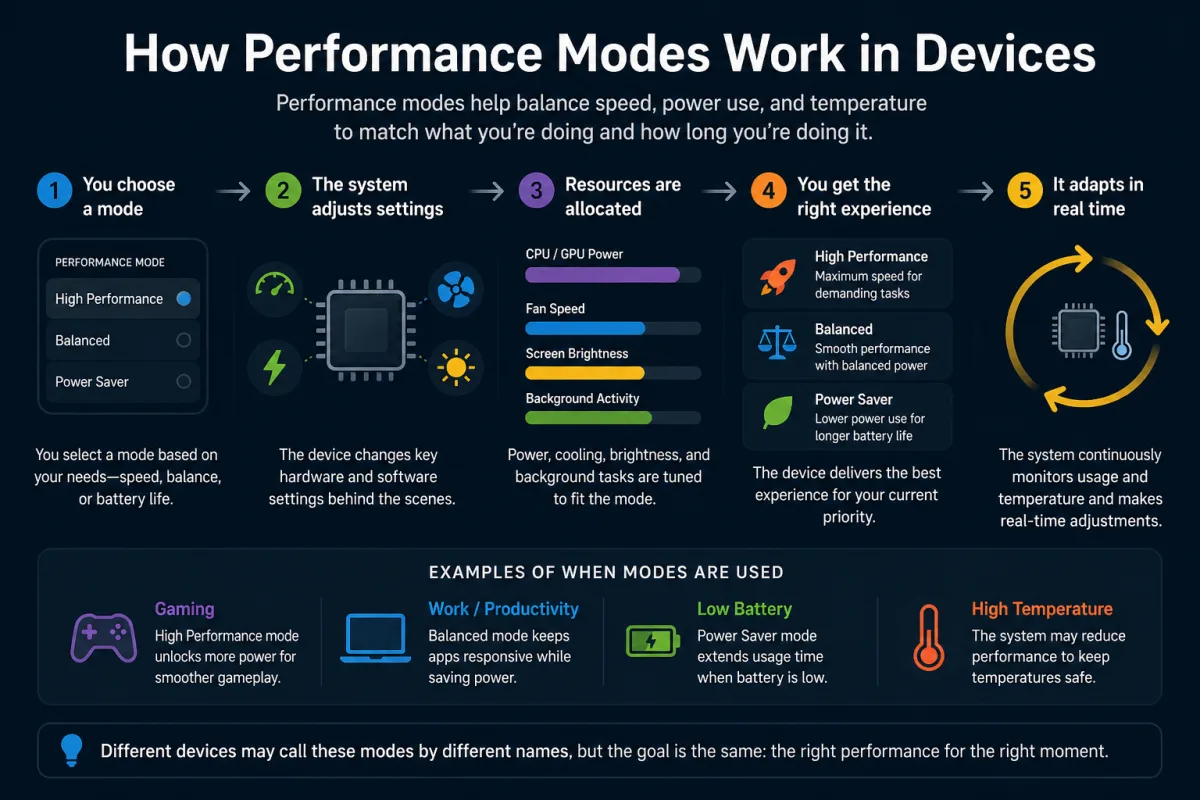
How Performance Modes Work in Devices
Performance modes promise peak power or enduring battery, but they're often an intricate dance of algorithms and compromises. You think you're in control, yet devices frequently prioritize thermal limits or marketing benchmarks over your actual experience.
How Heat Dissipation Works in Modern Devices
It's not just about pushing heat out; it's about intelligently throttling power. Modern devices don't just cool; they dynamically manage heat as a core performance strategy.
How Heat Dissipation Works in Modern Devices
Fans are just the start. The true genius of modern heat dissipation lies in an invisible, atomic-level war against entropy, dictating performance from your phone to your PC.
Why Gaming Phones Have Cooling Systems
Your gaming phone isn't just hot; it's fighting a silent battle for performance and longevity. The cooling systems aren't a gimmick—they're essential to preventing costly damage and frustrating lag.