My Real-World Experience with the Daxiongmao Endoscope Camera
As someone who enjoys tackling home repairs and tinkering with cars, I’ve often found myself wishing I had eyes in the back of my head – or, more accurately, eyes in tiny, dark, inaccessible spaces. So, when I stumbled upon the Daxiongmao Endoscope Camera, I decided it was time to finally pick one up. The promise of 1080P HD, IP67 waterproofing, and a 16.5ft flexible cable for inspecting everything from walls to engines sounded like exactly what I needed. After several weeks of putting it through its paces, here’s my honest take.
First Impressions & Setup
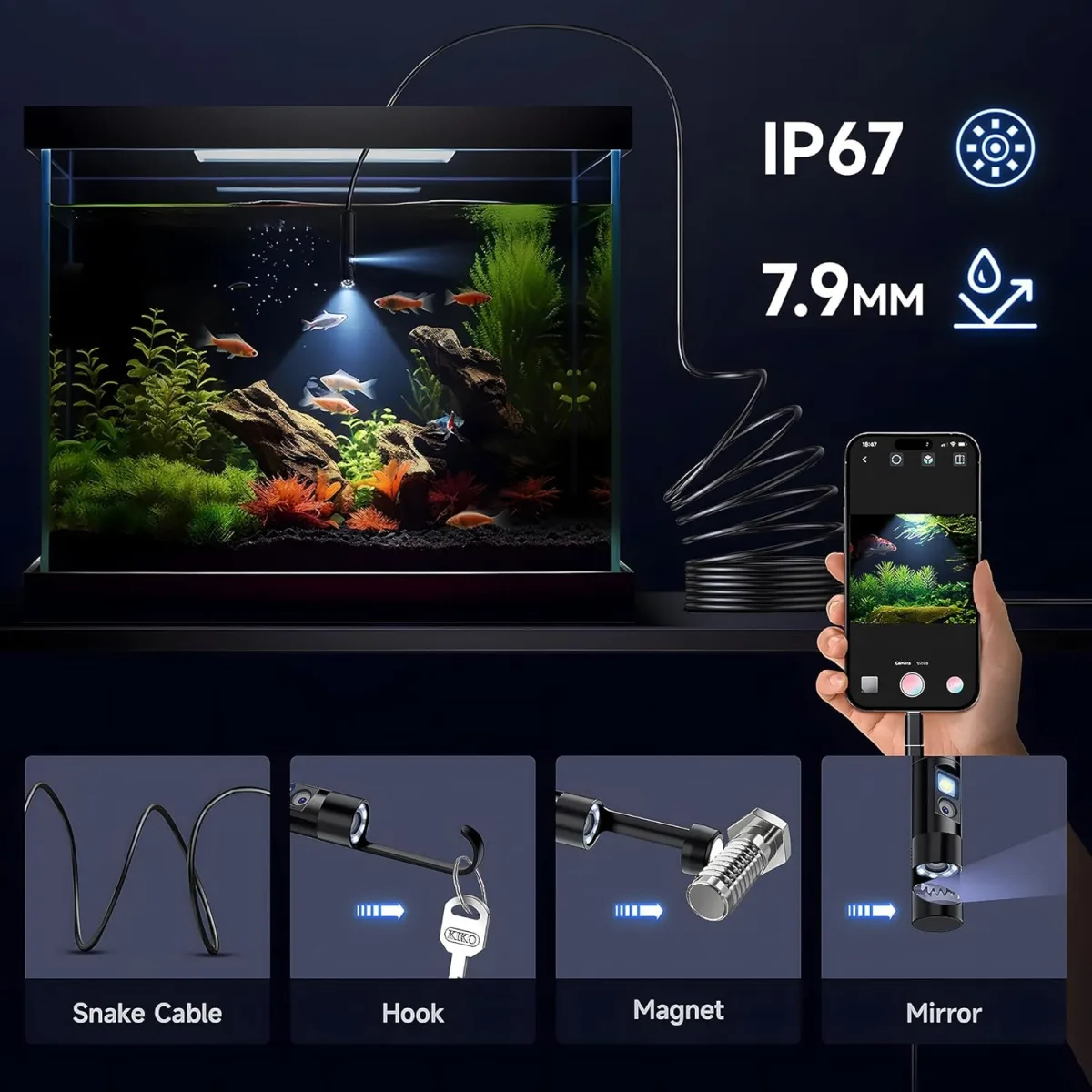
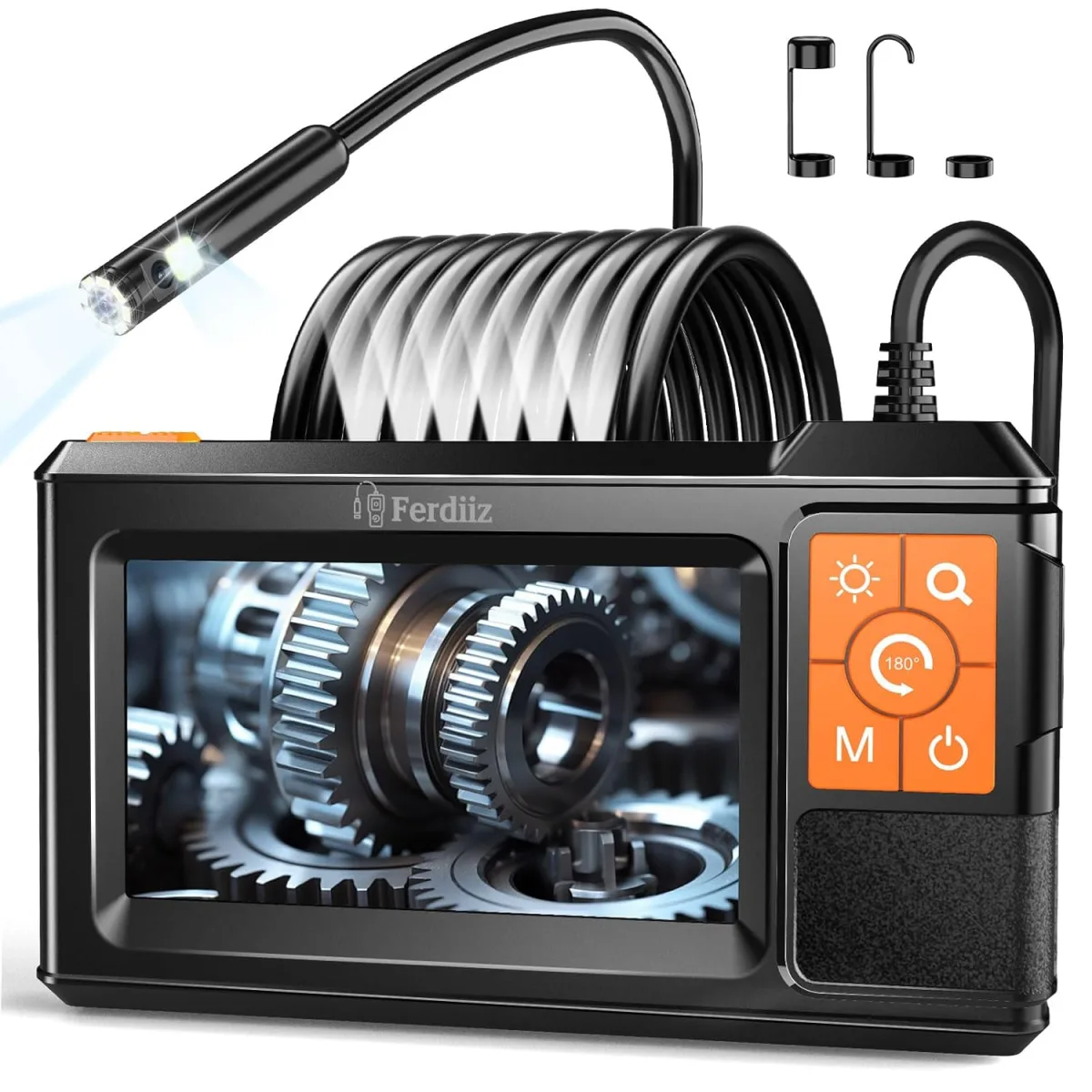
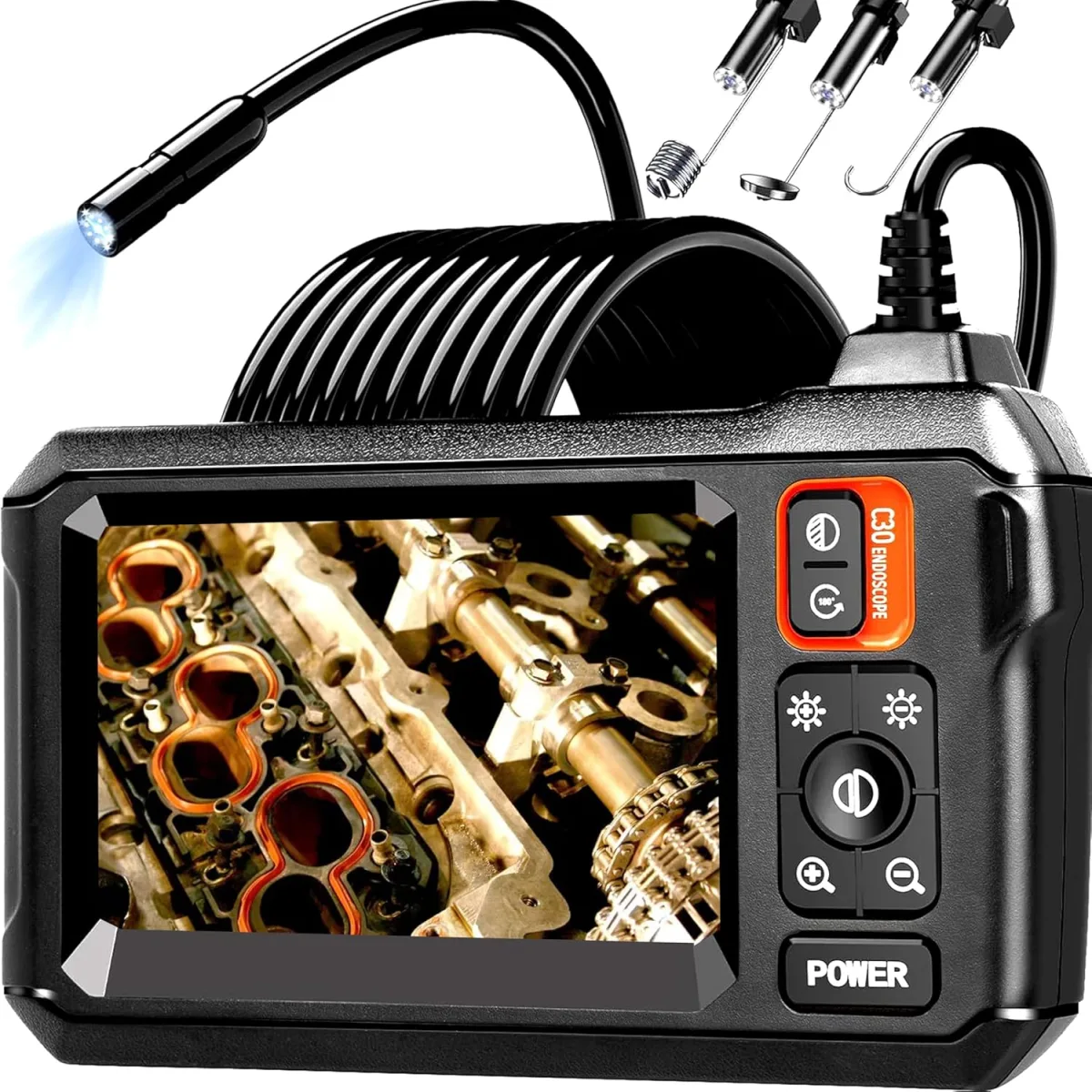
Right out of the box, the Daxiongmao feels pretty solid. It's not heavy-duty industrial grade, but it doesn't feel like a cheap toy either. The main unit, which houses the screen and controls, is comfortable to hold. The cable itself is indeed 16.5 feet long, which is a generous length for most household or automotive tasks. Included in the package are a few useful accessories: a magnet, a hook, and a side-view mirror, all designed to attach to the camera head. These are thoughtful additions that actually come in handy.
Setting it up was surprisingly straightforward. I charged the unit, turned it on, and the screen lit right up. There's no complicated app to download or Wi-Fi to connect to, which I actually prefer for a tool like this. It's truly plug-and-play, or rather, power-on-and-view. This simplicity is a definite win for anyone who just wants to get to work without fiddling with their phone.
Image Quality & Lighting: The Good, The Bad, and The Fuzzy
The product description boasts 1080P HD, and for the most part, it delivers a decent image. In well-lit, open spaces (which, let's be honest, isn't where you typically use an endoscope), the picture is clear and crisp. However, the real test comes in those dark, cramped environments. That's where the integrated LED lights shine – literally. There are six adjustable LEDs around the camera head, and you can dial them up or down with a physical button. This is crucial, as too much light can cause glare, especially in metallic or reflective areas like an engine block.
I found the lighting adequate for most tasks, allowing me to see details I otherwise wouldn't. The 1080P claim holds up *relatively* well, but don't expect the same clarity you'd get from a high-end smartphone camera. It's good enough to identify cracks, leaks, lost screws, or blockages. Where it struggles a bit is in extremely close-up situations where the focal length isn't quite right, or when the object is very far away in a large cavity. It has a sweet spot for focus, usually a few inches to a foot away, which is typical for these devices.
Maneuverability: The Snake Camera Experience
The 16.5ft flexible cable is a double-edged sword. On one hand, that length gives you incredible reach. I was able to snake it all the way down a long drainpipe and deep into a wall cavity without issue. On the other hand, a cable this long and flexible can be tricky to control. It's not entirely rigid, so pushing it around bends and corners sometimes requires a bit of finesse and patience. The cable does hold its shape reasonably well once bent, which is helpful, but it's not like a rigid wire that you can just push straight through anything. For very tight, complex turns, it can be a wrestling match.
Real-World Testing: Where It Shined (and Where It Didn't)
- Automotive Engine Inspection: This was one of my primary reasons for buying it. I used it to look into spark plug wells, inspect for oil leaks around the engine block, and even peer behind the firewall. It helped me confirm a minor coolant leak I suspected and locate a dropped nut near the exhaust manifold. Being able to see these areas without dismantling half the engine was a huge time-saver. If you're a DIY mechanic, this is where you'll really appreciate it. You can check today's price on Amazon if this sounds like a tool you need.
- Drain Pipes & Vents: I used it to investigate a slow kitchen drain. The IP67 waterproofing held up perfectly as I submerged the camera head into murky water. I was able to identify a hairball/grease clog that I could then target. For HVAC vents, it helped me spot a small toy my kid had dropped inside, preventing a costly professional call.
- Wall Inspections: I recently thought about running some new wiring and used the Daxiongmao to peek behind a drywall opening. It confirmed there was enough clear space and no unexpected obstacles like old pipes or electrical boxes right where I wanted to drill. This alone saved me from potentially damaging something.
- Lost Items: My son dropped his tiny Lego character behind the couch in a way that made it impossible to reach. The magnet attachment came to the rescue, letting me fish it out after a few tries. It's surprisingly handy for those "oops" moments.
IP67 Waterproofing: It Works!
I wasn't afraid to dunk the camera head into water, and it survived without a hitch. The IP67 rating means it's dust-tight and can withstand immersion in water up to 1 meter (about 3 feet) for 30 minutes. For inspecting drains, plumbing, or even a fish tank, this feature is invaluable and performed as advertised. It's a relief knowing you don't have to worry about water damage during messy inspections.
What I Loved (Pros)
- Stand-alone Unit: No need for a phone or Wi-Fi. Just turn it on and go.
- Good Image Quality: 1080P is decent for inspection purposes, especially with good lighting.
- Adjustable LED Lights: Essential for dark spaces, with fine control over brightness.
- Excellent Cable Length: 16.5ft offers fantastic reach for most jobs.
- IP67 Waterproof: Tested it, and it works, making it great for plumbing.
- Useful Accessories: The magnet, hook, and mirror are genuinely helpful.
- Battery Life: I got a solid few hours of continuous use on a single charge, which is plenty for most tasks.
What Annoyed Me (Cons)
- Cable Flexibility: While long, the cable can be a bit too flexible, making it challenging to steer around complex bends. A slightly stiffer, yet still pliable, cable would be ideal.
- Focal Length: Like many endoscopes, there's a specific sweet spot for focus. Very close-up or very distant objects can appear fuzzy.
- Screen Size: The built-in screen is adequate, but sometimes I wished for a larger display to see finer details. However, that would likely drive up the cost and reduce portability.
Who Should Buy This
This Daxiongmao endoscope is perfect for the average homeowner, DIY mechanic, plumber, or even an electrician who needs to peek into tight spots without breaking the bank. If you're constantly losing things in difficult-to-reach places, or you want to diagnose minor issues before calling a professional, this is a fantastic tool. It’s also a genuinely great gift tool for men (or anyone!) who loves gadgets and hands-on projects. If you're in the market for one, I'd say grab it on Amazon.
Who Should Skip It
If you're a professional who needs extremely precise, high-resolution imaging for critical inspections (like medical or aerospace applications), you'll probably need to invest in a much more expensive, specialized unit with advanced features like articulation. Also, if you need to record video or snap photos that are absolutely pristine for documentation, while this unit can do that, the image quality might not meet pro-level expectations. But for the vast majority of practical uses, it's more than sufficient.
Final Verdict
Overall, I'm genuinely impressed with the Daxiongmao Endoscope Camera. It’s not perfect, but for its price point, it offers excellent value and delivers on most of its promises. It has already paid for itself in saved time and avoided headaches during my various projects. It’s a handy, reliable tool that’s earned a permanent spot in my workshop. If you’re on the fence, I’d say go for it. It’s a solid inspection camera that gets the job done.