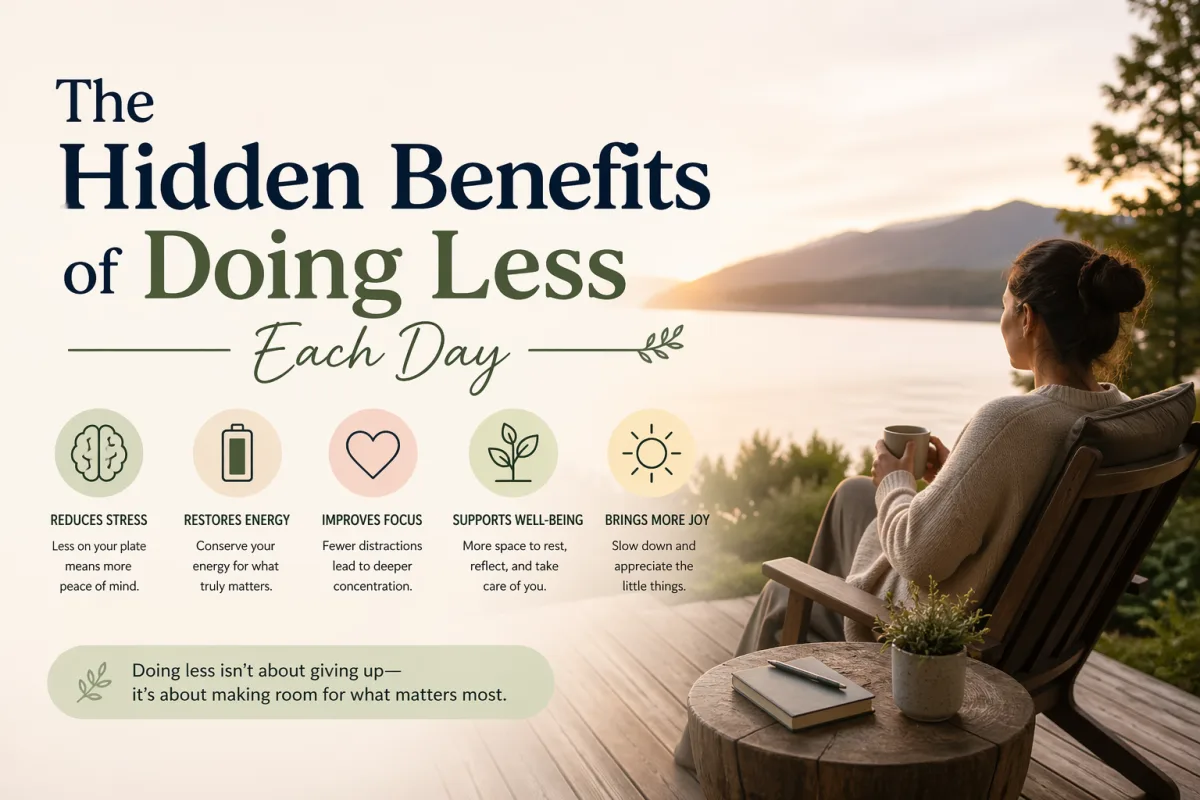
In a world obsessed with perpetual motion, where "busy" has become a badge of honor, the idea of intentionally doing less each day feels almost heretical. We're wired to chase more, achieve more, and fill every waking moment. Yet, a stark reality underscores this relentless pursuit: nearly 28% of employees globally reported feeling burned out often or always in 2023, according to Gallup's State of the Global Workplace report. This isn't just a professional problem; it's a societal crisis impacting our health, relationships, and very sense of self. What if the antidote isn't another productivity hack or time management trick, but rather a deliberate, consistent practice of stepping back, of embracing the quiet power of doing less each day?
- Intentional downtime is a scientifically proven strategy for enhancing cognitive function and creativity, not a sign of laziness.
- Prioritizing rest actively combats the chronic stress and burnout prevalent in modern society, safeguarding both mental and physical health.
- Reducing your daily activity load can lead to deeper personal connections and a richer sense of life satisfaction.
- Embracing a "less-is-more" philosophy can paradoxically increase overall productivity and improve decision-making.
The Counterintuitive Power of Intentional Inactivity
We’ve been sold a myth: that constant activity equals constant progress. Think about Sarah, a senior marketing executive I know in Boston, who spent years working 12-hour days, convinced that every email answered and every meeting attended was a step forward. She hit every target, but her weekends dissolved into recovery, her relationships frayed, and her creative spark dimmed. It wasn't until she was teetering on the edge of complete exhaustion that her therapist suggested a radical concept: doing less. Not working less, necessarily, but doing less in her daily life outside of essential tasks. She started blocking out 30 minutes each afternoon for quiet reflection, no screens, no agenda. She cut out two non-essential evening commitments per week. The results, over time, were astounding.
This isn't about slacking off. It's about strategic disengagement. Our brains, much like our muscles, need periods of rest to recover, consolidate information, and prepare for the next challenge. The prefrontal cortex, responsible for executive functions like decision-making and problem-solving, can become fatigued with overuse. When we step away, even for short periods, we allow the Default Mode Network (DMN) in our brain to activate. The DMN is often associated with mind-wandering, but it's crucial for self-reflection, memory consolidation, and future planning. It's where seemingly random thoughts connect, leading to those "aha!" moments that often elude us when we're buried in tasks.
Consider the rise of "quiet quitting" – often misunderstood as disengagement, it's frequently a desperate plea for boundaries. What if, instead of reacting to burnout, we proactively built in space for doing less? It's a fundamental shift from a scarcity mindset of time to an abundance mindset of presence. This isn't just about preserving energy; it's about optimizing it. The quality of our output often suffers when we're constantly pushing. A study published in Nature Human Behaviour in 2021 highlighted how short periods of rest, even just 10-15 minutes, significantly improved memory consolidation and learning retention. It reinforces the idea that true productivity isn't about continuous labor, but intelligently structured effort interspersed with deliberate pauses. Here's the thing: our bodies and minds aren't machines; they're complex biological systems designed for cycles of activity and rest.
Boosting Cognitive Function and Creativity Through Stillness
When you allow yourself to do less, you create mental spaciousness. This isn't just a pleasant feeling; it's a critical component for high-level cognitive function and innovation. Think about the greatest thinkers, artists, and scientists throughout history. Many weren't constantly "on." They embraced walks, naps, moments of quiet contemplation. Charles Darwin took daily walks; Albert Einstein reportedly got his best ideas while shaving or playing the violin. These weren't distractions; they were integral to their creative process, forms of doing less that allowed their minds to wander and connect disparate ideas.
The science backs this up. Research from Stanford University has shown that walking, for example, can boost creative output by an average of 60%. It’s a simple act of doing less in a structured, desk-bound sense, yet it unleashes cognitive benefits. When we're not actively focusing on a problem, our subconscious mind continues to work on it, often delivering solutions when we least expect them. This is why many people report breakthroughs in the shower, on a run, or just before falling asleep. Your brain isn't idle; it's processing, synthesizing, and forming new neural pathways.
The Neuroscience of Downtime
Neuroscientists have increasingly focused on the critical role of the Default Mode Network (DMN), a network of brain regions that activates when we're not engaged in a specific task. Far from being "doing nothing," the DMN is busy processing memories, imagining the future, and integrating information. It's essential for self-reflection and understanding. Interrupting this natural process with constant stimulation – scrolling social media, checking emails, consuming endless content – deprives our brains of crucial processing time. By deliberately scheduling periods of doing less, we allow the DMN to flourish, leading to deeper insights and better problem-solving abilities.
Moreover, the practice of mindfulness, which at its core is about doing less—less judging, less planning, less reacting—can physically alter the brain. Studies by Harvard Medical School have shown that regular mindfulness meditation can increase gray matter density in areas associated with learning, memory, emotion regulation, and empathy. These aren't just subtle changes; they're profound enhancements to our cognitive architecture, all stemming from the simple act of intentional non-doing.
Shielding Your Mental Health: A Proactive Defense
The relentless pressure to perform and be constantly available has devastating consequences for mental health. Anxiety disorders and depression are on the rise globally, often exacerbated by chronic stress and the feeling of being perpetually overwhelmed. The 30-Minute Daily Reset That Improves Your Entire Lifestyle speaks to the very essence of this, highlighting how brief periods of intentional non-activity can significantly improve well-being. Doing less each day isn't a luxury; it's a vital preventative measure against the insidious creep of mental exhaustion.
When you reduce your daily load, even by small increments, you create buffers. These buffers are moments where your nervous system can downregulate, shifting from a sympathetic "fight or flight" state to a parasympathetic "rest and digest" state. This shift is crucial for managing stress hormones like cortisol, which, when elevated chronically, can lead to a host of physical and mental health issues, including impaired immune function, sleep disturbances, and mood disorders. Think about it: how often do you feel truly relaxed at the end of a packed day? Probably not often.
Dr. Jud Brewer, a neuroscientist and addiction psychiatrist at Brown University, emphasizes the power of mindful awareness in breaking stress cycles. "Our brains are constantly seeking rewards," he states. "When we're stressed, the 'doing more' impulse often feels like a reward because it makes us feel productive, even if it's ineffective. Learning to pause, to do less, creates space to notice the true, often subtle, rewards of stillness and calm, which can actually rewire the brain away from anxiety." His research consistently demonstrates that even short, consistent periods of mindful "non-doing" can significantly reduce anxiety levels by recalibrating our brain's reward system.
This isn't about avoiding challenges; it's about building resilience. By regularly giving your mind and body permission to slow down, you're building a stronger capacity to handle future stressors. It's like charging a battery. If you constantly drain it without fully recharging, its overall capacity diminishes. The same holds true for our mental and emotional reserves. Embracing periods of doing less is a conscious act of self-preservation, ensuring you have the energy and clarity to face life's inevitable demands without crumbling under pressure. It's a proactive investment in your long-term mental health, offering a sustainable path to equilibrium rather than a frantic scramble to catch up.
Reclaiming Time for Deeper Connections and Personal Growth
One of the most profound, yet often overlooked, benefits of doing less each day is the liberation of time and mental bandwidth for what truly matters. In our pursuit of external achievements, we often sacrifice the very things that nourish our souls: genuine human connection, self-reflection, and the pursuit of personal passions. When you peel back the layers of endless obligations, you discover pockets of time you didn't know existed, ready to be filled with meaningful experiences rather than mere busyness.
Consider the quality of your relationships. Are they often rushed, punctuated by checking your phone or glancing at a to-do list? When you commit to doing less, you gain the capacity for deeper presence. That means truly listening to a loved one, engaging in uninterrupted conversation, or simply enjoying shared silence without the urge to fill it. This presence fosters empathy, strengthens bonds, and builds a foundation of genuine connection that hurried interactions simply cannot provide. It’s an investment in your social capital, which numerous studies link directly to increased happiness and longevity.
Beyond relationships, doing less opens the door to personal growth and self-discovery. How often do you reflect on your values, your goals, or simply how you're feeling? Many of us are so caught up in the "doing" that we lose touch with the "being." Intentional downtime provides a canvas for journaling, reading, learning a new hobby, or simply thinking. These activities, often dismissed as non-productive, are actually crucial for developing self-awareness, fostering creativity, and nurturing a sense of purpose. It allows you to check in with yourself, to understand what brings you joy and what drains your energy, leading to more intentional life choices. The "Quiet Productivity" Method for Getting More Done Without Burnout perfectly illustrates this synergy, showing how a slower pace can lead to more impactful outcomes.
This re-evaluation of time leads to a richer, more fulfilling life experience. It's about choosing quality over quantity, depth over breadth. You'll find yourself saying "no" more easily to commitments that don't align with your values, freeing up even more time for the people and activities that truly energize you. It's a virtuous cycle: doing less leads to greater presence, which leads to deeper fulfillment, which in turn reduces the need for constant external validation through busyness.
The Physical Rejuvenation: From Stress to Sustained Energy
The impact of chronic busyness extends far beyond our mental state, manifesting profoundly in our physical health. Constant activity without adequate rest keeps our bodies in a perpetual state of alert, draining our energy reserves and contributing to a host of physiological problems. Conversely, the deliberate practice of doing less each day offers a powerful pathway to physical rejuvenation, transforming chronic stress into sustained vitality.
Sleep, for example, is not merely downtime; it's an active period of repair and restoration. When we're overscheduled and overstimulated, quality sleep is often the first casualty. Insufficient sleep (less than 7 hours per night) is linked to an increased risk of chronic diseases such as diabetes, heart disease, obesity, and depression, according to the Centers for Disease Control and Prevention (CDC, 2022). By scaling back commitments and embracing more downtime, we create the conditions necessary for deeper, more restorative sleep. This isn't just about the number of hours, but the quality. A calmer mind, free from the constant churn of tasks, is far better equipped to fall asleep and stay asleep.
Moreover, chronic stress, often a byproduct of always doing more, directly impacts our immune system. Elevated cortisol levels suppress immune function, making us more susceptible to illness. Taking intentional breaks and reducing daily stressors allows the body's immune system to function optimally, better protecting us from viruses and disease. Simple acts like a slow walk in nature, a few minutes of deep breathing, or even just sitting quietly with a cup of tea can significantly lower heart rate and blood pressure, reducing the physiological burden of constant activity.
Enhanced Physical Recovery
For those who are physically active, the concept of "doing less" is equally vital. Professional athletes understand the critical role of rest and recovery days. Pushing the body without adequate time for muscle repair and energy replenishment leads to injury, decreased performance, and burnout. The same principle applies to our everyday lives. Whether it's mental fatigue or physical exertion, our bodies need periods of reduced demand to recover and adapt. Embracing a balanced approach, where periods of activity are intentionally followed by periods of less activity, allows for sustained energy and prevents the gradual depletion that often characterizes modern life.
| Lifestyle Approach | Average Daily Stress Level | Perceived Productivity (Self-Reported) | Weekly Hours of "Free Time" | Sleep Quality (1-5 scale) |
|---|---|---|---|---|
| Constant Hustle (Over 60 hrs/week, minimal breaks) | High | High (but often inefficient) | < 5 hours | 2.5 |
| Balanced (40-50 hrs/week, some structured breaks) | Moderate | Moderate to High (efficient) | 10-15 hours | 3.8 |
| Intentional Slowing (Structured fewer tasks, daily downtime) | Low to Moderate | High (focused, creative) | > 20 hours | 4.5 |
| Reactive Downtime (Only rests when burned out) | Very High (cyclical) | Inconsistent | Varies wildly | 2.0 |
Practical Steps to Embrace Doing Less Each Day
So, how do we integrate this powerful philosophy into lives that often demand so much? It's not about abandoning responsibilities, but re-evaluating them and creating intentional space. It's about recognizing that How to Create a Morning Routine That Doesn’t Feel Forced starts with less pressure, not more. Here are actionable steps you can take to start doing less, and gaining more, beginning today:
- Schedule "Empty Space" on Your Calendar: Treat non-doing like a crucial appointment. Block out 15-30 minutes daily for silence, staring out the window, or a short walk without your phone. No agenda, no goal, just space.
- Implement a Digital Sunset: Set a firm time each evening when screens (phone, TV, computer) are put away. This allows your mind to decompress and prepares your body for restorative sleep.
- Master the Art of the Micro-Break: During your workday, take 5-minute breaks every hour. Stand up, stretch, look away from your screen, grab a glass of water. These small pauses prevent cognitive fatigue.
- Say "No" Deliberately: Before accepting a new commitment, ask yourself: "Does this truly align with my priorities and values, or am I saying yes out of habit or obligation?" Protect your time fiercely.
- Delegate or Automate Where Possible: Look at your to-do list and identify tasks that someone else could do, or that could be streamlined through technology. Free up your mental and physical energy.
- Embrace Mindful Monotasking: Instead of constantly switching between tasks, choose one thing to focus on deeply for a set period. When you finish, truly finish before moving on. This reduces mental clutter.
- Cultivate a "Done Enough" Mindset: Perfectionism often leads to endless tweaking. Learn to recognize when a task is "good enough" and move on. The marginal gain of extra effort often doesn't justify the additional time and stress.
"The average person checks their phone 144 times a day, often without conscious intent. This constant micro-interruption fragments our attention and prevents the deep processing necessary for creativity and true rest." – Dr. Gloria Mark, Professor of Informatics, UC Irvine, 2023.
What This Means For You
Embracing the hidden benefits of doing less each day isn't a passive surrender to laziness; it's an active, intelligent strategy for sustainable living and thriving. It means understanding that your worth isn't tied to your productivity output, but to your overall well-being. It implies a shift from a culture of constant striving to one of intentional living. You'll find yourself more present in your conversations, more engaged with your hobbies, and more attuned to your own needs. Your creativity will spark, your decisions will be clearer, and your energy will be more consistent. This path isn't easy in a world that pulls you in a thousand directions, but the rewards are profound: a calmer mind, a healthier body, and a life lived with greater purpose and joy.
Frequently Asked Questions
Isn't "doing less" just another form of procrastination or laziness?
No, doing less is about intentionality, not avoidance. It's a deliberate choice to prioritize quality over quantity, and strategic rest over constant activity, to optimize long-term performance and well-being. Procrastination is often driven by fear or lack of motivation, whereas intentional "doing less" is a conscious strategy to recharge and gain clarity.
How can I convince my boss or colleagues that doing less will benefit my work?
Frame it in terms of outcomes: increased focus, better problem-solving, reduced errors, and enhanced creativity. Highlight specific examples where short breaks or structured downtime led to a breakthrough or prevented burnout. Focus on the positive impact on the quality and efficiency of your work, rather than just the reduction in hours.
I feel guilty when I'm not constantly busy. How do I overcome this?
Guilt often stems from societal conditioning. Start by reframing "doing less" as a vital part of your work, not separate from it. Practice self-compassion, acknowledge the feeling, but gently remind yourself of the proven benefits. Begin with small, scheduled periods of rest, observing how they positively impact your mood and energy, gradually retraining your brain to associate rest with benefit, not guilt.