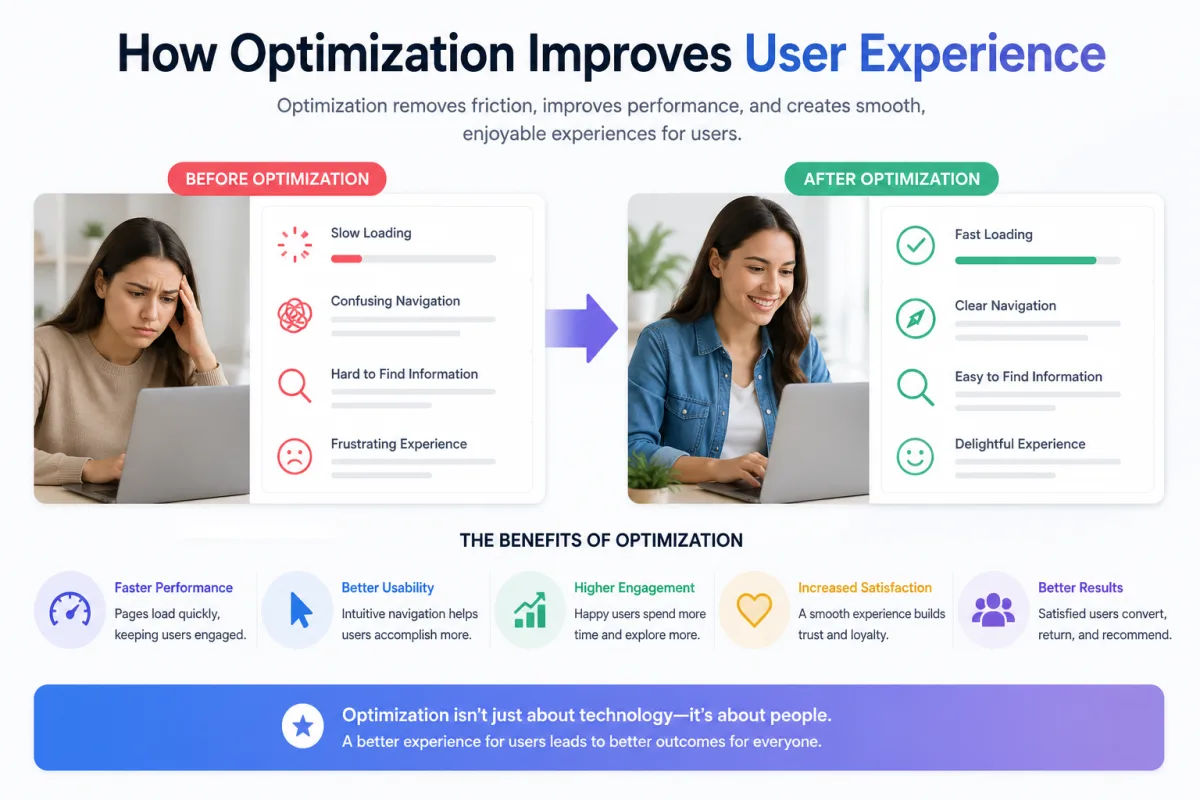
In 2017, Walmart Labs engineers shared a stark finding: for every 1-second improvement in page load time, their mobile conversion rates increased by 2%. This wasn't just a technical achievement; it was a profound insight into the human psyche. We often think of "optimization" as a dry, technical pursuit—shaving milliseconds off load times or streamlining code. But here's the thing: those technical tweaks aren't just making systems faster; they're actively reshaping user perception, building trust, and driving engagement in ways most people never consciously register. It's not merely about performance; it's about the subtle art of psychological engineering, transforming how we interact with the digital world, one imperceptible improvement at a time.
- Optimization is primarily a psychological endeavor, reducing cognitive load and fostering user trust, not just a technical one.
- Even imperceptible speed gains, often measured in milliseconds, profoundly influence user perception of reliability and professionalism.
- Strategic optimization directly translates into significant economic benefits, including higher conversion rates and reduced bounce rates.
- Anticipatory design, a core optimization strategy, predicts user needs to create seemingly effortless and intuitive digital experiences.
Beyond Speed: The Psychological Architecture of Performance
When we talk about optimization, our minds often jump to raw speed: faster websites, quicker app launches, smoother animations. While critical, raw speed is only one dimension. The more profound impact of optimization lies in its ability to manage and reduce cognitive load – the mental effort required to interact with a digital product. Think about it: a website that takes 2 seconds to load might feel slower than one that takes 3 seconds but shows an immediate, engaging loading animation. This is the "perceived performance" paradox, a battleground where optimization truly shines.
Dr. B.J. Fogg, director of the Persuasive Technology Lab at Stanford University, has long argued that human behavior is profoundly influenced by context and ease. If a digital experience is difficult or frustrating, even for a moment, users will disengage. This isn't just anecdotal; it's backed by hard data. Google’s 2021 research, conducted with Deloitte, revealed that a mere 0.1-second improvement in mobile site speed could boost conversion rates by 8%. This isn't because users are consciously clocking load times; it's because the seamlessness of the experience communicates reliability and competence, reducing the user’s mental friction and subtly encouraging them to complete their task. Optimization, in this light, isn't just about making things fast; it's about making them feel effortless, almost invisible, so the user can focus on their goal, not the mechanics of the interface.
The Illusion of Instantaneity
How does optimization create this illusion? It's often through clever design and engineering tricks. Take, for instance, progressive loading, where essential content appears first, followed by less critical elements. Or skeleton screens, which show a basic wireframe of the page content while data loads in the background. These techniques don't necessarily make the page load faster in absolute terms, but they provide immediate visual feedback, tricking our brains into perceiving responsiveness. Netflix has mastered this, pre-fetching content and anticipating user selections to make streams appear to start instantly. This isn't magic; it's meticulously engineered optimization designed to reduce perceived latency and keep users immersed. It's the difference between waiting for a blank screen and seeing progress, however minimal.
Reducing Cognitive Friction
Every decision a user has to make, every unnecessary click, every moment of confusion, adds to cognitive load. Optimization addresses this by streamlining user flows, presenting information clearly, and minimizing distractions. Consider the checkout process on e-commerce sites. Leading retailers like Amazon constantly A/B test every button, every field, every step to remove friction. They've found that even asking for a phone number too early in the process can cause abandonment. Simplifying forms, offering guest checkout options, and integrating payment methods like Apple Pay or Google Pay are all forms of optimization that reduce the cognitive burden, making the path to purchase feel natural and unencumbered. This isn't just about speed; it's about making the entire interaction feel intuitive, almost like a natural extension of thought.
Trust and Credibility: The Unseen Dividend of Smooth Interaction
What happens when a website loads slowly, or an app freezes repeatedly? Frustration, yes, but also a deeper, often subconscious erosion of trust. When a digital product performs poorly, we don't just blame the technology; we often extend that blame to the brand itself. We question its reliability, its professionalism, its very competence. Conversely, a consistently smooth, fast, and responsive experience builds immense credibility, even before a user engages with the content or features. It's a non-verbal promise of quality.
Amazon, a pioneer in e-commerce, famously understood this early on. Back in 2009, they reported that every 100 milliseconds of latency cost them 1% in sales. This wasn't just about impatient customers; it was about the subtle message that lag sends. A slow site feels clunky, outdated, and potentially insecure. A fast site feels modern, secure, and authoritative. This principle applies across industries. For banking apps, speed and reliability are paramount; any delay can trigger anxiety about financial security. For news sites, quick loading times mean users get their information faster, reinforcing the site's role as a timely and authoritative source. Optimization, therefore, becomes a fundamental pillar of brand building, quietly assuring users that they're interacting with a dependable entity.
“Trust is the bedrock of all human interaction, and in the digital realm, it's often built or broken in milliseconds,” notes Dr. B.J. Fogg, Director of the Persuasive Technology Lab at Stanford University, in his 2020 book, Tiny Habits. “When a system responds instantly, predictably, and without error, it communicates competence and care. This creates a powerful, often unconscious, sense of trust that makes users more likely to engage, return, and even forgive minor issues later on.”
The Economic Impact: Micro-Optimizations, Macro Returns
The connection between optimization and user experience isn't just about warm fuzzy feelings; it has a direct, measurable impact on a company's bottom line. Poor performance costs businesses billions annually in lost sales, higher bounce rates, and reduced customer loyalty. Conversely, investing in optimization yields significant returns, often far outweighing the initial expense. It's a strategic investment, not merely a technical one.
Consider the impact on bounce rates. Akamai, a leading content delivery network provider, published data in 2022 showing that a mere 2-second delay in web page load time can increase bounce rates by a staggering 103%. This means that for every 100 visitors, more than half might leave before even seeing the content if the site is slow. That's a direct loss of potential customers, advertising revenue, or audience engagement. On the flip side, companies like Google have shown that reducing page load times by just a few hundred milliseconds can lead to substantial increases in ad views and search query volume. The cumulative effect of these micro-optimizations isn't marginal; it's transformative for profitability.
From Load Times to Ledger Sheets
The journey from a faster load time to improved financial performance involves several steps. First, reduced bounce rates mean more users stay on the site, increasing the chances of conversion. Second, improved engagement leads to longer session durations and more page views, which can translate to higher ad revenue or deeper product exploration. Third, better user experience often leads to higher customer satisfaction, which in turn fosters loyalty and repeat business. A study by McKinsey in 2022 highlighted this, finding that companies excelling in UX maturity achieve 30-40% higher customer satisfaction and 10-20% higher revenue growth. It’s clear: UX optimization isn’t just a cost center; it’s a revenue driver.
The Cost of Inaction
Ignoring optimization, therefore, isn't a neutral decision; it's actively detrimental. Every slow page, every frustrating interaction, represents a missed opportunity and a potential hit to brand reputation. In competitive markets, where alternatives are just a click away, poor performance is a death knell. It's not just about losing current customers, but also about failing to attract new ones. Future growth depends on a seamless digital presence, and companies that neglect this aspect will find themselves increasingly marginalized. It’s a harsh reality, but in the attention economy, speed and fluidity are currency.
Anticipatory Design: Predicting User Needs Before They Click
One of the most sophisticated forms of optimization isn't just about reacting faster, but about predicting. Anticipatory design involves an interface that tries to understand a user's intent and provide relevant information or actions before they explicitly ask for them. This isn't science fiction; it's a carefully orchestrated process of data analysis, machine learning, and thoughtful UX design that dramatically enhances the feeling of effortlessness. Here's where it gets interesting: when done well, users don't even realize they're experiencing "optimization"; they just feel like the system "gets" them.
A prime example is YouTube's adaptive streaming technology. It constantly monitors your internet connection speed and device capabilities, adjusting video quality in real-time to prevent buffering. You rarely notice the video quality fluctuating because the system anticipates potential issues and optimizes the stream before they become problems. This isn't just a technical feat; it’s a profound psychological one that keeps users immersed. Similarly, many modern search engines begin fetching results as you type, reducing the perceived wait time after you hit "enter." This kind of proactive optimization shifts the burden from the user to the system, creating a truly seamless interaction.
Another powerful application of anticipatory design can be found in navigation apps. Google Maps, for instance, not only provides directions but often suggests routes based on real-time traffic, even offering alternative paths mid-journey. It learns your common destinations and provides quick access, reducing the steps required to start navigation. This isn't just about displaying information; it's about making complex decisions on the user's behalf, based on a wealth of data, to optimize their journey. This intricate dance between How Hardware and Software Work Together is key to delivering a truly optimized, human-centric experience.
The Dark Side of Feature Bloat: Why Less is Often More
Optimization isn't always about adding; sometimes, it's about judicious subtraction. The digital world is rife with "feature bloat"—the tendency for products to accumulate an ever-increasing array of functionalities, often leading to complex, confusing, and ultimately slower user experiences. While the intention might be to offer more value, the reality is that an overloaded interface can overwhelm users, increase cognitive load, and ironically, diminish satisfaction. This is where strategic optimization involves ruthless prioritization.
Think back to the initial resistance many users had to Microsoft Office's Ribbon UI when it was introduced. While powerful, its sheer volume of options often felt overwhelming compared to the simpler menu-driven interfaces of previous versions. In contrast, the success of many mobile applications, like Instagram or TikTok, lies in their focused functionality and minimalist design. They do one or two things exceptionally well, without cluttering the interface with extraneous features. This isn't accidental; it's a deliberate optimization choice to prioritize ease of use and immediate engagement over comprehensive, but confusing, functionality. Overly complex features can also contribute to Why Some Features Drain Battery in Background, further degrading the user experience.
Apple's design philosophy, particularly with iOS, often exemplifies this "less is more" approach. Each new version introduces refinements, but rarely a deluge of complex new features that fundamentally alter the user flow. Instead, they focus on optimizing existing interactions, simplifying settings, and ensuring core functionalities are incredibly smooth. This focus on refinement over expansion is a powerful form of optimization, ensuring that the user experience remains intuitive and uncluttered, rather than becoming a labyrinth of options. It's about respecting the user's attention and cognitive limits.
Engineering for Empathy: The Human-Centric Optimization Approach
At its core, true optimization is an act of empathy. It's about understanding user pain points, anticipating their needs, and designing experiences that feel natural, intuitive, and even delightful. This isn't a purely technical task for engineers; it requires a deep collaboration between designers, product managers, and developers, all centered around a human-first philosophy. It's about asking, "How can we make this experience better for *them*?" not just "How can we make this faster?"
Spotify offers a compelling example of empathy-driven optimization. Beyond its powerful recommendation algorithms, the app is constantly optimizing its interface to make music discovery and playback seamless. Features like "Daily Mixes" and personalized playlists are forms of optimization that reduce the cognitive load of choosing what to listen to. The ability to smoothly transition between devices, download music for offline playback, and create collaborative playlists all speak to an understanding of diverse user needs and contexts. They aren't just adding features; they're refining the entire listening journey to be as frictionless and enjoyable as possible, recognizing that music is an deeply personal experience. This approach ensures that the platform is not just functional, but genuinely enhances the user's life.
This human-centric approach is also evident in the rigorous A/B testing and user research conducted by leading tech companies. They don't guess what users want; they test hypotheses with real users, measure behaviors, and iterate. This continuous feedback loop ensures that optimization efforts are always aligned with actual user needs and preferences, rather than internal assumptions. It's a pragmatic application of empathy, turning user insights into actionable improvements that refine the digital experience over time.
| Optimization Tactic | Impact on User Experience | Measured Benefit (Avg.) | Source (Year) |
|---|---|---|---|
| Reduce Page Load Time (1 sec) | Decreased frustration, improved engagement | 8% higher conversion rates (mobile) | Google / Deloitte (2021) |
| Optimize Image & Media Files | Faster visual loading, less data usage | 25% faster load times for media-heavy sites | Portent (2020) |
| Implement Progressive Web Apps (PWAs) | App-like experience, offline capabilities | 50% increase in mobile sessions | Starbucks (2020) |
| Streamline Checkout Process | Reduced cognitive load, clearer path to purchase | 35% reduction in cart abandonment | Baymard Institute (2023) |
| Improve Mobile Responsiveness | Consistent experience across devices | 77% of U.S. adults value fast mobile efficiency | Pew Research Center (2023) |
Strategies for Enhancing User Experience Through Optimization
Achieving a truly optimized user experience requires a multi-faceted strategy that goes beyond simple speed fixes. It demands a holistic view of the user journey and a commitment to continuous improvement. Here are actionable steps that organizations can take to significantly improve how users interact with their digital products:
- Prioritize Core Web Vitals: Focus on Google's key metrics (Largest Contentful Paint, First Input Delay, Cumulative Layout Shift) which directly measure user-centric performance. Improving these doesn't just appease search engines; it directly impacts how fast and stable content appears to users.
- Implement Responsive Design with Mobile-First Principles: Ensure your product adapts seamlessly to all screen sizes, starting with the smallest. Mobile users expect speed and clarity, and a desktop-first approach often leaves them with a clunky experience.
- Optimize Imagery and Media: Compress images, use modern formats (e.g., WebP), and implement lazy loading for off-screen elements. Visuals are often the heaviest part of a page, and intelligent media handling can dramatically reduce load times.
- Streamline User Flows and Reduce Cognitive Load: Analyze user journeys to identify bottlenecks and points of confusion. Simplify forms, minimize clicks, and provide clear calls to action. Every unnecessary step is a potential point of abandonment.
- Leverage Caching and Content Delivery Networks (CDNs): Store frequently accessed data closer to users and distribute content globally. This reduces server response times and drastically speeds up content delivery, especially for geographically dispersed audiences.
- Conduct Regular A/B Testing and User Research: Don't guess what users want; test it. Small changes in button text, layout, or color can have profound effects on engagement and conversion. User feedback is invaluable for iterative optimization.
- Minimize Third-Party Scripts and Bloat: Each external script (ads, analytics, trackers) adds overhead. Audit and reduce unnecessary third-party integrations, as they often contribute significantly to slow load times and security vulnerabilities.
- Embrace Accessibility Standards: Optimization for accessibility (e.g., proper alt text, keyboard navigation, clear contrast) not only broadens your audience but also often results in cleaner, more semantic code that benefits all users.
“User experience isn't just a buzzword; it's the heartbeat of digital success. Companies that invest in optimizing their UX see significantly higher customer retention rates—up to 89% for those with superior experiences, compared to just 33% for those with poor ones.” — Qualtrics XM Institute, 2022
The evidence is unequivocal: optimization is far more than a technical backend process. It's a critical strategic lever that directly influences human psychology, translating into tangible business outcomes. The consistent findings across academic research, industry reports from Google and McKinsey, and real-world case studies from companies like Walmart and Amazon demonstrate that even marginal improvements in performance, perceived or actual, profoundly affect user trust, engagement, and ultimately, a company's financial health. Neglecting optimization isn't merely a missed opportunity; it's a competitive disadvantage that actively erodes brand value and customer loyalty in an increasingly demanding digital landscape.
What This Means For You
So, what does this deep dive into optimization mean for you, whether you're a business owner, a developer, or just a regular user?
- For Businesses: Stop viewing optimization as an IT cost center and start seeing it as a critical investment in customer acquisition and retention. Prioritize UX metrics alongside financial ones. Even small, consistent efforts can yield significant returns in conversion rates, customer satisfaction, and brand perception. Your digital speed directly reflects your operational credibility.
- For Developers and Designers: Your work isn't just about functionality; it's about crafting emotional experiences. Every millisecond, every pixel, every interaction carries psychological weight. Embrace a human-centric approach to performance, focusing on perceived speed and cognitive load reduction, not just raw technical benchmarks.
- For Users: Demand better. Understand that a fast, fluid digital experience isn't a luxury; it's a sign of a company that respects your time and attention. Your choices influence companies to invest more in optimization, pushing the entire digital ecosystem towards greater usability and efficiency.
Frequently Asked Questions
What's the difference between actual speed and perceived speed in user experience?
Actual speed refers to the measurable time it takes for a system to complete a task, like a page loading in 2.5 seconds. Perceived speed, however, is how fast a user *feels* the system is, which can be influenced by visual cues like loading animations or progressive content rendering, making a 3-second load feel faster than a 2-second blank screen.
How much can a slow website really impact business?
Significantly. For instance, Akamai reported in 2022 that a 2-second delay in page load time can increase bounce rates by 103%. This translates directly into lost potential customers, reduced engagement, and a negative impact on search engine rankings, costing businesses billions annually.
Is optimization only about making things faster, or are there other benefits?
While speed is a major component, optimization extends far beyond. It also encompasses reducing cognitive load, improving accessibility, streamlining user flows, and enhancing overall system reliability. These factors collectively build user trust, increase engagement, and foster brand loyalty, as highlighted by Stanford's Dr. B.J. Fogg.
What are some immediate, low-effort ways to optimize a website for better user experience?
You can start by compressing images, enabling browser caching, minimizing JavaScript and CSS files, and ensuring your site is mobile-responsive. These actions often yield noticeable improvements in page load times and overall user experience with relatively minimal development effort.