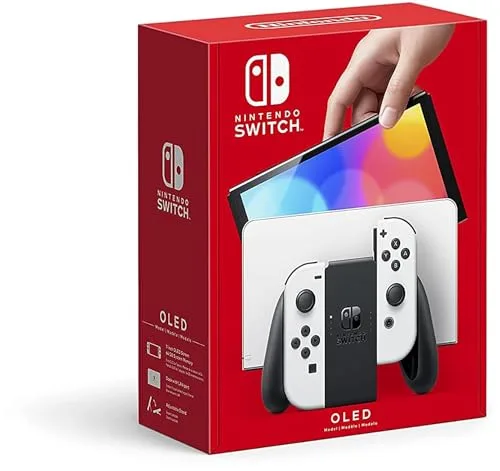
My Honest Take on the Nintendo Switch OLED Model
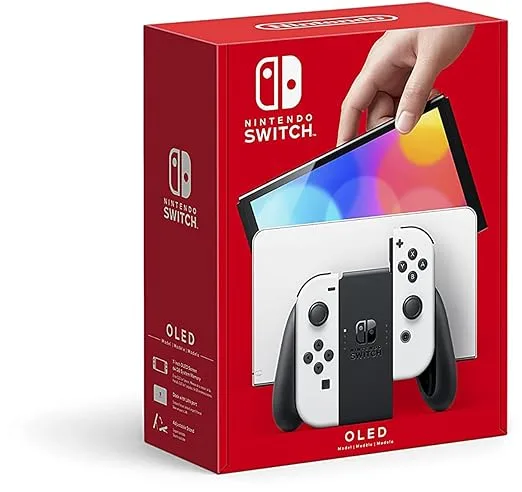
As a long-time Nintendo Switch owner – I had the original model since launch – I was incredibly curious about the OLED version. Was it just a minor facelift, or a truly worthwhile upgrade? After spending a good few months with the Nintendo Switch OLED Model with White Joy-Cons, I can confidently say it’s a mixed bag, but mostly in a good way.
Right out of the box, the first thing that hits you is that screen. Wow. Seriously, it's stunning. I fired up Zelda: Breath of the Wild, a game I’ve played countless hours of, and it immediately felt like a new experience. The colors are so much more vibrant, the blacks are truly black, and the contrast just pops. Playing in handheld mode now feels like a premium experience, something I didn't fully appreciate was missing until I saw it on the OLED. The larger 7-inch screen (compared to the original's 6.2-inch) doesn't sound like a huge jump on paper, but in practice, it makes a noticeable difference. Everything just feels a little more immersive, a little less cramped.
What I Loved About It
- The OLED Screen: I can't emphasize this enough. If you play in handheld mode a lot, this alone might be worth the price of admission. Games like Metroid Dread, Splatoon 3, and Mario Odyssey look absolutely incredible. The visual fidelity is just on another level compared to the original LCD. It's brighter, too, which helps when I'm trying to sneak in some gaming on a sunny patio.
- Improved Kickstand: This was a pleasant surprise. The original Switch's kickstand was notoriously flimsy and narrow. The OLED model has a wide, sturdy kickstand that spans almost the entire width of the console. It's also fully adjustable, so I can set it at pretty much any angle I want. This makes tabletop mode actually usable for two-player games or just watching a YouTube video while eating. It’s a small detail, but it makes a big difference in usability.
- Enhanced Speakers: I noticed the audio quality is a definite step up in handheld mode. The sound is clearer and a bit louder, which is great when I don't want to bother with headphones. It adds to that overall premium feel.
- Built-in Ethernet Port: This is a godsend for anyone who plays online competitive games like Smash Bros. or Splatoon. Having a stable wired connection directly from the dock means no more worrying about Wi-Fi drops. I've definitely felt the difference in latency. If you want to pick one up here, you'll appreciate this little addition if online gaming is your jam.
- Increased Storage: 64GB of internal storage isn't massive, but it's double the original Switch's 32GB. It means I can download a few more games before needing to break out the microSD card, which is always nice.
What Annoyed Me (or What's Missing)
- No Performance Upgrade: This is the biggest sticking point for me. The OLED Switch runs on the exact same internal hardware as the original. This means no improved frame rates, no higher resolutions (still 720p handheld, 1080p docked), and no faster loading times. While the screen makes games look better, they don't necessarily play better. I was secretly hoping for a slight bump, but alas, it's purely a display and quality-of-life upgrade.
- Joy-Con Drift: While not exclusive to the OLED model, it's still a Nintendo Switch issue. My original Joy-Cons eventually developed drift, and while my OLED ones are fine for now, it's a nagging concern in the back of my mind. It would have been great if Nintendo had addressed this hardware flaw with the new model.
- The Price: It's more expensive than the standard Switch, and for most people, that extra cost is almost entirely for the screen. If you primarily play docked, that extra money doesn't get you much beyond the Ethernet port.
- Still No 4K Output: I know it's a portable console, but with the PS5 and Xbox Series X pushing 4K, it would have been neat to see the dock offer 4K upscaling or output for games that could handle it. But again, same internals, so no real surprise here.
My Experience After a Few Weeks
After a few weeks, my habits definitely changed. I found myself playing more in handheld mode, simply because the screen is so much more enjoyable. Games that previously looked a bit washed out on the original screen now pop with color and clarity. I also used tabletop mode far more often, thanks to that rock-solid kickstand. The white Joy-Cons look super sleek, though I can already tell I'll need to keep them clean to prevent them from looking grubby over time.
When I played docked on my TV, the experience was virtually identical to my original Switch. The Ethernet port was the only real differentiator there. So, if your primary use case is playing on a big screen, the OLED model might not be the most impactful upgrade for you.
Who Should Buy This
- New Switch Buyers: If you're buying your first Nintendo Switch, get the OLED. It's simply the best version of the console available right now, offering the most premium experience.
- Handheld Mode Enthusiasts: This is where the OLED truly shines. If you spend most of your gaming time on the go or lounging on the couch with the console in your hands, the screen upgrade is genuinely transformative.
- Original Switch Owners Looking for an Upgrade (and mostly play handheld): If your original Switch is getting old, or you just want a noticeable visual refresh for your portable gaming, then the OLED is a fantastic choice.
-
Online Gamers: The built-in Ethernet port in the dock is a huge win for competitive online players seeking the most stable connection. If you want to check today's price, you'll see it's usually just a bit more than the standard model, but offers these nice perks.
Who Should Skip It
- Original Switch Owners Who Primarily Play Docked: If your Switch is almost always hooked up to your TV, the OLED model offers very little benefit beyond the Ethernet port. Save your money and wait for a true next-gen console.
- Nintendo Switch Lite Owners: If you're happy with your Lite's portability and don't care about playing on a TV, the OLED might not be enough of a leap to justify the cost.
- Budget-Conscious Buyers: The standard Switch is still a great console and often goes on sale. If every dollar counts, you can get a fantastic gaming experience without the OLED's premium screen.
- Those Waiting for a Performance Boost: If you're holding out for a "Switch 2" or a console with better graphics and processing power, this isn't it. The OLED model is an iteration, not a revolution in performance.
Final Thoughts
The Nintendo Switch OLED is undoubtedly the best version of the Nintendo Switch for handheld play. The screen is a marvel, and the improved kickstand and speakers genuinely enhance the portable experience. The Ethernet port is also a welcome addition. However, it’s crucial to understand that it offers no performance upgrade. If you're a new buyer, or an existing Switch owner who spends most of their time gaming on the go, then I wholeheartedly recommend it. You can grab it on Amazon, especially if you prioritize that beautiful display. But if your Switch mostly lives in its dock, you might be better off waiting for whatever Nintendo has next.