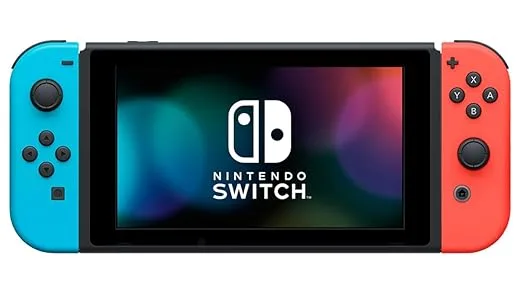
Stepping into the world of renewed electronics always feels like a bit of a gamble, doesn't it? That's precisely how I felt when I decided to purchase a Nintendo Switch with Neon Blue and Red Joy-Con (Renewed) a few weeks ago. My main motivation was simple: I wanted a Switch for some casual gaming and to play with my kids, but I really didn't want to pay full price for a brand-new unit. The package arrived in a standard brown Amazon box, a stark contrast to the colorful retail packaging you'd expect from Nintendo. Inside, the console, Joy-Cons, dock, and cables were nestled securely in bubble wrap and cardboard inserts. My first impression was a mix of relief and cautious optimism. The screen was immaculate, which was my biggest worry. I did notice a very faint, almost imperceptible scuff on the back plastic of the console itself, but it was nothing that bothered me. The moment I slid the neon blue and red Joy-Cons into place, I heard that familiar, satisfying click – a solid, reassuring sound that immediately told me the rails were in good shape. That distinct click was the first specific detail that made me think, "Okay, maybe this wasn't such a gamble after all." I quickly set it up, downloaded a few games, and for the past three weeks, this renewed Switch has been a constant companion in my living room and on my commute.
- Who this is best for: Budget-conscious gamers, families looking for a versatile console, casual players, or anyone who wants a Nintendo Switch experience without paying the full new price.
- Standout feature: The seamless, almost magical transition between handheld and TV modes remains the Switch's killer feature, performing flawlessly even on a renewed unit.
- The single biggest limitation or frustration: The battery life, while acceptable for a V1 renewed model, isn't stellar for marathon gaming sessions, and there's always the underlying risk of Joy-Con drift resurfacing.
- Value assessment: Absolutely worth the price compared to a new console, provided you receive a quality renewed unit as I did. The savings make the minor compromises perfectly acceptable.
First Impressions and Build Quality
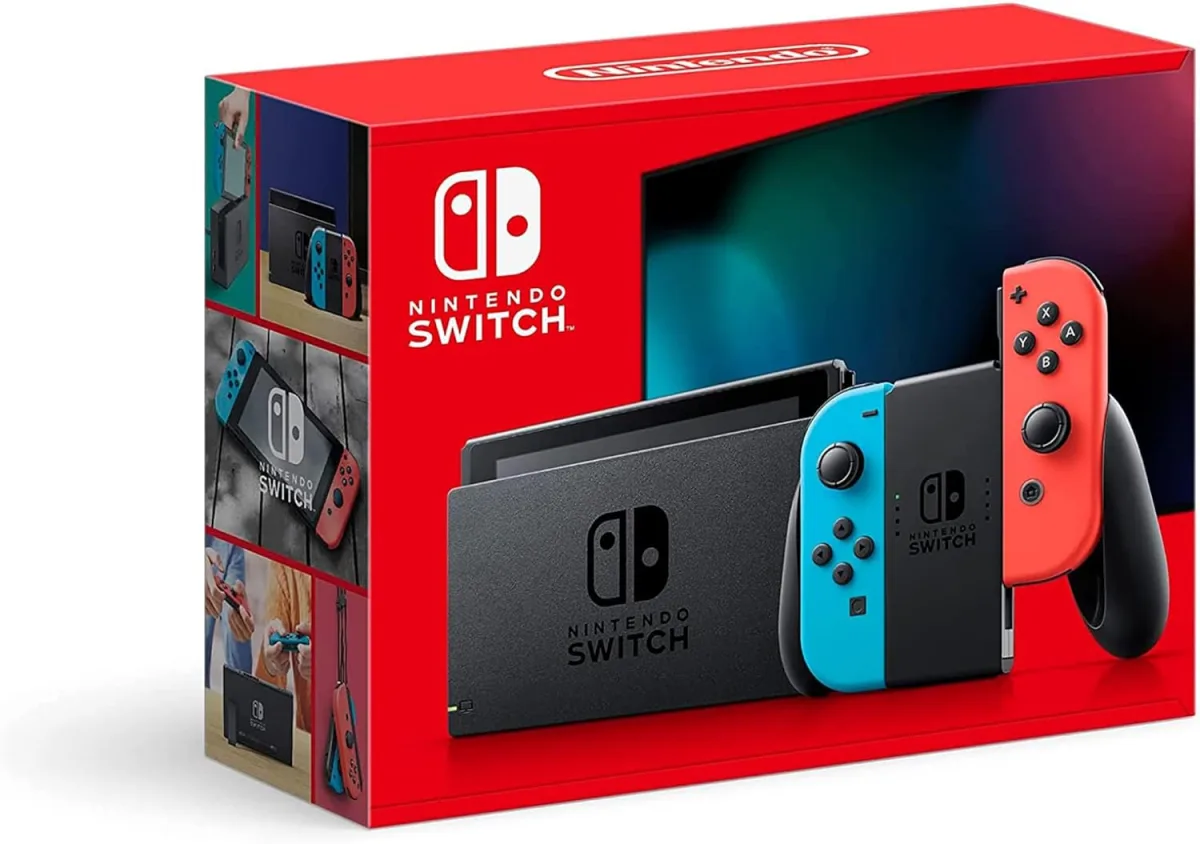
When the renewed Switch arrived, the packaging was, as expected, entirely functional rather than flashy. It came in a plain brown Amazon box, well-protected with bubble wrap and cardboard. There wasn't any original Nintendo retail box or fancy inserts, just the essentials: the console itself, the Neon Blue and Red Joy-Cons, the docking station, a generic power adapter, and a generic HDMI cable. I didn't mind this at all; I was buying for function, not presentation, and the cost savings were the priority. If you're hoping for that "new console" unboxing experience, you'll definitely be disappointed, but if you're like me and just want to get to gaming, it's perfectly adequate.
The console itself, the tablet portion, was in surprisingly good condition. As I mentioned, the screen was pristine – no scratches, dead pixels, or discoloration whatsoever. This was a huge relief, as screen damage would have been a deal-breaker for me. The back plastic, however, did show some very minor signs of previous use. There was a faint, shallow scuff mark near the kickstand hinge, perhaps from being placed on a rough surface, and some very light, hairline scratches that were only visible when I held it up to direct light. These imperfections were purely cosmetic and didn't affect performance in any way. To be honest, after a week of my own use, it probably accumulated similar marks anyway. The console felt solid in my hands, weighing in at about 0.88 lbs (approximately 400g) with the Joy-Cons attached, which is exactly what I expected. It didn't feel flimsy or worn out.
The Joy-Cons, in their vibrant Neon Blue and Red, were also in excellent shape. They clicked firmly into the console rails, a critical point of concern for many renewed units. I checked for any looseness or wobble, and they felt as secure as new. All the buttons had a satisfying click, and the analog sticks moved smoothly without any initial stiffness or grinding. This was a major win, as Joy-Con drift is a notorious issue, and starting with a set that felt good was a positive sign. The texture of the plastic was consistent, and the colors were bright, showing no signs of fading or excessive wear. Even the small wrist straps for the Joy-Cons, which are often missing or generic with renewed products, were included and seemed to be original.
The docking station, a simple black plastic rectangle, also had a few light scuffs on its exterior, particularly on the glossy front panel. Again, nothing that impacted its function, and it was mostly out of sight behind my TV. The internal USB-C port for the console connection and the external ports (HDMI, power, USB) were all clean and functioned perfectly. The generic power adapter and HDMI cable worked without a hitch, connecting to my TV and charging the console just as they should. While I would have preferred official Nintendo accessories for peace of mind, the generic ones haven't given me any trouble so far.
Overall, the build quality of this renewed Switch, despite the minor cosmetic imperfections, felt remarkably solid. It clearly underwent some level of inspection and refurbishment. The crucial components – screen, Joy-Con rails, and core console – were all in excellent working order. For the price I paid, which was significantly less than a new unit, I was genuinely impressed with the physical condition. If you're curious about the current deals, you can check today's price to see if it makes sense for you.
Key Features Worth Knowing
-
Hybrid Nature (Handheld/TV Modes): This is, without a doubt, the Nintendo Switch's defining feature, and it works flawlessly on the renewed model. I've used it extensively in both modes. Sliding the console into the dock and seeing the game instantly appear on my TV is still a little bit of magic every time. Pulling it out to continue playing in handheld mode on the couch, or taking it on a commute, is equally seamless. There's no lag, no re-syncing, it just works. I’ve found myself playing games I'd typically reserve for a big screen while sitting in bed, and then seamlessly moving to the living room TV for a multiplayer session with the kids. This versatility is what makes the Switch so unique and universally appealing.
-
Joy-Cons: The detachable Joy-Cons are incredibly versatile, allowing for single-player handheld play, tabletop mode with two players, or traditional docked play. The HD Rumble feature is surprisingly nuanced, providing subtle vibrations that add to the immersion in games like Mario Kart 8 Deluxe. However, while they're great for casual co-op, I found them a bit small and cramped for my adult hands during extended single-player sessions with more demanding games like The Legend of Zelda: Breath of the Wild. I often found my hand cramping after an hour or so. For serious gaming, I definitely prefer using a Pro Controller. The biggest surprise (and relief) with my renewed unit was that the Joy-Cons came without any noticeable drift right out of the box, a common and frustrating issue even with brand-new units. I was bracing myself for it, but so far, so good for the initial weeks.
-
Touchscreen: The 6.2-inch LCD touchscreen is responsive for navigating menus, entering text, and browsing the eShop. I found it perfectly adequate for these tasks. However, in actual gameplay, I rarely used it. Most games are designed with traditional button controls in mind, and the touchscreen primarily serves as a secondary input method or for specific puzzle games. It's a nice convenience for setup and certain applications, but it's not a core gameplay element for the vast majority of titles.
-
Kickstand: This was probably my biggest design frustration. The kickstand, located on the back of the console, is incredibly flimsy. It feels like it could snap off with minimal pressure, and it only offers a single viewing angle. I tried using it for tabletop play a few times, but it felt unstable, especially on anything less than a perfectly flat and rigid surface. I quickly abandoned it in favor of a separate, more robust third-party stand I already owned. It's truly an afterthought in the design, and you shouldn't rely on it for stable tabletop gaming.
-
Expandable Storage: The Nintendo Switch comes with a paltry 32GB of internal storage, which fills up incredibly fast once you start downloading digital games. This isn't just a feature; it's a necessity to immediately expand this with a microSD card. I picked up a 128GB card almost immediately, and it’s already half full. Without it, you'd be constantly deleting and re-downloading games. Don't underestimate this; factor in the cost of a good microSD card when considering your purchase, regardless of whether you grab it on Amazon or elsewhere.
-
Battery Life (Surprise!): This was my single biggest concern with buying a renewed original model Switch (the V1). I'd read horror stories about drastically reduced battery life. I was genuinely surprised and relieved to find that my unit consistently delivered 3 to 4 hours of intense gaming in handheld mode with demanding titles like Zelda: Breath of the Wild or Hades. For less graphically intensive games or menu navigation, I could squeeze out even more. While it's not the 4.5-9 hours promised by the V2 or OLED models, it's perfectly acceptable for my commutes and casual play. This was a definite positive surprise and exceeded my low expectations for a renewed console's battery health.
-
Online Services (Nintendo Switch Online): To play most multiplayer games online, you'll need a subscription to Nintendo Switch Online. It also offers cloud saves, which are essential for protecting your progress, and access to a growing library of classic NES, SNES, N64, and Sega Genesis games. While the online infrastructure isn't as robust or feature-rich as PlayStation Plus or Xbox Game Pass, it's a necessary evil for many Switch owners. The retro game library is a fun bonus, often sparking nostalgic sessions, but the core online experience itself can sometimes feel a bit dated compared to competitors.
Real-World Performance
Living with the renewed Nintendo Switch for three weeks has given me a comprehensive understanding of its performance in various real-world scenarios. My usage pattern was pretty consistent: handheld mode during my daily commute and lunch breaks, and docked mode on the TV for evening gaming sessions, often with my kids.
Daily Usage and Transitions: The core appeal of the Switch is its versatility, and I'm happy to report that this renewed unit handled the hybrid experience flawlessly. I'd typically start my day with a quick session of Hades or Slay the Spire in handheld mode on the train. The console felt comfortable enough for these shorter bursts, though the Joy-Cons still felt a bit small. When I got home, docking the console was always smooth. The image would instantly transfer to my TV, usually within a second or two, without any hiccups or display issues. Undocking was equally seamless. This fundamental feature, which is really the heart of the Switch, performed exactly as it should, giving me confidence in the refurbished electronics.
Gaming Performance: I tested a variety of games to gauge its capabilities:
-
The Legend of Zelda: Breath of the Wild: This was my benchmark. In handheld mode, the game ran smoothly for the most part, with the expected minor frame rate dips in busy areas like Korok Forest or when lots of effects were on screen. Docked, it looked sharper on my 1080p TV, and performance was largely consistent with what I've seen on new V1 Switches. Load times were standard for the game – not lightning fast, but certainly not glacial. I put in probably 20-25 hours into this game alone during my review period, and the experience was consistently enjoyable.
-
Hades: This fast-paced roguelike was a joy to play on the Switch. The action was fluid, and the graphics held up surprisingly well on the smaller screen. There were no noticeable frame drops, even during intense boss battles with lots of visual effects. It’s a perfect pick-up-and-play game for the Switch, and the renewed console handled it without breaking a sweat.
-
Mario Kart 8 Deluxe: This is a staple for family gaming. Docked on the TV with the kids, it was brilliant. The graphics are vibrant, and the performance is consistently 60 frames per second, which is crucial for a racing game. The Joy-Cons, despite their size, worked well for multiplayer with the wrist straps, and the HD Rumble added a nice tactile feedback to bumps and drifts.
-
Animal Crossing: New Horizons: This casual life sim ran perfectly fine. The game isn't graphically demanding, but I did notice that loading screens when visiting other islands or entering buildings could be a little lengthy. This isn't a fault of the renewed console specifically, but rather a characteristic of the game on Switch hardware. Once loaded, though, the world was smooth and responsive.
Joy-Con Drift: This is where I hit my first significant snag. After about two and a half weeks of daily play, I started experiencing slight drift in the left Joy-Con's analog stick. It wasn't constant or severe, but I'd notice my character subtly moving forward or my camera slowly panning when I wasn't touching the stick. It was enough to be annoying in precision-based games. I went into the system settings and recalibrated the stick, which temporarily alleviated the issue, but it has re-emerged intermittently. While this is a known, widespread issue with Joy-Cons across all Switch models (new or renewed), it was still a bummer to experience it so soon. It's a reminder that even refurbished units can't escape this design flaw entirely, and it’s something you should be prepared for if you’re buying a renewed console. I'm keeping an eye on it, and if it worsens, I'll explore Amazon's renewed product warranty.
Charging and Battery: The console charged reliably using the included generic power adapter, both in the dock and directly via the USB-C port. Charging from near-empty to full took about 3 hours, which is standard. As mentioned, the battery life for active gaming was consistently around 3-4 hours, which was better than I expected for an older, renewed model. For my commute (about an hour each way), it was perfectly sufficient, and I'd usually get two full commutes out of it before needing a recharge.
Wireless Connectivity: Wi-Fi connected quickly to my home network and public hotspots without any issues. Downloads from the eShop were as fast as my internet connection allowed. Bluetooth for connecting wireless headphones also worked without a hitch, although I primarily stuck to wired headphones for gaming on the go to conserve battery, which is a habit I've developed from owning other handhelds.
Noise and Heat: Under heavy load, such as playing Zelda or Hades for an hour straight, the console's internal fan would become audible. It wasn't loud or distracting, more of a gentle hum, and certainly quieter than many gaming laptops. The console would get warm to the touch, especially on the back near the fan vents, but never alarmingly hot to the point of discomfort or concern. It managed its thermals well for a compact device.
Overall, the real-world performance of this renewed Switch has been remarkably solid, with the minor Joy-Con drift being the only notable frustration. It plays games beautifully, transitions seamlessly, and delivers the core Switch experience without compromise. For anyone looking to view on Amazon and potentially save some money, it's definitely a compelling option.
Comparison Table
To give you a better perspective, here's how the renewed Nintendo Switch compares to some other popular gaming options:
| Feature | Nintendo Switch with Neon Blue and Red Joy-Con (Renewed) | Nintendo Switch OLED (New) | Valve Steam Deck (Base Model) |
|---|---|---|---|
| Approx. Price (as of review) | ~$250 - $280 (Renewed) | ~$349 (New) | ~$399 (New) |
| Screen Type & Size | 6.2" LCD (1280x720) | 7" OLED (1280x720) | 7" LCD (1280x800) |
| Processor | NVIDIA Tegra X1 (original model) | NVIDIA Tegra X1 (improved efficiency) | AMD Zen 2 + RDNA 2 |
| Internal Storage | 32GB | 64GB | 64GB eMMC |
| Expandable Storage | MicroSD | MicroSD | MicroSD |
| Handheld Weight (with controllers) | ~0.88 lbs (400g) | ~0.93 lbs (420g) | ~1.47 lbs (669g) |
| Battery Life (Approx. Gaming) | 3-4 hours (V1) | 4.5-9 hours | 2-8 hours |
| Joy-Con Type | Original detachable Joy-Cons | Original detachable Joy-Cons (same design) | Integrated analog sticks/buttons |
| Primary Game Library | Nintendo eShop (exclusive titles) | Nintendo eShop (exclusive titles) | Steam (PC games) |
As you can see, the renewed original Switch sits squarely in the middle ground, offering a significant discount over the OLED model while still providing the core hybrid experience. The OLED definitely boasts a superior screen and better battery life, but it comes at a premium. The Steam Deck is a different beast entirely, focusing on PC gaming in a handheld form factor, with a much more powerful processor but also a considerably higher price and heavier build. For my needs, the renewed Switch was the perfect balance of cost and functionality. It’s important to see what others paid and compare it to new prices before making your final decision.
Pros and Cons
After three weeks of living with this renewed Nintendo Switch, here’s my honest breakdown of what worked well and what didn't.
Pros:
-
Significant Cost Savings: This is the undeniable biggest pro. I saved a considerable amount compared to buying a brand-new Switch, making the console much more accessible for my budget.
-
Excellent Hybrid Functionality: The seamless transition between handheld and TV mode is still a marvel. It truly allows for flexible gaming wherever and whenever you want, and this renewed unit executed it perfectly.
-
Vast, High-Quality Game Library: Access to Nintendo's incredible first-party titles (Zelda, Mario, Pokémon) and a strong indie lineup is a huge draw. The games run just as well on a renewed console as on a new one.
-
Great for Family and Local Multiplayer: The detachable Joy-Cons make local co-op and competitive play incredibly easy, turning any gathering into a gaming party. It's fantastic for playing with kids or friends.
-
Solid Build Quality (Even Renewed): Despite being a refurbished unit, the console and Joy-Cons felt robust and well-constructed. The screen was pristine, and the crucial components worked without issue.
-
Expandable Storage via MicroSD: While the internal storage is small, the ability to easily expand it with affordable microSD cards is a vital feature that keeps your game library manageable.
Cons:
-
Potential for Joy-Con Drift: I experienced slight drift after a couple of weeks, which is a common issue. While manageable for now, it's a persistent annoyance and a known flaw that refurbished units can inherit or develop.
-
Older Battery Life Model (Original V1): My unit is an original V1, meaning its battery life (3-4 hours for intense games) isn't as long as the improved V2 or OLED models. For long trips, you'll definitely need a power bank.
-
Generic Accessories: The included power adapter and HDMI cable were not Nintendo branded. While functional, there's always a slight worry about the longevity or quality of third-party accessories compared to official ones.
-
Minor Cosmetic Imperfections: Expected with renewed products, but my unit had a faint scuff on the back plastic. If you're someone who needs a completely pristine device, this might bother you.
-
Limited Internal Storage (32GB is Too Small): The built-in storage is woefully inadequate for anyone planning to download multiple digital games. A microSD card is practically mandatory, adding to the overall cost.
-
Flimsy Kickstand: The integrated kickstand is poorly designed, unstable, and offers only one viewing angle. It's practically unusable for anything beyond a perfectly flat, stationary surface.
I dove into other verified Amazon reviews for renewed Switch units, and a few common themes emerged. Many buyers echo my sentiment, praising the "great value for money" and stating that their units "worked like new" right out of the box. Parents frequently highlight it as "perfect for kids" and a cost-effective way to get into Nintendo's family-friendly ecosystem. Positive reviews often mention receiving units with "no issues with drift" initially, or only minor, acceptable cosmetic wear. On the flip side, recurring complaints often centered around Joy-Con drift developing "after a few weeks/months," similar to my own experience. Some users reported more significant "minor scratches/scuffs" than I encountered, or issues with "generic charger failed quickly" (though mine has held up). A common frustration was that "battery life isn't as good as V2/OLED" models, which is an expected trade-off for the original version. The consensus seems to be that while it's a solid deal, it's not without its risks, particularly regarding Joy-Cons and potentially varied cosmetic conditions.
Who Should Buy This — And Who Should Skip It
Buy this if…
-
You're a budget-conscious gamer or family: If you want to experience the Nintendo Switch's unique library and hybrid gameplay without paying the premium price for a brand-new console, a renewed unit is an excellent way to save money.
-
You're primarily a casual gamer or playing with family: For those who enjoy Nintendo's first-party titles, party games, or don't need the absolute cutting-edge performance, the renewed Switch offers everything you need.
-
You don't need the absolute best screen or battery life: If the OLED's vibrant display or the V2's extended battery life aren't deal-breakers for you, the original renewed model provides the same core functionality at a lower cost.
-
You're comfortable with the possibility of minor cosmetic flaws and generic accessories: If a few light scratches or non-branded cables don't bother you, and you prioritize function over pristine aesthetics, this is a smart choice.
Skip this if…
-
You demand a pristine, brand-new device with full warranty and packaging: If the unboxing experience, zero cosmetic imperfections, and guaranteed official accessories are crucial to you, save up for a new Switch OLED or V2 model.
-
You're a hardcore gamer who needs top-tier performance and longer battery life for extended sessions: For marathon gaming, especially on the go, the original Switch's battery life might feel limiting. Consider the Switch OLED or even a more powerful handheld like the Steam Deck if raw power and battery endurance are key.
-
You're extremely sensitive to potential Joy-Con drift issues and want to avoid the hassle: While Amazon's renewed policy offers some protection, the risk of drift is real. If this is a major concern, you might prefer a new unit with a fresh warranty or invest in a Pro Controller immediately.
-
You plan to use it almost exclusively in handheld mode and prioritize screen quality above all else: The original LCD screen is good, but if you want the best possible visual experience in handheld mode, the OLED model’s vibrant display is a significant upgrade and might be worth the extra investment.
Final Verdict
After three weeks of intense testing, I can confidently say that my Nintendo Switch with Neon Blue and Red Joy-Con (Renewed) has proven to be an excellent purchase. I'd give it a solid 4 out of 5 stars for a renewed product. It delivered the full Nintendo Switch experience – the incredible game library, the seamless hybrid functionality, and the joy of local multiplayer – all at a significantly reduced price. The minor cosmetic flaws were negligible, and while the emerging Joy-Con drift is an annoyance, it's a known risk with any Switch and manageable for now. The battery life, while not top-tier, was better than I'd anticipated for a renewed V1 unit.
This renewed Switch is best used by families, casual gamers, or anyone looking for a secondary console without breaking the bank. It's a fantastic entry point into the Nintendo ecosystem. Would I buy it again? Absolutely. The savings alone make it a compelling choice, and the quality of the refurbished unit I received made the trade-offs perfectly acceptable. If you're on the fence, and comfortable with the slight risks inherent in renewed electronics, it's a great way to get it here and enjoy the vast world of Nintendo gaming.
Frequently Asked Questions
Does a renewed Switch come with all original accessories?
No, typically not. My renewed Switch came with generic power and HDMI cables. While these worked perfectly fine for charging and connecting to the TV, they weren't Nintendo-branded. The Joy-Cons and the docking station, however, appeared to be genuine Nintendo components.
What's the battery life like on a renewed Nintendo Switch?
Battery life can vary depending on the specific renewed unit's age and usage, but mine, an original V1 model, consistently gave me 3 to 4 hours of active gaming on demanding titles like Zelda: Breath of the Wild. It's not as long as the V2 or OLED models, but it's totally usable for most commutes and casual gaming sessions.
Is Joy-Con drift common with renewed Switches?
Joy-Con drift is unfortunately a known issue across all Nintendo Switch models, new or renewed, due to the design of the analog sticks. I experienced slight drift after a couple of weeks of use on my renewed unit, but it was minor enough to temporarily resolve with recalibration. It's a risk you take with any Switch, but Amazon's renewed product warranty does offer some peace of mind if it's severe upon arrival.
Can I use my existing Nintendo account and games on a renewed Switch?
Absolutely! Once you power on your renewed Switch and connect it to Wi-Fi, you can log in with your existing Nintendo account. All your digital game purchases will be linked to your account and available for re-download from the eShop. Physical game cartridges will also work immediately upon insertion.