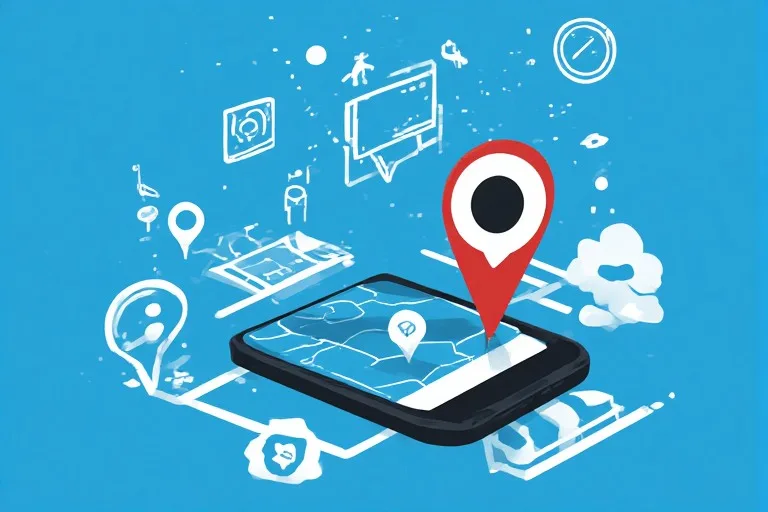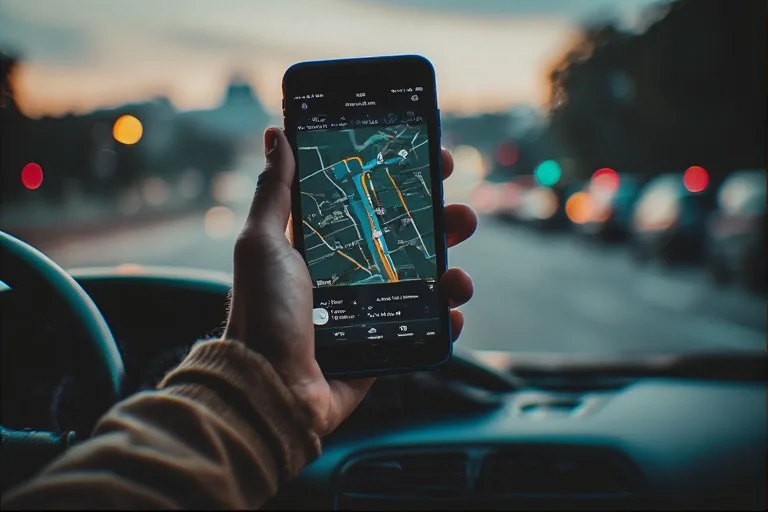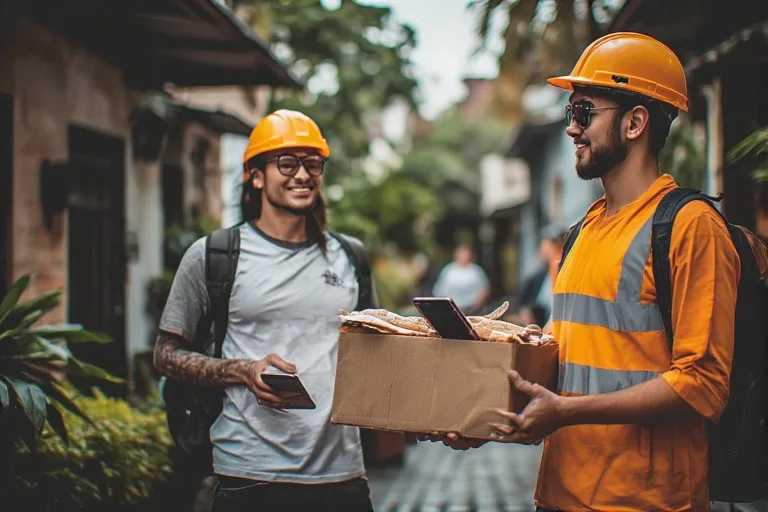
Imagine Sarah, impatiently tapping her phone screen, watching a tiny car icon inch its way across a digital map. Her pizza, ordered 45 minutes ago, is now just two blocks away. This isn't magic; it's a meticulously engineered system that allows delivery apps to track your order in real time, a technological marvel we now take for granted. The global online food delivery market, valued at over $189 billion in 2023, relies almost entirely on this hyper-accurate visibility, according to Statista. But how exactly do these delivery apps track your order in real time, transforming a complex logistical ballet into a simple dot on your screen? It's a fascinating blend of hardware, software, and predictive analytics, working in concert to bring you your groceries, takeout, or packages.
- GPS, cellular data, and Wi-Fi triangulation combine for pinpoint location tracking.
- Backend servers process vast amounts of data to predict delivery times and optimize routes.
- Customer-facing maps abstract complex data into user-friendly real-time updates.
- Privacy considerations are paramount in how location data is collected and used.
The Core Technologies: GPS, Cellular, and Wi-Fi Triangulation
At the heart of real-time order tracking lies a sophisticated interplay of positioning technologies. When a delivery driver accepts your order, their smartphone becomes a mobile tracking beacon. The primary tool here is Global Positioning System (GPS), a satellite-based navigation system that provides precise location and time information anywhere on Earth. It's the same technology that guides your car navigation system or helps you find a restaurant.
However, GPS isn't always perfect. It can be spotty indoors, in dense urban canyons, or when signals are obstructed. That's where cellular data and Wi-Fi triangulation step in. These complementary technologies bolster GPS accuracy, particularly in challenging environments. The app on the driver's phone uses a combination of these methods, constantly sending its location data back to the app's servers.
GPS: The Global Standard for Pinpoint Accuracy
Every delivery driver's smartphone contains a GPS receiver. This tiny chip listens for signals from a constellation of satellites orbiting Earth. By calculating the time it takes for these signals to reach the device from at least four different satellites, the phone can triangulate its exact position on the globe. This data, including latitude, longitude, and altitude, is incredibly precise, often down to a few meters. For a deeper dive into how this fundamental technology works, you might find How GPS Works Even Without Internet Access particularly illuminating.
Augmenting GPS: Cellular and Wi-Fi's Crucial Role
When GPS signals are weak, the app seamlessly switches to or combines with other positioning methods. Cellular triangulation uses the signal strength from nearby cell towers to estimate the phone's location. The closer the phone is to a tower, the stronger the signal, allowing for a rougher, but still useful, positional fix. Wi-Fi positioning, on the other hand, leverages the unique MAC addresses of nearby Wi-Fi networks. By comparing these to a vast database of known Wi-Fi access point locations, the app can often achieve surprising accuracy, especially in urban areas where Wi-Fi networks are abundant. This multi-layered approach ensures continuous, reliable tracking, minimizing "dead zones" where your order might disappear from the map.
From Driver's Phone to Your Screen: The Data Flow Pipeline
The journey of your order's location data from the driver's device to your screen is a high-speed digital relay race. It begins with the driver's app, which continuously collects location coordinates. This data is then securely transmitted over the internet to the delivery app's backend servers. These powerful servers are the central nervous system of the entire operation, processing millions of data points every second from countless active drivers and customer orders.
Once received, the raw GPS, cellular, and Wi-Fi data undergoes a crucial transformation. It's cleaned, filtered, and then translated into meaningful geographic information. Algorithms analyze this stream of location updates, plotting the driver's path, calculating their speed, and estimating their arrival time. This processed data is then made available to your customer app. When you refresh your tracking screen, your app sends a request to these same backend servers, which then deliver the most recent, refined location data back to your device. This constant communication loop ensures the map on your phone reflects the driver's actual position with minimal delay.
Dr. Emily Chen, a Senior Data Scientist at GeoSense Logistics, highlights the scale of this operation: "We're not just tracking dots; we're processing terabytes of geospatial data daily. Our internal studies show that a 10-second improvement in location refresh rates can reduce customer support inquiries by 15%, directly impacting operational efficiency and satisfaction."
Predictive Analytics and Route Optimization: Beyond Simple Tracking
Simply knowing where a driver is isn't enough; delivery apps also excel at predicting where they'll be and when your order will arrive. This is where advanced predictive analytics and sophisticated route optimization algorithms come into play. These systems don't just follow a path; they actively shape it, striving for efficiency.
When you place an order, the system immediately begins calculating an estimated delivery time (ETA). This isn't a static number. It's a dynamic prediction influenced by a multitude of factors: traffic conditions, weather, current demand, the driver's historical performance, the number of other orders they might be carrying, and even the time it takes for the restaurant to prepare your food. As the driver progresses, their real-time location data constantly feeds back into these algorithms, allowing the ETA to be updated and refined. This constant recalculation means your "15 minutes away" could shift to "12 minutes" or "18 minutes" based on unforeseen delays or sudden traffic changes.
Route optimization is another critical layer. It's not always about the shortest distance; it's about the fastest, most efficient path. Algorithms consider real-time traffic data, road closures, one-way streets, and even historical patterns of congestion at different times of day. They can dynamically reroute a driver if a faster path emerges, ensuring your order gets to you as quickly as possible. This complex dance of data, algorithms, and real-world conditions is what makes real-time tracking so powerful and seemingly effortless for the user. For a broader understanding of how these logistical technologies are applied across different services, consider reading The Technology Behind Ride-Sharing Apps Explained.
The Human Element: Drivers, Dispatchers, and Dynamic Challenges
While technology forms the backbone, the human element—specifically the delivery drivers—remains indispensable. Drivers are the critical interface between the digital tracking system and the physical world. Their actions, their decisions, and even their smartphone's battery life directly impact the accuracy and continuity of your real-time updates.
Think about it. A driver might encounter unexpected road construction, a sudden downpour, or difficulty finding parking at a bustling apartment complex. These real-world variables, while often fed into the system through traffic data, can still cause deviations from the predicted route or ETA. Drivers are often equipped with in-app tools to report delays or communicate directly with customers, adding another layer of transparency. Sometimes, a dispatcher or customer support agent might intervene, using the same tracking data to assist a driver or provide more personalized updates to a frustrated customer. This collaboration between human ingenuity and technological precision is what keeps the delivery ecosystem running smoothly, even when faced with the unpredictable nature of urban logistics.
The technology is robust, but it's the drivers who navigate the real streets, interact with restaurants, and deliver directly to your door. Their consistent engagement with the app, ensuring location services are active and their phone is charged, is paramount to the seamless experience customers have come to expect when they track your order in real time.
Ensuring Reliability: Geofencing, Beacons, and Error Correction
To further enhance the reliability and precision of real-time tracking, delivery apps employ several advanced techniques, including geofencing and, in some specialized cases, even Bluetooth beacons. Geofencing involves creating virtual perimeters around specific geographic areas, like a restaurant, a customer's drop-off zone, or a busy intersection. When a driver's device crosses one of these invisible boundaries, it triggers an event within the app.
For instance, when a driver enters the geofence around a restaurant, the app can automatically update your status to "Driver has arrived at restaurant." When they leave the restaurant's geofence, it might update to "Order picked up, on its way." This automated status reporting reduces manual input errors and provides more accurate, timely updates. Some warehouses or large restaurant chains might also utilize Bluetooth beacons. These small devices emit signals that a driver's phone can detect, providing extremely precise indoor positioning, useful for confirming a driver's presence in a specific area where GPS might fail. These technologies work behind the scenes to minimize tracking discrepancies and ensure you receive the most accurate information possible.
Beyond these, error correction algorithms are constantly at work. They identify and smooth out "GPS jumps"—erroneous location readings that can momentarily place a driver blocks away from their actual position. By analyzing the driver's speed and previous trajectory, these systems can intelligently filter out unlikely data points, presenting a consistent and reliable path on your screen. This meticulous attention to detail is what gives us confidence in the tiny car icon moving across our map.
Privacy and Security in Real-Time Tracking
The convenience of real-time tracking inevitably brings up important questions about privacy and data security. Delivery apps collect a significant amount of your location data, as well as the drivers'. This data is essential for the service to function, but it also carries responsibilities. Companies typically employ robust security measures to protect this sensitive information, using encryption for data in transit and at rest. They adhere to data privacy regulations like GDPR and CCPA, which dictate how personal data can be collected, processed, and stored.
For customers, the location tracking is generally limited to when an order is active. For drivers, however, the tracking might be more extensive while they are "on duty" or logged into the app, even between deliveries, to optimize their next assignment. Users often have control over location permissions in their phone settings, able to grant access "only while using the app" or to revoke it entirely. It's a delicate balance between providing a transparent, efficient service and respecting individual privacy. Understanding an app's privacy policy is crucial for any user concerned about how their data is being used. A 2022 survey by the Pew Research Center found that 79% of Americans are concerned about how companies use their data, underscoring the importance of transparent privacy practices in this sector.
What This Means For You
For you, the end-user, this complex web of technology translates directly into unparalleled convenience and transparency. You no longer need to wonder if your food has left the restaurant or if your package is stuck in transit. You have real-time visibility, allowing you to plan your time, greet your driver, or simply relax knowing exactly when your order will arrive. This level of insight reduces anxiety and increases satisfaction, fundamentally changing our expectations for delivery services.
It also gives you a sense of control. If there's a delay, you're often informed proactively. If you need to provide specific instructions, you can often do so with the confidence that the driver is on their way and will see them. The evolution of real-time tracking hasn't just improved logistics; it's redefined customer service in the on-demand economy. It empowers you with information, transforming a black-box process into a transparent, predictable experience.
Frequently Asked Questions
Why isn't my order tracking updating?
Tracking updates can sometimes lag due to intermittent internet connectivity on the driver's device, poor GPS signal in certain areas, or temporary server issues. While rare, these disruptions can cause the map to appear static until new data comes through. Often, simply refreshing your app or waiting a moment will resolve the issue.
How accurate is the tracking?
Under ideal conditions, real-time tracking can be highly accurate, often within a few meters, thanks to combined GPS, cellular, and Wi-Fi data. However, factors like dense urban environments, heavy tree cover, or driver's phone settings can slightly reduce precision. Estimated arrival times are dynamic and continuously updated, reflecting real-world conditions like traffic and driver speed.
Do delivery apps track me even when I'm not ordering?
For customers, delivery apps typically only track your location when you are actively using the app and have given permission for location services. However, for drivers, tracking often extends throughout their "on-duty" hours to facilitate efficient dispatching and route planning, even between active deliveries. Always review an app's privacy policy and your phone's location permissions settings to understand how your data is being used.