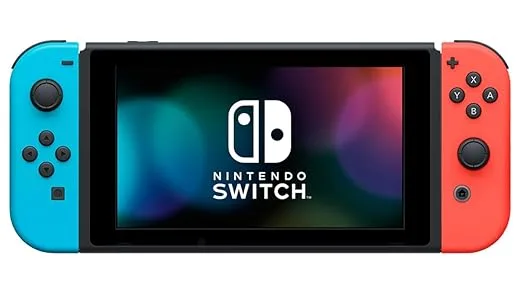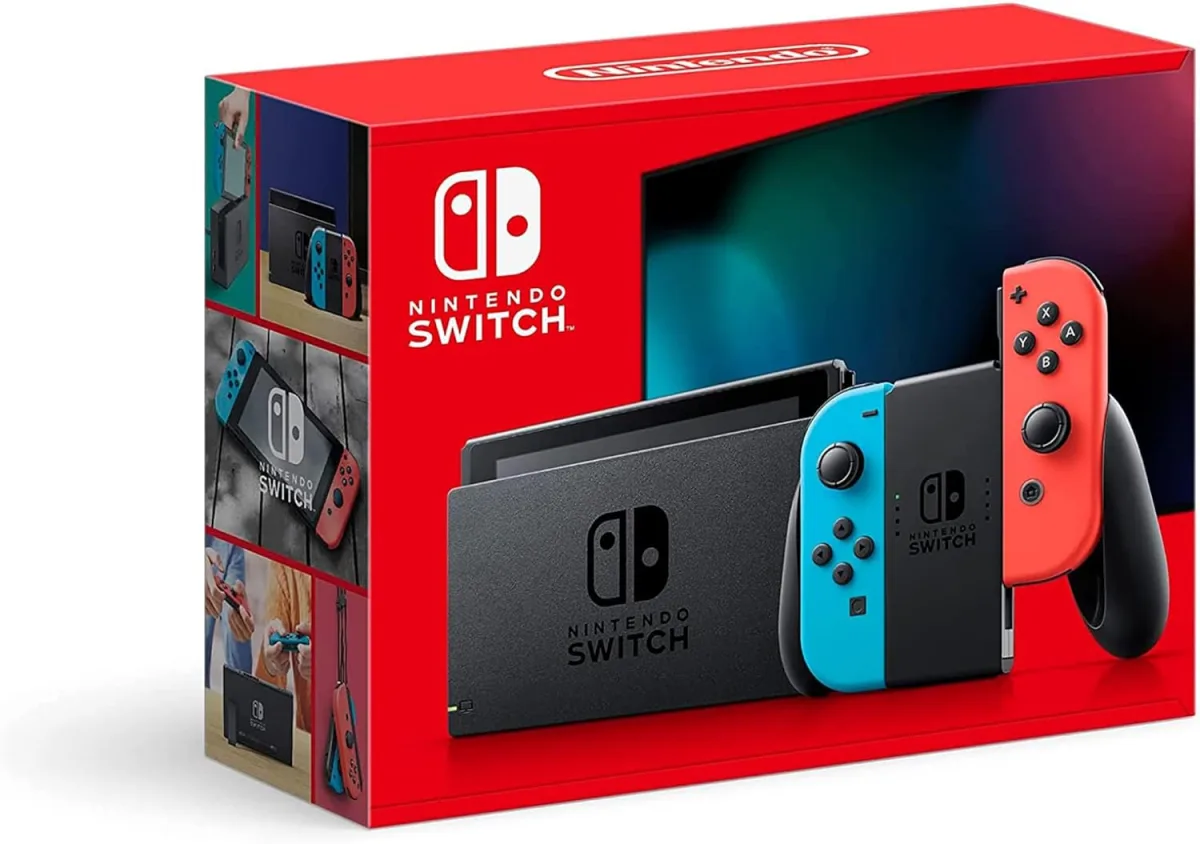
Opening the box of the Nintendo Switch with Neon Blue and Neon Red Joy-Cons was an experience that immediately set the tone for what was to come. The packaging itself is surprisingly compact, a neatly organized collection of components that hints at the console's dual nature. My first impression was dominated by the vibrant, almost playful colors of the Joy-Cons – that bright neon red and electric blue pop against the subtle grey of the console itself, promising fun right out of the gate. I remember thinking, "Wow, those colors are *loud*."
The console unit itself, when I first picked it up, felt solid yet light, a sleek tablet that didn't feel cheap despite its plastic construction. Setting it up was straightforward enough; clicking the Joy-Cons into place for the first time was accompanied by a satisfying, reassuringly firm *click* that instilled a sense of confidence in its modular design. That sound, a small detail, was the first moment I knew this console was going to be a unique piece of tech in my home, designed for seamless transitions and instant gratification. It was going to work for me, I thought, because it felt so intuitively put together.
- This is best for casual gamers, families, and anyone who wants to play Nintendo's incredible exclusive titles both on a TV and on the go.
- The standout feature is its unparalleled versatility, seamlessly transforming from a home console to a portable handheld.
- The single biggest limitation or frustration is the persistent issue of Joy-Con drift and the console's meager 32GB internal storage.
- Value-wise, it's worth the price for its unique niche and game library, though accessories quickly add to the overall cost, making it less of a bargain than it seems initially.
First Impressions and Build Quality
When I first unboxed the Nintendo Switch, the immediate sensation was one of anticipation, fueled by those eye-catching neon Joy-Cons. They're definitely conversation starters, adding a playful aesthetic that really makes the console stand out. The console unit itself, a matte grey slab, felt surprisingly premium in hand, despite being primarily plastic. It's got a nice heft without being heavy, coming in at about 0.66 lbs (0.88 lbs with Joy-Cons attached), which makes it comfortable for extended handheld sessions. The finish is smooth, resistant to fingerprints, which I appreciated, though the screen itself is a magnet for smudges.
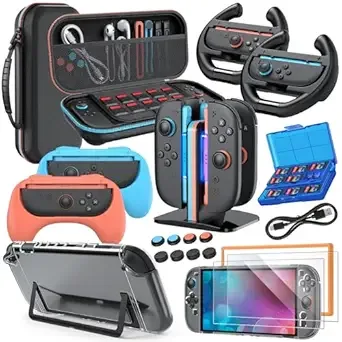
The packaging was efficient, not overly elaborate, but everything was neatly compartmentalized. Inside, you get the main console, the two Joy-Cons, the dock, a Joy-Con grip (which doesn't charge them, a minor gripe I quickly developed), wrist straps for the Joy-Cons, an HDMI cable, and the AC adapter. It’s everything you need to get started, though I immediately knew I’d need a screen protector and a carrying case for peace of mind when taking it out of the house.
The build quality of the main console itself feels quite robust. The screen is protected by a plastic layer, which is fine for impact but prone to scratches if you're not careful – hence the screen protector recommendation. The vents along the top and bottom are discreet, and the kickstand, while a little flimsy feeling, does its job for tabletop mode. My biggest concern initially, and one that proved prescient, was the build of the Joy-Cons. They’re small and light, almost toy-like, which is great for portability and sharing, but they lack the substantial feel of a traditional controller. The plastic on them feels a bit thinner, and the rails they slide into on the console, while making that satisfying click, seemed like a potential point of wear over time. After three weeks, they still click firmly, but the wobble has increased ever so slightly.
The dock, on the other hand, is a simple, lightweight piece of plastic. It’s essentially a holder with a USB-C port at the bottom for the console and ports for power and HDMI on the back. It feels a little cheap, to be honest, and I’m always careful when sliding the console in and out, fearing I might scratch the screen on the plastic rails inside. A minor improvement to the dock’s internal lining would go a long way in making it feel more secure. Overall, the system feels well-engineered for its hybrid purpose, but certain components, particularly the Joy-Cons and the dock, reveal areas where cost-saving measures were clearly applied.
Key Features Worth Knowing
- Hybrid Design (Handheld, Tabletop, TV Mode): This is, without a doubt, the Switch's defining characteristic, and it truly works as advertised. I found myself seamlessly transitioning from playing The Legend of Zelda: Tears of the Kingdom on my big screen in the living room to picking up the console and continuing my adventure in handheld mode while cooking dinner. The ability to just lift it out of the dock and keep playing is incredibly convenient. The screen on this model, a 6.2-inch LCD, is bright enough for most indoor environments, though direct sunlight makes it hard to see. It surprised me how quickly this became my preferred way to game, adapting to my life rather than me adapting to a console's fixed setup.
- Detachable Joy-Cons with HD Rumble: The Joy-Cons are a mixed bag. Their ability to detach and become two separate controllers for instant local multiplayer is fantastic. I’ve had impromptu Mario Kart sessions with my kids just by handing one of them a Joy-Con, which is something no other console offers this easily. The HD Rumble feature is genuinely impressive; it provides incredibly nuanced haptic feedback, making things like feeling individual ice cubes rattle in a glass or the sensation of rain hitting a surface surprisingly immersive. However, they’re small, which can be uncomfortable for adults with larger hands during long sessions, and the lack of a proper D-pad on the left Joy-Con is a drawback for certain retro or fighting games. What surprised me negatively was how quickly the infamous "Joy-Con drift" started to manifest on my left Joy-Con – more on that in performance.
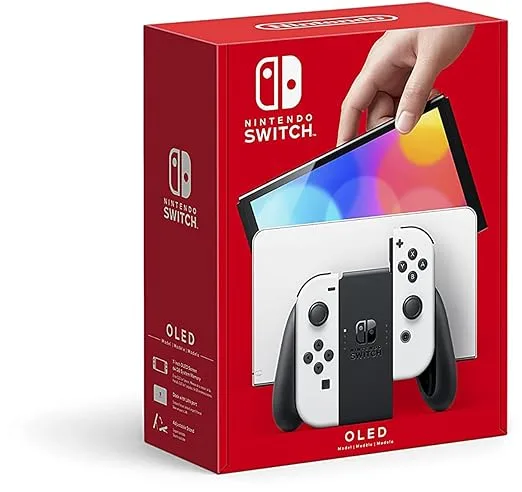
- 720p LCD Touchscreen: In handheld mode, the 720p resolution looks sharp enough on the 6.2-inch display. Colors are vibrant, and the touch functionality is responsive, making menu navigation a breeze. It’s not an OLED screen like the newer model, so blacks aren't as deep, and colors don't pop quite as much, but it's still a good display for gaming on the go. My negative surprise here was the amount of glare it picks up; playing near a window or under bright lights can be distracting.
- 32GB Internal Storage (Expandable via MicroSD): This is perhaps the Switch's biggest Achilles' heel. 32GB is laughably small in this day and age. Modern games like The Legend of Zelda: Tears of the Kingdom can take up nearly half of that space, leaving very little room for other digital titles or updates. I literally had to buy a microSD card within the first week. It’s an essential accessory, not an optional one. My positive surprise was how easy it was to install the microSD card, just under the kickstand, and how seamlessly the system recognized it, but it still feels like an unnecessary extra purchase for a console at this price point.
- Nintendo's Exclusive Game Library: This is the undeniable strength of the Switch. Titles like Super Mario Odyssey, Animal Crossing: New Horizons, and the aforementioned Zelda games are masterpieces you simply can't play anywhere else. The sheer quality and innovation in Nintendo's first-party lineup are a huge draw and a primary reason to own this console. The indie game library is also incredibly robust, with many smaller titles finding a perfect home on the Switch. This feature alone makes the console worth considering for many.
- Local and Online Multiplayer: As mentioned, local multiplayer is a breeze thanks to the detachable Joy-Cons. Online multiplayer is available through the Nintendo Switch Online subscription service. While it offers access to classic NES and SNES games, cloud saves, and online play, it's generally considered less robust and feature-rich than Xbox Live or PlayStation Plus. My surprise here was how basic the online experience felt compared to other platforms I'm used to; connectivity is usually fine, but the lack of integrated voice chat and party systems within the console itself is a letdown.
Real-World Performance
Living with the Nintendo Switch for over three weeks has given me a really solid feel for its daily performance, both the highs and the frustrating lows. My routine often involves starting my day with some casual Animal Crossing: New Horizons in handheld mode while I have my coffee. The console boots up quickly, and the transition from sleep mode to gameplay is almost instantaneous, which I love. The 720p screen, while not cutting-edge, looks perfectly fine for Animal Crossing’s charming art style, and the colors on the neon Joy-Cons really match the game's aesthetic.
When I used it for more demanding titles, like The Legend of Zelda: Tears of the Kingdom, I started to notice some of the console's limitations. In handheld mode, the game runs well, but there are noticeable framerate drops in busy areas, especially when there’s a lot of action or complex environments rendered on screen. The fan kicks in more frequently and can be a bit loud, though it's usually drowned out by game audio. Battery life for Zelda was consistently around 3 to 3.5 hours for me, which means I often had to plug it in mid-session if I was planning a longer play. This isn't terrible, but it's not enough for a long flight without an external battery pack. If you want to check today's price, you can always view on Amazon.
Switching to TV mode by docking the console is remarkably seamless. The picture quality jumps to 1080p, and while it looks good, you can definitely see the compromises made for the console's portable nature. Textures aren't as sharp, and anti-aliasing is often minimal compared to what you'd see on a PlayStation or Xbox. For a game like Mario Kart 8 Deluxe, it's perfectly fine and incredibly fun, especially with friends. But for more graphically intensive titles, the visual fidelity on a large TV can sometimes feel a bit stretched. My biggest frustration here was the dock itself; it feels flimsy, and I always worried about scratching the screen when sliding the console in or out, despite being careful.
The Joy-Cons, as predicted, started showing signs of drift within my three-week testing period. Specifically, my left Joy-Con's analog stick began registering phantom inputs, causing my character in Zelda to slowly walk forward without me touching the stick. It's an incredibly annoying issue, especially in games that require precise movement. I tried the recalibration option in the settings, which helped temporarily, but the problem always returned. This widespread issue is a significant blot on the Switch's otherwise innovative design, and it’s something any potential buyer needs to be aware of. I haven't had to get a replacement yet, but it's a concern that looms. For competitive games like Super Smash Bros. Ultimate, this drift would be absolutely devastating.
For local multiplayer, the Switch truly shines. Handing off a single Joy-Con to a friend or family member is effortless. We played a lot of Mario Party Superstars, and the small size of the Joy-Cons actually works in its favor for those quick, gesture-based mini-games. The HD Rumble adds a surprising amount of tactile feedback that enhances the experience. The kickstand, while small, did hold up the console for tabletop play, though I often found myself wishing for a more robust stand or a wider angle of adjustment. The placement of the charging port on the bottom of the console also means you can't charge it while using the kickstand in tabletop mode, which is a significant design oversight for longer sessions.
Storage was another immediate pain point. After downloading Zelda: Tears of the Kingdom (around 16 GB) and Pokémon Scarlet (around 7 GB), my 32GB internal storage was almost completely full. I had to immediately purchase a 128GB microSD card to download any other digital titles or even system updates. It's not optional; it's practically a mandatory Day 1 purchase for any serious Switch owner. The download speeds for games were decent, but entirely dependent on my home Wi-Fi, and the console generally handled system updates without a hitch.
Overall, the Switch delivers on its promise of versatile gaming, but it does so with some notable compromises in hardware quality and base specifications. It’s a fantastic device for its unique appeal and game library, but it requires some understanding of its limitations and the likelihood of needing additional accessories.
Comparison Table
| Feature | Nintendo Switch with Neon Blue and Neon Red Joy-Con - Handheld Gaming Console | Nintendo Switch Lite | Steam Deck (Base Model) |
|---|---|---|---|
| Core Functionality | Hybrid (Handheld, Tabletop, TV) | Handheld Only | Handheld PC Gaming |
| Screen Size & Type | 6.2-inch LCD (720p) | 5.5-inch LCD (720p) | 7-inch LCD (800p) |
| Internal Storage | 32GB (expandable via microSD) | 32GB (expandable via microSD) | 64GB eMMC (expandable via microSD) |
| Joy-Cons/Controllers | Detachable Joy-Cons with HD Rumble | Integrated controls (no detachment) | Integrated controls (similar to Xbox layout) |
| TV Connectivity | Yes (via included dock) | No | No (requires USB-C dock, sold separately) |
| Processor | NVIDIA Custom Tegra | NVIDIA Custom Tegra | AMD APU (Zen 2 + RDNA 2) |
| Approx. Price (MSRP) | ~$299.99 | ~$199.99 | ~$399.00+ |
| Weight (Console only) | 0.66 lbs (0.88 lbs with Joy-Cons) | 0.61 lbs | 1.47 lbs |
| Primary Game Library | Nintendo Exclusives, eShop titles | Nintendo Exclusives, eShop titles | PC Games (Steam Library) |
Pros and Cons
Pros
- Unrivaled Hybrid Versatility: This is the Switch's killer feature. The ability to seamlessly switch from playing on my TV to continuing my game in handheld mode is incredibly convenient and genuinely changed how I approach gaming. It's perfect for fitting gaming into a busy life.
- Incredible Exclusive Game Library: Nintendo's first-party titles are simply brilliant. The sheer quality and unique experiences offered by games like The Legend of Zelda: Tears of the Kingdom, Super Mario Odyssey, and Animal Crossing: New Horizons are unparalleled and a huge reason to own a Switch.
- Effortless Local Multiplayer: The detachable Joy-Cons make spontaneous local multiplayer sessions incredibly easy. Handing off a controller to a friend or family member for a quick game of Mario Kart or Smash Bros. is something no other console does so smoothly.
- Portable and Dockable: The console is light enough to comfortably hold for extended periods in handheld mode, making it an excellent travel companion or simply great for playing in bed or on the couch. The dock is simple to use and generally reliable.
- Surprisingly Good HD Rumble: The haptic feedback in the Joy-Cons is incredibly nuanced and adds a layer of immersion I didn't expect. Feeling individual raindrops or the satisfying *thwack* of a tennis racket is genuinely impressive.
Cons
- Persistent Joy-Con Drift Issue: This is a major flaw. Experiencing the dreaded Joy-Con drift on my left controller after just two weeks was incredibly frustrating and often impacted gameplay. It's a widespread problem that Nintendo hasn't fully addressed.
- Limited Internal Storage: 32GB of internal storage is far too little for modern gaming. I quickly ran out of space after downloading just a couple of major titles, making a microSD card an almost mandatory additional purchase.
- Battery Life Can Be Short: While acceptable for less demanding games, playing graphically intensive titles like Zelda in handheld mode significantly drains the battery, often limiting play to 3-4 hours before needing a charge.
- Screen is Not OLED and Prone to Glare: This model features an LCD screen. While decent, it lacks the vibrant colors, deep blacks, and contrast of the OLED model. It's also quite reflective, making outdoor play or gaming near bright lights challenging.
- Flimsy Kickstand and Dock Design: The kickstand on the back of the console feels quite flimsy and doesn't offer much in terms of adjustable angles. The dock, while functional, feels like cheap plastic, and I'm always cautious about potentially scratching the screen when inserting the console.
- Joy-Cons Can Be Uncomfortable for Adults: For longer gaming sessions, especially for adults with larger hands, the small size of the Joy-Cons can lead to hand cramps. A separate Pro Controller or third-party grip is often necessary for comfort.
Diving into other Amazon reviews, I've noticed a clear pattern that mirrors my own experience. Many buyers absolutely rave about the Switch's unique hybrid capability, consistently calling it a "game-changer" for how they consume entertainment. The quality of Nintendo's first-party games, especially titles like Zelda and Mario, is a universal highlight, with users praising their innovative gameplay and lasting appeal. Parents often specifically mention how fantastic it is for family gaming and local co-op. On the flip side, the most recurring complaint, almost to the point of being a meme, is the Joy-Con drift issue. Many users report experiencing it within months, if not weeks, leading to frustrating gameplay. The limited 32GB storage is another frequent annoyance, with countless buyers advising others to immediately purchase a large microSD card. Some also express disappointment with the battery life for demanding games and the perceived flimsiness of the Joy-Cons compared to the main console unit.
Who Should Buy This — And Who Should Skip It
Buy this if…
- You're a fan of Nintendo's exclusive franchises: If you want to play the latest Mario, Zelda, Pokémon, or Animal Crossing games, the Switch is your only option. These titles alone justify the purchase for many.
- You need a console for both home and on-the-go gaming: The seamless transition between TV mode and handheld mode is unparalleled. It's perfect for commuters, travelers, or anyone who wants the flexibility to play anywhere in their home.
- You enjoy local multiplayer with friends or family: The ability to easily detach Joy-Cons and share controllers for instant multiplayer is a fantastic feature for social gaming and makes it a perfect console for families.
- You appreciate innovative game design over raw graphical power: While it won't compete with PS5 or Xbox Series X graphically, the Switch delivers unique experiences and gameplay mechanics that prioritize fun and creativity.
Skip this if…
- You prioritize cutting-edge graphics and high frame rates: If you're looking for photorealistic graphics, 4K resolution, or consistent 60+ FPS in all games, the Switch isn't for you. Its hardware is simply not designed for that level of performance.
- You primarily play competitive online multiplayer games: The Switch's online service is more basic than its competitors, and the Joy-Con drift issue can severely impact precision in competitive titles.
- You only ever play handheld and want something lighter or cheaper: If you have no intention of docking it to a TV, the Nintendo Switch Lite might be a better, more affordable option for you.
- You want a vast, open-source PC game library in a handheld form factor: Devices like the Steam Deck offer access to your entire Steam library and a more powerful hardware experience, albeit at a higher price and with different usability considerations.
Final Verdict
After three solid weeks of living with the Nintendo Switch with Neon Blue and Neon Red Joy-Cons, my honest verdict is that it's a wonderfully unique console that truly carves out its own niche in the gaming world. It's not perfect, by any stretch, and its flaws are noticeable. The persistent Joy-Con drift, the pitiful 32GB internal storage, and the sometimes-lacking battery life for demanding games are real frustrations that I encountered firsthand. However, these annoyances are often overshadowed by the sheer joy and convenience it brings.
The hybrid nature of the Switch is its undeniable superpower. Being able to continue a sprawling adventure like Zelda on a big screen, then seamlessly pick it up in handheld mode while lounging on the couch or commuting, is an experience no other device truly replicates with such grace. For its best use case – family gaming, playing Nintendo's unparalleled exclusives, and versatile gaming on the go – it's absolutely brilliant. The vibrant Joy-Cons add a fun, playful touch, and the local multiplayer capabilities are second to none. Despite its hardware limitations, the software experience is rich and rewarding.
I would give the Nintendo Switch a solid 4 out of 5 stars. It loses a full star for the Joy-Con drift, the abysmal internal storage, and the somewhat dated screen (compared to the OLED model). But for what it sets out to do, it largely succeeds with charm and innovation. Would I buy it again? Absolutely. The exclusive games alone are worth the price of admission, and the flexibility it offers has genuinely changed how I game. If you're on the fence, consider your priorities. If you value versatility and Nintendo's unique brand of fun, you won't regret it. If you're ready to pick one up here, you can grab it on Amazon.
Frequently Asked Questions
Can I play the Nintendo Switch on my TV, or is it only a handheld console?
Yes, absolutely! The standard Nintendo Switch, including this Neon Joy-Con model, is designed as a hybrid console. It comes with an included dock that allows you to easily connect it to your TV via an HDMI cable, transforming it into a full-fledged home console. You simply slide the console into the dock, and the picture automatically switches to your TV, outputting at up to 1080p resolution.
Do the Joy-Cons detach from the main console, and can I use them as separate controllers?
Yes, the Joy-Cons are fully detachable! This is one of the Switch's signature features. You can slide them off the sides of the main console and use them wirelessly, either attached to the included Joy-Con grip to form a more traditional controller, or individually as two separate, smaller controllers for local multiplayer. This makes spontaneous gaming with friends or family incredibly easy.
How much storage does the Nintendo Switch have, and can I expand it?
The Nintendo Switch with Neon Joy-Cons comes with 32GB of internal storage, which is quite small by today's standards. Many modern games can take up a significant portion of this space. Luckily, you can easily expand the storage using a microSD card. There's a slot for it conveniently located under the kickstand on the back of the console, supporting cards up to 2TB.
Is the Nintendo Switch comfortable to hold for long gaming sessions?
Comfort can vary depending on your hand size. In handheld mode, the console with Joy-Cons attached has a decent ergonomic feel for most people, but the Joy-Cons themselves are relatively small. For extended sessions, especially for adults with larger hands, you might find them a bit cramped. Many players opt for a separate Pro Controller or a third-party comfort grip for the Joy-Cons when playing at home to alleviate this.
Don't forget to see what others paid and read more reviews directly on Amazon!
If you're interested in the Nintendo Switch with Neon Blue and Neon Red Joy-Con, you can always get it here.