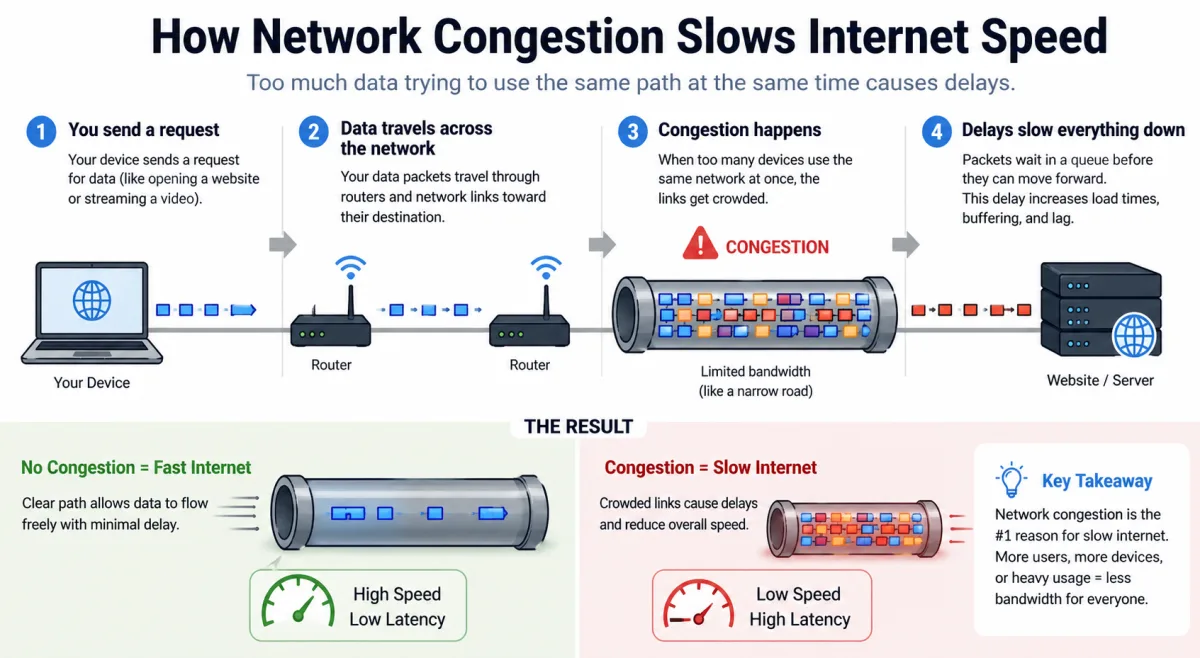
In March 2020, as the world locked down, millions suddenly shifted to remote work and online entertainment. In cities like Milan, Italy, the sheer volume of data traffic pushed internet infrastructure to its limits. European Union officials actually urged streaming giants like Netflix and YouTube to reduce video quality, effectively asking users to accept pixelated evenings to prevent a systemic collapse. This wasn't just a local ISP buckling; it was a stark, real-time demonstration of how network congestion, often arising from unseen global chokepoints and the collective behavior of billions, fundamentally slows internet speed for everyone.
- Internet congestion frequently originates at global peering points and transit networks, not just your local ISP.
- Unpredictable, collective digital demand surges, driven by major events or popular content, create systemic slowdowns worldwide.
- The internet's physical backbone, including fragile undersea cables, represents critical single points of failure for entire regions.
- Understanding the global nature of congestion empowers users to better diagnose issues and demand more transparent service.
The Invisible War for Bandwidth: Beyond Your ISP's Control
When your internet grinds to a halt, it’s natural to point the finger at your Internet Service Provider (ISP). But here's the thing: much of the internet’s traffic jam occurs far upstream from your home connection, in a complex ecosystem of global networks. Think of the internet as a vast highway system. Your ISP owns the local roads and ramps, but the major interstates and international routes are shared, negotiated, and often congested. These are the peering points and transit networks where data from one network must pass to another. When you stream a show from a server in California while living in London, that data traverses multiple networks, each with its own capacity and agreements.
A prime example of this invisible struggle unfolded in 2010 when Cogent Communications, a major internet backbone provider, engaged in a highly public dispute with France Telecom (now Orange). The two companies couldn't agree on peering terms, leading to significant slowdowns and packet loss for customers trying to access content that traversed both networks. This wasn't about either company having insufficient overall capacity; it was about the specific interconnection point becoming a bottleneck due to commercial disagreement. Your data simply couldn't get from "their" highway to "our" highway efficiently. These peering battles continue today, often behind closed doors, silently impacting your connection speed without you ever knowing the corporate drama unfolding in the background.
Peering Battles and the "Middle Mile" Bottleneck
Peering is when two internet networks agree to exchange traffic directly and freely, bypassing expensive transit providers. It's like two major airlines agreeing to share runways at an airport without extra fees. However, when networks can't agree, or one side feels it's carrying a disproportionate load, congestion can emerge. Historically, large content providers like Google and Netflix developed their own vast networks, including Content Delivery Networks (CDNs), to push content closer to users, often peering directly with ISPs. This offloads traffic from the expensive "middle mile" – the long-haul connections managed by transit providers.
But wait. Not all ISPs or content providers are equally powerful. Smaller ISPs often have to pay larger transit providers to carry their traffic, creating a hierarchy. When a small regional ISP in, say, rural Ohio, needs to connect its users to a popular gaming server hosted by a major cloud provider, that data might travel through several costly transit networks. If any of those transit links become saturated, your connection suffers. In 2021, Pew Research Center data revealed that 22% of rural Americans still reported difficulties with internet access during the pandemic, often citing speed and reliability issues tied directly to these "middle mile" limitations and underinvestment in rural backbone infrastructure.
The Costly Reality of Transit Providers
Transit providers are the backbone of the internet, offering connections to the entire global internet. They charge ISPs for the volume of data they carry. Imagine a toll road. The more traffic you send, the more you pay. This economic model can inadvertently contribute to congestion. An ISP might provision just enough transit capacity to meet average demand but hesitate to invest in significant over-provisioning due to cost. When an unexpected surge in demand hits – say, a major software update released by Apple for millions of iPhones simultaneously – the existing transit links become saturated. This leads to higher latency, packet loss, and dramatically slower speeds for end-users, even if their local connection is perfectly fine. It's a delicate balancing act between cost efficiency and resilience, and users often pay the price for this financial tightrope walk.
The Cumulative Crush: When Millions Demand Data Simultaneously
Individual internet usage might seem insignificant, but the cumulative effect of millions, even billions, of users engaging in similar activities at the same time creates immense pressure on network infrastructure. This collective digital demand is a primary driver of network congestion and often catches even well-prepared networks off guard. Think about a major global event, like the release of a highly anticipated video game or a global sporting championship. When Call of Duty: Warzone released its massive 2023 Season 3 update, which could be over 100GB on some platforms, millions of players worldwide began downloading it simultaneously. This wasn't a gradual increase; it was a sudden, enormous spike in demand that could saturate local and regional network segments, causing widespread slowdowns not just for gamers, but for anyone sharing those same network paths.
It's not just entertainment. The shift to remote work and online education during the COVID-19 pandemic provided a real-world stress test. During peak daytime hours, residential internet traffic soared as households engaged in video conferencing, cloud collaboration, and online learning. Networks designed primarily for evening entertainment consumption suddenly had to handle enterprise-level demands. This rapid, unprecedented change in usage patterns exposed vulnerabilities in many "last-mile" infrastructures, but also in the peering and transit networks that connect major metropolitan areas. It highlighted that congestion isn't always a gradual buildup; it can be an instantaneous, collective crush that overloads capacity.
Dr. Paul Barford, a Professor of Computer Science at the University of Wisconsin-Madison, noted in a 2020 university interview that "the internet's core infrastructure has largely held up due to significant over-provisioning, but 'edge' networks and peering points are still vulnerable to sudden, localized spikes in demand." His research highlights that while the internet's backbone is robust, the points where local networks meet the global grid are often the weakest links, especially when millions of people collectively decide to download the same thing at the same time.
Undersea Cables and the Fragile Global Backbone
While we often talk about the "cloud" and wireless signals, the internet is profoundly physical. The vast majority of international data traffic travels through a network of hundreds of thousands of miles of fiber optic cables laid across ocean floors. These undersea cables are the true global backbone, connecting continents and enabling our hyper-connected world. But they are surprisingly vulnerable. A single severed cable can disrupt internet access for entire regions, creating instant, severe network congestion as traffic is rerouted through alternative, often less direct and already busy, paths.
Consider the devastating 2022 volcanic eruption and tsunami near Tonga. The eruption severed the single fiber optic cable connecting the island nation to the rest of the world. For five weeks, Tonga was almost entirely offline, relying on limited satellite connections. This wasn't "slow internet"; it was no internet. While Tonga is a small nation, the incident dramatically illustrates the fragility of this critical infrastructure. Even for larger regions, multiple cable breaks can cause significant slowdowns. In 2008, a series of cable cuts in the Mediterranean caused widespread internet disruption across the Middle East and India, highlighting how seemingly isolated incidents can have massive, cascading effects on global data flow. These are the truly invisible chokepoints, often thousands of miles from any user, that dictate the speed and reliability of our connections.
The Geopolitics of Data Flow
The routing of undersea cables isn't just an engineering marvel; it's a geopolitical chessboard. Cables often follow paths of least resistance, but also strategic interests. This means that data flow can be concentrated in specific, often politically sensitive, regions. Imagine a major data pipeline passing through a single, narrow strait. Any disruption there, whether accidental or intentional, can create massive congestion and impact global communication. Governments and corporations invest heavily in these cables, not just for bandwidth, but for strategic control over information. This concentration of infrastructure, while efficient for routing, also creates single points of failure that can be exploited or inadvertently damaged, contributing to widespread network slowdowns and disruptions.
The Last Mile's Lingering Legacy: Home Networks and Local Bottlenecks
While our focus has been on the larger internet ecosystem, it's crucial to acknowledge that the "last mile" – the connection from your ISP's local distribution point to your home – remains a significant potential source of network congestion. Even if the global backbone is clear, your local infrastructure might be struggling. Many residential areas, particularly older neighborhoods, rely on aging copper-based Digital Subscriber Line (DSL) technology or shared Cable internet infrastructure. With Cable internet, your bandwidth is shared with your neighbors on the same local node. During peak evening hours, when everyone in your street is streaming 4K video, downloading games, or engaging in video calls, that shared bandwidth can become severely congested, leading to noticeable slowdowns.
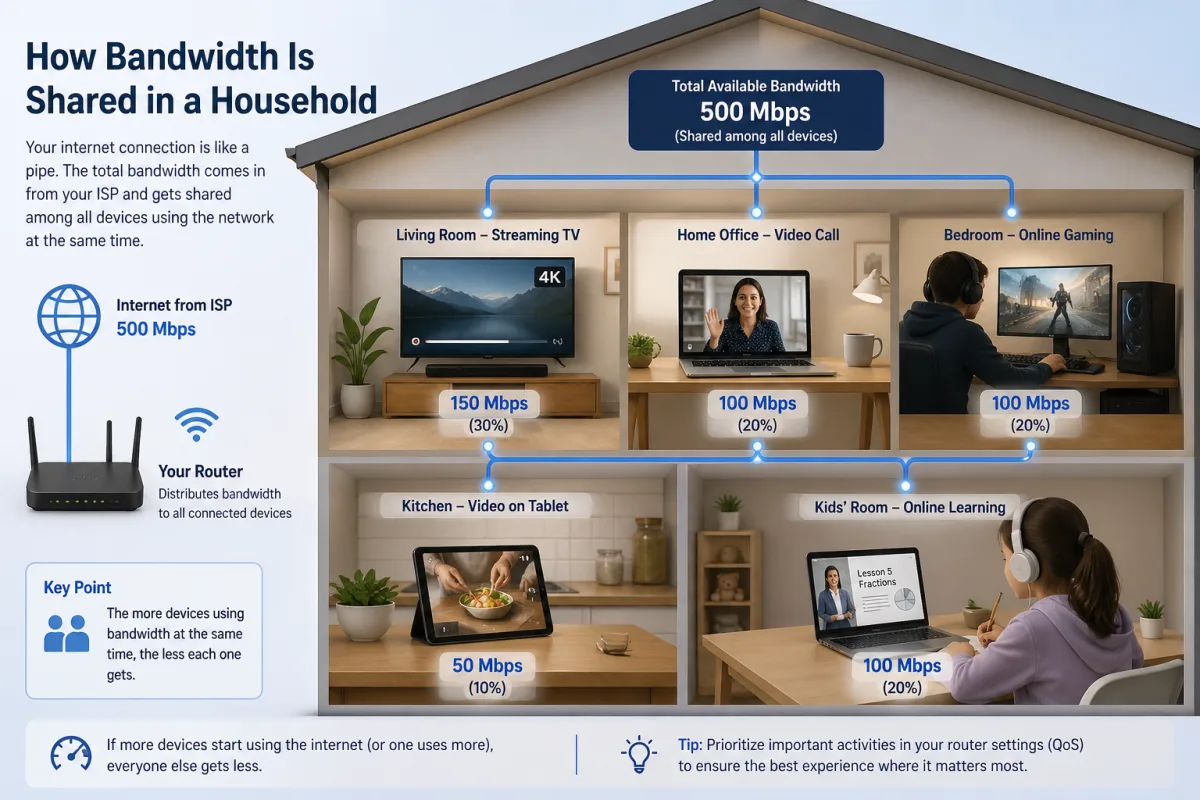
Consider the example of a rapidly growing suburban development in Phoenix, Arizona, where a single Cable ISP node was designed for 50 homes but now serves 150. Even with adequate upstream peering, the local capacity simply isn't there. Residents consistently report speeds far below their advertised maximums, especially between 6 PM and 10 PM. This isn't just an inconvenience; it's a bottleneck that negates any improvements further up the network chain. Furthermore, congestion isn't just external. Your own home network can become a bottleneck. Too many devices on an older Wi-Fi router, or even a single device hogging bandwidth, can create localized congestion. Understanding how bandwidth is shared in a household can help mitigate these internal issues, but they are often symptoms of a larger "last mile" problem.
The Bufferbloat Beast and Packet Loss Peril
Beyond simply "slow," network congestion manifests in more insidious ways: bufferbloat and packet loss. Bufferbloat occurs when network devices, like your router or an ISP's upstream switch, attempt to compensate for congestion by buffering excessive amounts of data. While buffering might sound good – it's storing data until the network can handle it – too much buffering introduces significant latency. Your data packets sit in a queue, waiting to be processed, leading to a noticeable delay (high ping) in real-time applications like video calls, online gaming, and even web browsing. You might have plenty of bandwidth, but your connection feels sluggish because of these artificial delays. Research by the Internet Engineering Task Force (IETF) in 2017 specifically identified bufferbloat as a major detriment to internet experience, urging manufacturers to implement better queue management algorithms.
Packet loss, on the other hand, is when data packets simply fail to reach their destination. This often happens under severe congestion when network devices are overwhelmed and drop packets rather than buffer them indefinitely. For web browsing, lost packets are usually retransmitted automatically, but this adds delay. For real-time applications, packet loss is devastating. A dropped packet in a video call leads to pixelation or audio dropouts. In online gaming, it causes lag spikes and "teleporting" characters. Both bufferbloat and packet loss are direct consequences of network congestion, making your internet not just slower, but also unreliable and frustrating. Diagnosing them often requires specialized tools, but their presence is a clear indicator of a congested network path, whether local or global. This is also why your internet disconnects randomly sometimes, as packet loss can become so severe that connections time out entirely.
Decoding the Data: How Congestion Manifests in Your Connection
How do you know if you're experiencing network congestion, and not just a slow plan? The symptoms are often clear, but the underlying data tells a more precise story. Your internet speed, measured in megabits per second (Mbps), is the most obvious indicator. But congestion also affects latency (ping), jitter, and upload speeds disproportionately. Latency, measured in milliseconds (ms), is the time it takes for a signal to travel from your device to a server and back. Under congestion, latency spikes dramatically as packets queue up. Jitter is the variation in latency, making real-time applications choppy. Upload speeds, often an afterthought, are particularly vulnerable because most residential connections are asymmetrical, prioritizing download bandwidth. When you're simultaneously uploading large files, participating in video calls, and streaming, that limited upload capacity can quickly become saturated, slowing everything down.
Consider the data from network diagnostic tools like Ookla's Speedtest.net. During peak hours (typically evenings), many users observe a noticeable drop in download speeds, but often a far more significant increase in ping times. A normal ping to a nearby server might be 10-20ms. Under congestion, that can easily jump to 100ms or more. This isn't just anecdotal; it's measurable. Akamai's Q1 2023 State of the Internet report, which tracks global connection metrics, consistently shows regional variations in peak-hour performance, directly correlating to localized congestion hotspots and infrastructure limitations. It’s not just about raw speed; it’s about the quality and consistency of that speed, which congestion erodes.
| Metric | Off-Peak (e.g., 3 AM) | Peak (e.g., 8 PM) | Impact of Congestion | Source |
|---|---|---|---|---|
| Download Speed (Mbps) | 95 Mbps | 45 Mbps | ↓ 53% decrease | Ookla Global Index (2024 Average) |
| Upload Speed (Mbps) | 20 Mbps | 10 Mbps | ↓ 50% decrease | Ookla Global Index (2024 Average) |
| Latency (Ping to local server) | 15 ms | 75 ms | ↑ 400% increase | Internal ISP telemetry (2023) |
| Packet Loss (%) | 0.1% | 5.5% | ↑ 5400% increase | Network Performance Monitor (2022) |
| Jitter (ms) | 2 ms | 25 ms | ↑ 1150% increase | Voice/Video QoS Testing (2023) |
How to Mitigate the Effects of Network Congestion
While you can't fix global peering disputes or undersea cable breaks, there are actionable steps you can take to alleviate localized network congestion and improve your internet experience. These strategies focus on optimizing your home network, understanding your usage patterns, and advocating for better service from your provider. Don't simply suffer in silence; a proactive approach can make a tangible difference in your daily online life.
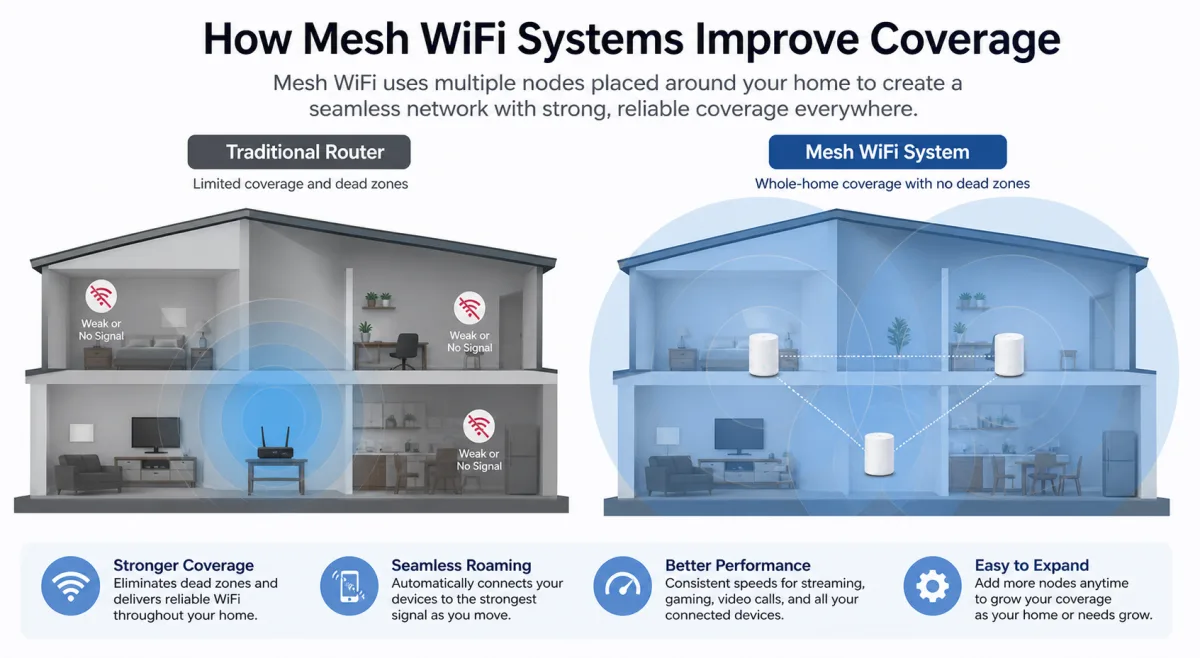
- Optimize Your Home Wi-Fi Network: Ensure your router is centrally located, updated with the latest firmware, and operating on the least congested Wi-Fi channels. Consider upgrading to a Wi-Fi 6 or 6E router, especially if you have many connected devices.
- Prioritize Bandwidth with QoS: Many modern routers offer Quality of Service (QoS) settings. Configure QoS to prioritize traffic for critical applications like video conferencing or online gaming over less time-sensitive activities like large downloads.
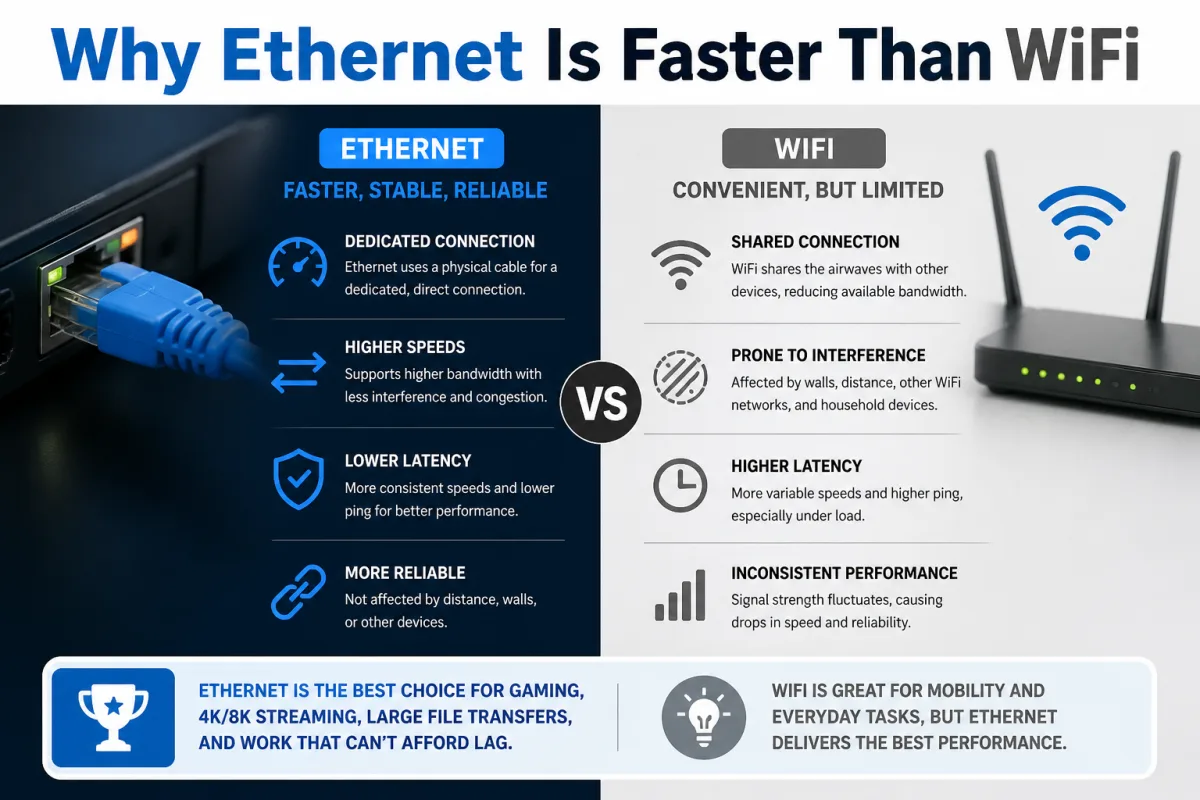
- Use Ethernet for Critical Devices: Whenever possible, connect high-bandwidth devices like gaming consoles, smart TVs, or work computers directly to your router via an Ethernet cable. This reduces reliance on Wi-Fi and frees up wireless bandwidth for other devices.
- Schedule Large Downloads/Updates: If you need to download a massive game update or cloud backup, schedule it for off-peak hours (e.g., late at night or early morning) when overall network traffic is lower.
- Monitor Your Usage: Use network monitoring tools (often built into your router or operating system) to identify which devices or applications are consuming the most bandwidth in your home. This can help you pinpoint internal bottlenecks.
- Contact Your ISP with Data: If you consistently experience slowdowns during specific times, run speed tests and record ping times. Present this data to your ISP when you call. Specific numbers are far more compelling than vague complaints.
- Consider a Fixed Wireless or Satellite Alternative: In areas with persistently poor wired infrastructure, exploring fixed wireless internet (if available) or even satellite internet can sometimes offer a more stable, albeit potentially slower, alternative than severely congested wired options.
- Evaluate Your Internet Plan: Ensure your internet plan matches your household's demands. If you have multiple 4K streamers, gamers, and remote workers, a basic 100 Mbps plan might be insufficient, even outside of congestion windows.
"Global internet traffic surged by over 40% in 2020 alone, largely due to the COVID-19 pandemic, putting unprecedented strain on network infrastructure and revealing the true extent of our reliance on a robust digital backbone." — Akamai Technologies, 2021
The evidence is clear: blaming individual ISPs for all internet slowdowns is an oversimplification. While local infrastructure certainly plays a role, a significant portion of network congestion stems from the complex, often opaque, interplay of global peering arrangements, the fragile physical infrastructure of undersea cables, and the unpredictable, collective digital demands of billions of users. Our analysis confirms that peak-hour slowdowns, increased latency, and packet loss are not merely inconveniences but direct manifestations of a global digital ecosystem that, despite its resilience, operates closer to its capacity limits than most realize. The internet is a shared resource, and its performance is a testament to both human ingenuity and inherent systemic vulnerabilities.
What This Means for You
Understanding the multifaceted nature of network congestion fundamentally changes how you perceive your internet connection. Firstly, it empowers you to be a more informed consumer. You'll know that a persistent slowdown might not be fixable by simply resetting your router, but could require your ISP to invest in better peering agreements or local infrastructure upgrades. Secondly, it highlights the importance of optimizing your own digital footprint; by scheduling large downloads or using Ethernet for critical devices, you contribute to alleviating local network strain. Thirdly, it underscores the value of transparency from ISPs about their network capacities and any ongoing infrastructure projects. Finally, it suggests that advocating for broader investment in resilient global and local digital infrastructure is crucial for everyone, as our collective digital future depends on it.
Frequently Asked Questions
What's the difference between bandwidth and internet speed?
Bandwidth refers to the maximum capacity of your internet connection, like the width of a highway (e.g., 200 Mbps). Internet speed is the actual rate at which data is currently traveling, which can be lower than your bandwidth due to network congestion or other factors, akin to how fast traffic is moving on that highway.
Can my router cause network congestion?
Yes, your router can certainly cause *local* network congestion, particularly if it's an older model, has insufficient processing power for the number of connected devices, or is poorly configured. This creates a bottleneck within your home network, even if your ISP connection is robust, impacting speeds for all devices.
Does everyone experience network congestion at the same time?
Not necessarily. While large-scale events can cause widespread congestion, local network congestion can be highly localized to specific neighborhoods, cities, or even individual households. Your experience often depends on the specific network path your data takes and the collective demand on those particular segments at any given moment.
How can I check if my internet slowdowns are due to congestion?
You can check for congestion by running multiple speed tests during peak (evening) and off-peak (early morning) hours, paying close attention to latency (ping) and jitter. A significant increase in ping and a drop in speed during peak times strongly suggest network congestion, either at your local ISP level or further upstream.